Pizza Dough Calculator
Baker's Percentages for Any Style
This pizza dough calculator uses baker's percentages to compute exact flour, water, salt, and yeast amounts for any pizza style. Choose from Neapolitan, New York, Detroit, or Roman presets — then adjust hydration, pre-ferment type, and environment settings to get a precise fermentation schedule tailored to your kitchen.
How to use this calculator
Choose a pizza style to load recommended defaults, then adjust the number of dough balls and weight per ball. Fine-tune baker's percentages (hydration, salt, yeast, oil, sugar) using the sliders. The calculator instantly shows ingredient amounts in grams. Enable a pre-ferment (poolish or biga) for more complex flavor. Adjust environment settings to get fermentation timing tailored to your kitchen.
Pizza Style
Baker's Percentages
Pre-ferment
Environment
22°CIngredients
Main dough
Fermentation Schedule
Fermentation targetUse ~26.5°C water for optimal dough temperature
Save your recipe in Fond
Sign up to save custom pizza recipes, track fermentation notes, and access the full Pizza Workshop with project management.
Join the waitlistLearn more about pizza dough
Beginner Pizza Dough
Your first homemade pizza dough, from scratch. A simple same-day recipe with 4 ingredients, plus everything you need to know about mixing, kneading, and shaping before you move on to fancier stuff.
Neapolitan Pizza Dough
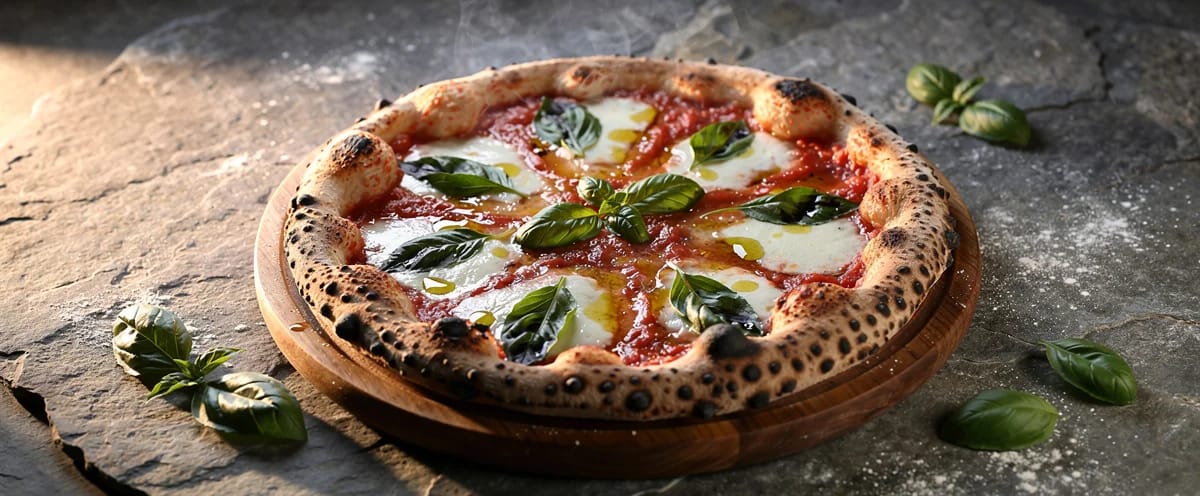
Neapolitan dough the way Naples does it: 00 flour, 60-62% hydration, long fermentation, and extreme heat. This guide follows AVPN standards and adapts them for home ovens — including flour brands, fermentation schedules, and a full troubleshooting section.
New York Style Pizza Dough
Big, foldable slices with a crispy bottom and chewy bite. NY-style dough uses high-gluten flour, a touch of oil and sugar, and a 48-hour cold ferment for that classic slice-shop flavor.
Detroit-Style Pizza Dough
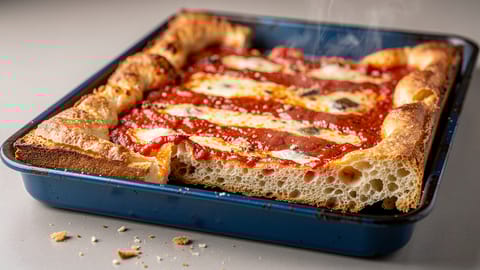
Rectangular pan pizza with a shatteringly crispy caramelized cheese edge and an open, focaccia-like crumb. 70% hydration dough, Wisconsin brick cheese, and cold sauce stripes applied after baking.
Roman pizza al taglio
Rome's iconic sheet pizza, sold by weight and eaten standing up. An ultra-light, airy crumb with a crispy bottom, made with poolish and ~80% hydration over 2-3 days.
Sourdough Pizza Dough
Make pizza with your sourdough starter for a crust with real complexity: mild tang, open crumb, and excellent browning. Plan for 8-72 hours of fermentation depending on your schedule.
No-Knead Pizza Dough
Skip the kneading entirely. Mix flour, water, salt, and a pinch of yeast, then wait 12-18 hours. Time does the gluten development for you, and the crust turns out light and airy with about 5 minutes of actual work.

Overnight Pizza Dough
Mix the dough before bed, refrigerate it, bake pizza the next day. 10 minutes of work the night before, and you get better flavor than same-day dough with zero extra effort.
Pizza dough hydration: complete guide to water ratios
How the water-to-flour ratio shapes your crust. 60% gives you a stiff, easy-to-handle dough; 75%+ gives you open, airy crumb but requires more technique. Includes baker's percentages by style, a decision framework, bassinage technique, and fermentation interaction.
Pizza Dough Fermentation: Room Temperature vs Cold Fermentation
Room temp vs. fridge, 4 hours vs. 72 hours, and how to tell when your dough is actually ready. The time-temperature relationship is the single biggest lever for better-tasting pizza.
Poolish vs Biga: Complete Guide to Pizza Pre-Ferments
Two Italian pre-ferments, very different results. Poolish (liquid, 100% hydration) makes airy, extensible dough. Biga (stiff, 50-60%) makes chewy, structured crumb. Which one you pick depends on your pizza style.
Cold Fermentation Pizza Dough Guide
Slow-rise your dough in the fridge for 24, 48, or 72 hours. The longer it sits, the more complex the flavor gets. Most home bakers hit the sweet spot at 48 hours with 0.1% fresh yeast.
Pizza Flour Guide: 00, Bread Flour, AP & Protein Content
00 vs. bread flour vs. all-purpose: what actually matters is protein content and how it matches your pizza style. Includes W values, brand recommendations, and a style-to-flour matching table.
Pizza Dough Troubleshooting: Common Problems & Fixes
Dough too sticky? Won't stretch? Bland crust? Tearing during shaping? This guide covers the most common headaches and what's actually going wrong, with quick fixes you can try right now.
Pizza Dough FAQ
Quick answers to 25+ pizza dough questions. How long to let it rise, can you freeze it, what to do when it's too sticky, how to store it. Each answer leads with the "what to do" before the "why."
Pizza water and key ingredients: what actually matters
The stuff beyond flour that quietly affects your dough: water hardness, salt percentage, yeast types (instant vs. fresh vs. active dry), diastatic malt, oil, and why a $15 scale beats measuring cups.
Essential Pizza Equipment: What You Actually Need
Stop wasting money on gadgets. A baking steel and a digital scale are the two upgrades that actually matter. Everything else is just a bonus.
Frequently Asked Questions
What is baker's percentage?
Baker's percentage expresses each ingredient as a percentage of the total flour weight. Flour is always 100%. For example, 65% hydration means the water weighs 65% of the flour weight. This makes recipes infinitely scalable.
What hydration should I use?
It depends on the style. Neapolitan is typically 60-65%, New York style 63-67%, Detroit 68-72%, and Roman al Taglio 75-85%. Higher hydration gives a more open crumb but is harder to handle.
What is a poolish vs a biga?
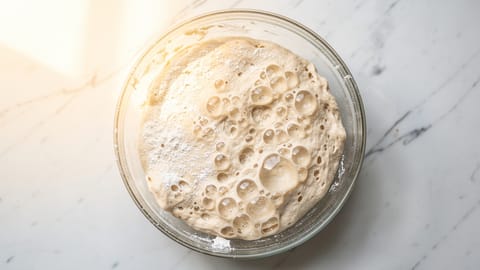
Both are pre-ferments that develop flavor and improve texture. A poolish is 100% hydration (equal parts flour and water) and ferments 8-16 hours. A biga is 55% hydration (stiffer) and adds more structure to the dough.
How does altitude affect pizza dough?
At higher altitudes, lower air pressure causes dough to rise faster. Above 900m, reduce yeast by 25%. Above 2000m, reduce by 50%. The calculator adjusts this automatically.
How long should I cold ferment?
Cold fermentation (4°C/39°F) develops complex flavors. Minimum 24 hours for noticeable improvement. 48-72 hours is the sweet spot for most styles. Beyond 72 hours, the dough may over-ferment.
How much water for 500g of flour in pizza dough?
At 65% hydration (classic Neapolitan), you need 325g of water for 500g of flour. At 70% (New York or Detroit), that's 350g. Use this calculator to instantly compute water and all other ingredients for any flour weight and hydration level.
What hydration for Neapolitan pizza?
Traditional Neapolitan pizza uses 60–65% hydration. This produces a firm, smooth dough that handles well at high temperatures. Lower hydration (60%) gives more structure; 65% gives a slightly more open crumb. The calculator defaults to 63% for the Neapolitan preset.
How much yeast for overnight pizza dough?
For a 24-hour room-temperature ferment, use approximately 0.1–0.2% yeast (baker's percentage). For a 48–72 hour cold ferment, drop to 0.05–0.1%. Less yeast = slower, more flavorful fermentation. The calculator adjusts yeast amounts automatically based on your fermentation target and room temperature.