Kosher Salt
A coarse-grained salt with large, flat crystals that's preferred by chefs for seasoning because it's easy to pinch, dissolves well, and has no additives.
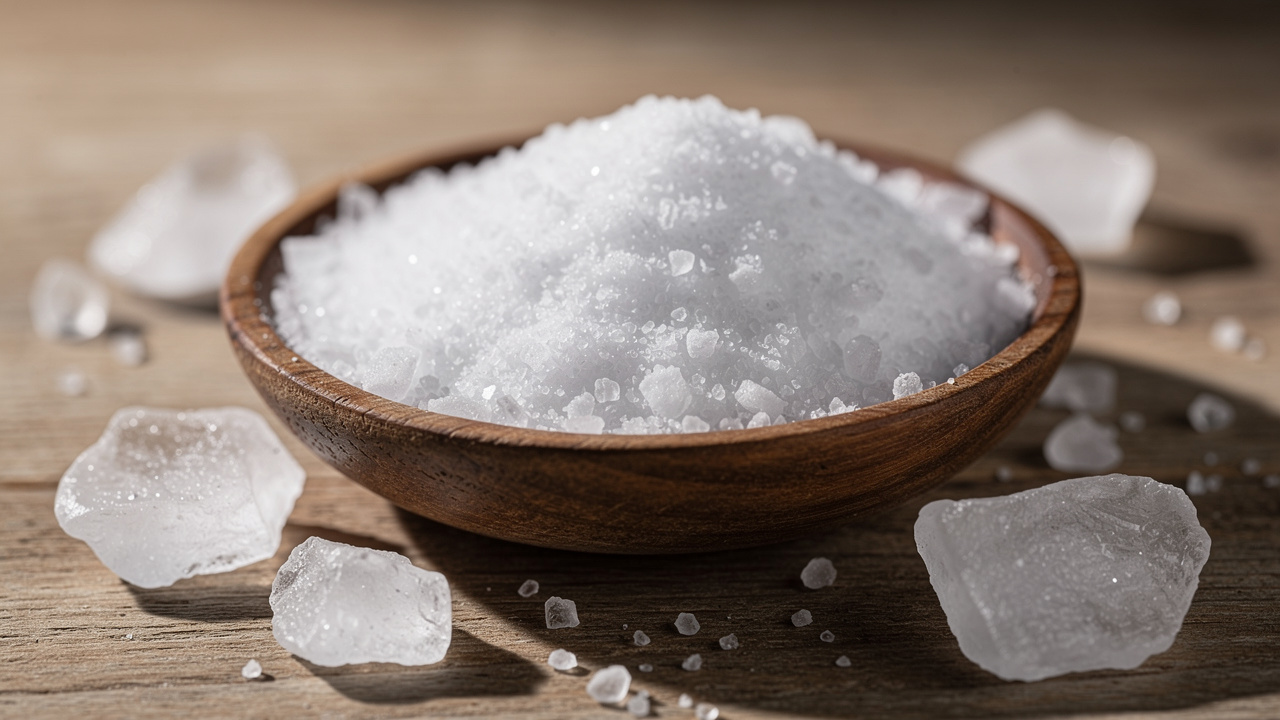
Kosher salt has become the standard salt in professional and serious home kitchens. Its name comes from its traditional use in koshering meat (drawing out blood), not from being certified kosher.
Why chefs prefer kosher salt
- Easy to pinch — large flakes are easy to grab and control
- Even distribution — sticks to food better than fine salt
- No additives — no iodine or anti-caking agents that can taste metallic
- Forgiving — harder to over-salt with larger crystals
- Dissolves cleanly — no residue or off-flavors
Kosher salt vs. table salt
| Property | Kosher Salt | Table Salt |
|---|---|---|
| Crystal size | Large, flat | Small, cubic |
| By volume | Less dense | More dense |
| Additives | None | Iodine, anti-caking |
| Taste | Clean | Can taste metallic |
| Best use | Cooking, finishing | Baking (precise measurements) |
The brand matters: Diamond Crystal vs. Morton
⚠️ These two common brands are not interchangeable by volume.
| Measurement | Diamond Crystal | Morton |
|---|---|---|
| 1 tsp | 3g | 4.8g |
| 1 tbsp | 9g | 14.4g |
| Conversion | 1.5x more | Standard |
If a recipe specifies one brand, adjust accordingly:
- Recipe calls for Diamond Crystal, you have Morton: use about 2/3 the amount
- Recipe calls for Morton, you have Diamond Crystal: use about 1.5x the amount
When to use different salts
| Salt | Best use |
|---|---|
| Kosher (Diamond Crystal) | Everyday seasoning, most cooking |
| Kosher (Morton) | Same, but measure carefully |
| Table salt | Baking (consistent density), salting pasta water |
| Flaky sea salt (Maldon) | Finishing, texture |
| Fine sea salt | Baking, delicate applications |
Seasoning tips
- Season from height — 10-12 inches above food for even distribution
- Season in layers — throughout cooking, not just at the end
- Taste as you go — the only way to know if it's right
- Salted butter compensation — reduce salt if using salted butter
Common mistakes
- Using table salt measurements for kosher — you'll under-season
- Not accounting for brand differences — Morton is significantly saltier by volume
- Salting too late — seasoning during cooking develops deeper flavor
- Fear of salt — properly seasoned food isn't "salty," it's flavorful
Related Fond featureRecipe scaling