 Bastien
Mise en place: meaning, pronunciation and origin
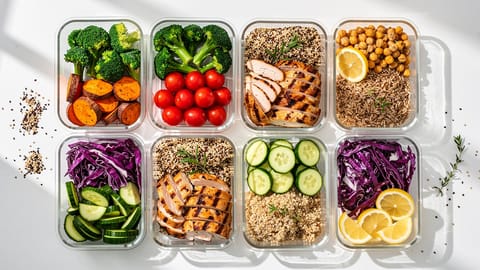
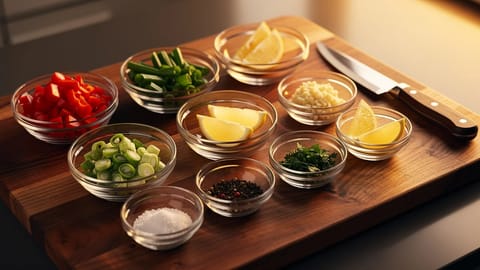
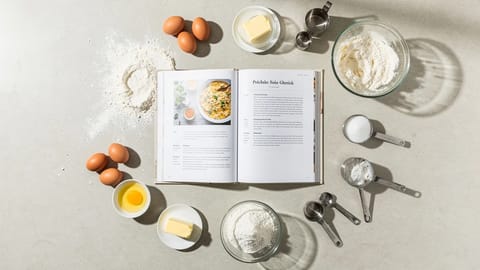
Mise en place is the French culinary term for "everything in its place": preparing and organizing every ingredient and tool before cooking begins, so the cook can focus on heat and timing instead of hunting for things.
Mise en place (pronounced "MEEZ ahn plahs") is a French culinary term that means "everything in its place." In cooking, mise en place is the practice of preparing and organizing every ingredient, tool, and piece of equipment before you turn on the heat.
This entry covers the term itself. For a practical system to set up mise en place at home, including when staged prep works better, see what mise en place looks like in a home kitchen.
What does mise en place mean?
Literally, mise en place means "putting in place" or "set-up." Mise is the noun form of the verb mettre (to put), and en place means "in place." The usual English gloss, "everything in its place," captures how cooks use it.
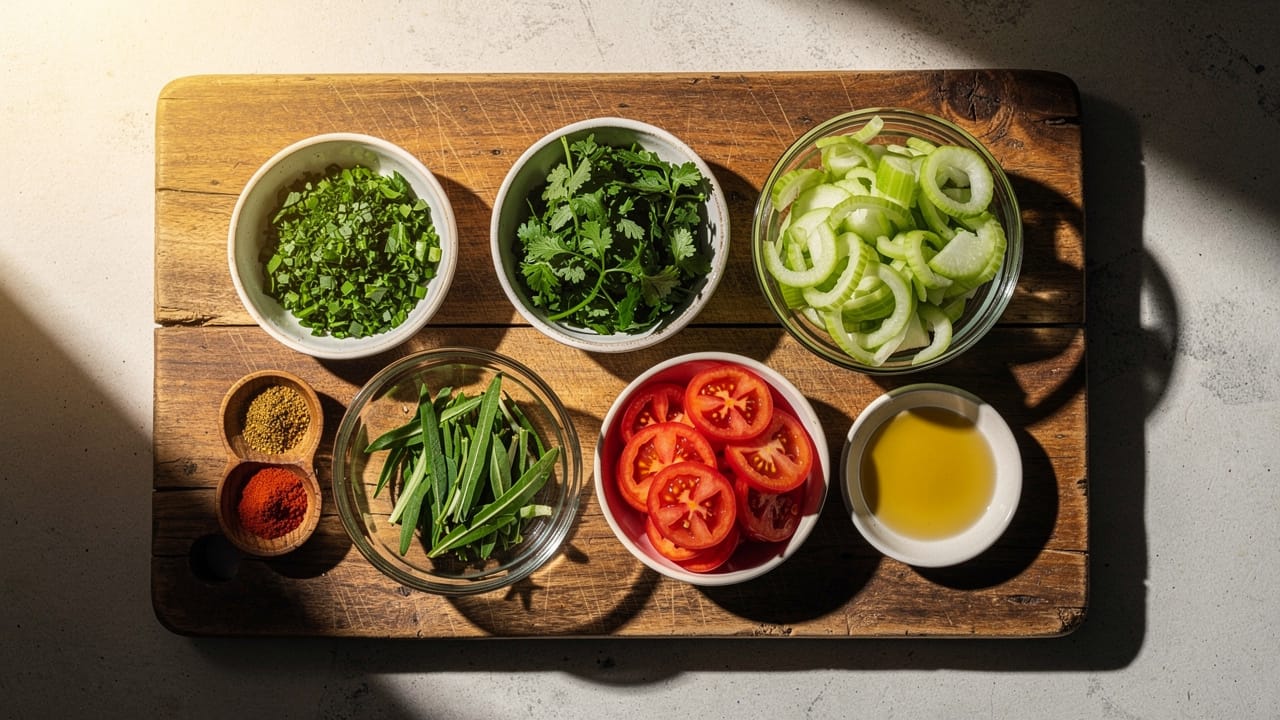
In a kitchen the phrase does double duty. As a noun, it names the prepared ingredients themselves: a cook who "checks their mise" is looking over the diced onions, measured spices, and portioned proteins lined up at the station. As a discipline, it means the habit of reading the recipe, measuring, and laying everything out before the first pan goes on the burner.
French restaurants also use the term in the dining room. Setting tables, folding napkins, and stocking the service station before guests arrive is the mise en place de salle, the front-of-house version of the same idea.
How do you pronounce mise en place?
"MEEZ ahn plahs," or /miz ɑ̃ plas/ in the International Phonetic Alphabet. The "s" in mise is voiced, like a "z." En is a nasal "ahn," with no hard "n" at the end. Place ends in a short "ah" vowel, so it rhymes with "boss" rather than with the English word "place." Give each syllable roughly even weight, as French does.
Where does the term come from?
The practice took shape in 19th-century French professional kitchens. Auguste Escoffier's brigade system gave each cook a station and a defined set of responsibilities, and line cooks handling dozens of orders an hour needed a way to work without fumbling. The answer was total preparation before service began. That discipline carries into home kitchens just as well.
Why is mise en place important?
Mise en place is not about being neat for the sake of it. It solves real problems that cause meals to go wrong.
You catch mistakes early. Reading the recipe and pulling every ingredient exposes gaps before they become emergencies. No more discovering halfway through a stir-fry that you're out of soy sauce.
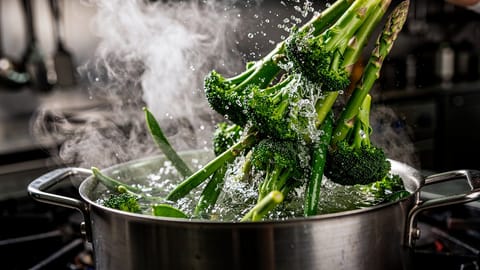
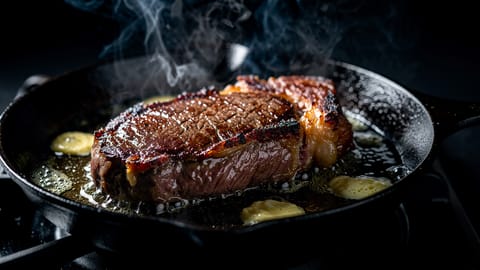
Timing-sensitive techniques work. Searing meat, deglazing a pan, or blanching vegetables all depend on having everything within arm's reach when the moment comes. The Maillard reaction that builds deep browning happens in a narrow temperature window. Scrambling for an ingredient during that window means losing control of the heat.
Total cook time drops. It feels slower to prep everything first, but cooking becomes pure assembly once you start. Skipping the prep step for a "quick" weeknight meal usually costs more time overall, because you keep pausing mid-cook to grab things. No pauses to mince garlic while onions burn, no hunting for the right measuring spoon.
You waste less food. Pre-measuring means you use exactly what the recipe calls for. No half-chopped onion abandoned on the cutting board because time ran out.
Mise en place examples
What mise en place looks like depends on the complexity of the dish:
| Dish | Mise en place |
|---|---|
| Weeknight pasta | Boil water, measure pasta, mince garlic, grate cheese, open canned tomatoes |
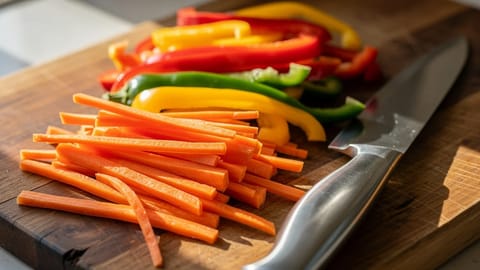
| Stir-fry | Slice all vegetables, mix sauce in a bowl, portion protein, have oil and aromatics ready |
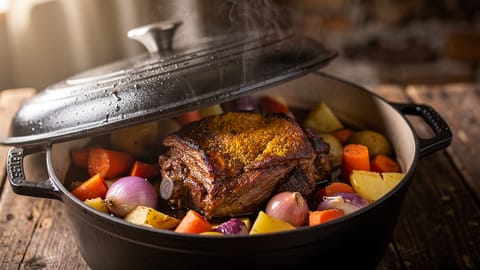
| Braised short ribs | Season and temper meat, dice mirepoix, measure wine and stock, prep herb bundle |
| Baking a cake | Measure dry and wet ingredients separately, grease pan, preheat oven, set out stand mixer |
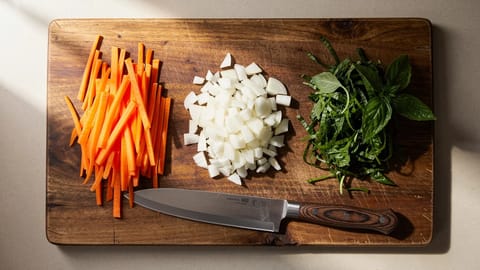
In every case, the pattern is the same: prep everything, then cook. The scale changes, the principle doesn't. Good knife cuts help here too. Uniform pieces cook evenly, so your chiffonade, julienne, or brunoise serves a purpose beyond looking nice.
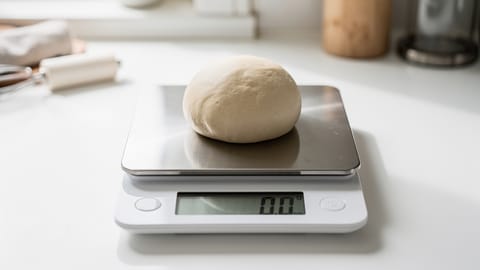
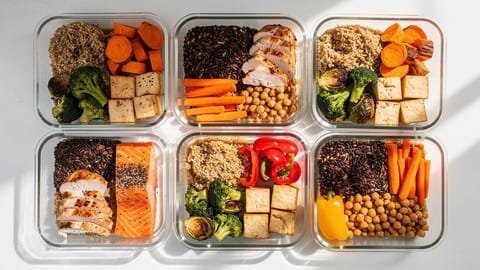
The routine itself is short: read the whole recipe, gather the ingredients, wash and cut and measure, set out the tools, then arrange everything in order of use. A kitchen scale adds precision, especially for baking, and an instant-read thermometer removes the guesswork on proteins. For a step-by-step home method with checklists, see the guide to what mise en place is and how to build the habit.
Mise en place in professional kitchens
Restaurant kitchens take this further. Morning prep shifts exist for one reason: building mise en place before service. Cooks arrive hours early to break down proteins, build stocks, make sauces, and portion ingredients. During service, "cooking" is mostly assembly, applying heat to components that were prepped hours ago.
Each station keeps ingredients in the same position every shift. A sauté cook grabs the salt without looking because it's always in the same spot. That muscle memory is what makes a packed kitchen look effortless from the dining room.
When supplies run low mid-service, cooks restock immediately. They never wait until they run out. This is called "refiring your mise."
What are common mise en place mistakes?
The single biggest improvement for most home cooks is the recipe read-through. Two minutes of reading the whole thing front to back saves twenty minutes of scrambling later. It sounds obvious, but the common habit is to jump straight to step one.
Mise en place beyond cooking
The concept has spread well beyond the kitchen. Productivity writers and surgeons both use variations of mise en place to reduce errors and speed up execution. The core idea is universal: gather everything you need, arrange it logically, then begin the work. Whether you're coding, painting, or prepping dinner, the principle holds.
Mise en place in Fond
Fond hasn't launched yet. This is how it will work at launch. Join the waitlist for early access.
Fond keeps the full ingredient list attached to the recipe you're cooking, and recipe scaling recalculates every quantity when you change the number of servings. Your mise en place matches the batch you're making, whether you're cooking for two or ten, and Cook mode keeps the steps on screen while you work through them.