 Bastien
Kitchen Scale
A kitchen scale weighs ingredients in grams instead of guessing with cups. Tare zeroes the bowl, so you can weigh a whole recipe into one container.
A kitchen scale is a small digital (or spring) balance that tells you how much an ingredient weighs, usually in grams. It replaces cups and spoons with a number that does not change with how you scoop, pack, or level. King Arthur Baking standardizes a cup of all-purpose flour at 120 g, but a cup scooped straight from the bag and pressed down can come in well above that, and that gap is the difference between a tender cake and a dense one. 120 g on a scale is 120 g every time.
If "scale" in a recipe means multiplying it up or down, you want recipe scaling instead. This entry is about the tool.
How do you use a kitchen scale?
Most digital kitchen scales use a strain-gauge sensor under the platform: the load bends a small metal beam a tiny amount, and the electronics convert that bend into a weight. In use, there are only three things to learn: the tare button, the unit button, and where to put the bowl.
What the tare function does
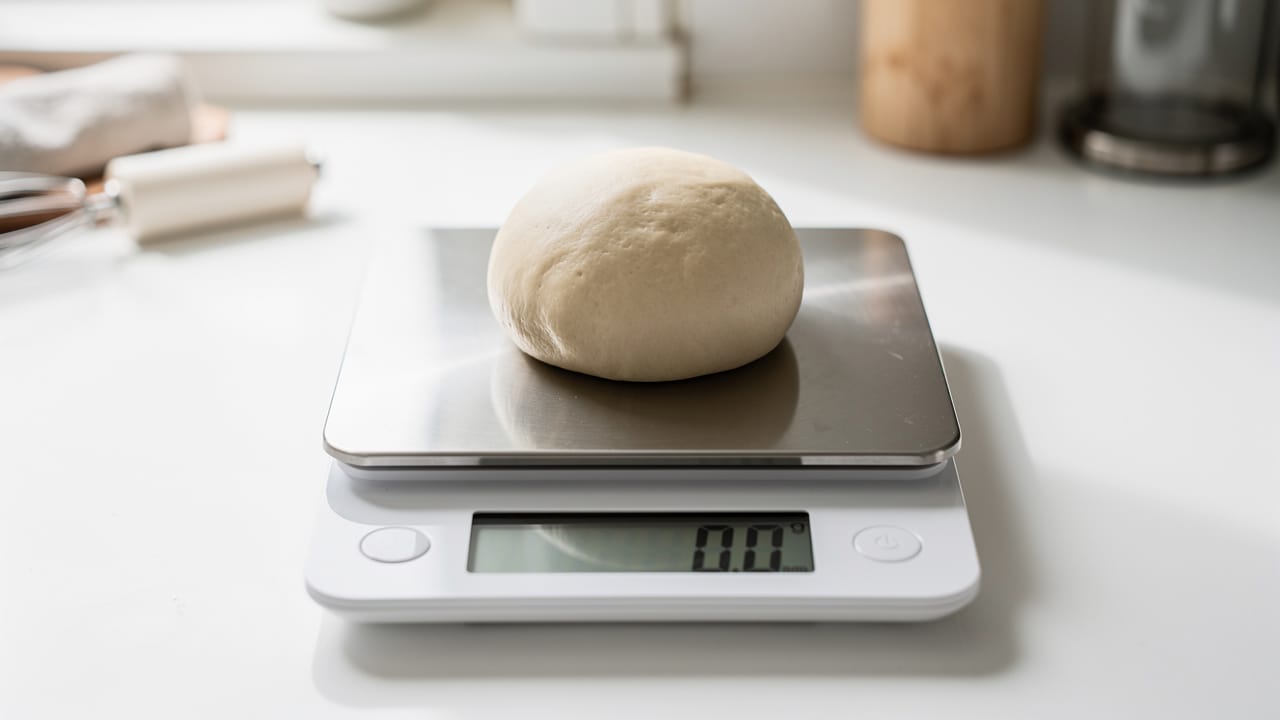
Tare is the most important button on the scale. It resets the display to zero with whatever is already on the platform, so the container's weight is ignored. The word comes from commerce: the tare weight is the weight of an empty container, subtracted from the gross weight to get the net weight of the goods.
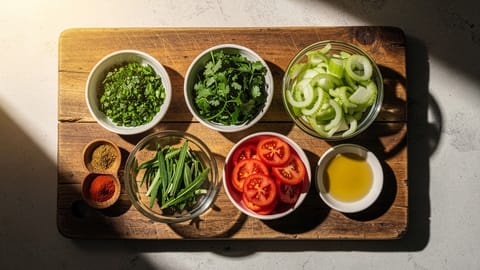
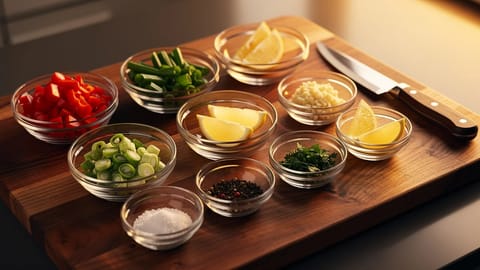
That is a whole recipe measured into one bowl with no measuring cups to wash. With your mise en place laid out, it is also faster than scooping.
Reading the display: grams, ounces, milliliters
The unit button cycles through grams, ounces, pounds, and sometimes milliliters. Grams are the standard for cooking and baking: they are precise, universal, and easy to multiply. Use ounces only when an older American recipe gives them. The "ml" setting on most scales is just grams relabeled, which is only right for water and thin liquids (1 ml of water weighs 1 g); oil, honey, and milk do not weigh 1 g per ml.
Set the bowl in the middle of the platform, keep the scale on a flat surface, and give it a second to settle before you read. If the display drifts or reads a few grams with nothing on it, press tare or power-cycle it.
What should you look for when buying a kitchen scale?
The most annoying flaw in cheap scales is a short auto-off. You step away to crack eggs, the scale shuts down, and your tare reference is gone. Check the auto-off delay in the product description before anything else.
When does weighing matter most?
Baking
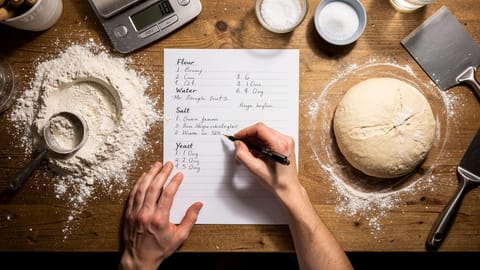
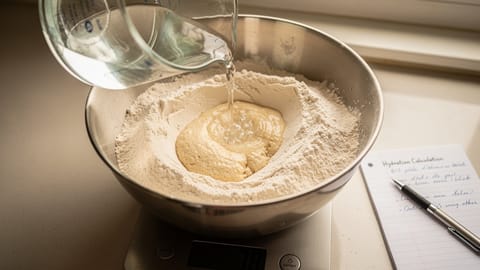
Baking is chemistry. The ratios of flour to liquid to fat to leavener decide texture, rise, and structure. Professional formulas use baker's percentages, which express every ingredient as a percentage of flour weight, and that system only exists on a scale. Bread is the most sensitive case: dough hydration is a weight ratio, and a 65% dough and a 75% dough handle completely differently.
Coffee
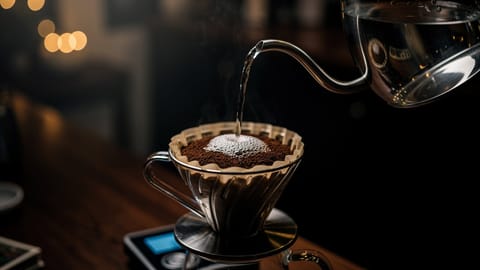
Specialty coffee uses brew ratios, typically 1:15 to 1:17 coffee to water by weight. A 0.1 g scale lets you dose beans and pour water precisely enough to repeat a cup you liked.
Scaling a recipe
Halving 250 g is 125 g. Halving "1 and 3/4 cups" is mental math and rounding. Weight makes recipe scaling trivial.
Meal prep and portions
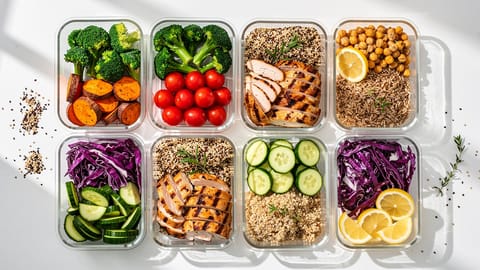
Weighing portions during meal prep gives consistent serving sizes, whether you are tracking intake or just want five identical lunches.
Salt
Salt is the clearest case for weight in savory cooking. A teaspoon of table salt weighs about 6 g, while a teaspoon of kosher salt weighs far less because the flakes trap air. Weighing removes the crystal-size variable.
Common weight references
| Ingredient | 1 US cup (approx.) | Why it varies |
|---|---|---|
| All-purpose flour | 120–125 g | Scooping vs. spooning, humidity |
| Granulated sugar | 200 g | Fairly consistent (uniform crystals) |
| Brown sugar | 213–220 g | Packing density |
| Butter | 227 g (2 sticks) | Consistent, sold by weight |
| Water | 237 g | Consistent, 1 ml = 1 g |
| Vegetable oil | 218 g | Lighter than water (~0.92 g per ml) |
| Rolled oats | 90 g | Flake size differs |
| Cocoa powder | 85 g | Sifted vs. packed |
| Honey | 340 g | Dense; never assume 1 ml = 1 g |
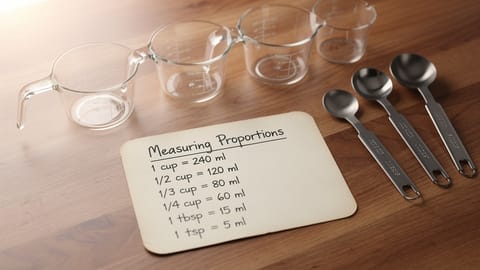
Flour, sugar, brown sugar, butter, and water values are King Arthur Baking's chart figures; the rest are the densities behind Fond's unit converter, which uses a 240 ml cup. A US cup is legally 240 ml (236.6 ml by the older definition), while a metric cup is 250 ml, which is one more reason recipes travel better in grams.
Kitchen scale in Fond
Fond hasn't launched yet. This is how it will work at launch. Join the waitlist for early access.
Fond has a measurement-unit setting (metric or imperial) that applies to recipe ingredients, and the servings control on any recipe rescales the quantities with it. Weigh what the ingredient list says, and if a recipe only gives cups, the unit converter turns them into grams for common ingredients.