Mandoline
A precision slicing tool with an adjustable blade that creates uniform thin cuts for vegetables, fruits, and more.
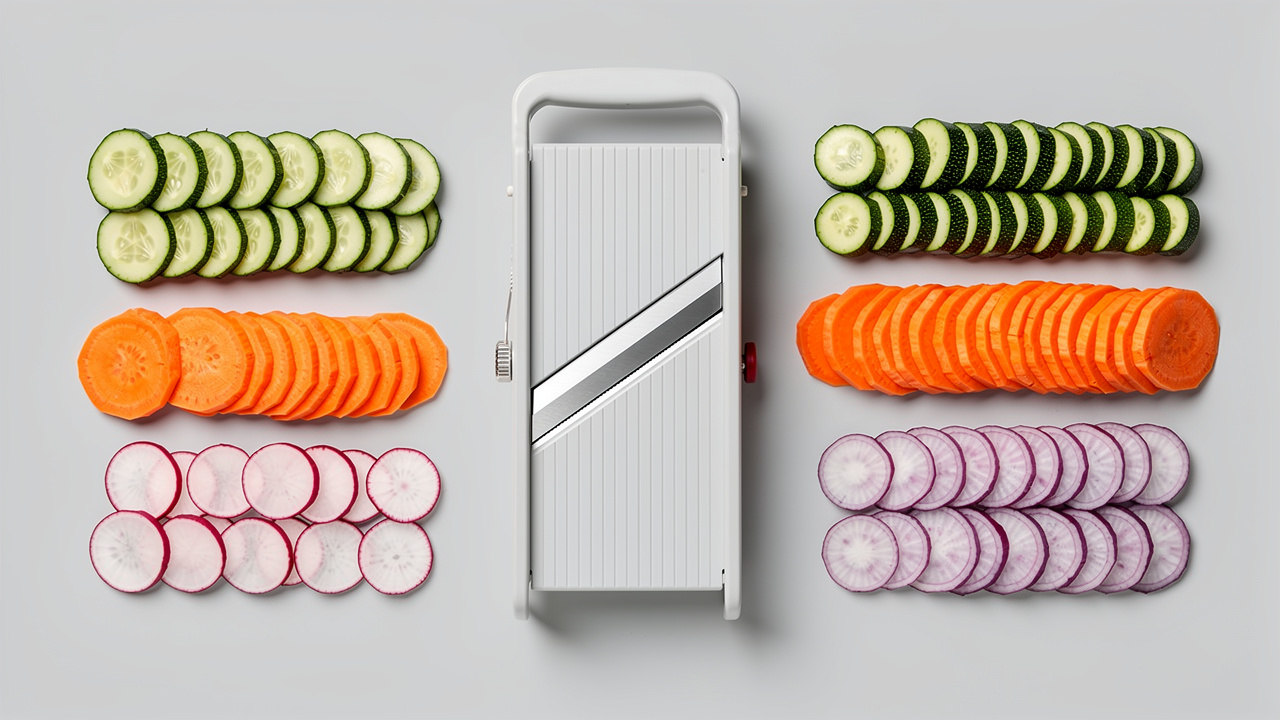
A mandoline is a slicing tool that produces consistently thin, uniform cuts that are nearly impossible to achieve by hand. It's the secret behind paper-thin potato chips, perfect gratins, and restaurant-quality vegetable presentations.
Why use a mandoline
- Uniform thickness — every slice identical for even cooking
- Speed — slice a potato in seconds
- Thin cuts impossible by knife — 1mm or thinner
- Professional presentation — elevates home cooking
- Consistent results — no skill variance
Types of mandolines
| Type | Pros | Cons | Best for |
|---|---|---|---|
| French/stainless steel | Durable, precise | Expensive, heavy | Serious cooks |
| Japanese | Sharp, lightweight | Requires care | Everyday use |
| Plastic handheld | Affordable, compact | Less durable | Beginners |
Common cuts
- Straight slice — chips, gratins, pickles
- Julienne — matchstick cuts for salads, stir-fries
- Waffle/crinkle — decorative chips, better sauce adhesion
- Batonnet — thicker sticks for fries
Essential safety rules
⚠️ Mandolines are among the most dangerous kitchen tools. Respect them.
- Always use the hand guard — no exceptions
- Use a cut-resistant glove — cheap insurance
- Keep the blade sharp — dull blades require pressure, causing slips
- Stay focused — injuries happen at the end when you rush
- Stop before the end — use remaining piece for stock or snacking
- Never reach over the blade — even when cleaning
Best foods for mandoline
- Potatoes (chips, gratins, scalloped)
- Cucumbers (pickles, salads)
- Onions (rings, thin slices)
- Fennel (salads, carpaccio)
- Cabbage (coleslaw, sauerkraut)
- Apples and pears (tarts, salads)
- Radishes (garnishes)
Mandoline care
- Hand wash only — never dishwasher
- Dry immediately to prevent rust
- Store with blade guard
- Sharpen or replace blades when dull
Related Fond featureRecipe instructions