Mortar and Pestle
A traditional grinding tool consisting of a bowl (mortar) and club-shaped tool (pestle) used to crush, grind, and blend spices, herbs, and pastes.
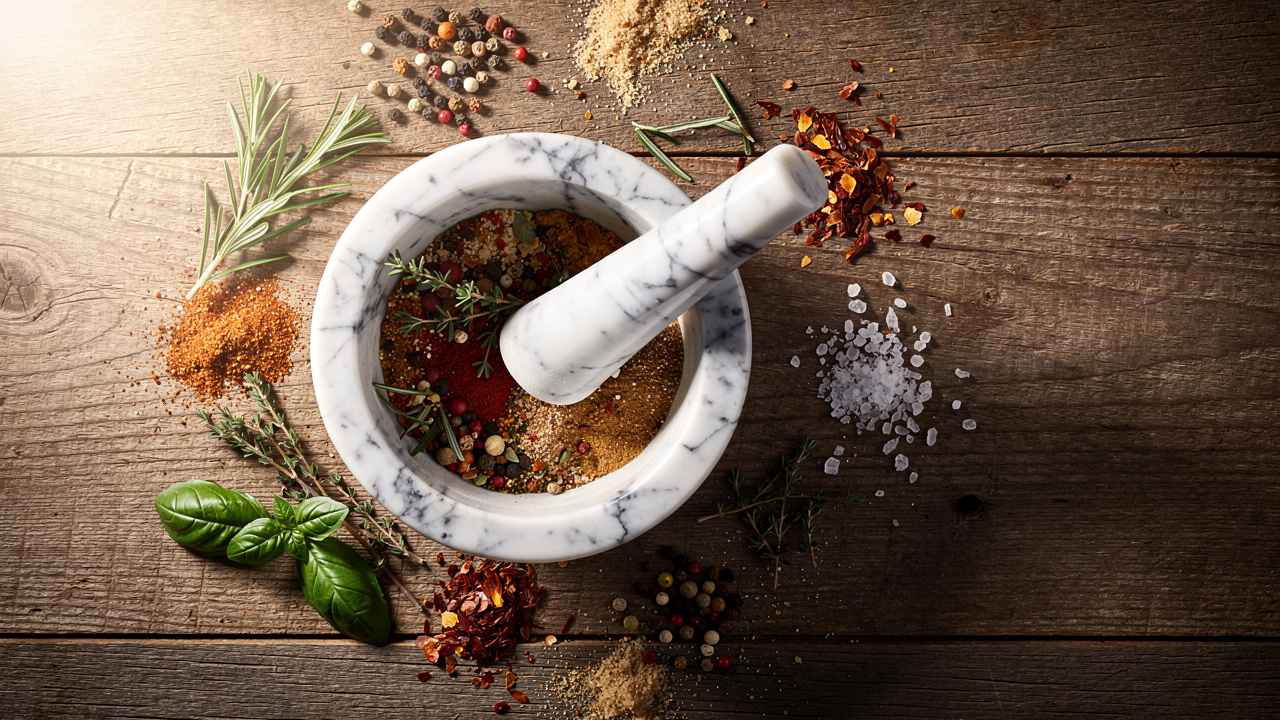
The mortar and pestle is humanity's oldest food processing tool, used for thousands of years across every culture. It works by crushing and grinding ingredients through direct pressure and friction, releasing oils and flavors that blades simply cut past.
Why mortar and pestle vs. machines
- Superior flavor release — crushing ruptures cell walls, releasing aromatic oils
- Texture control — from coarse to silky smooth
- No heat buildup — preserves volatile aromatics (unlike blade processors)
- Traditional authenticity — essential for Thai curry pastes, pesto, guacamole
- Quiet and reliable — no electricity, no breakdowns
- Therapeutic — meditative, satisfying work
Types of mortars
| Material | Best for | Pros | Cons |
|---|---|---|---|
| Granite | General purpose, pastes | Heavy, textured surface | Heavy |
| Marble | Delicate grinding | Beautiful, smooth | Can stain |
| Ceramic/Porcelain | Dry spices | Easy to clean | Can chip |
| Wood | Dry ingredients | Lightweight | Absorbs flavors/oils |
| Molcajete (volcanic stone) | Mexican salsas | Traditional, porous | Requires seasoning |
| Suribachi (Japanese ceramic) | Sesame, small seeds | Ridged interior | Specialized |
Classic preparations
Pesto Genovese
The mortar produces superior pesto because it bruises rather than chops basil, releasing oils without oxidation.
Thai curry paste
Authentic pastes require pounding — the texture and flavor integration can't be replicated by a food processor.
Guacamole
A molcajete creates the ideal chunky-smooth texture and allows flavors to meld.
Spice blends
Toasted whole spices, freshly ground, have incomparably more aroma than pre-ground.
Technique tips
- Start with hardest ingredients — begin with tough items like peppercorns or seeds
- Work in batches — don't overfill; grind in stages
- Pound, don't stir — use downward force, then twist to grind
- Add salt early — it acts as an abrasive to help break things down
- Add liquids last — only after solids are properly ground
Sizing guide
- Small (1-2 cups) — spice grinding, small quantities
- Medium (3-4 cups) — everyday use, pestos, small pastes
- Large (6+ cups) — curry pastes, guacamole for a crowd