 Bastien
What is umami? The savory fifth taste, explained
Umami is the savory basic taste produced by free glutamate, plus two nucleotides that amplify it. It coats the tongue, lingers for minutes, and keeps saliva flowing.
Umami is the savory basic taste produced by free glutamate, an amino acid, together with two nucleotides that amplify it: inosinate from meat and fish, and guanylate from dried mushrooms. It registers as depth and body rather than as a flavor you can point at, and it belongs with sweet, sour, salty and bitter among the tastes the tongue detects directly.
For a ranked list of umami-rich foods with their glutamate figures, and how to cook with them, see umami foods and how to use them.
The word is Japanese, from umai (delicious) and mi (taste), and you say it oo-MAH-mee. Kikunae Ikeda, a chemistry professor at Tokyo Imperial University, named the taste in 1908 after identifying glutamate as the compound behind kombu dashi. He published in Japanese the following year. English readers had to wait until 2002, when Chemical Senses ran a translation under the title "New seasonings".
What does umami taste like?
Umami spreads across the tongue and coats it, lingers for several minutes, and triggers sustained salivation. Persistence is the giveaway. Salt and sugar land hard and clear out; umami is still there several bites later, which is why a dish carrying it feels finished rather than merely seasoned.
It doesn't taste fishy, which is the guess people land on most often. Anchovies and fish sauce get recommended so relentlessly as umami shortcuts that the taste inherits their reputation. A teaspoon of fish sauce in a beef stew reads as more beef.
There's no umami zone on the tongue either. The receptors appear in taste buds across every region of it, and the tongue map that hands each taste its own patch is a common misconception.
What you're noticing:
- A savory quality that fills the whole mouth instead of one spot
- More saliva than the mouthful seems to warrant
- An aftertaste that holds for a minute or two
- A sense that the dish is complete
Where does the umami taste come from?
Three compounds do the work, and they arrive from different places.
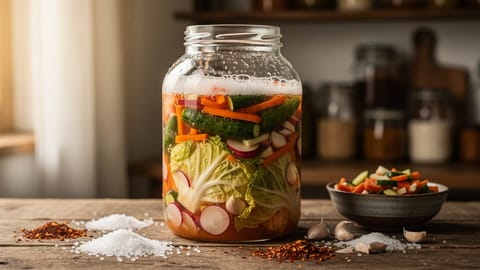
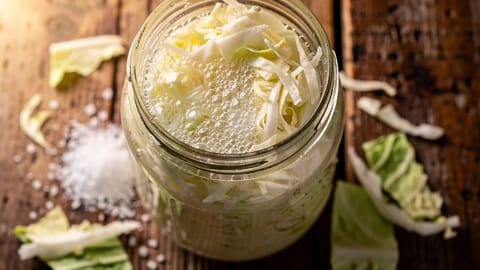
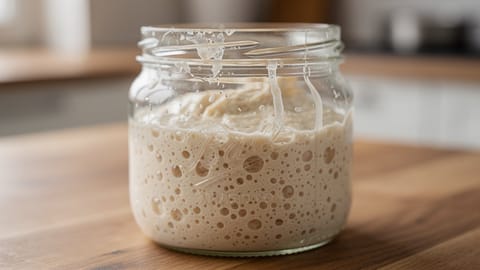
Glutamate sits at the center. Only free glutamate counts: locked inside a protein chain it tastes of nothing, and it takes cooking, aging, drying or fermenting to cut those chains and release it. That is why aged cheese, cured meat, lacto-fermented vegetables and a mature sourdough starter all taste more savory than the raw ingredients they came from. Receptor evidence caught up much later: a taste receptor built from T1R1 and T1R3 was shown to respond to L-glutamate in 2002.
Inosinate (IMP) came second. Shintaro Kodama, working under Ikeda, found it in dried bonito flakes in 1913. It is the nucleotide half of dashi and the reason cooked chicken, pork and tuna read as deeply savory.
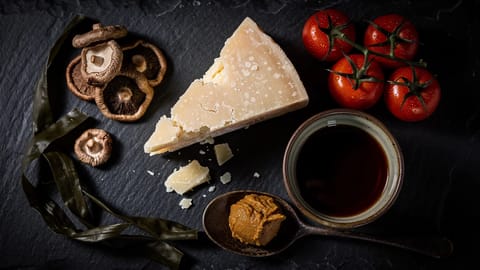
Guanylate (GMP) turned up in shiitake, and Akira Kuninaka identified it in 1957 along with the effect that matters most in a kitchen: glutamate plus a nucleotide tastes stronger than the two added together. The Umami Information Center puts the peak at 7 to 8 times the intensity of either compound on its own, at a glutamate-to-inosinate ratio of about 1:1. Kombu with bonito in dashi and Parmesan over tomato sauce are the same trick in two cuisines.
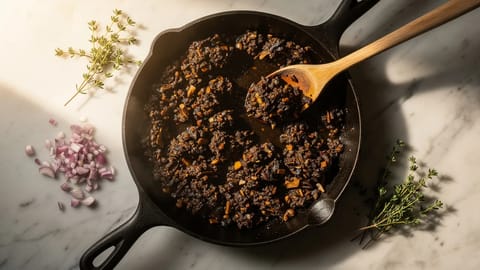
A finely chopped duxelles is one of the few preparations that brings both halves in a single spoonful, since dried mushrooms carry guanylate and free glutamate together.
Which foods have the most umami?
Figures below come from the Umami Information Center's ingredient database, in milligrams per 100 g.
| Ingredient | Free glutamate (mg/100 g) | Notes |
|---|---|---|
| Kombu (rausu) | 2,290-3,380 | The seaweed Ikeda was studying |
| Parmigiano Reggiano | 1,200-1,680 | Highest of the everyday Western ingredients |
| Soy sauce | 400-1,700 | The range tracks brand and fermentation time |
| Dried shiitake | 1,060 | Also about 150 mg guanylate, so it brings both halves of the synergy |
| Fish sauce (nam pla) | 950 | Disappears into anything braised or simmered |
| Oyster sauce | 900 | Common in Chinese stir-fries |
| Anchovy | 630 | Melts into sauces and dressings |
| Miso | 200-700 | Red (aka) sits near the top of that range, white (shiro) near the bottom |
| Tomato | 150-250 | Climbs as the fruit ripens; paste and sun-dried go higher still |
| Cheddar | 180 | Aging is what moves the number |
| Katsuobushi (dried bonito) | 30-40 | Barely any glutamate. Its 470-700 mg of inosinate is what pairs with kombu |
That last row is worth a second look, because katsuobushi has a reputation as an umami powerhouse and its glutamate number is close to nothing. It earns its place through inosinate instead, which is exactly why dashi wants both ingredients and not a double dose of either.
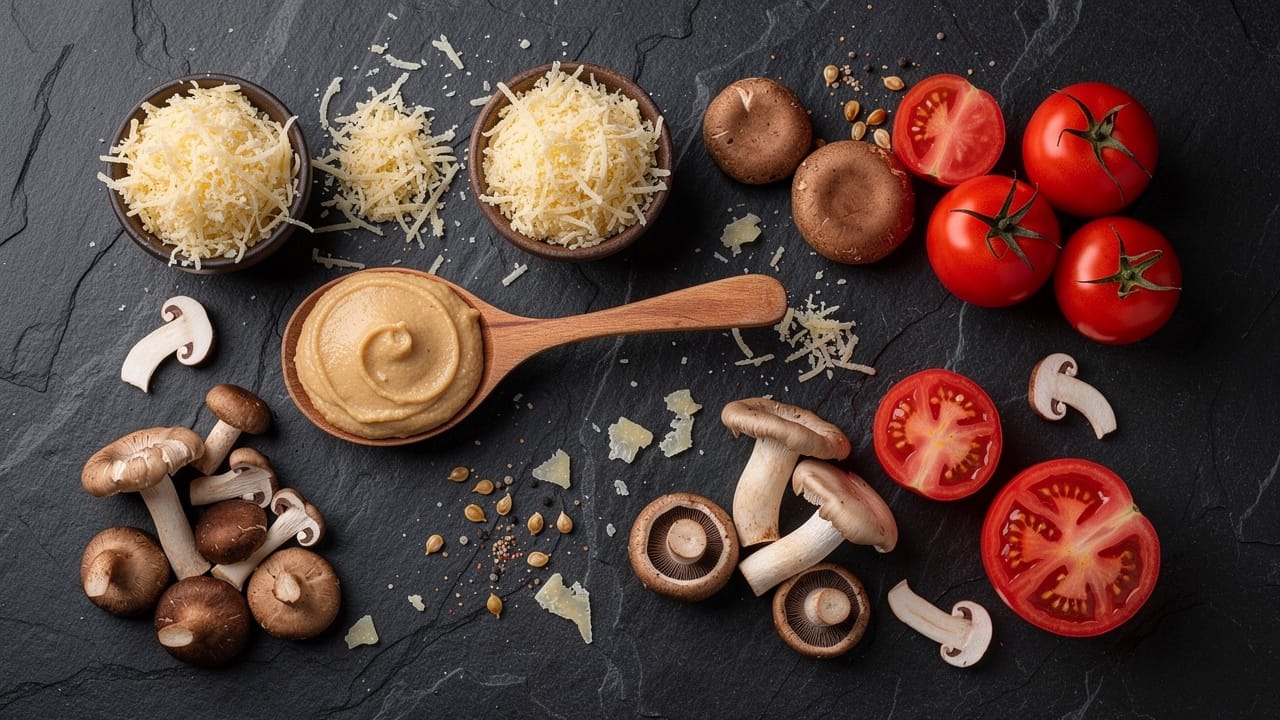
Cooks also reach for tomato paste, mushroom powder, nutritional yeast, aged balsamic, marmite and black garlic when a dish needs savory weight in a hurry.
How do you add umami to a dish?
Build a glutamate base, then add something with a nucleotide in it. Tomato paste, miso or soy sauce at the start of a sauce, soup or braise gives you the first half; meat, fish or dried mushrooms give you the second. A tablespoon of tomato paste seared in oil before the liquid goes in does more for a sauce than most of what happens afterwards.
Treat it as seasoning rather than as a flavor. A teaspoon of fish sauce in a beef stew won't announce itself; neither will a splash of soy in tomato soup. Both make the dish taste more like itself.
Long cooking helps for the same reason aging does. Braising, simmering and reducing all break proteins down and concentrate what's released, which is why a long stock has more body than a fast one.
Umami, savory and salty
These get used interchangeably and they sit at different levels. Savory is a broad flavor category covering roughly everything that isn't sweet, while salty and umami are both basic tastes with their own receptors, triggered by sodium and by glutamate respectively. Umami contributes to savory flavor. It isn't a synonym for it.
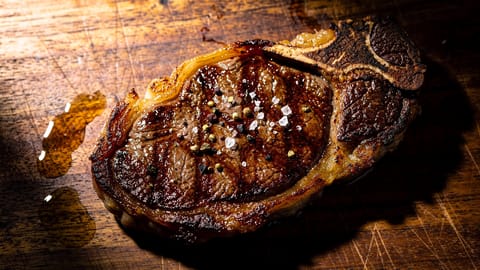
A seared steak tastes savory because of umami, salt, fat and browning together. Take the salt out and the umami is still there, only harder to notice, which is roughly what happens when you under-season a mushroom soup.
Is umami the same as MSG?
No. Umami is a taste; MSG is one ingredient that delivers it. Monosodium glutamate is the sodium salt of glutamic acid, and glutamic acid is an amino acid that occurs naturally in free form in tomatoes, soy sauce and certain cheeses. The glutamate ion your receptors see is the same either way.
On the regulatory side, EFSA re-evaluated glutamic acid and glutamates used as food additives (E 620-625) in 2017 and set a group acceptable daily intake of 30 mg per kg of body weight per day, then recommended reviewing the maximum permitted levels for those additives. That ADI covers glutamates added to food, not the glutamate that shows up on its own in Parmesan or a ripe tomato. The longer argument about MSG, including where the headache story came from, is in the umami article.
How does the Maillard reaction create umami?
The Maillard reaction, the browning that happens when proteins and sugars meet heat above roughly 140°C (280°F), breaks proteins apart and leaves free amino acids behind along with hundreds of new aroma compounds. A deeply seared steak, roasted vegetables and toasted bread all taste more savory than their raw versions for that reason. The browned crust is not only texture.
Umami in Fond
Fond hasn't launched yet. This is how it will work at launch. Join the waitlist for early access.
Recipes in Fond carry a flavor-profile field, and umami is one of the values you can filter your library by, alongside savory, sweet, spicy, tangy, bitter, fresh, rich and smoky. It's a quick way to pull up the deep, savory end of what you've saved, or to notice that a week of planned dinners is leaning hard in one direction.
Sources
- What is Umami — Umami Information Center
- Umami-rich foods: glutamate, inosinate and guanylate content — Umami Information Center
- New seasonings — Kikunae Ikeda, Chemical Senses (English translation of the 1909 paper)
- An amino-acid taste receptor — Nelson et al., Nature
- Umami — Wikipedia
- EFSA reviews the safety of glutamates added to food — European Food Safety Authority