Olive Oil
A versatile cooking fat pressed from olives, available in grades from extra virgin (best for finishing) to refined (best for high-heat cooking).
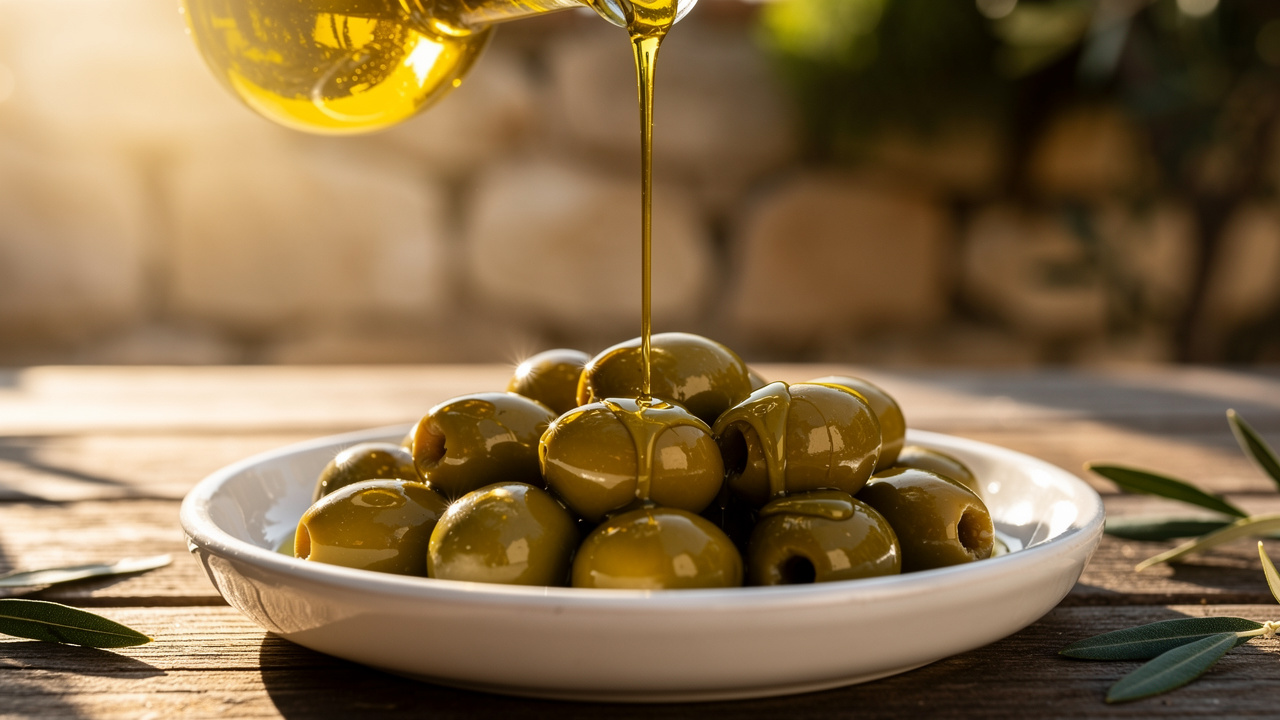
Olive oil is one of the most important ingredients in cooking, but understanding the different grades and when to use each can be confusing. Here's what you need to know.
Olive oil grades explained
Extra Virgin Olive Oil (EVOO)
- How it's made: First cold press, no chemicals or heat
- Smoke point: 375-400°F / 190-205°C
- Flavor: Fruity, peppery, grassy — varies by origin
- Best for: Finishing, dressings, dipping, low-medium heat cooking
- Cost: Most expensive
Virgin Olive Oil
- How it's made: Cold pressed, slightly higher acidity than EVOO
- Smoke point: 390°F / 200°C
- Flavor: Milder than EVOO
- Best for: Everyday cooking, sautéing
Pure/Regular Olive Oil
- How it's made: Blend of refined and virgin oils
- Smoke point: 465°F / 240°C
- Flavor: Neutral
- Best for: High-heat cooking, frying
Light Olive Oil
- How it's made: Highly refined
- Smoke point: 470°F / 245°C
- Flavor: Very neutral (not lower in calories!)
- Best for: Baking, high-heat frying
Choosing olive oil
| If you're... | Use this |
|---|---|
| Making vinaigrette | Quality EVOO |
| Finishing pasta | Quality EVOO |
| Dipping bread | Quality EVOO |
| Sautéing vegetables | Regular or virgin |
| Pan-frying | Pure/regular |
| Deep frying | Light/refined |
| Baking | Light olive oil |
Storage tips
- Store in a dark, cool place (not near the stove)
- Use within 6-12 months of opening
- Dark bottles protect from light degradation
- Refrigeration is okay — cloudiness is normal and reversible
Reading labels
- "First cold press" — marketing term, all EVOO is cold pressed
- "Product of Italy" — may be bottled in Italy from other countries' olives
- Harvest date — fresher is better; look for recent dates
- DOP/PDO — protected designation, quality indicator
- Acidity level — lower is better for EVOO (under 0.8%)
Common myths
- "Never cook with EVOO" — False. It's fine for medium-heat cooking
- "Light means fewer calories" — False. It refers to flavor, not calories
- "Olive oil goes bad slowly" — It degrades faster than you think
Related Fond featureIngredient tracking