 Bastien
Deglazing
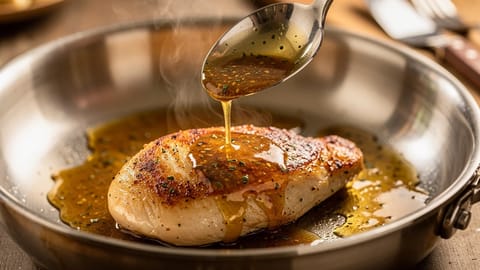
Deglazing is adding 120-240 ml of liquid (wine, stock, vinegar) to a hot pan after searing to dissolve the browned bits stuck to the bottom — the foundation of every pan sauce in under 5 minutes.
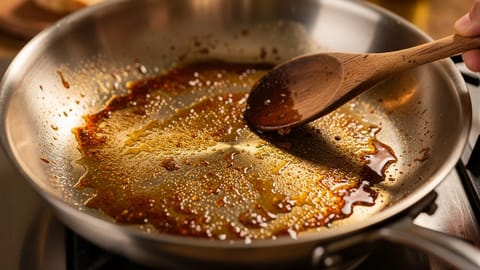
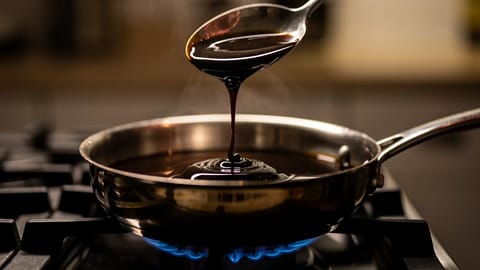
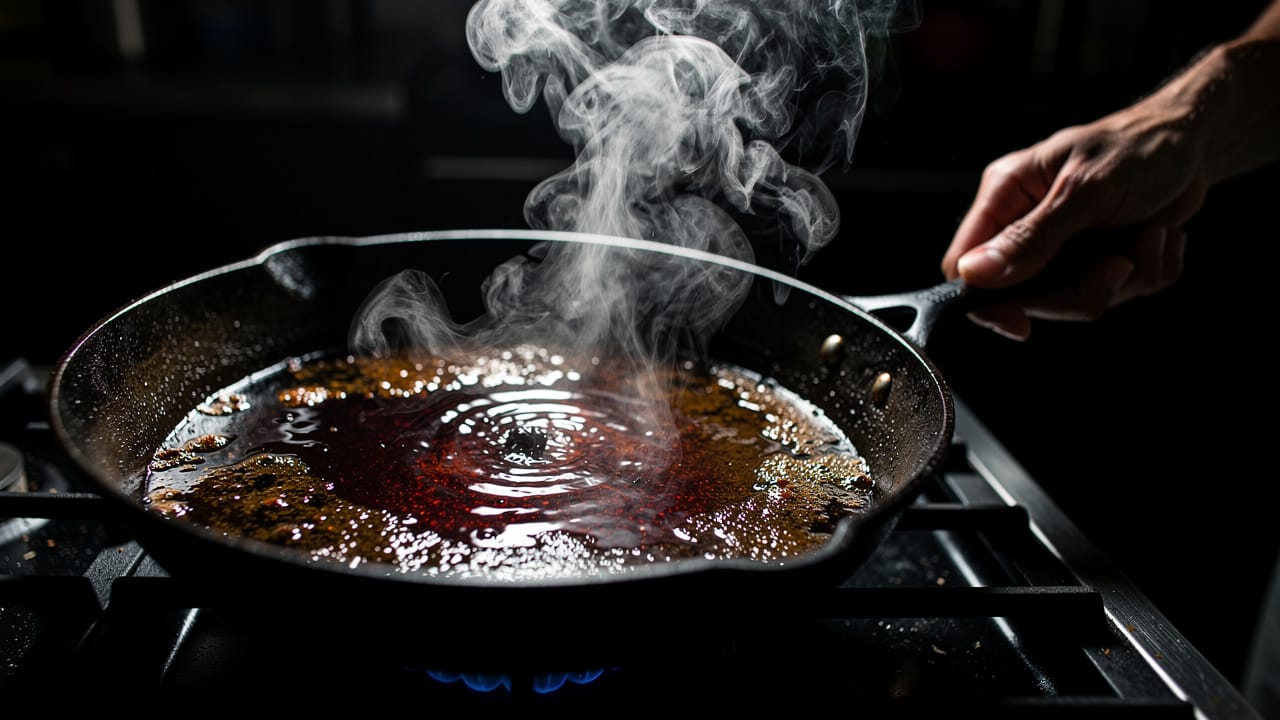
Deglazing is a cooking technique where liquid (wine, stock, vinegar, or water) is added to a hot pan after searing meat or vegetables to dissolve the browned bits stuck to the bottom — known as fond. Those browned bits become the foundation of pan sauces, gravies, and gastriques.
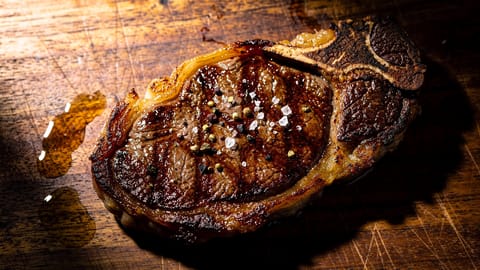
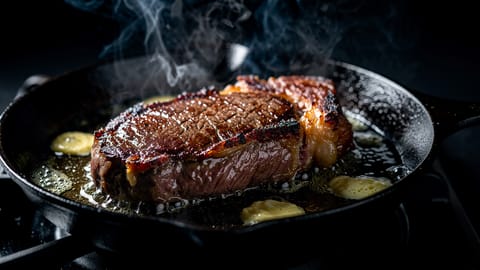
The browned layer has a name: fond. It is concentrated Maillard reaction product, flavor compounds built up during searing, roasting, or sauteing. Deglazing transforms it from stuck-on residue into the foundation of a sauce.
Most cooks first meet fond as a cleanup problem: seared pork chops leave dark patches on the stainless steel that look like a mess. A splash of white wine and 30 seconds of scraping turn that mess into a kitchen that smells like a bistro. That is the entire technique.
It is one of the simplest techniques that separates home cooking from restaurant cooking. A pan sauce made from deglazed fond takes 3-5 minutes and delivers flavor that no bottled sauce can match.
What is fond?
Fond (from the French word for "base" or "foundation") is the layer of browned proteins and caramelized sugars that sticks to the pan during high-heat cooking. It is not burnt food. It is a dense layer of flavor compounds created by the Maillard reaction.
You build fond every time you sear meat, brown onions, or roast vegetables in a pan. The better the sear, the better the fond, and the better the sauce.
How to deglaze a pan: step by step
The whole process takes about 2-3 minutes from the moment liquid hits the pan. You will hear aggressive sizzling when the liquid first goes in. That is normal. The steam helps lift the fond.
Finishing the sauce
After reducing, you have a basic deglazing sauce. To finish it:
- Swirl in cold butter (1-2 tablespoons, off heat). The butter emulsifies into the reduced liquid, creating a glossy, silky sauce. This is called monter au beurre.
- Add cream for a richer, thicker sauce. Simmer to reduce after adding.
- Season with salt, pepper, and a squeeze of acid (lemon juice or vinegar) to brighten.
- Strain (optional) for a smoother sauce. Most home pan sauces are fine unstrained.
How to deglaze a pan with wine
Wine is the classic deglazing liquid, and for good reason. The alcohol dissolves both water-soluble and fat-soluble flavor compounds from the fond, pulling out more complexity than water or stock alone. As the wine reduces, the acidity concentrates into a sharp, clean backbone for the sauce, and part of the alcohol evaporates along the way.
White wine works with chicken, fish, pork, and vegetables. It reduces to a bright, fruity acidity. Red wine pairs with beef, lamb, duck, and mushrooms, giving a deeper, more tannic result. Use a wine you would drink. Cooking wine from the grocery store is loaded with salt and off-flavors.
A reliable ratio: 120 ml wine reduced by half, then 240 ml stock reduced by half again. The wine layer gives acidity, the stock layer gives body.
How to deglaze a pan without wine
Not everyone cooks with alcohol. The good news: you can deglaze a pan without wine and still get a great sauce.
The most direct substitute. Stock rich in gelatin gives body and silkiness that mimics what wine + stock together achieve. Use the full 360 ml and reduce by two-thirds. Add a splash of vinegar or lemon juice at the end for the acidity that wine would have provided.
A tablespoon of apple cider vinegar or sherry vinegar deglazes aggressively. The acidity lifts fond fast. Follow immediately with stock, because vinegar alone reduces to something harsh. It works especially well with pork chops, producing a punchy, bright sauce.
Water works. It dissolves fond effectively, and the resulting sauce still captures all the Maillard flavor from the pan. It will be thinner and less complex, so finish with butter and a squeeze of lemon. For a quick weeknight dinner, water plus butter is honest and good.
Darker beers add malty depth to braised dishes and stews. Dry cider works like white wine for pork and chicken. Let either reduce fully before adding stock.
What are the best deglazing liquids?
| Liquid | Flavor profile | Best with | Notes |
|---|---|---|---|
| White wine | Bright, acidic, fruity | Chicken, fish, pork, vegetables | Most versatile; reduces to clean acidity |
| Red wine | Deep, tannic, rich | Beef, lamb, duck, mushrooms | Use a wine you would drink; cook off the alcohol |
| Stock | Savory, rich, full-bodied | Everything | Gelatin-rich stock makes the best sauces (natural emulsification) |
| Broth | Light, seasoned | Soups, light pan sauces | Less body than stock; good for quick weeknight sauces |
| Vinegar | Sharp, bright, punchy | Pork chops, chicken, liver | Use sparingly, a splash, not a pour |
| Beer | Malty, complex | Braised dishes, stews, pork | Darker beers add more depth |
| Citrus juice | Fresh, light, clean | Fish, chicken, vegetables | Best as a finishing touch rather than main deglazing liquid |
| Spirits (bourbon, brandy) | Warm, complex, sweet | Steak, pork, flambeed dishes | Careful: alcohol can ignite. Let it cook off. |
| Water | Neutral | Emergency or diet-conscious | Works, but lacks the flavor of wine or stock |
The pan sauce formula
This works for any protein you sear. The result: a restaurant-quality sauce from scratch, using only what is already in your pan.
Deglazing for braised dishes
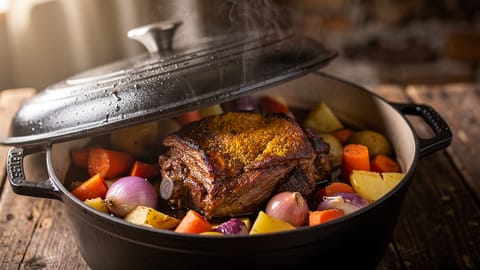
Deglazing is the first step in many braised dishes. After browning the meat:
The deglazed fond enriches the entire braising liquid, so every bite carries the flavor of the initial browning.
What are the most common deglazing mistakes?
You likely used a non-stick pan. Non-stick coatings prevent fond from developing. Switch to cast iron, carbon steel, or stainless steel for searing and deglazing.
The pan was not hot enough when you added the liquid. Keep the pan on medium-high heat. The liquid should sizzle aggressively on contact.
You did not reduce enough. Keep simmering until the sauce coats the back of a spoon. Reduce by at least half.
Too much fat was left in the pan before deglazing. Pour off excess fat first, leaving only about 1 tablespoon.
The fond was burnt (black instead of brown). If you see black spots, wipe out the pan with a paper towel before deglazing, or start with a clean pan. Burnt fond is not fixable.
You added butter while the pan was still on high heat. Remove the pan from the heat before swirling in cold butter so it emulsifies into a glossy sauce.
Tips for better deglazing
Deglazing in Fond
Fond hasn't launched yet. This is how it will work at launch. Join the waitlist for early access.
Fond's Cook mode walks a pan-sauce recipe step by step, with per-step timers you can run for the deglaze and the reduction. And the recipe's ingredients, deglazing liquid included, go straight onto your shopping list.