Essential Pizza Equipment: What You Actually Need
Stop wasting money on gadgets. A baking steel and a digital scale are the two upgrades that actually matter. Everything else is just a bonus.
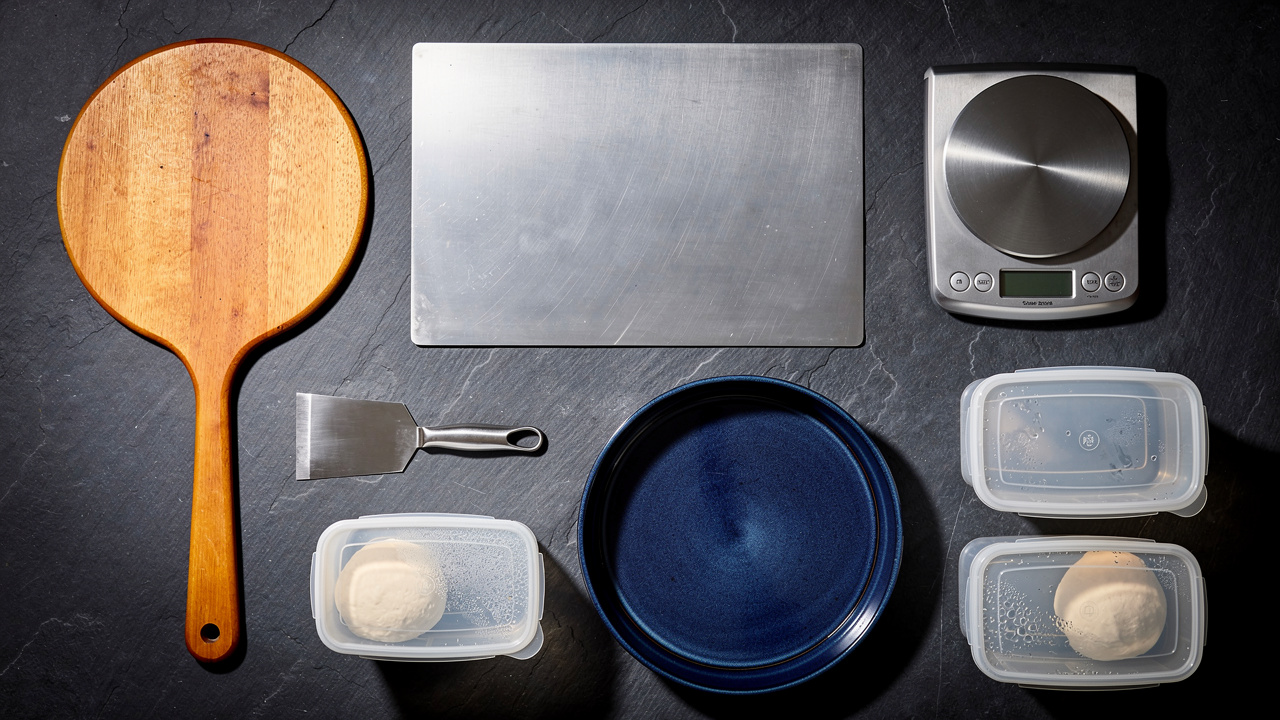
TL;DR: If you only buy two things, make them a baking steel and a digital scale. A steel transforms your home oven into a pizza machine, and a scale makes your dough consistent every single time.
Pizza stones vs. pizza steels: which one works?
The surface you bake on is the single most important variable in your kitchen. Both pizza stones and baking steels store heat, but they perform very differently.
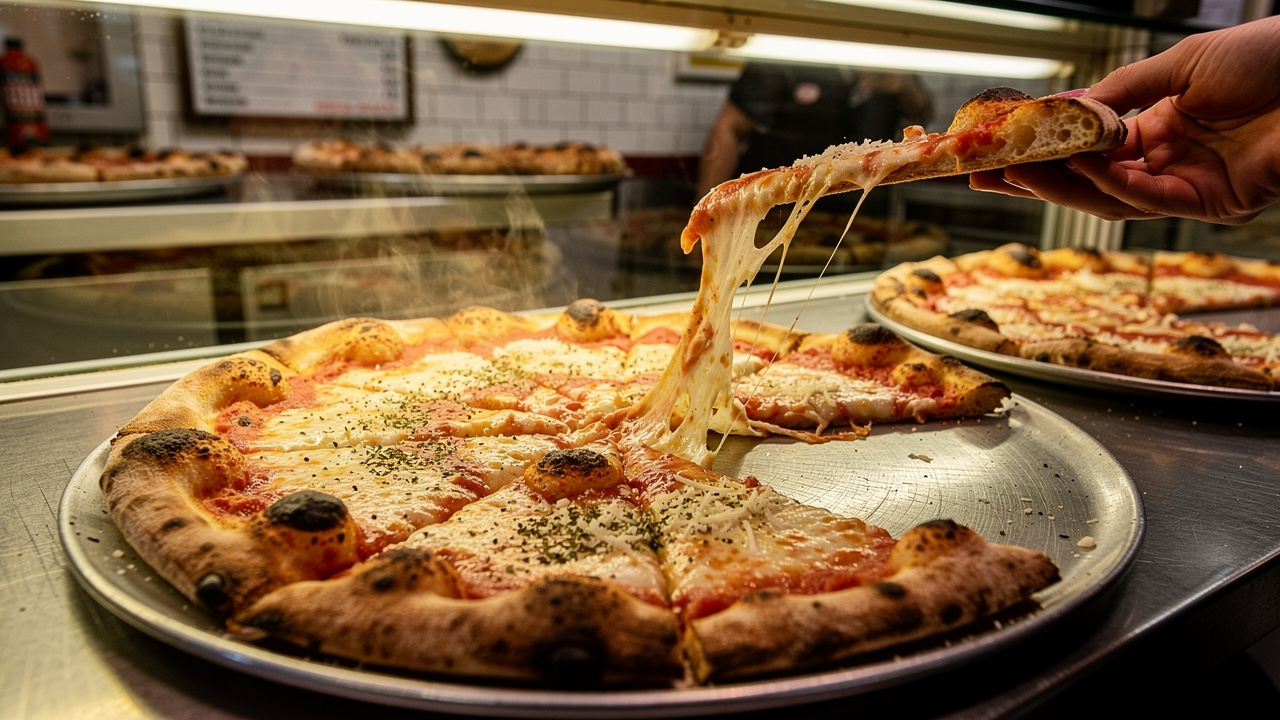
Baking steels are the better choice for home cooks. Steel conducts heat much faster than ceramic, which means it dumps energy into your dough the second it hits the surface. You get better oven spring, a crispier bottom, and it won't crack if you accidentally splash water on it.
- Pros: Indestructible, better heat transfer, perfect for New York and Neapolitan styles.
- Cons: Heavy and more expensive than stones.
Pizza stones are the classic choice. They work well for bread and general baking, but they are fragile. They can crack from "thermal shock" if they're not handled carefully.
- Pros: Cheaper, lighter, easier to find.
- Cons: Prone to cracking, slower recovery time between pizzas.
Tip: Whichever you choose, preheat it for at least 45-60 minutes at your oven's absolute maximum temperature. Your oven might say it's ready after 15 minutes, but the stone is still stone-cold in the middle.
The "double surface" trick
If you want professional results in a home oven, try the two-surface setup. Place one stone/steel on the bottom rack and another on the top rack (about 4-5 inches below the broiler).
- The bottom surface chars the crust.
- The top surface reflects heat back down, melting the cheese and blistering the top of the dough.
- This creates a "heat chamber" that mimics a real 900°F pizza oven.
The digital scale: essential pizza equipment
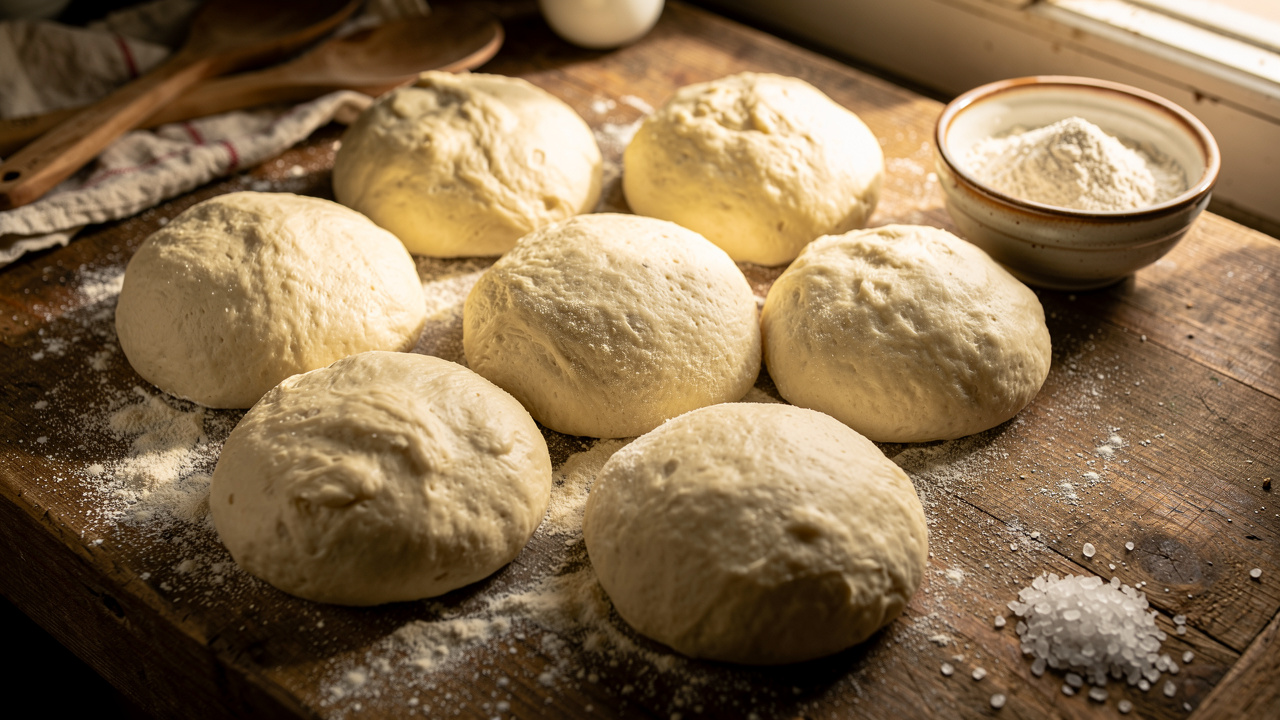
If you're still using cups and spoons, you're playing a guessing game. A cup of flour can weigh anywhere from 120g to 160g depending on how tightly you pack it. A kitchen scale eliminates this guesswork entirely. That's the difference between a perfect dough and a sticky mess.
You need two types of scales:
- Main Kitchen Scale: For flour and water (0.1g resolution).
- Jewelry/Pocket Scale: For yeast and salt (0.01g resolution). Since you often only need 0.5g of yeast, a standard kitchen scale isn't accurate enough to tell the difference between "a little" and "way too much." Use the pizza dough calculator to get exact weights for your batch size.
Pizza peels: wooden for launch, metal for retrieval
You shouldn't use the same tool for everything.
- Wooden Peels: Use these for building and launching. Raw dough is less likely to stick to wood than to metal. Dust it with a little semolina (not flour) before you put the dough on.
- Metal Peels: These are thin and sleek. Use them to rotate the pizza mid-bake and to pull it out. Don't try to build a pizza on a metal peel—it will stick before you even reach for the sauce.
Tip: If you're nervous about the "launch," try a perforated metal peel. The holes let excess flour fall through so it doesn't burn on your stone and make your kitchen smoky.
Pizza pans: only black steel matters
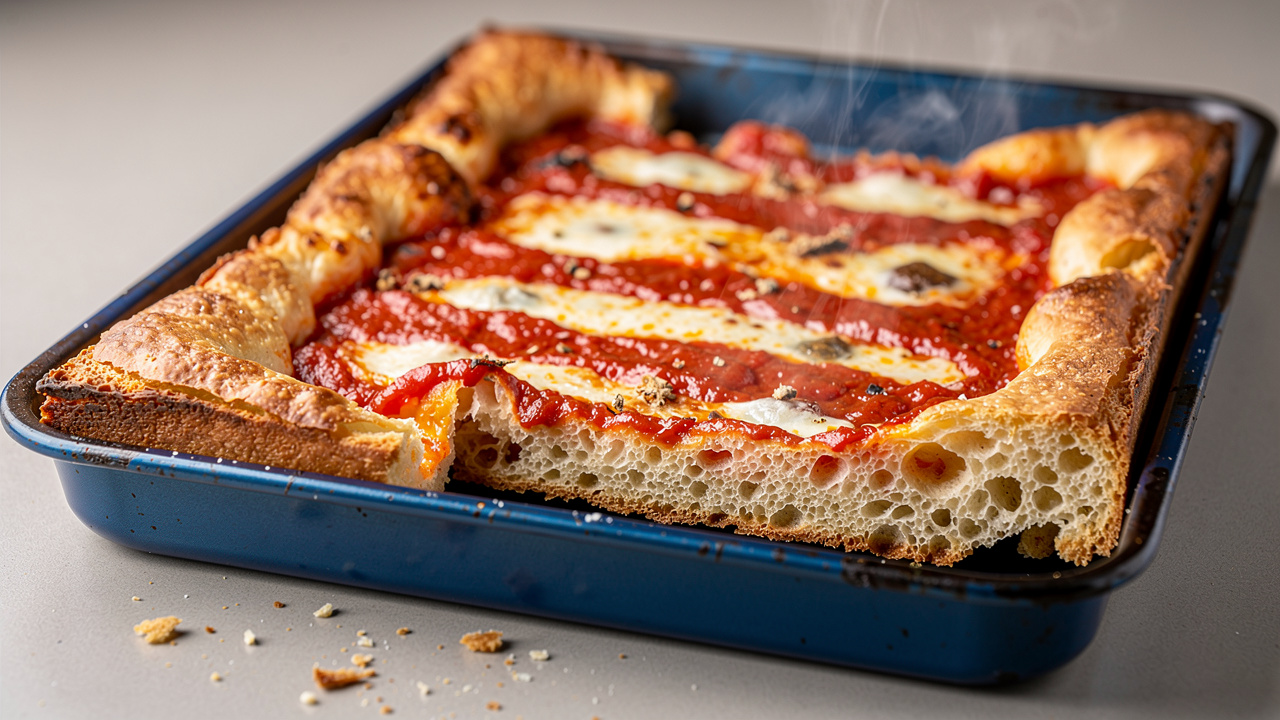
For Detroit, Sicilian, or Pan pizza, ignore stainless steel and aluminum. You want Seasoned Black Steel. It conducts heat aggressively and develops a non-stick patina over time.
- Detroit Style: Look for the classic 8.5" x 12.5" blue or black steel pans.
- Seasoning: Treat them like cast iron. Wipe them with a tiny bit of oil and bake them at 500°F for an hour before your first use. Never wash them with soap if you can help it—just wipe them clean.
Mixing pizza dough: hands vs. machines
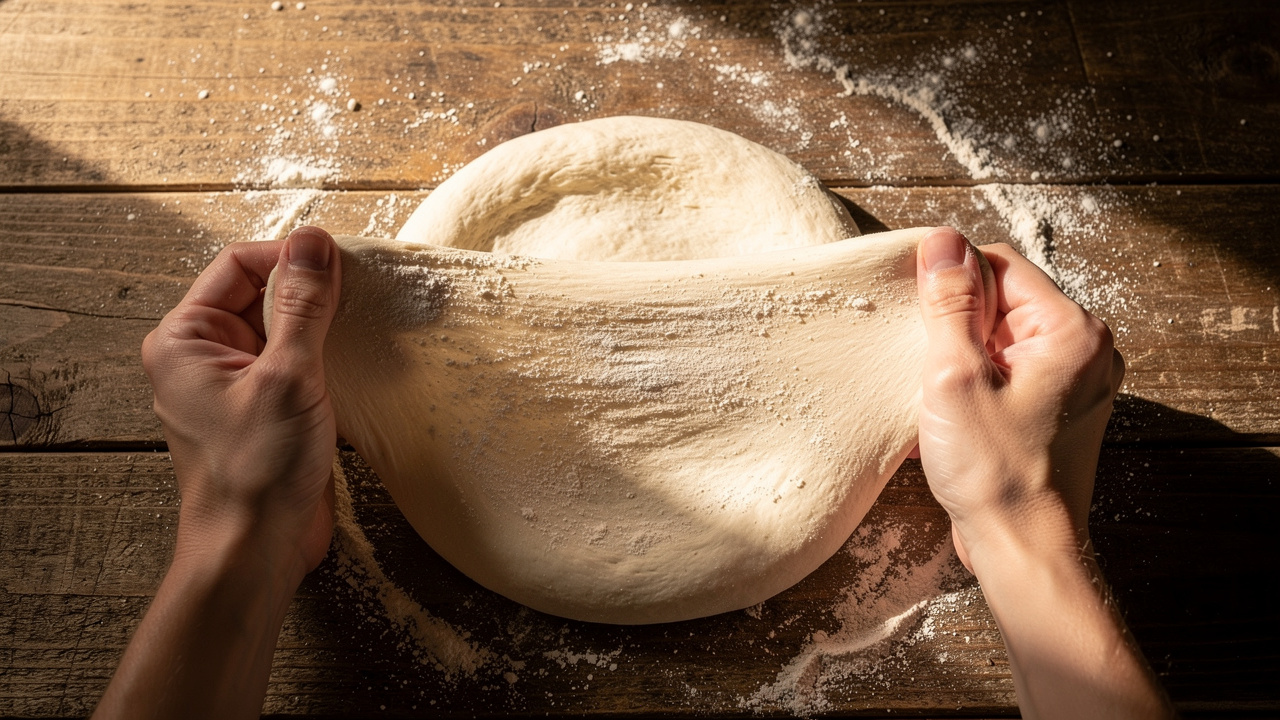
- Hand Mixing: I actually recommend this for beginners. It helps you "feel" the dough and understand how gluten develops.
- Stand Mixers: Great for large batches, but keep it on the lowest speed. High speeds generate friction heat that can accidentally "cook" your yeast before the dough even hits the oven.
- Food Processors: Avoid them. They spin way too fast and can destroy the gluten structure in seconds.
The rocker blade: the finishing pizza tool
Forget the little wheel cutters. A rocker blade (mezzaluna) is faster, cleaner, and won't drag your toppings across the pizza. One decisive "crunch" and you're done.
| Tool | Importance | Why? |
|---|---|---|
| Baking Steel | Essential | Better heat = better crust. |
| Digital Scale | Essential | Consistency is everything in baking. |
| Wooden Peel | High | Prevents the "stuck pizza" nightmare. |
| Bench Scraper | Medium | Makes cleanup and portioning 10x easier. |
| Rocker Blade | Low | Just makes you look like a pro. |