 Bastien
Gluten development in bread dough, stage by stage
Gluten development is the process of building a stretchy protein network in dough through kneading, folding, or time — required for bread to rise, hold structure, and develop chew.
Gluten development is the process of forming a stretchy, elastic protein network in dough by hydrating wheat flour and applying mechanical action (kneading, folding, or time). Strong gluten traps gas from yeast or sourdough, giving bread its rise, structure, and chew.
Gluten development is what makes bread possible. Flour proteins, glutenin and gliadin, only combine into gluten once water reaches them, and kneading makes the resulting strands longer and stronger. That network traps gas from fermentation and holds the crumb open after baking. Knowing where your dough sits on that path is what lets you fix a dense loaf instead of guessing at it.
How does gluten form?
Gluten doesn't exist in dry flour. It only forms when flour proteins come into contact with water:
Elasticity vs extensibility
Both properties matter, and well-developed dough has a balance of both:
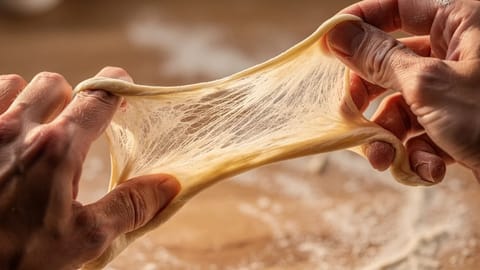
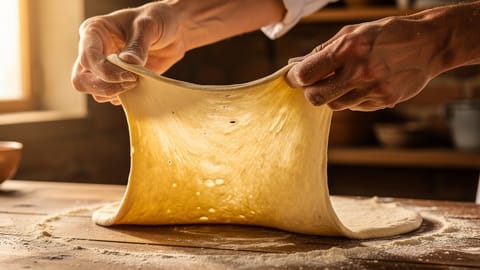
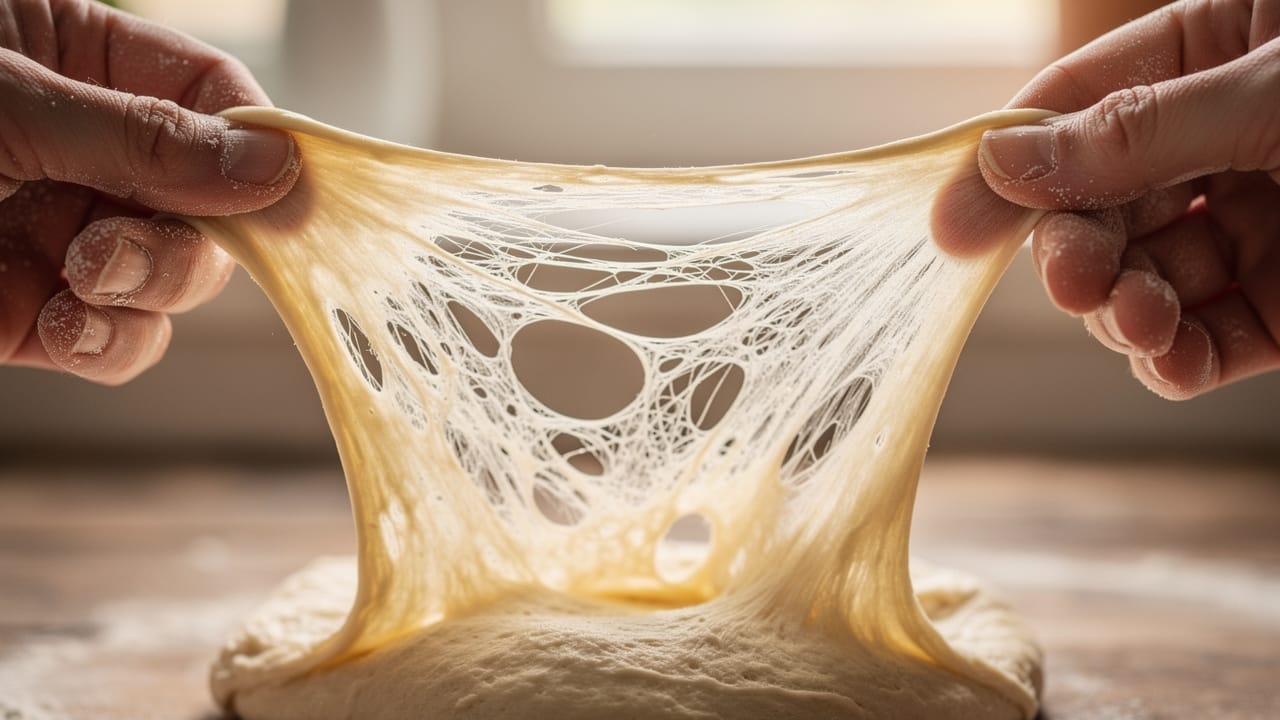
The goal is a dough that stretches willingly but still has enough tension to hold its form, exactly what you test with the windowpane test.
What are the stages of gluten development?
Bakers track development as a sequence of stages rather than a number of minutes, because flour, hydration and mixer speed all move the clock. BAKERpedia's dough mixing reference names six, and they describe a bowl of home dough just as well as a spiral mixer.
| Stage | What the dough looks like | Gluten status |
|---|---|---|
| Pick-up | Sticky, cold, lumpy | Ingredients not yet evenly dispersed |
| Initial development | Warmer, smoother, drier | Glutenin and gliadin hydrating, gluten starting to form |
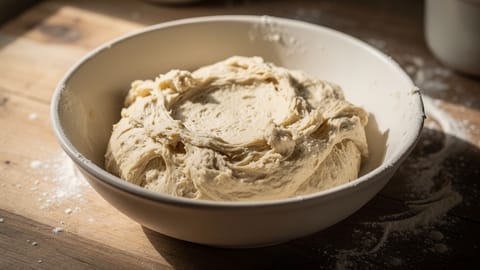
| Clean-up | Stiffest point, pulls together as one mass | Partly developed: very elastic, not yet extensible |
| Final development | Smooth, easy to handle, gluten film visible | Fully developed, best gas retention |
| Let-down | Warm, sticky, slack, flows too readily | Network starting to weaken |
| Break-down | Beginning to liquefy | Network gone, dough is unusable |
Most bread recipes are aiming at final development and stop there. When a recipe asks for "medium" development it usually means stopping short of that point on purpose, leaving folding and a long bulk fermentation to finish the job.
Past final development the dough gets weaker, which catches people out. Excess mechanical energy and shear break the disulphide bonds holding the large gluten aggregates together, the network loses most of its water-holding capacity, and the water it was carrying is released. So an overmixed dough turns slack, wet and sticky rather than tight. A stand mixer or food processor left running is the usual cause; hand kneading rarely delivers enough energy to get there.
The windowpane test
The windowpane test is the standard way to check where a dough has got to, and it takes about ten seconds. Commercial bakers run the same check under the name gluten film test.
| Dough state | How it feels | Windowpane result |
|---|---|---|
| Under-developed | Shaggy and rough, tears when pulled | Tears straight away |
| Developing | Smoother, springy, still tight | Stretches, then tears before it goes thin |
| Fully developed | Smooth, elastic, tacky but not sticky | Thin membrane, light visible through it |
| Overmixed | Slack, wet, no spring left | Sags and tears without ever tightening |
Not every bread needs a full windowpane. Rustic loaves and high-hydration breads can produce excellent results with moderate gluten development.
What are the best methods of developing gluten?
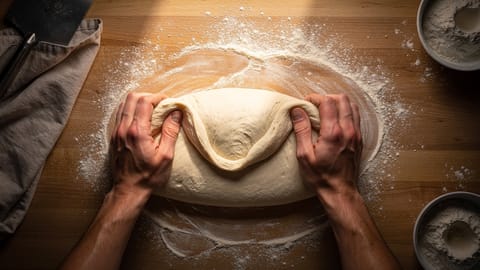
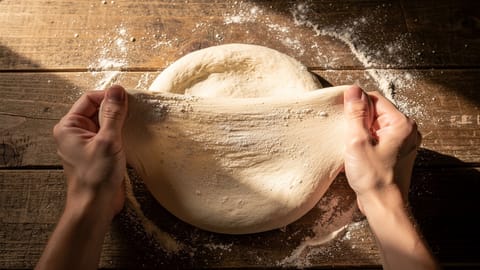
Traditional push-fold-rotate motion. The most direct way to develop gluten.
| Method | Time | Speed | Risk |
|---|---|---|---|
| Hand kneading | 10-15 minutes | Moderate | Hard to overmix |
| Stand mixer (dough hook) | 5-8 minutes on medium | Fast | Can overmix if unattended |
| Food processor | 45-60 seconds | Very fast | Easy to overmix |
Hand kneading is forgiving: most people tire before the dough reaches let-down. Machine mixing needs watching. Start on low to bring the dough together, move to medium, and stop as soon as it passes the windowpane test.
Gentle stretch-and-fold during bulk fermentation. The preferred method for high-hydration and artisan doughs.
- 4-6 sets of folds spaced 15-30 minutes apart during the first 2-3 hours of bulk
- Each set: stretch one side of the dough up and fold it over the center, rotate, repeat 4 times (north, south, east, west)
- Develops strength gradually without overworking
- Redistributes temperature and yeast for even fermentation
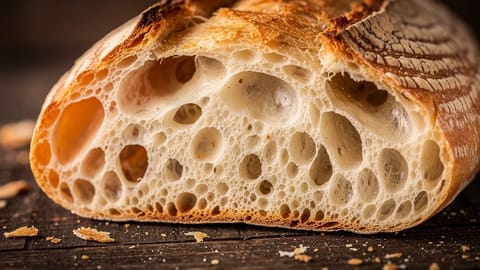
Folding produces dough with excellent extensibility and open crumb: ideal for ciabatta, focaccia, and sourdough.
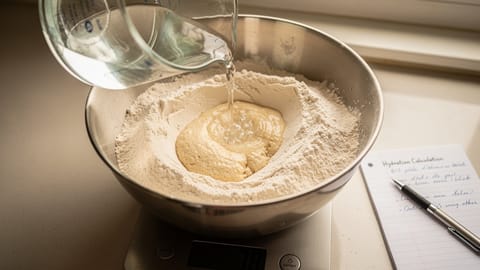
Mix only flour and water, then rest 20-60 minutes before adding salt, yeast, or other ingredients. During this rest, enzymes in the flour begin breaking down starch and proteins start hydrating and linking on their own. Autolyse buys extensibility without any extra kneading, which is why it turns up in so many artisan formulas. Delaying the salt, sugar and fat is standard practice in commercial bakeries too: it shortens the clean-up stage and gets the proteins hydrated faster.
Benefits:
- Dough becomes smoother and more extensible with less kneading
- Better flavor development (enzymes create sugars)
- Reduced total mixing time by 30-50%
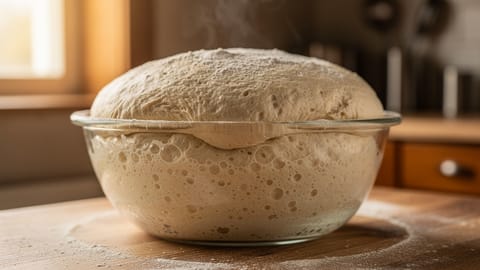
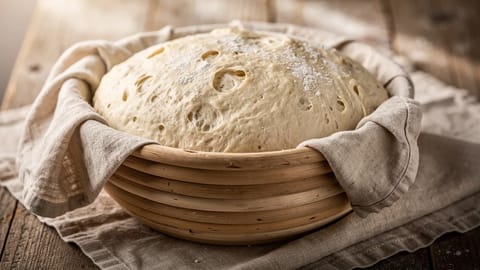
Very wet dough (75-80% hydration) sits 12-18 hours at room temperature with minimal yeast. Gluten develops slowly through hydration and long fermentation alone. Popularized by Jim Lahey's no-knead bread method.
- Produces an open, irregular crumb with large holes
- Minimal effort: just mix and wait
- The long fermentation also builds exceptional flavor
Flour protein and gluten potential
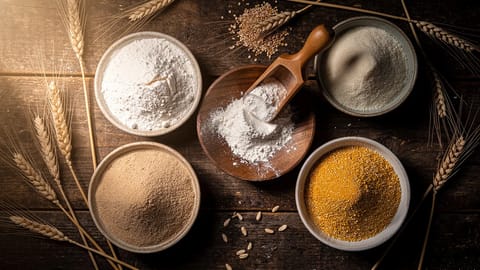
The protein content of flour determines how much gluten can form:
| Flour | Protein | Gluten strength | Best for |
|---|---|---|---|
| High-gluten bread flour | 13-14.5% | Very strong | Bagels, chewy pizza |
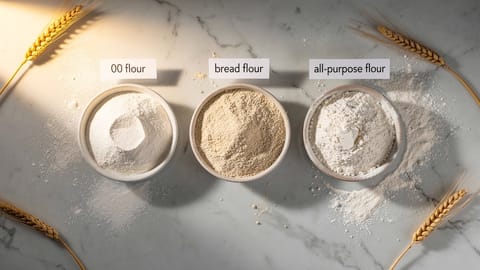
| Bread flour | 12-13% | Strong | Sandwich bread, artisan loaves |
| All-purpose | 10-12% | Medium | Versatile: bread, cookies, sauces |
| Italian 00 (tipo 00) | 11-13% | Medium-strong, extensible | Neapolitan pizza, pasta |
| Whole wheat | 13-14% | Strong but bran interferes | Dense, nutty breads |
| Pastry flour | 8-9% | Weak | Pie crusts, biscuits |
| Cake flour | 7-8% | Very weak | Cakes, delicate pastries |
| Rye flour | 5-7% | Minimal (different proteins) | Rye bread: mix with wheat flour |
Whole wheat flour has high protein but the bran particles act like tiny knives, cutting through gluten strands. This is why 100% whole wheat bread is denser. Compensate with higher hydration (70-80%) and longer fermentation.
Pizza pulls on opposite ends of this table depending on the style, since a Neapolitan base and a Detroit pan want very different gluten. The pizza flour guide matches each style to a protein band and, where the bag reports one, a W value.
What factors affect gluten development?
| Factor | Effect on gluten | How to manage |
|---|---|---|
| Hydration | More water = more extensible, less elastic | Adjust based on desired crumb |
| Salt | Tightens gluten bonds, increases strength | Add after autolyse for best effect |
| Fat (butter, oil) | Coats gluten, slows development | Add late in mixing for enriched doughs (brioche) |
| Sugar | Competes for water, slows development | Enriched doughs need longer mixing |
| Acidity | Strengthens gluten at moderate levels | Sourdough fermentation helps |
| Temperature | Warm dough develops faster | Aim for 24-27°C (75-80°F); mixer friction pushes it up, so check it |
| Time | Longer rest = more passive development | Use for no-knead and high-hydration styles |
| Fermentation | Gas production strengthens and stretches network | Folding during bulk helps |
When do you want less gluten?
Not all baking benefits from strong gluten. Quick breads, cakes and pastry want the opposite, and the technique is mostly about keeping the proteins from finding each other:
| Product | Goal | Technique |
|---|---|---|
| Pie crust | Flaky, tender | Keep fat and water cold; mix until just combined |
| Biscuits | Tender, layered | Cut in cold fat; fold like a letter, handle minimally |
| Cakes | Light, tender crumb | Use cake flour (7-8% protein); don't overmix |
| Quick breads (banana, soda bread) | Tender, even crumb | Stir wet into dry until no dry flour shows |
| Pancakes/crepes | Tender, not chewy | Mix until just combined; lumps are fine |
| Muffins | Tender, dome shape | Mix wet and dry until barely combined |
| Shortbread | Sandy, crumbly | High fat ratio prevents gluten formation |
Fat is doing most of the work in several of these. Gluten only forms once water reaches the proteins, so pastry method rubs the fat into the flour first and leaves the proteins coated when the water arrives.
Troubleshooting
Cause: Under-developed gluten.
Fix: Knead longer, or let rest 15-20 minutes then try again. Sometimes all the dough needs is a bench rest to relax.
Cause: Too much elasticity. The dough is sitting at the clean-up stage, where the gluten is tight and extensibility hasn't caught up yet.
Fix: Let rest 15-30 minutes under a cloth. Gluten relaxes on its own, and the same dough will stretch willingly afterwards.
Cause: Overmixed. Past full development the gluten network degrades and releases the water it was holding.
Fix: There is no rescue once a dough reaches break-down. Next batch, stop at the first clean windowpane and finish by hand if you're unsure.
Cause: Insufficient gluten development.
Fix: Knead or fold more. Check flour protein content. Bread flour (12%+) gives better results than all-purpose for structured loaves.
Cause: Weak gluten can't hold shape during proofing and baking.
Fix: Use higher-protein flour. Add more folds during bulk fermentation.
Cause: Too much gluten developed in a product that should be tender.
Fix: Mix less. Use lower-protein flour. For pastry, keep fat cold, it coats flour proteins and prevents gluten formation.
Cause: Not enough rest or under-developed gluten. More causes and fixes in the pizza dough troubleshooting guide.
Fix: Rest dough balls 1-2 hours at room temp before stretching. Use the pizza dough calculator for correct hydration and timing.
Cause: Bran particles cut gluten strands.
Fix: Increase hydration. Mix longer. Add vital wheat gluten (1-2% of flour weight) if needed.
Tips
Gluten development in Fond
Fond hasn't launched yet. This is how it will work at launch. Join the waitlist for early access.
Fond's recipe instructions guide you through each gluten development stage, from mixing and autolyse to folding schedules during bulk fermentation. The app adjusts technique recommendations based on hydration level and flour type, so you always know whether to knead, fold, or rest.