 Bastien
Yeast Types
Active dry, instant and fresh yeast are the same organism, Saccharomyces cerevisiae, processed differently. Instant goes straight into the flour, active dry is rehydrated first, and fresh is used at about three times the weight of dry.
Active dry yeast, instant yeast and fresh yeast are the three forms of baker's yeast you will meet in recipes, and they are all the same organism, Saccharomyces cerevisiae, processed and dried differently. The practical differences are how you add them, how fast they work, and how much you weigh out. Once you know those, you can bake any recipe with whichever jar is in your fridge.
Yeast is one of the most common leavening agents in baking. It eats sugars in the dough and releases carbon dioxide, which the gluten traps as the dough rises, plus alcohol and other compounds that give bread its flavor.
Active dry vs instant yeast: what is the difference?
Both are dried yeast, and both work in every bread and pizza recipe. The difference comes from the drying process and the size of the granules.
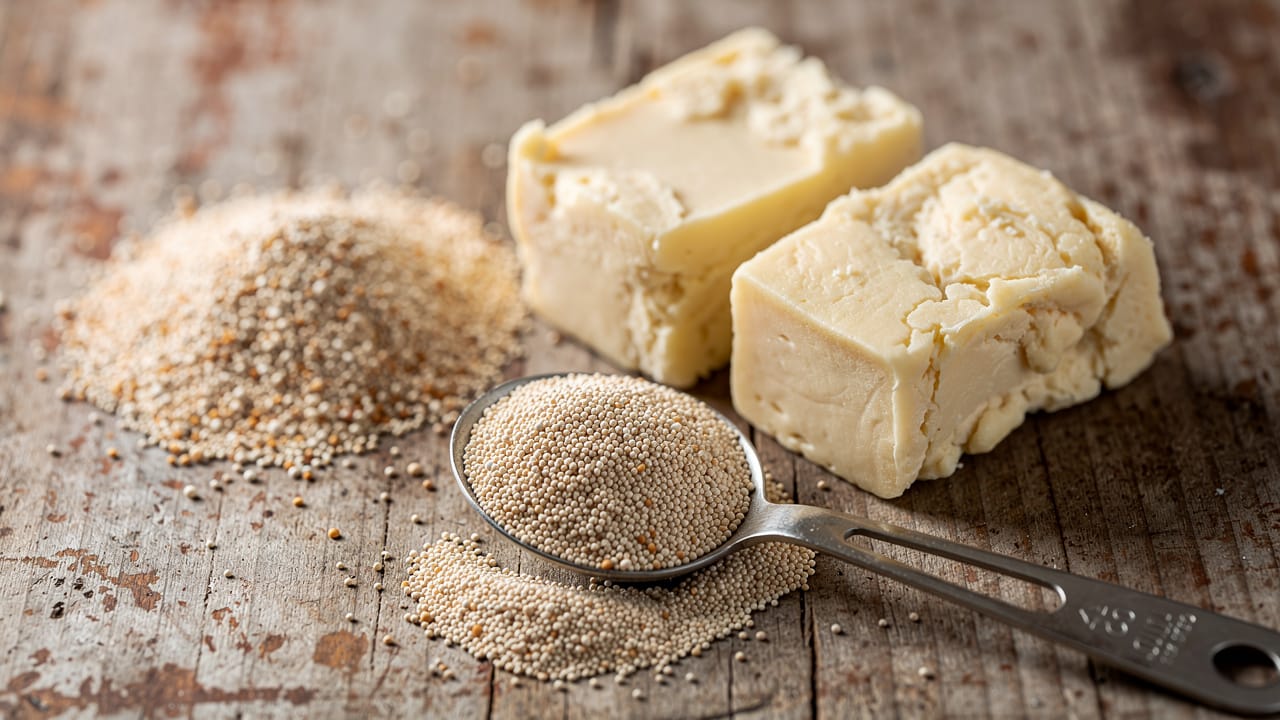
Active dry yeast is dried into larger granules with a layer of dead cells on the outside protecting the live cells inside. Those outer cells need to hydrate and dissolve before the live ones can start working, which is why active dry is rehydrated in warm water first. Sprinkled dry into flour, it can leave undissolved pockets and uneven rising.
Instant yeast is dried more gently into fine, porous granules that absorb moisture straight from the dough. It goes in with the dry ingredients, works a little faster, and is the type most professional bakers and pizza makers use. "Rapid rise" and "bread machine yeast" are marketing names for instant yeast; some rapid-rise products add dough conditioners, but the yeast is the same. Instant yeast can also be dissolved if a recipe asks for it, so it substitutes for active dry in every direction.
What are the three main types of yeast for baking?
Active dry yeast
| Property | Detail |
|---|---|
| Form | Coarse, sand-like granules |
| Activation | Dissolve in warm water (about 38-43°C / 100-110°F) before use |
| Rise time | Standard, the baseline the other types are compared to |
| Shelf life | Long unopened; a few months refrigerated after opening |
| Best for | Traditional recipes, and when you want to verify the yeast is alive before committing |
Instant yeast (rapid rise, bread machine yeast)
| Property | Detail |
|---|---|
| Form | Fine, powder-like granules |
| Activation | Mix directly with dry ingredients, no dissolving needed |
| Rise time | Faster than active dry |
| Shelf life | Long unopened; a few months refrigerated after opening |
| Best for | Pre-ferments (poolish, biga), pizza dough, bread machines, any recipe |
Fresh yeast (cake yeast, compressed yeast)
Fresh yeast is sold in soft, crumbly blocks and has not been dried. BAKERpedia lists compressed yeast at about 70% water, with a shelf life of 2-3 weeks under refrigeration.
| Property | Detail |
|---|---|
| Form | Moist, clay-like blocks (42 g cubes in much of Europe) |
| Activation | Crumble into lukewarm liquid or directly into the flour |
| Rise time | Fast; nothing is dormant |
| Shelf life | 2-3 weeks refrigerated |
| Best for | Professional bakeries, enriched doughs (brioche, panettone), European recipes |
Fresh yeast is the professional standard in much of Europe and impractical for most home bakers because it spoils quickly. If a European recipe specifies fresh yeast, convert to instant using the chart below.
Yeast conversion chart
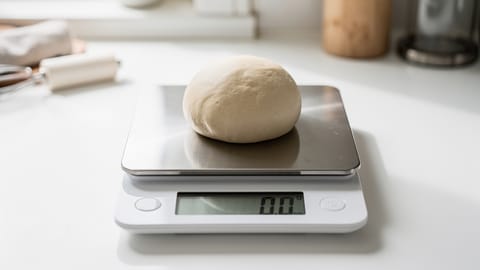
Convert by weight and use a kitchen scale; volume measurements are unreliable with yeast.
Two references anchor these ratios. Red Star's conversion chart matches one 7 g packet of dry yeast to about two-thirds of an ounce (roughly 19 g) of fresh cake yeast, and it uses the same dry-yeast quantity whether the jar says active dry or instant. Yeast makers in Europe such as Lesaffre give the fresh-to-dry ratio as 3 to 1. Fond's pizza dough calculator uses instant yeast as its reference and converts to active dry at 1.25x and to fresh at 3x. Either way, the difference between active dry and instant shows up as rising speed, not as a failed loaf.
Converting in baker's percentages
For pizza and bread recipes written in baker's percentages, these are practical ranges:
| Yeast type | Typical range (% of flour) |
|---|---|
| Instant yeast | 0.1-1.0% |
| Active dry yeast | 0.1-1.25% |
| Fresh yeast | 0.3-3.0% |
For poolish and long-fermented doughs, use the low end (0.1-0.3% instant). For same-day bread, use the high end (0.5-1.0% instant).
Which yeast should you use for which recipe?
| Recipe | Best yeast | Why |
|---|---|---|
| Poolish / biga | Instant | Tiny amounts (0.1 g) blend evenly; no dissolving needed |
| Same-day pizza | Instant or active dry | Either works; instant is faster |
| Cold-fermented pizza | Instant | Low yeast amounts are easier to measure and disperse |
| Artisan bread with a sourdough hybrid | Instant | Clean flavor that does not compete with the sourdough tang |
| Brioche / enriched dough | Fresh or instant | Fresh is the traditional choice; instant is a close second |
| Bread machine | Instant | Designed for dry-mix-and-go |
| Quick dinner rolls | Instant | Fastest rise |
For most home bakers, a single jar of instant yeast handles every recipe. Active dry is fine too; dissolve it first and allow a little more time.
How do you proof active dry yeast?
Proofing (testing) active dry yeast before adding it to your dough confirms it is alive:
Temperature matters. Hot water damages yeast; keep it well below 50°C (120°F). Cold water activates it too slowly to foam within 10 minutes. Use a thermometer or aim for "warm bath" temperature.
You do not need to proof instant yeast; it activates on contact with moisture in the dough. If you are unsure whether an old jar is still alive, proof it the same way.
How does the amount of yeast affect fermentation?
The amount of yeast sets how fast your dough ferments. These are practical starting points at about 24°C (75°F):
| Yeast amount (instant) | Bulk fermentation time | Flavor |
|---|---|---|
| 0.1% of flour (1 g per 1 kg) | 8-16 hours | Maximum complexity |
| 0.3% of flour (3 g per 1 kg) | 4-6 hours | Good balance of speed and flavor |
| 0.5% of flour (5 g per 1 kg) | 2-3 hours | Moderate flavor |
| 1.0% of flour (10 g per 1 kg) | 1-1.5 hours | Minimal flavor development |
For pizza dough, how long to ferment at each of those doses covers the room-temperature and fridge schedules the percentages map onto.
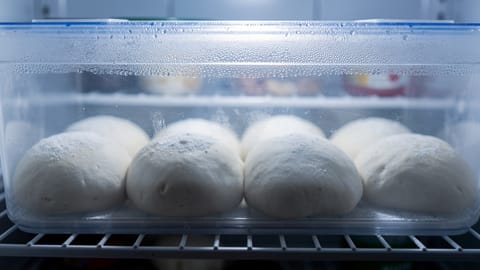
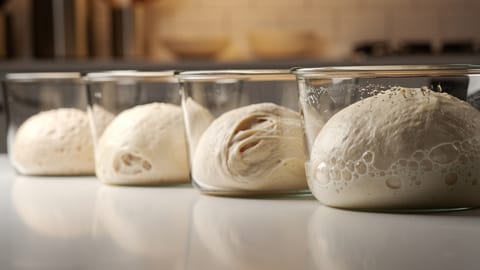
Less yeast plus more time means more flavor. That is why pizza and artisan bread recipes use tiny amounts of yeast with long fermentation schedules, often including cold fermentation in the fridge: the slow version gives the flour's enzymes and the yeast's by-products time to build a more complex, slightly tangy taste that a fast rise cannot match.
Troubleshooting yeast problems
Dead yeast, water too hot, or too cold to activate. Proof the yeast first and check the water temperature with a thermometer.
Old yeast losing potency, a cold kitchen, or salt touching the yeast directly. Use fresher yeast, move the dough to a warm spot (24-26°C / 75-79°F), and add salt after the initial mix.
Too much yeast or too long a bulk fermentation. Reduce the yeast, shorten the bulk, or switch to cold fermentation.
Not enough yeast or under-proofed. Increase the yeast slightly or extend the proof.
Too much yeast for the fermentation time. Reduce the yeast and extend bulk fermentation.
Active dry yeast that was not fully dissolved. Dissolve it completely before adding the flour, or switch to instant.
How do you store yeast?
| Yeast type | Unopened | Opened | Freezer |
|---|---|---|---|
| Active dry | Cool, dark cupboard until the best-before date | Airtight in the fridge, a few months | Extends life well beyond that |
| Instant | Cool, dark cupboard until the best-before date | Airtight in the fridge, a few months | Extends life well beyond that |
| Fresh | Always refrigerated | 2-3 weeks | Not recommended; it loses potency |
After opening, squeeze out the air and seal the package in a zip-lock bag or airtight container. Moisture is the enemy: it wakes the yeast early, and the cells exhaust their food and die. For bulk buying, dry yeast keeps well in the freezer; measure what you need straight from the freezer, and it activates as it warms in the dough.
Yeast types in Fond
Fond hasn't launched yet. This is how it will work at launch. Join the waitlist for early access.
Fond's pizza dough calculator lets you pick instant, active dry or fresh yeast (or a sourdough starter) and converts the gram amount for you, using instant as the reference: active dry at 1.25x and fresh at 3x. It also suggests a yeast percentage for your schedule and room temperature, so a long cold ferment gets the tiny dose it needs.