 Bastien
Chiffonade
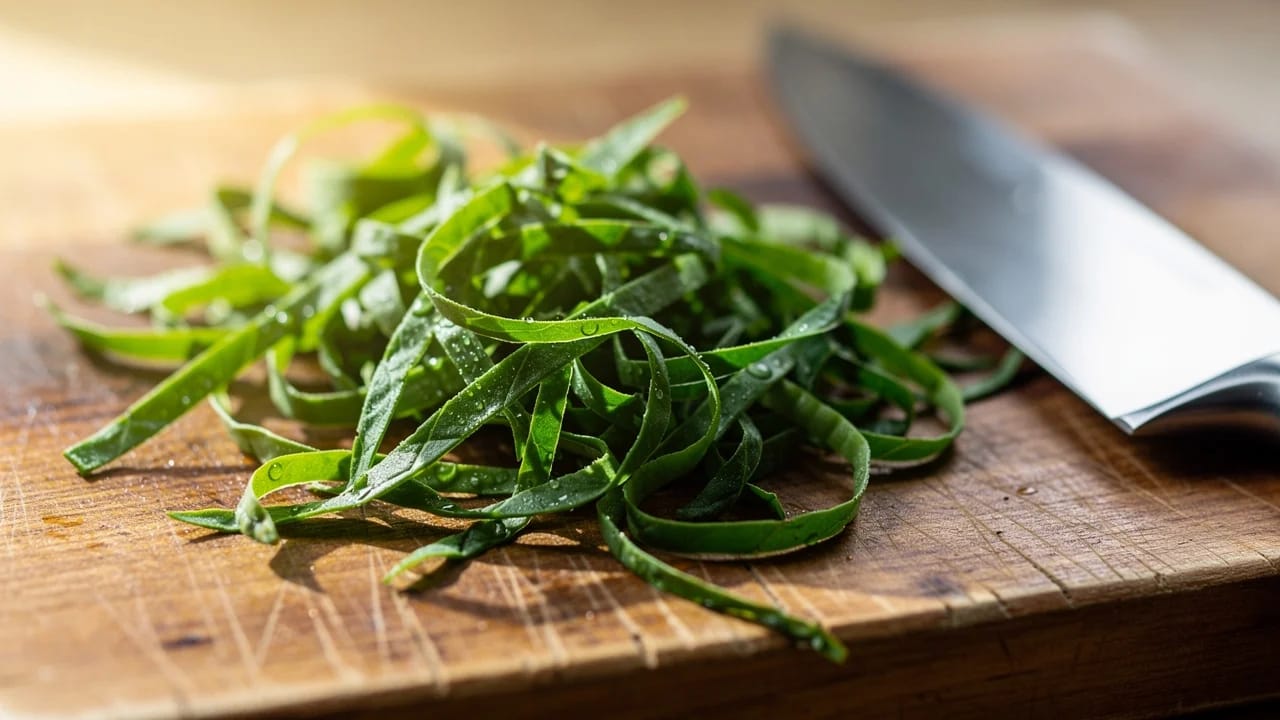
Chiffonade is a French knife cut that turns herbs and leafy greens into thin, uniform ribbons, usually 1-3 mm wide, by stacking the leaves, rolling them tightly, and slicing across the roll.
Chiffonade is a French knife cut for turning herbs and leafy greens into thin, uniform ribbons. The word means "little rags" in French, from chiffon, and it describes the result: delicate strips about 1/16 to 1/8 inch (1-3 mm) wide. It's pronounced "shif-oh-NAHD." The same word names both the technique and the pile of ribbons it produces.
It's one of the simplest knife cuts to learn, and once you have it down, you'll use it constantly. Fresh basil on pasta, mint in a salad, spinach in soup. Chiffonade turns leafy ingredients into something that distributes evenly, looks clean on the plate, and releases more flavor than tearing by hand.
The difference shows on something as simple as a Caprese salad. Torn basil leaves some bites without any herb at all. Ribbons put basil in every forkful.
How do you chiffonade basil and other herbs?
You need a sharp knife and a cutting board. That's it.
The whole chiffonade cutting process takes about 30 seconds per batch. Speed comes with practice, but even slow cuts look better than rough chopping.
Which leaves work best for chiffonade?
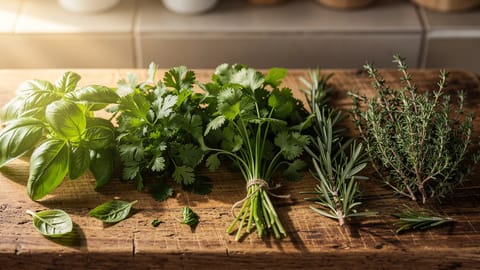
Chiffonade works on any broad, flat leaf. The most common:
- Basil, the classic chiffonade herb. Used on pasta, pizza, Caprese salad, and bruschetta. If you want to learn how to chiffonade basil, it's the best leaf to practice on
- Mint, ribbons in tabbouleh, spring rolls, or scattered over lamb
- Sage, chiffonade before frying for a crispy garnish
- Spinach, ribbons wilt quickly in hot pasta or soup
- Kale, chiffonade makes raw kale more palatable in salads (massage with oil after cutting)
- Lettuce, romaine or butter lettuce chiffonade for taco garnish or Vietnamese pho
- Cabbage, wider chiffonade ribbons work well for coleslaw and stir-fries
Small-leafed herbs like thyme, rosemary, and oregano are too narrow for chiffonade. Strip the leaves from the stems and mince those instead.
Tip: For herbs you plan to store fresh, wait to chiffonade until right before serving. Cut herbs oxidize fast.
What is the difference between chiffonade and julienne?
These cuts look similar but apply to different ingredients.
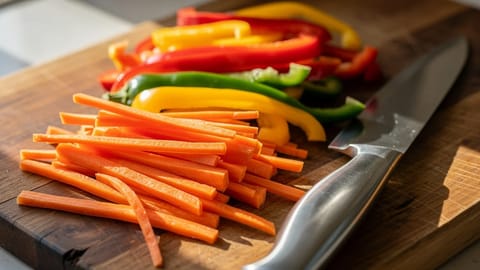
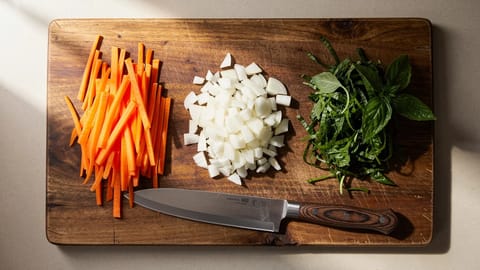
The julienne requires squaring off the vegetable first, then cutting into planks, then matchsticks. Chiffonade is faster because leaves are already flat: you roll and slice.
Both cuts appear in professional knife skills curricula, but chiffonade is the easier one to learn first. The Escoffier School of Culinary Arts lists it among the knife cuts every cook should know, alongside julienne and brunoise.
What are the best tips for cleaner chiffonade cutting?
A few habits make the biggest difference between ragged strips and clean ribbons.
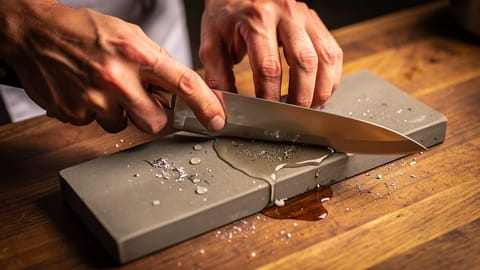
If your basil ribbons darken quickly after cutting, your knife needs sharpening. A sharp edge causes less cell damage, which slows the enzymatic browning that turns basil black: the enzyme polyphenol oxidase in the leaf reacts with oxygen wherever cells are crushed, the same reaction that browns a cut apple.
When should you use chiffonade?
Chiffonade isn't just for garnishing. It's a functional cut that serves specific purposes.
For raw applications (salads, garnishes, cold dishes), chiffonade distributes flavor more evenly than whole or torn leaves. Every bite gets some herb instead of one mouthful getting an entire basil leaf.
For hot applications (soups, pasta, stir-fries), thin ribbons wilt almost instantly when they hit heat. Spinach chiffonade dropped into hot pasta will be perfectly wilted by the time you toss the dish.
For presentation, chiffonade looks more intentional than a rough chop. A pile of basil ribbons on a Margherita pizza looks better than torn leaves every time. It's one of those small details that signals someone paid attention.
Mise en place is about having everything prepped and ready before you start cooking. Chiffonade is one of those prep steps that takes seconds but makes the finished dish noticeably better.
Grab a bunch of basil, stack the leaves, roll them tight, and start slicing. Once this technique clicks, you'll reach for it every time a recipe calls for fresh herbs. Browse more techniques in our knife cuts guide or explore the full cooking glossary on Fond.