 Bastien
How to store fresh herbs so they last weeks, not days
Most fresh herbs die in 2-3 days because people store them wrong. The fix comes down to one distinction: soft herbs vs. hard herbs. This guide covers the best storage method for every common herb, how to freeze and dry herbs for long-term use, how to revive wilted ones, and how to plan meals around what's actually in your fridge.
You bought a beautiful bunch of cilantro on Saturday. By Tuesday, it's a wilted, slimy mess at the bottom of your fridge. Sound familiar? The EPA estimates that about a third of the food in the United States goes uneaten, and fresh herbs are some of the worst offenders. Learning how to reduce food waste starts with the most perishable items in your kitchen. They're delicate, they're perishable, and most people store them wrong.
The good news: with the right method, most fresh herbs last 2-3 weeks instead of 2-3 days. The key is understanding which herbs need which treatment. It comes down to one simple distinction, soft herbs vs. hard herbs, and once you know the difference, you'll stop watching your money wilt in the crisper drawer.
This guide covers the best storage method for every common herb, how to freeze herbs for long-term use, how to revive wilted ones, and how to plan your meals around what's actually in your fridge. For storing the rest of your groceries well, see our complete food storage guide.
Soft herbs vs. hard herbs: why it matters
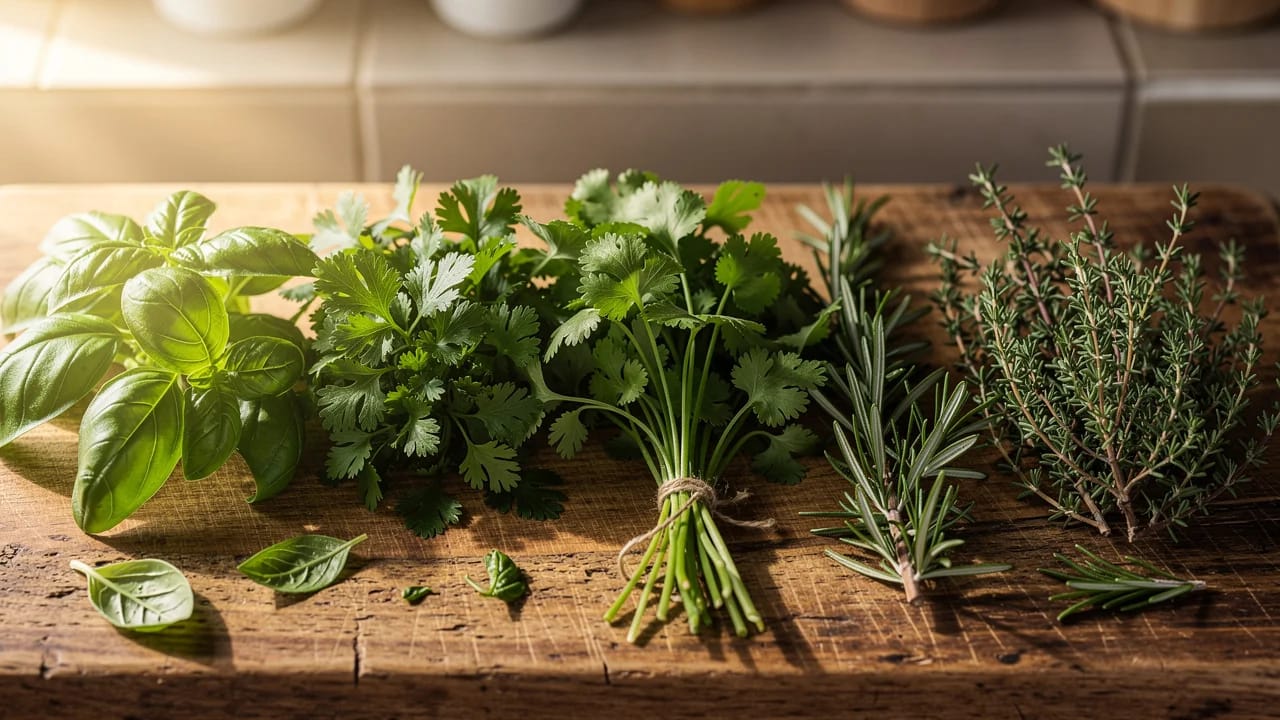
Not all herbs are built the same, and storing them the same way is why they die so fast.
Here's a quick test: can you bend the stem easily without it snapping? It's a soft herb. Does it feel woody and rigid? Hard herb. That one-second check tells you everything about how to store it.
How to store fresh herbs in the fridge
Soft herbs need water and airflow. The best method treats them like a bouquet of flowers, because that's essentially what they are.
The water glass method (how to store cilantro, parsley, mint, dill)
This is the single most effective way to store soft herbs in the fridge, and it takes about 90 seconds. Cilantro is the herb people ask about most, and it is the one that benefits most: its thin stems and tender leaves dry out and go slimy fastest when left in the bag from the store.
With this method, parsley and cilantro routinely last one to two weeks. Mint and dill hold up for about a week. Health Canada's official advice is more conservative: trimmed, unwashed herbs in a resealable bag keep up to five days in the crisper. The water and the loose bag are what buy the extra week.
The loose bag cover matters more than you'd think. Without it, the dry air inside your refrigerator pulls moisture from the leaves and they go limp within days. The bag creates a humid microclimate that mimics the herbs' natural growing conditions.
Why basil is the exception
Basil breaks all the rules. Refrigerating basil causes chilling injury: the cold damages the cell membranes and the leaves blacken within a day or two. A 2023 review in Frontiers in Plant Science puts the damage threshold at around 10 °C (50 °F), with severe injury at 5 °C and below, which is exactly where a home fridge sits. Health Canada calls basil the only herb that should be stored unrefrigerated. If you've ever wondered why your grocery store basil looks awful after a night in the fridge, that's why.
Instead, store basil on the counter at room temperature. Trim the stems, place them in a glass of water like you would with other soft herbs, and keep the jar away from direct sunlight. It'll stay perky for 5-7 days.
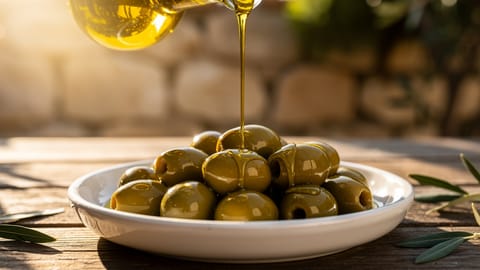
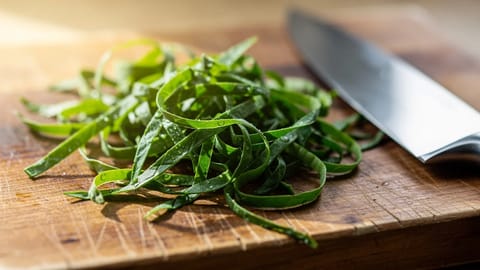
If you need basil to last longer than a week, skip the fridge entirely and go straight to the freezer. Chop the leaves into a chiffonade, pack them into ice cube trays, cover with olive oil, and freeze. Each cube gives you a ready-to-use portion for pasta, pesto, or sauces.
How to store fresh rosemary, thyme, and other hard herbs
Hard herbs are lower maintenance, but they still need a little attention. The enemy here is excess moisture on the leaves, which causes them to rot, and excess dryness, which makes them brittle.
This method keeps fresh rosemary and thyme going for 2-3 weeks. The paper towel provides just enough moisture to prevent drying out, while the bag prevents the fridge from pulling all the humidity away. A dedicated corner of the crisper for herb bundles keeps them from getting crushed under heavier produce.
Should you use an herb keeper?
Dedicated herb storage containers, vertical keepers with a water reservoir at the bottom, work well for soft herbs. They're the water glass method in a purpose-built container. For hard herbs, they're overkill. A damp paper towel in a bag does the same job for free.
If you cook with fresh herbs more than twice a week, an herb keeper might be worth the counter or fridge space. Otherwise, a mason jar and a plastic bag get identical results.
Herb-by-herb storage quick reference
Tip: Cilantro with roots still attached lasts even longer. If you find it at an Asian grocery store, buy it there, the roots add days of shelf life.
How to freeze fresh herbs for long-term storage
Properly stored herbs last weeks in the fridge, but freezing extends that to months. The trade-off: frozen herbs lose their fresh texture and won't work as a garnish. For cooking, soups, sauces, stews, marinades, they're just as good as fresh. If you're worried about ice crystals affecting the herbs, our guide on freezer burn explains why proper packaging matters.
Ice cube tray method
This is the most practical freezing method because it gives you pre-portioned, ready-to-use herb cubes.
Each cube equals roughly 1 tablespoon of fresh herbs. Toss them directly into hot pans, simmering soups, or sauce bases, no thawing needed. Health Canada gives frozen herb cubes about 3 months at their best; they stay safe and usable well beyond that, with the aroma fading slowly. Keep oil cubes frozen until the moment you use them. Health Canada warns that improperly stored vegetables and herbs in oil give botulism bacteria ideal conditions, and tells you to keep any herb-in-oil mixture refrigerated and use it within a week. Never leave one on the counter.
When choosing between water and oil, think about the final dish. Water cubes work for soups and stews. Oil cubes are better for sautes and pasta sauces because the oil melts into the cooking fat. Check our guide on cooking oil smoke points to pick the right oil for your cooking temperature.
Flash-freeze on a baking sheet
For herbs you want to keep whole or in sprigs, rosemary, thyme, dill, flash-freezing preserves their shape better than the ice cube method.
- Wash and thoroughly dry the herbs
- Spread them in a single layer on a parchment-lined baking sheet
- Freeze for 2-3 hours until solid
- Transfer to a labeled freezer bag, pressing out excess air
Flash-frozen herbs stay usable for months; the National Center for Home Food Preservation's method is the same, a few sprigs wrapped and bagged, and it notes they suit cooked dishes rather than garnish. You can crumble them directly into dishes while still frozen, since they break apart easily.
When to use frozen vs. fresh
Frozen herbs work great in anything cooked: braises, soups, roasted vegetables, sauces, and marinades. They release their flavor into the dish as they thaw and cook.
They don't work for fresh applications. A frozen basil leaf won't make a good caprese salad, and frozen cilantro turns mushy as a taco topping. For garnishes, salads, and anything where texture matters, you need fresh.
How to dry fresh herbs at home
Drying is the oldest preservation method, and certain herbs take to it better than others. Oregano, thyme, rosemary, and sage dry well and retain most of their flavor. Basil, cilantro, and parsley lose a lot in the drying process and are better frozen.
Air drying is the simplest approach. Bundle 4-6 stems together with kitchen twine and hang them upside down in a warm, dry spot with good airflow. Avoid direct sunlight, which fades the flavor. They'll be fully dry in 1-2 weeks depending on humidity. The Old Farmer's Almanac notes that oregano, sage and thyme air-dry easily, while thick-leaved basil and parsley are better dried in a dehydrator or frozen unless you live in a very arid climate.
Oven drying is faster. Spread individual leaves on a parchment-lined baking sheet and dry at the lowest setting, around 170 °F (75 °C), for 1-2 hours with the oven door cracked open. Check every 30 minutes: you want them crumbly, not brown. The goal, as the Old Farmer's Almanac puts it, is to remove moisture without cooking the herbs, which is why a dehydrator at a much lower temperature keeps more flavor.
Store dried herbs in airtight glass jars away from heat, light, and moisture. They'll keep their potency for about 6-12 months. After that, they fade. A good test: crush a pinch between your fingers. If it smells strong, it's still good. If it smells like dust, replace it.
How to revive wilted herbs
Before you throw out sad-looking herbs, try this: trim 1/2 inch off the stems and submerge the entire bunch in a bowl of ice water for 15-30 minutes. The cold water rehydrates the cells and firms up the leaves. It works remarkably well on parsley, cilantro, mint, and basil.
Recoverable. Trim stems and soak in ice water for 15-30 minutes. The leaves should perk back up as the cells rehydrate.
Pick off the bad leaves immediately, decay spreads fast. The remaining healthy leaves are fine to use. Store them properly going forward.
Past saving. Compost them. Slime means bacterial breakdown has started, and no amount of ice water will reverse it.
Still perfectly good for cooking. The flavor is actually more concentrated when the leaves have dried slightly. Only discard when they turn brown and brittle.
Plan your meals around your herbs
Here's where most herb storage advice stops: "Store your herbs properly and they'll last longer." True, but incomplete. Knowing your cilantro lasts 10-14 days is only useful if you plan to actually use it within that window.
Think about it this way. You buy a bunch of cilantro and a bunch of parsley on Saturday. The cilantro is fresh for about 12 days. Instead of letting it sit until it's questionable, plan backward from that shelf life. Tacos on Monday, a grain bowl with cilantro-lime dressing on Wednesday, salsa verde on Friday. Three meals, one bunch, zero waste.
This is meal prep thinking applied to a single ingredient. You already do this instinctively with proteins: you wouldn't buy chicken and let it sit for two weeks. Herbs deserve the same respect. Planning your grocery shopping around what you'll actually cook that week makes a big difference.
A recipe management app makes this easier; Fond, the one we're building, is designed for it. Search your recipe library by ingredient, see which recipes call for the herbs you have on hand, and put them on the weekly calendar before the herbs fade. When your batch cooking session includes a chimichurri sauce that uses up an entire bunch of parsley and cilantro, nothing goes to waste.
The mise en place philosophy applies here too. Preparation isn't just about having your ingredients measured and ready before you cook. It's about knowing what you have, when it expires, and what you're going to do with it.
Common herb storage mistakes to avoid
Store smart, cook smart, waste less
- Soft herbs (parsley, cilantro, mint) go in water in the fridge with a loose bag on top
- Hard herbs (rosemary, thyme, oregano) get wrapped in a damp paper towel in a bag
- Basil stays on the counter, never refrigerate it
- Freeze herbs in ice cube trays with water or oil for long-term storage (best within 3 months)
- Flash-freeze whole sprigs on a baking sheet for cooked dishes later
- Plan meals backward from your herbs' shelf life to use them before they fade
Fresh herbs make the difference between a good meal and a great one, but only if they're still alive when you need them. The bigger shift is thinking of herbs as ingredients with a deadline, not decorations you hope to use eventually. Buy them with a plan. Store them properly. Cook with them before time runs out.
Keep your recipes organized and your meal plan aligned with what's fresh in your kitchen. Fond, the app we're building, is designed to let you search by ingredient, plan the week on a calendar, and turn "I have cilantro" into three dinners. It isn't released yet: join the waitlist to hear when it opens.
Sources
- Fresh herbs: food safety tips — Health Canada
- Freezing fresh herbs — National Center for Home Food Preservation
- Preserving herbs: drying and freezing — The Old Farmer's Almanac
- Preharvest and postharvest techniques that optimize the shelf life of fresh basil: a review — Frontiers in Plant Science, 2023
- Food safety tips for vegetables and herbs in oil — Health Canada
- Preventing wasted food at home — US EPA