Searing
High-heat browning technique that creates a flavorful Maillard crust on meat, fish, or vegetables.
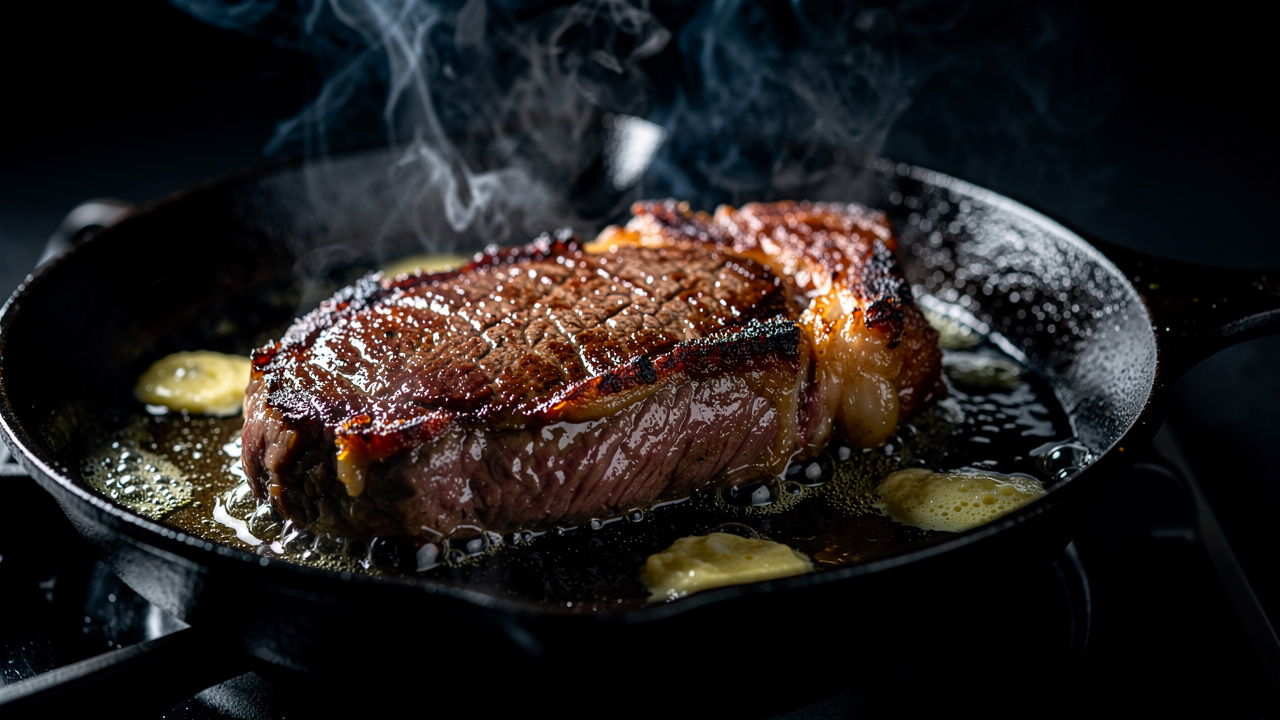
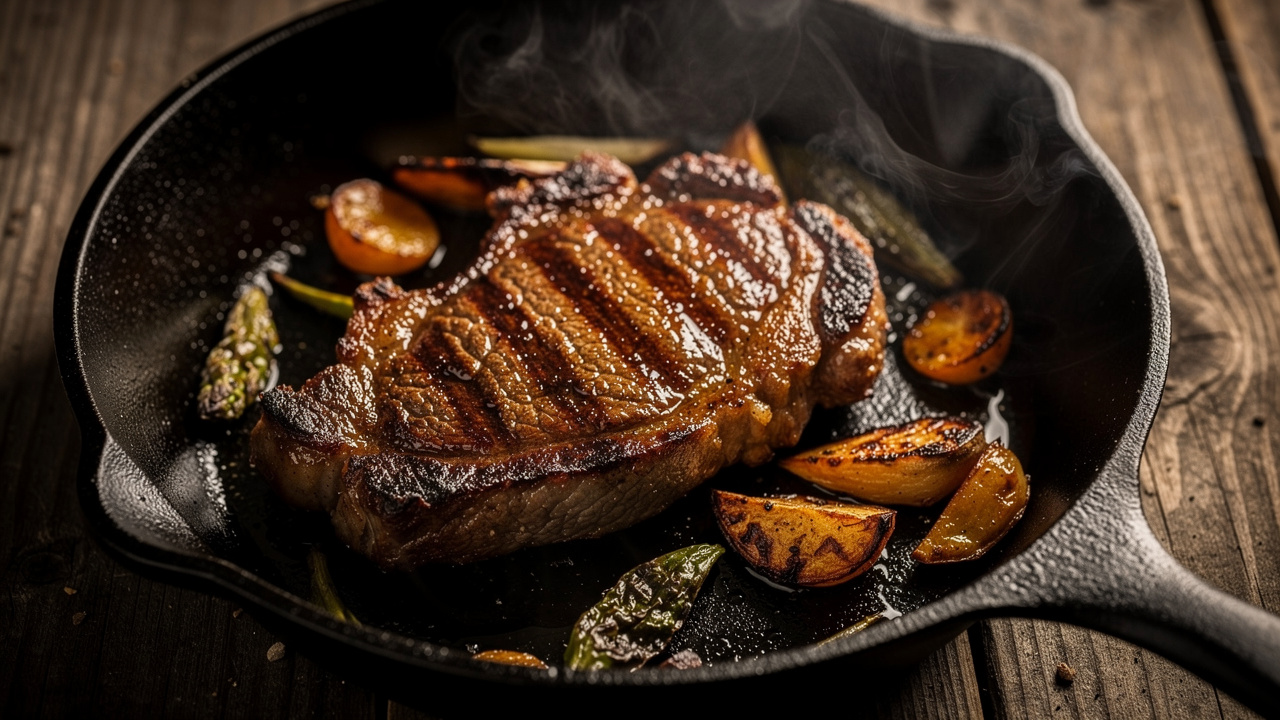
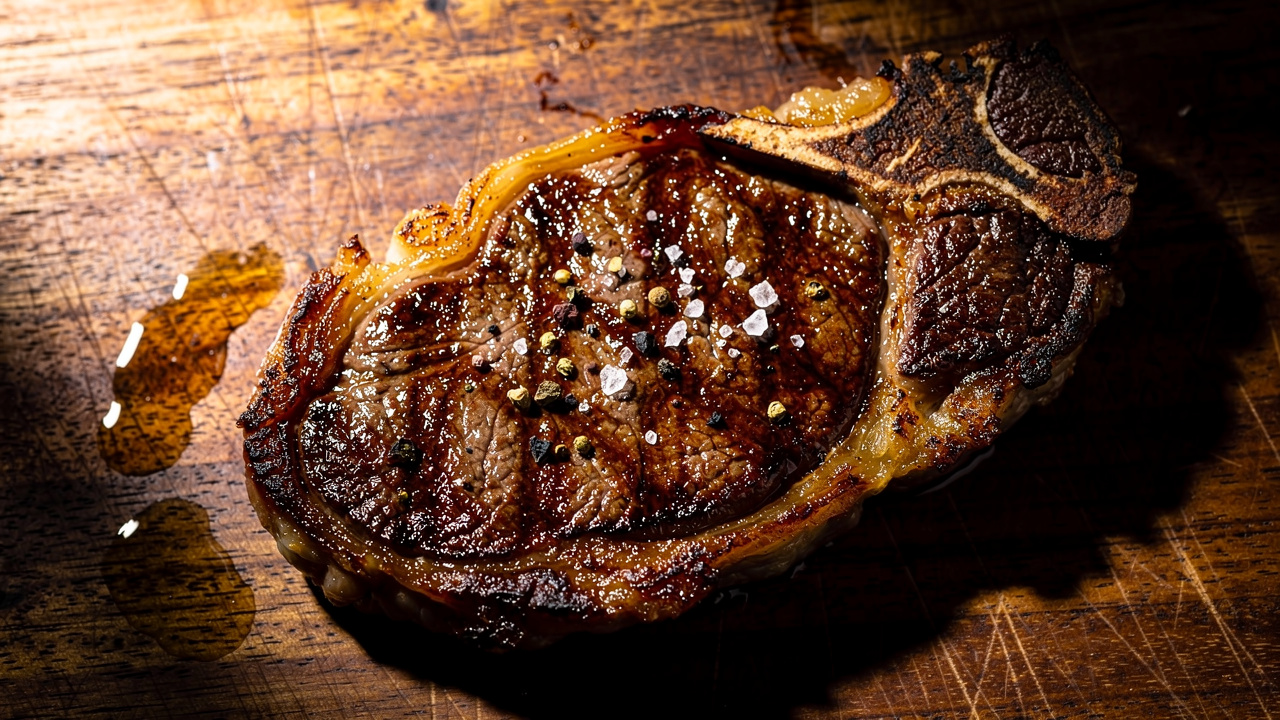
Searing is the process of cooking food at high heat until a browned crust forms. This crust is the result of the Maillard reaction — a chemical process between amino acids and sugars that creates hundreds of new flavor compounds.
How to sear properly
- Dry your protein thoroughly — moisture is the enemy of browning
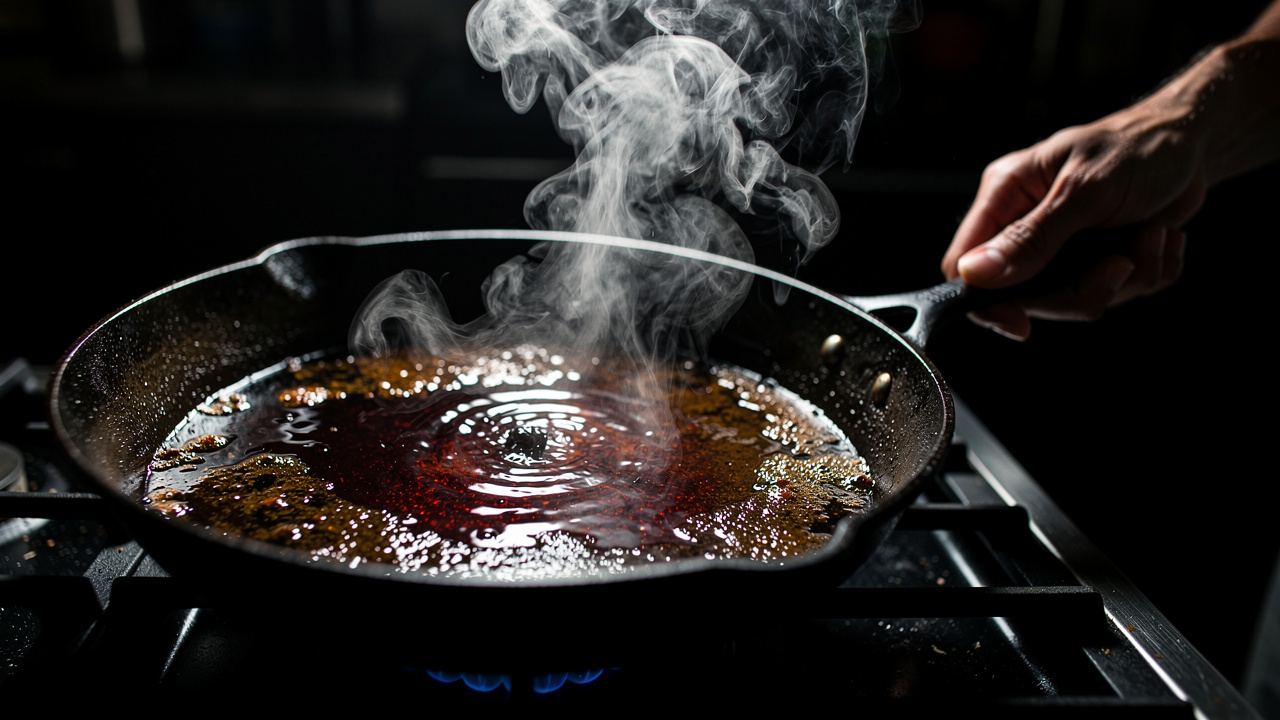
- Preheat the pan until very hot — the food should sizzle immediately
- Use high smoke-point oil — avocado, grapeseed, or refined vegetable oil
- Don't overcrowd the pan — leave space between pieces
- Don't move the food — let it develop a crust before flipping
Best pans for searing
| Pan Type | Pros | Cons |
|---|---|---|
| Cast iron | Excellent heat retention, affordable | Heavy, requires seasoning |
| Carbon steel | Lightweight, heats quickly | Requires seasoning |
| Stainless steel | Non-reactive, oven-safe | Food can stick |
Common searing mistakes
- Cold pan: Results in gray, steamed meat instead of a crust
- Wet meat: Moisture creates steam, preventing browning
- Moving food too soon: Breaks the developing crust
- Overcrowding: Temperature drops, causing steaming
The searing myth
Searing doesn't "seal in juices" — this is a common misconception. However, searing absolutely improves flavor through the Maillard reaction and creates appealing texture contrast.
Related Fond featureCook mode