 Bastien
Maillard Reaction
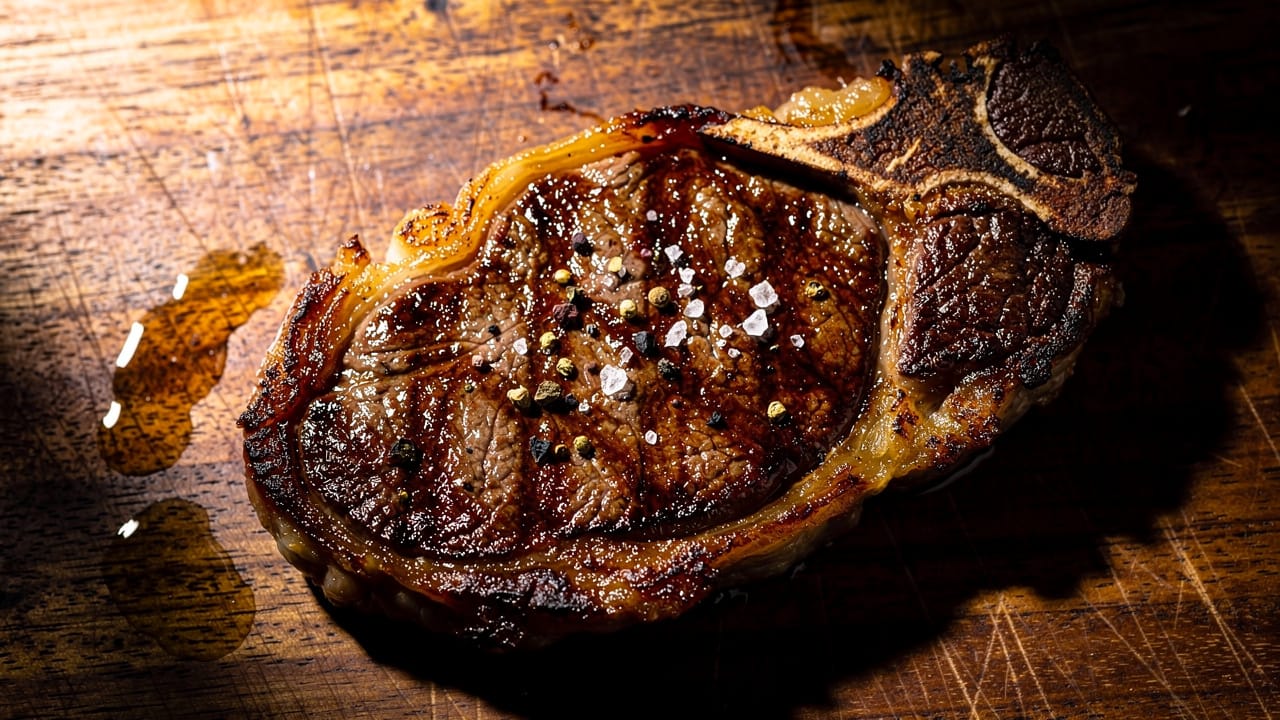
The Maillard reaction is the browning that happens when amino acids meet reducing sugars under heat. It builds the crust on a seared steak and the smell of roasting coffee.
The Maillard reaction is the browning that happens when amino acids and reducing sugars meet heat. They combine, break apart, and recombine into brown pigments called melanoidins along with a long list of new aroma molecules. It is what separates a seared steak from a boiled one, a bread crust from the crumb inside it, roasted coffee from a green bean, and a toasted almond from a raw one.
It carries the name of Louis-Camille Maillard, the French physician and chemist who described it in 1912. Say it "my-YAR".
How do you pronounce "Maillard reaction"?
Say my-YAR, roughly [ma.jaʁ] in IPA. Maillard is a French surname, which sets two rules: the ill is a y-glide rather than an L sound, and the final d stays silent. Two syllables, stress on the second.
You will hear "MAY-lard" constantly in English-speaking kitchens and on cooking shows. Nobody will misunderstand you if you say it that way. It is an anglicization rather than the name, which is why the French pronunciation is the one you see in food science writing.
How the Maillard reaction works
The reaction moves through three stages, and each one produces something different.
- Condensation. An amino group and the carbonyl group of a reducing sugar (glucose, fructose, lactose) join and lose water to form a Schiff base, which then rearranges into an Amadori or Heyns product. These early products are colorless and odorless. They are precursors, nothing more.
- Fragmentation. Amadori products break apart along several routes into reactive dicarbonyls and small carbonyl compounds. Most of the aroma is born here. Which route dominates depends on pH: acidic conditions push toward furans, which smell caramel-like, while alkaline conditions push toward pyrazines, which smell roasted and coffee-like.
- Polymerization. Those fragments condense into melanoidins, the high-molecular-weight brown polymers you can actually see. The 2025 review in Foods describes them as nitrogen-containing brown polymers and copolymers.
Every food arrives with a different mix of amino acids and sugars, so the same three stages land somewhere different each time. That is why browned beef and toast smell nothing alike despite running identical chemistry.
What temperature does the Maillard reaction need?
There is no switch that flips at one number, and the widely repeated "140°C threshold" oversells the precision. The reaction runs wherever amino acids and sugars share a warm space. Heat decides how fast.
The 2025 Foods review calls the reaction typical above 120°C (250°F) and reports the rate rising three- to fivefold for every extra 10°C. Estimates of that multiplier vary across the literature, but they all point in the same direction. Laboratory model systems brown happily at 80 to 100°C given hours instead of minutes, which is why a very long, very low roast eventually colors and a four-minute sear needs a much hotter pan to get anywhere.
Why wet food will not brown
Water is the reason chicken thighs steam instead of searing. While free moisture sits on the surface, incoming energy goes into evaporating that water rather than raising the surface temperature, so the surface parks near 100°C (212°F). No crust forms in the few minutes you have, and the food cooks through before it colors.
Every technique below is the same instruction in different clothes: get the water off the surface, then keep it off.
pH: the lever most cooks never touch
Alkaline conditions speed the reaction up. Across roughly pH 3 to 9, the rate rises as pH rises, because the amino group only reacts when it is in its free, uncharged form. Acid does the reverse.
That single fact explains a set of kitchen tricks that otherwise look unrelated:
- Pretzels get dipped in a lye or baked-soda bath before they hit the oven. That is why their brown is so much deeper than an ordinary bread crust at the same oven temperature.
- A pinch of baking soda in the onion pan raises the pH and pushes browning along noticeably faster than heat alone. The trade-off is texture: the alkaline environment also softens pectin, so the onions collapse. Useful for soups and dips, less good when you wanted them to hold their shape. Too much and the flavor turns soapy.
- Acidic marinades (vinegar, citrus, buttermilk) slow browning down. If a recipe marinates and then sears, wipe the surface and dry it properly or you will fight the pan the whole way.
What the food itself brings
The reaction needs both partners, so foods short on either one brown reluctantly.
- Milk powder in bread dough or cookie batter adds lactose and milk protein at the same time, which is why enriched doughs color faster than lean ones.
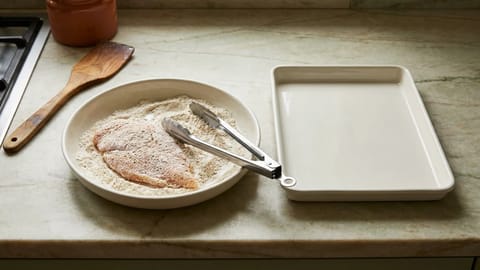
- Dredging in flour before frying puts starch and protein on the outside of the food, and that coating browns into a crisper crust than bare protein does.
- A little sugar in a dry rub speeds up surface color, but sugar scorches before a thick cut is done. Save it for quick-cooking pieces or keep the heat moderate.
- Dry-aged beef crusts fast. Enzymes have spent weeks breaking proteins into free amino acids, and free amino acids are exactly what the reaction wants.
Maillard reaction vs caramelization
The two get conflated constantly. They are separate reactions that happen to run at the same time in most cooking.
Per-sugar caramelization temperatures differ enough that a single number misleads, and our caramelization entry breaks them down properly. When you roast vegetables, both reactions run: Maillard on the amino acids, caramelization on the sugars, which is why the result tastes more layered than either one alone. They are rarely the only two processes going either, and our guide to the chemical reactions behind everyday cooking charts them against the temperatures where each begins.
How to get more browning
Searing meat
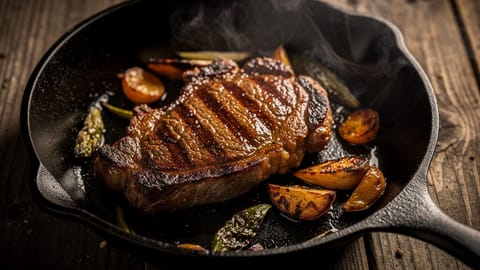
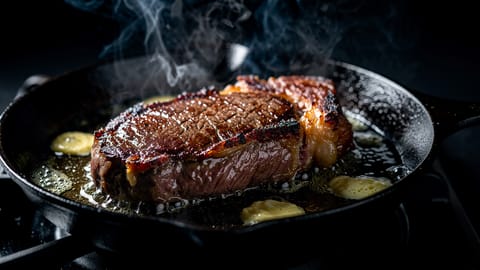
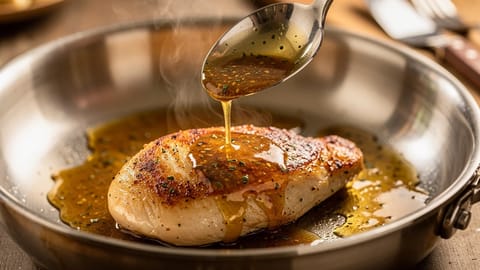
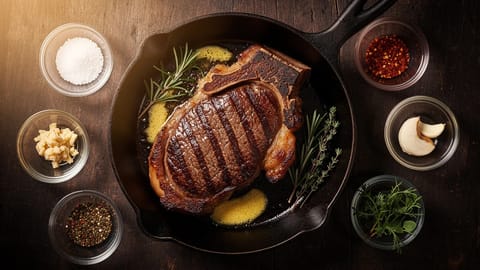
A good sear is a contact problem: dry, protein-rich surface against a very hot pan, undisturbed.
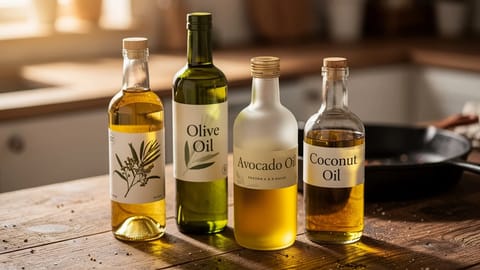
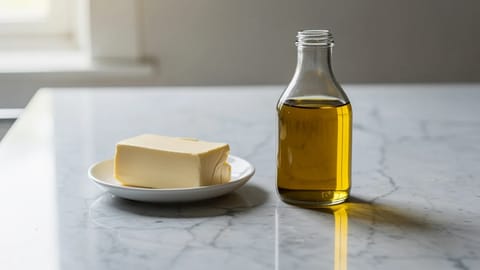
Fat choice matters more at sear temperatures than anywhere else in cooking. Butter browns and then burns well below a hot pan's surface temperature, so for a hard sear use something from the top of the smoke point range; our butter versus oil comparison covers when to swap one in for the other.
Roasting vegetables
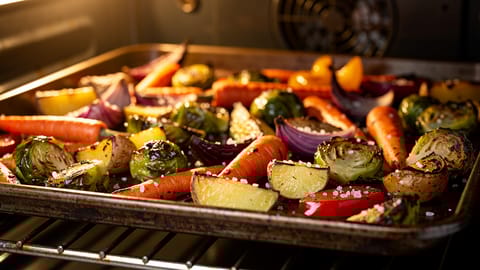
- Cut for surface area. Halves with a flat face down beat small cubes.
- Toss with oil and spread in one layer. Overlapping pieces steam each other.
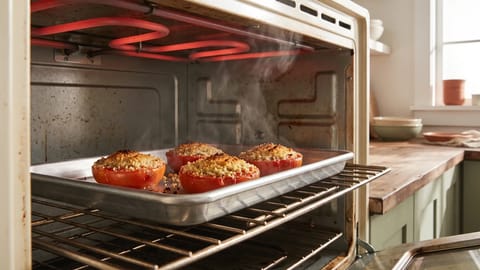
- Roast at 200°C (400°F) or above. Convection helps by clearing steam off the pan.
- Leave them alone for the first 15 to 20 minutes so the contact face can color.
Baking bread
- Start hot, around 230°C (450°F), to drive surface color early.
- Steam for the first 10 minutes. It gelatinizes surface starch, which then browns better once the steam clears.
- Drop the temperature and finish dry. An egg or milk wash adds protein and sugar for a deeper color.
Browning before a braise
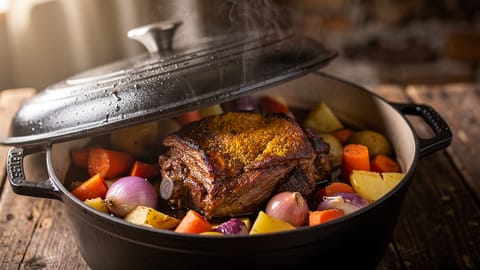
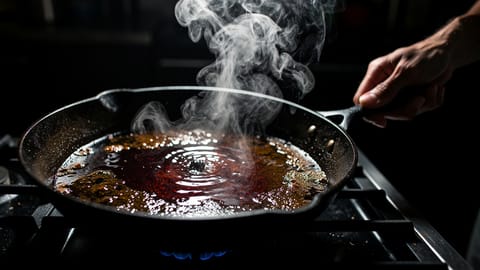
The sear is where a braise gets its depth, because nothing in the pot afterward runs hot enough to brown anything. Color the meat hard, then deglaze so the fond ends up in the sauce instead of on the pan. Skip it and the finished dish tastes thin no matter how long it cooks.
Maillard reaction examples
| Food | What the reaction produced | Why it works |
|---|---|---|
| Seared steak | Dark crust, roasted beef aroma | Protein-rich surface, dry, very hot pan |
| Toast | Golden color, nutty smell | Starch-derived sugars, dry heat, thin cross-section |
| Roasted coffee | Complex bitterness, caramel notes | Free amino acids in the green bean, high roast temperature |
| French fries | Crisp golden shell | Surface sugars plus oil hot enough to drive off water instantly |
| Grilled onions | Sweet and savory at once | Natural sugars plus amino acids, both reactions running |
| Roast chicken skin | Crisp, deeply flavored | Protein-rich skin that dries out in oven heat |
| Cookies | Brown edges, toffee flavor | Butter proteins and brown sugar meeting a dry oven |
| Pretzels | Mahogany, glossy crust | Alkaline dip before baking |
| Soy sauce | Deep brown, heavy umami | Months of slow browning during fermentation |
Is the Maillard reaction dangerous?
Browning food is ordinary cooking and happens in nearly everything you eat hot. The specific compound worth knowing about is acrylamide.
Acrylamide forms through one branch of the Maillard pathway, the one that starts with the amino acid asparagine reacting with reducing sugars. EFSA describes it forming in starchy foods heated above 120°C in low-moisture conditions: fried potato products, coffee, bread, biscuits and crackers. EFSA's experts concluded that dietary acrylamide potentially raises cancer risk across all age groups, while noting that human studies remain limited and inconsistent. The US National Cancer Institute puts it the same way: rodent studies show increased cancer risk, and human epidemiology has not found consistent evidence of a link.
Two practical consequences:
- Cook starchy food to golden, not dark. The color you can see tracks the compound you cannot. Keeping potatoes out of the refrigerator helps too, since cold storage raises their sugar content.
- This is a starch problem, not a meat problem. Searing a steak does not make acrylamide. Meat cooked very hot raises a separate question about heterocyclic amines and polycyclic aromatic hydrocarbons, which the National Cancer Institute associates with cooking above about 150°C (300°F) and with fat dripping onto flame; population studies there have not established a definitive link in humans either.
Brown your food. Don't blacken it. The working range does the flavor work without the questions.
The Maillard reaction in Fond
Fond hasn't launched yet. This is how it will work at launch. Join the waitlist for early access.
Fond's Cook mode walks a recipe one step at a time with timers attached, which is exactly when browning instructions get skipped. Drying the surface, preheating the pan properly, and leaving the meat alone for three full minutes all happen while your hands are busy and your attention is elsewhere. Having the current step on screen with its timer running is the difference between a crust and a gray edge.
Sources
- Maillard Reaction in Flour Product Processing: Mechanism, Impact on Quality, and Mitigation Strategies of Harmful Products — Foods
- Insights into flavor and key influencing factors of Maillard reaction products: A recent update — Frontiers in Nutrition
- Acrylamide — European Food Safety Authority
- Acrylamide and Cancer Risk — National Cancer Institute
- Chemicals in Meat Cooked at High Temperatures and Cancer Risk — National Cancer Institute