 Bastien
Cast Iron Skillet
A cast iron skillet is a heavy 2-4 kg pan made from molten iron poured into a sand mold, prized for its heat retention, oven-to-stovetop versatility, and the natural non-stick surface (seasoning) that develops with use.
A cast iron skillet is a heavy, thick-walled frying pan made from molten iron poured into a sand mold. In cooking, a cast iron skillet is prized for its heat retention: it stays hot when cold food hits the surface, which makes it the go-to pan for searing steaks, frying eggs, baking cornbread, and any technique that depends on consistent, high heat.
Cast iron has been cast into cookware for centuries, and cast iron skillets have been a kitchen standard in Western cooking since the 18th century. Unlike modern non-stick pans that wear out in a few years, a well-maintained cast iron skillet lasts generations. It is valued for heat retention, durability, and non-stick cooking when properly seasoned, and the seasoning is also what keeps bare iron from rusting.
Why use a cast iron skillet?
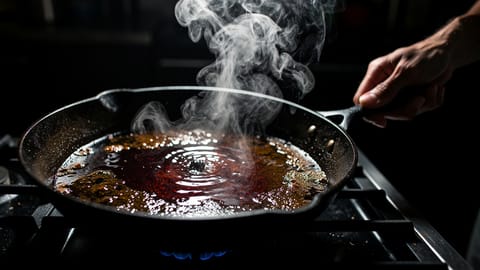
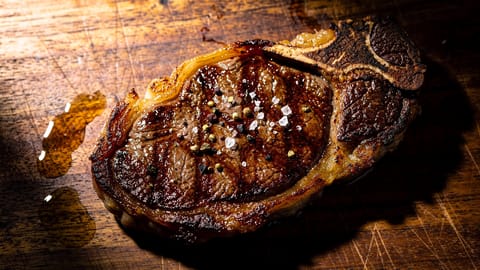
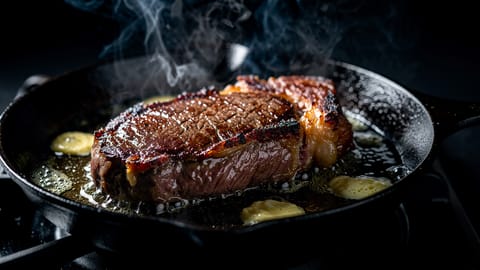
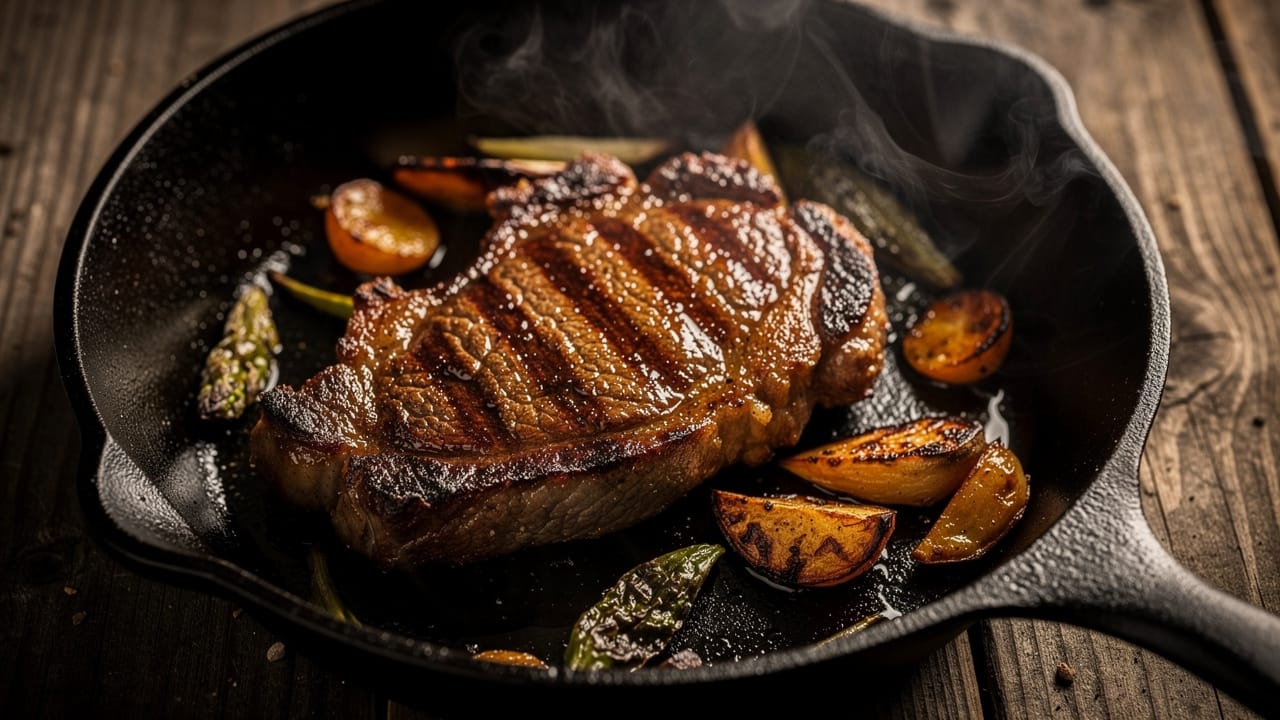
Heat retention. Cast iron is dense and heavy, so it stores a large amount of thermal energy. When you place a cold steak on a stainless steel pan, the temperature drops sharply. A cast iron skillet barely flinches. It stays hot enough to maintain the Maillard reaction and produce a deep, even sear without steaming the meat.
Oven-to-stovetop versatility. A cast iron skillet handles any heat source: gas, electric, induction, oven, broiler, grill, and campfire. You can sear on the stovetop and finish roasting in the oven without switching pans.
Natural non-stick surface. With proper cast iron skillet seasoning (a polymerized oil layer), the surface becomes naturally non-stick. The more you cook with it, the better the surface gets. No synthetic coatings that degrade over time.
Durability. There is no wear-out mechanism. Cast iron doesn't warp, the handle doesn't loosen, and the cooking surface improves with age. The only maintenance is seasoning.
How do you season a cast iron skillet?
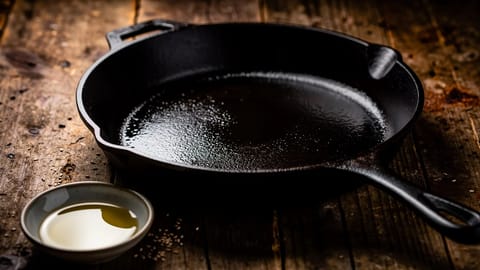
Seasoning is the thin, hard layer of polymerized oil that protects the iron from rust and creates a non-stick cooking surface. When oil is heated past its smoke point, it bonds to the iron through polymerization, a chemical reaction that turns liquid fat into a solid, plastic-like coating.
Initial seasoning (for new or stripped pans):
Tip: "Almost dry" matters. Too much oil creates a sticky, uneven surface. The goal is a molecular-thin layer that polymerizes completely. Multiple thin coats build a better surface than one thick coat.
For a complete walkthrough, see our guide to seasoning cast iron.
How do you clean and care for a cast iron skillet?
Daily cast iron skillet cleaning is simpler than most people think. The seasoning is tougher than it looks, and Lodge's own care guide is far more relaxed than the folklore.
The old advice against soap dates back to when soap contained lye, which actually dissolves polymerized oil. Today's mild dish soap is completely safe for seasoned cast iron.
What is a cast iron skillet best for?
| Great for | Not ideal for |
|---|---|
| Searing steaks and chops | Long-simmered acidic sauces (tomato, wine) |
| Pan-frying (chicken, fish, eggs) | Very delicate fish that falls apart |
| Cornbread, Dutch babies, skillet cookies | Quick stir-fries that need constant tossing |
| Smash burgers | Boiling water or making stock |
| Skillet pizza | Light sautes where weight matters |
| Roasting in the oven | |
| Deglazing for pan sauces |
The acid warning is often overstated. A quick deglaze with wine or a splash of lemon juice is fine on well-seasoned cast iron. The problem is simmering tomato sauce for 30+ minutes. Prolonged acid contact strips seasoning and can give food a metallic taste.
What size cast iron skillet should you buy?
| Size | Best for |
|---|---|
| 8 inch (20 cm) | Eggs, single portions, side dishes |
| 10 inch (25 cm) | Everyday cooking for 1-2 people |
| 12 inch (30 cm) | The most versatile size, handles nearly everything for 2-4 people |
| 15 inch (38 cm) | Large batches, whole chickens, party-scale cooking |
A 12-inch skillet is the workhorse size for most home cooks. If you buy one cast iron skillet, make it that one. It fits four chicken thighs or two large steaks without crowding, which is what makes searing work.
How does cast iron compare to stainless steel and non-stick?
| Feature | Cast iron | Stainless steel | Non-stick (PTFE) |
|---|---|---|---|
| Heat retention | Excellent | Good | Poor |
| Searing performance | Best | Very good | Poor (low max temp) |
| Weight | Heavy (5-8 lbs) | Medium | Light |
| Oven safe | Yes, any temp | Yes, any temp | Usually under 450°F (230°C) |
| Non-stick | Improves with use | No | Yes, but degrades |
| Lifespan | Generations | Decades | 2-5 years |
| Maintenance | Season + oil | Minimal | Minimal |
| Acidic foods | Limited | No problem | No problem |
| Price | $20-$50 | $50-$200 | $20-$80 |
When to choose cast iron: searing, frying, baking, and any task where heat retention matters. When to choose stainless steel: acidic sauces, deglazing, and fond-building where you want to see the browning. When to choose non-stick: eggs, crepes, and delicate foods that stick easily. For more on choosing the right cooking fat for each pan, see butter vs oil.
Should you get an enameled cast iron skillet instead?
Enameled cast iron is the same iron with a glassy enamel coating fused to the surface. The enamel prevents rust, removes the need to season, and allows more thorough cleaning, and it tolerates acidic foods, which makes it the better choice for long-simmered tomato sauces and braises. It also limits the small amount of iron that bare pans leach into food.
The trade-offs are real, though. Enameled pans lose some of bare cast iron's ability to withstand searing heat and to build a non-stick surface, the enamel can chip if the pan is dropped or shocked with cold water, and a similar pan can cost three or four times as much as its bare counterpart. For a skillet that mostly sears and fries, bare cast iron is the better tool. For a pot you braise and simmer in, enamel wins, which is why most Dutch ovens are enameled.
What are the most common cast iron myths?
"Never use soap." False. Modern dish soap is mild and won't strip polymerized seasoning. This myth comes from the lye soap era. Wash your skillet with soap whenever you want.
"Don't cook acidic foods." Mostly false. A quick deglaze with wine or vinegar is fine. Avoid simmering tomato sauce for hours, that's the scenario that actually damages seasoning.
"Cast iron heats evenly." False. Cast iron actually heats unevenly on the stovetop. The area directly over the burner gets much hotter than the edges. What cast iron does well is retain heat once it's hot. Preheat for 5-10 minutes, rotating the pan once, for the most even temperature.
"Old cast iron is better than new." Partly true. Vintage skillets (pre-1960s) were machined smooth after casting, creating a flatter cooking surface. Modern Lodge skillets have a slightly pebbly texture from sand casting. Both work well. Modern pans just need a few more rounds of seasoning to build up a smooth surface.
What are the most common cast iron problems?
Cause: Too much oil applied before baking. The excess didn't polymerize fully.
Fix: Place the skillet upside down in a 450°F (230°C) oven for an hour to bake off the residue. Next time, wipe the oil on, then wipe it off until the pan looks almost dry. You want a molecular-thin layer, not a visible coating.
Cause: Thick layers of oil that polymerized on the surface without bonding to the iron underneath. Common with flaxseed oil applied too heavily.
Fix: Strip the seasoning with oven cleaner or a self-cleaning oven cycle, then re-season from scratch with 3-4 thin coats. Switch to grapeseed oil or Crisco for a more forgiving build.
Cause: Pan not preheated enough, or seasoning hasn't built up yet. New skillets need 10-20 cooking sessions to develop a strong non-stick layer.
Fix: Preheat for a full 5 minutes over medium heat before adding food. Use a bit more oil than you think you need on newer pans. Cook fatty foods (bacon, sausage) for the first few uses to accelerate the seasoning.
Cause: Moisture left on the surface, or stored in a humid environment without oil.
Fix: Scrub rust off with steel wool or a chain mail scrubber. Wash, dry, and re-season with 2-3 oven cycles. Prevent future rust by drying on a hot burner after every wash and applying a thin oil coat before storing.
Cast iron skillet in Fond
Fond hasn't launched yet. This is how it will work at launch. Join the waitlist for early access.
Fond tags recipes by equipment, so you can filter your library for the dishes that call for a cast iron skillet when you're planning a searing night. In Cook Mode, any preheat or resting timers written into the recipe are one tap away, which helps with the 5-10 minute preheat that cast iron needs before the food goes in.