 Bastien
The Complete Food Storage Guide: Fridge, Freezer, and Pantry
A practical guide to storing food properly at home, covering fridge zones, freezer wrapping, pantry conditions, the temperature danger zone, safe timing windows, containers, and how to tell when food has gone bad.
TL;DR: The fridge handles short-term storage at 1-4°C, the freezer handles long-term at -18°C, and the pantry handles shelf-stable items at cool, dry, dark conditions. Keep perishables out of the 4-60°C danger zone, wrap freezer food airtight, and transfer opened fridge items into sealed containers. The rest is details.
Most kitchens lose groceries every week. Herbs wilt in the crisper, chicken develops that plastic-bag funk within three days, and the leftover rice at the back of the fridge becomes a guessing game. Learning how to store food properly isn't one big revelation. It is a string of small, boring adjustments that add up: a thermometer, better containers, a labeling habit. This guide covers all of them in one place.
Proper food storage sits at the intersection of safety and quality. The food-safety rules come from the FDA and USDA. The quality rules come from physics and chemistry (moisture loss, enzyme activity, ethylene off-gassing, ice crystal damage). You don't need to memorize the science, but it helps to know why certain tricks work.
The food storage basics
The single most important rule: keep perishable food out of the temperature danger zone. Between 4°C and 60°C (40°F to 140°F), bacteria multiply fast enough to cause illness within a few hours. Above 60°C they die off. Below 4°C they slow down dramatically. That window is where most food-safety problems happen.
This leads to the two-hour rule. Any perishable food left at room temperature should go back into cold storage within two hours. If the kitchen is above 32°C (summer, hot oven, outdoor BBQ), cut that to one hour. Past the window, reheating won't make the food safe again because many bacterial toxins survive cooking.
Tip: A cheap probe thermometer is the best food-safety purchase you'll ever make. Keep one in the fridge, one in the freezer, and one for cooking. The dial settings on appliances drift; actual temperatures don't lie.
Fridge storage: what goes where
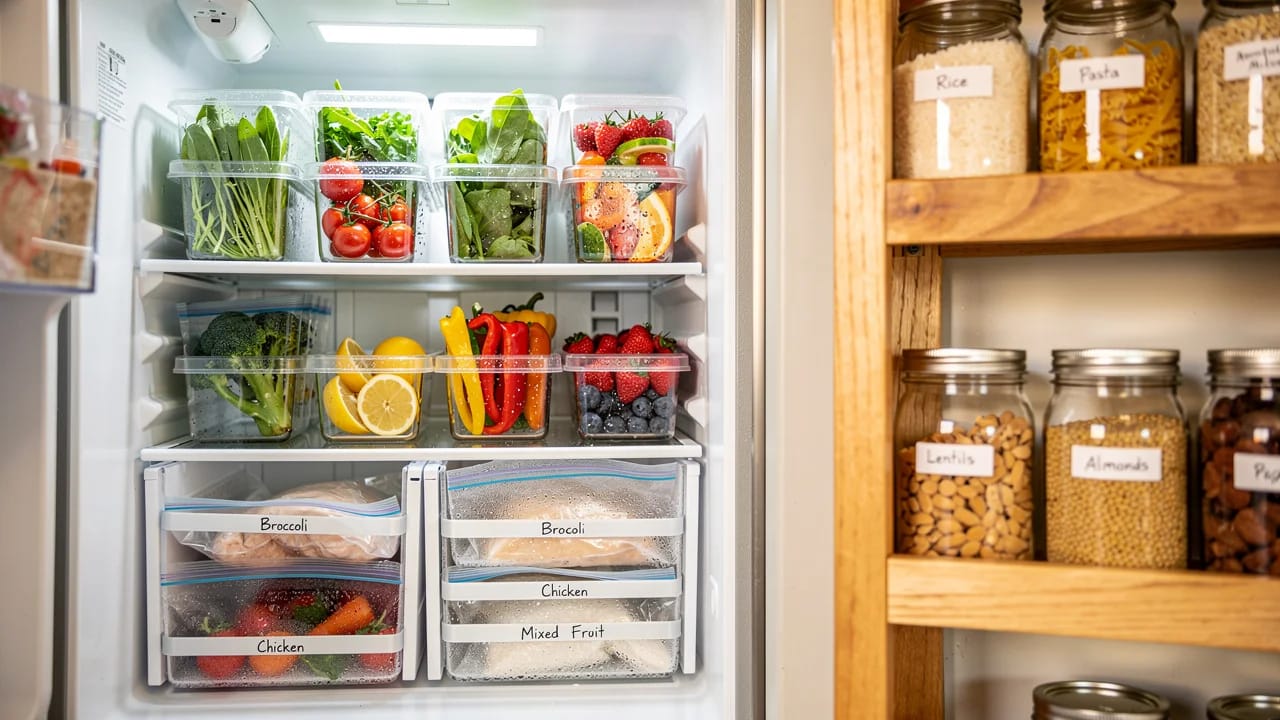
Every fridge has temperature gradients. The door is the warmest spot and the back of the bottom shelf is the coldest. Using that geography intentionally makes a real difference.
Top shelf: Ready-to-eat foods and leftovers. This is the most consistent temperature zone and stays cleaner because nothing raw drips down onto it.
Middle shelves: Dairy, eggs, deli meats. Not the door, despite where the egg rack lives. Door temperatures fluctuate 2-3°C every time you open it.
Bottom shelf: Raw meat, poultry, and fish. Always the lowest level so that if anything leaks, it can't contaminate food below. A rimmed tray under raw proteins catches drips for the same reason.
Crisper drawers: Fruits in the low-humidity drawer (vents open), vegetables in the high-humidity drawer (vents closed). Fruits release ethylene gas as they ripen, and most vegetables wilt faster when exposed to it. Keep them separate.
Door: Condiments, butter, sauces, water pitchers. Tolerant of small temperature swings. Never eggs or milk, even though manufacturers design racks for them.
Note: If your fridge isn't full, add jugs of water. Thermal mass helps the compressor cycle less, keeps temperature steadier, and saves electricity. A half-empty fridge swings temperatures much more than a packed one.
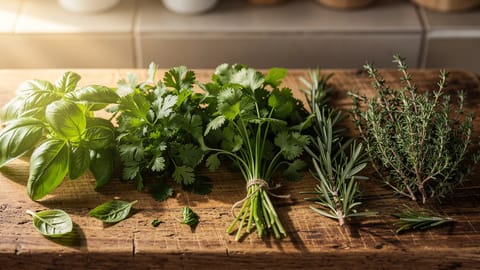
For produce specifically, a few items deserve their own notes. Tender herbs benefit from the glass-of-water trick: trim the stems, stand them in water, cover loosely with a bag. Mushrooms go in paper bags, not plastic; plastic traps moisture and speeds up slime. Berries skip the wash until you're ready to eat them, because surface moisture cuts their shelf life in half.
Freezer storage: prep, wrap, label
The freezer is forgiving on safety and unforgiving on quality. Food stays safe essentially forever at -18°C, but texture and flavor degrade steadily. The goal of freezer technique is slowing that quality decline.
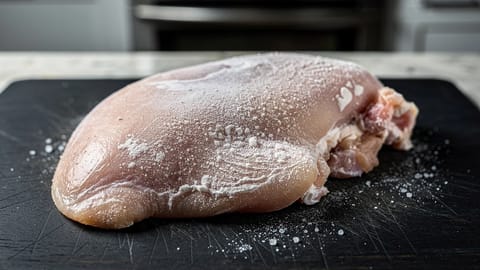
The common enemy is freezer burn: those pale, papery patches on frozen food. It's dehydration caused by moisture sublimating from the surface when it contacts air. Tight wrapping prevents it; loose wrapping guarantees it. Double-wrap anything going in for more than a month.
Warning: Don't refreeze food that thawed on the counter or in warm water. Fridge-thawed food is usually fine to refreeze, but the texture takes a hit. If in doubt, cook it first, then freeze the cooked version.
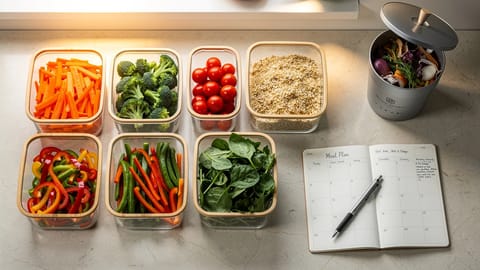
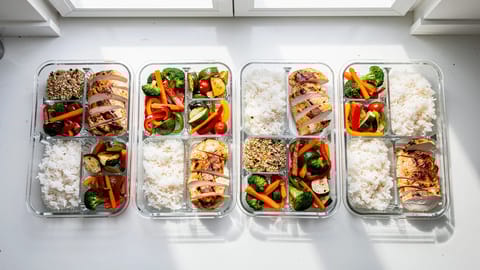
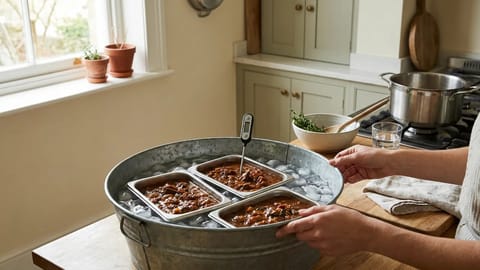
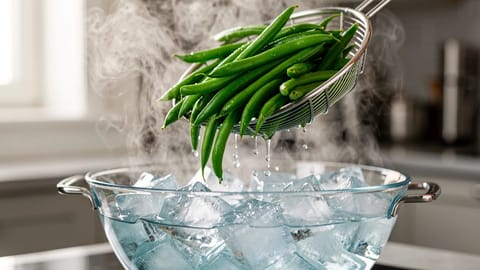
Batch cooks pay off big in the freezer. Soups, stews, cooked grains, and meal-prep portions freeze beautifully if packaged right. Flat-packed bags stack efficiently and thaw quickly. Rigid containers waste more space but protect softer items better. For produce, blanch-and-shock before freezing deactivates the enzymes that otherwise cause off-flavors during storage.
Pantry and dry storage
Pantry food is shelf-stable, which doesn't mean immortal. Heat, light, humidity, and oxygen still degrade dry goods over time. Good pantry conditions are 10-21°C, below 15% humidity, dark, and pest-free.
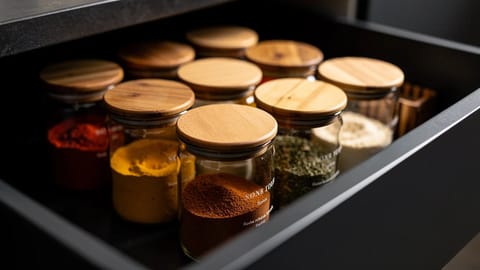
Most dry goods keep best in airtight containers after opening. Flour, sugar, rice, pasta, and dried beans all last longer in glass or heavy plastic than in their original paper bags. Spices lose potency fast once exposed to air, so store whole spices away from the stove, not above it.
Pantry staples and their practical shelf lives, assuming proper storage:
- Dried pasta, rice, lentils: 1-2 years
- All-purpose flour: 6-12 months (whole-wheat drops to 3-6 due to bran oils)
- Sugar (white, brown, powdered): indefinite
- Baking soda: 6 months active, longer as a deodorizer
- Oils: 6-12 months; refrigerate nut oils
- Canned goods: 1-2 years past the date for low-acid, 12-18 months for high-acid like tomato
Root vegetables deserve pantry-style storage even though they're fresh. Potatoes go in a dark, cool, ventilated spot, never with onions, because onion gas makes potatoes sprout. Onions and garlic like similar conditions but apart from potatoes. Winter squash keeps for months on a counter in a cool room.
Foods that don't belong in the fridge
The fridge is a powerful tool, but it's not universal. Several common foods get worse in cold storage.
Tomatoes: Cold kills flavor and turns the texture mealy. Ripe tomatoes keep 3-5 days on the counter; use them fast.
Potatoes: Fridge cold converts potato starch to sugar, which caramelizes aggressively when cooked and can form acrylamide at high heat. Keep them in a paper bag somewhere cool and dark.
Onions and garlic: They dry out and absorb fridge humidity at the same time, which somehow makes them both mushy and leathery. Mesh bag, cool pantry.
Bread: Fridge staling is faster than counter staling. That's real food science, not a myth. Room temperature in a paper bag for daily use, freezer for longer storage.
Bananas: The skin turns black and the flavor development stalls. Only refrigerate once fully ripe, and even then the peel will darken.
Honey, olive oil, coffee beans: All keep best at cool room temperature. Honey crystallizes in the fridge, olive oil clouds and separates, coffee picks up fridge odors and humidity.
Containers: what actually keeps food fresh
Container choice matters more than most guides let on. The best fridge or freezer setup loses effectiveness if the packaging lets air in.
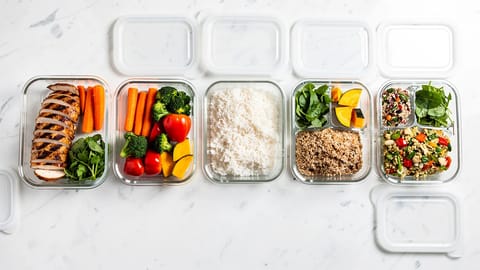
For fridge storage, glass containers with silicone-gasket lids are the best all-rounders for leftovers and produce. Glass doesn't absorb odors or stain, and the clear sides show what's inside without opening. For freezer storage, flat-pack freezer bags or dedicated freezer containers with tight lids. Thin deli containers crack below -10°C.
For dry goods, wide-mouth mason jars work for everything from flour to dried beans. Pour from a bag and label with a grease pencil. A good container setup also cuts food waste by making contents visible instead of buried.
Tip: Match container size to contents. A half-cup of leftover rice in a quart container has too much headspace and dries out fast. Transfer to the smallest container the food fits in.
How long food lasts: a reference table
These are quality-first estimates, assuming proper storage at the right temperature. Safety windows can be slightly longer but flavor degrades past these ranges.
For a fully authoritative reference, Health Canada's safe food storage chart lists fridge and freezer windows by item, and the FDA's storage page sets the 4°C fridge, -18°C freezer, and two-hour rules this guide follows.
When to toss it: signs food has gone bad
Use-by dates are guidance, not law. Your senses are better detectors than a printed date for most items. Trust what you see and smell, and when in doubt, throw it out.
Dairy develops a distinct sour odor before visible changes. Pour some into a clear glass; curdling or graininess confirms it. Discard.
A slimy film means bacterial growth. Even if the smell seems fine, the texture change is enough reason to discard. No amount of rinsing makes it safe.
Toss the whole item. Visible mold means invisible mold has spread through the food. Hard cheeses are the only exception: cut 2.5cm (1 inch) around the spot and use the rest.
Could be oxidation (harmless, especially on ground meat) or spoilage. Combined with any smell or sliminess, discard. Fresh meat only? Cook and use immediately.
Throw out without opening. Bulging means gas-producing bacteria, which can include Clostridium botulinum. Never taste to check.
If your soup is bubbling or your leftovers smell alcoholic or yeasty, bacteria or yeast have taken over. Discard.
Safe to eat but quality-degraded. Trim the affected parts or use in soups and stews where texture matters less.
Best practices and common mistakes
Food storage isn't glamorous, but it's one of the highest-impact skills in the kitchen. A well-run fridge cuts grocery bills, reduces waste, and makes weeknight cooking less frantic. Pick two or three changes from this guide (a thermometer, a labeling habit, better containers) and try them for a month. The rest will follow on their own.