 Bastien
How to meal prep: a practical guide for beginners
Classic meal prep means dedicating about 2 hours on a Sunday to planning, cooking, and portioning complete meals for the week ahead. Unlike batch cooking, which produces versatile components you mix and match, meal prep gives you finished meals ready to grab and eat. This guide covers everything from equipment and shopping lists to a minute-by-minute prep day timeline and safe storage practices.
Spending 45 minutes cooking dinner every night adds up to over 5 hours a week standing in front of the stove. Multiply that by the mental load of deciding what to eat, shopping without a plan, and cleaning up each time, and weeknight cooking starts to feel like a second job. Meal prep fixes that. You dedicate one focused session, about 2 hours on a Sunday, to preparing portioned, ready-to-eat meals for the days ahead. The result: you open the fridge on a Tuesday night and dinner is already done.
This guide walks you through how to meal prep from scratch, whether you've never prepped a single container or you've tried before and gave up by Wednesday. No vague advice. Real timelines, specific temperatures, and a step-by-step system you can start this weekend.
What is meal prep?
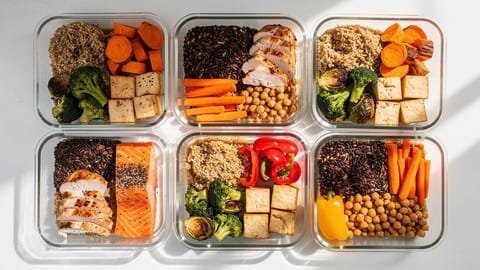
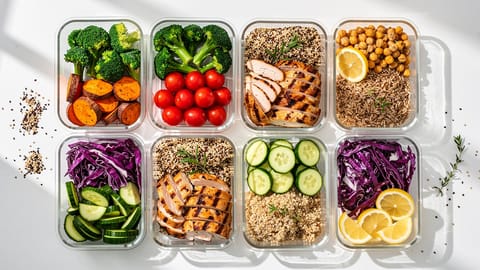
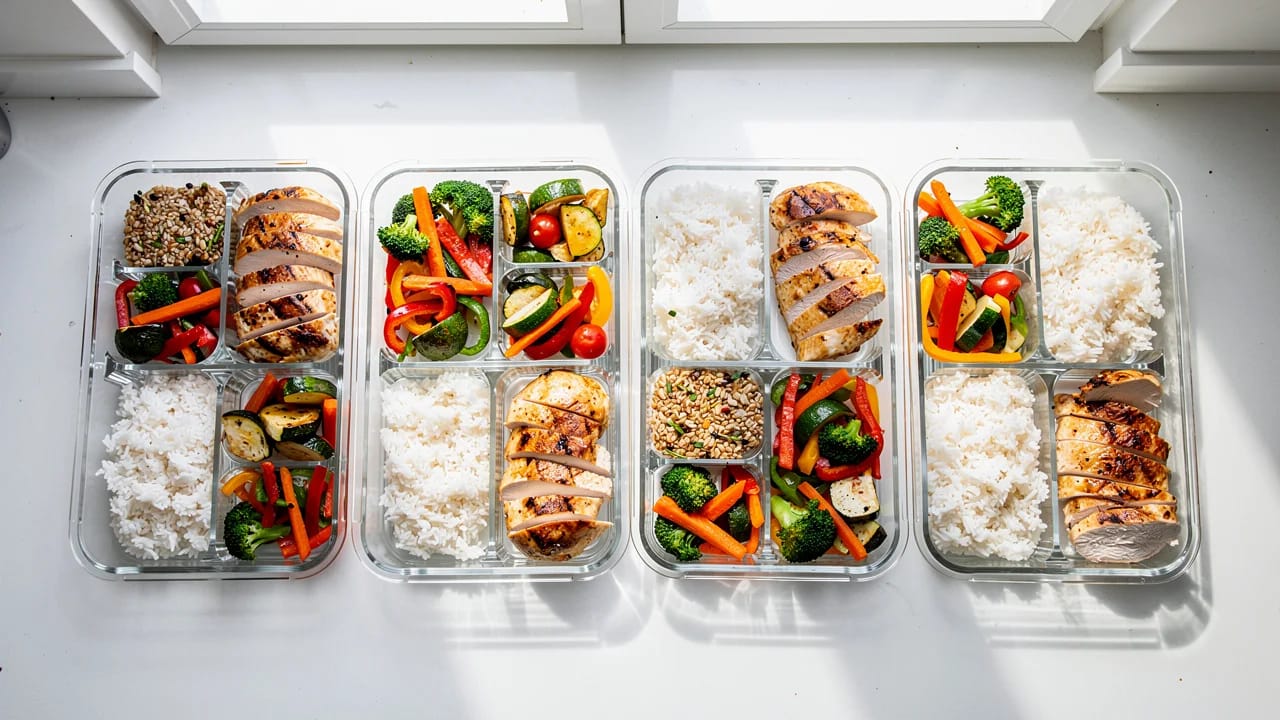
Meal prep covers any cooking and portioning done ahead of time, and this guide focuses on the classic version: planning, cooking, and portioning complete meals in advance so they are ready to grab and eat throughout the week. Unlike batch cooking, which focuses on preparing versatile components you mix and match into different dishes, classic meal prep produces finished meals with protein, starch, vegetable, and sauce already assembled in individual containers.
Think of it this way: batch cooking gives you a fridge full of building blocks. Meal prep gives you a fridge full of lunches.
Both approaches save time. The difference is in how much assembly you want to do on a weeknight. If you prefer zero decisions at mealtime, meal prep is your method. If you like a bit of creative flexibility, batch cooking might suit you better. Many people use a combination of both, with prepped lunches and batch-cooked dinner components. For a full comparison, see our batch cooking guide.
Four approaches to meal prep
Not all meal prep looks the same. Pick the style that fits your week:
- Individual portions. Cook complete meals on Sunday, divide them into containers, and grab one each day. This is classic meal prep and what most of this guide focuses on.
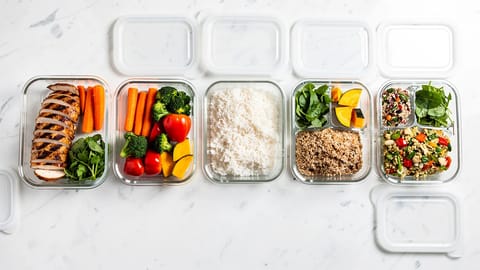
- Batch cooking components. Prepare proteins, grains, and vegetables separately. Mix and match them throughout the week for more variety. Our batch cooking guide covers this approach in depth.
- Ingredient prepping. Wash, chop, and portion raw ingredients without cooking them. Great if you enjoy cooking but hate the daily chopping and measuring.
- Freezer meals. Assemble meals raw or cooked, freeze immediately, and thaw as needed. Best for people who want two weeks of food from a single session.
Individual portions are the usual starting point, because zero decisions at lunchtime is the thing most people are actually after. A hybrid tends to settle in later: portioned lunches, batch-cooked dinner components, and more room to improvise in the evening.
Why meal prep is worth your time
Meal prep pays out in two currencies. The obvious one is time, since a single session stands in for four or five weeknight cooking sessions. The less obvious one is what you eat when you're tired, which is where most good intentions quietly fall apart. Money comes into it too, though how much depends entirely on what you were buying before. Here is what each of those looks like in practice, and where the whole thing stops being worth doing.
Save 4-6 hours per week
The math is simple. Cooking dinner from scratch takes 30-45 minutes per night, plus cleanup. That's 3.5 to 5.25 hours across seven days. A single 2-hour meal prep session replaces four or five of those nights. Even accounting for the prep session itself, you come out 2-4 hours ahead every week.
Spend less on food
A home-cooked meal lands somewhere around $3-5 per serving, against roughly $12-20 for a takeout order. Those are ballpark numbers rather than measured ones, and they move a lot with your city and your shopping habits. Run them for a household of two swapping three takeout nights a week and you get $40-90 back per week, which annualizes into real money. You also waste less food, because you shop with a plan and cook what you actually bought.
Eat better without thinking about it
Decision fatigue is real. When healthy food is already cooked and portioned in the fridge, you eat it. When it isn't, you default to whatever is fastest, and fastest usually means delivery or a bowl of cereal. Meal prep removes the daily negotiation with yourself about what to eat. The decision was already made on Sunday.
When meal prep isn't worth it
Most guides on this topic skip the part where meal prep goes wrong, so here it is. Prepped food that never gets eaten is money and time thrown away twice over, and unpredictable weeks are very good at producing exactly that. If your evening plans change three times a week, five finished containers are a liability.
Texture is the other honest limitation. Anything crisp is compromised by day two, and a few dishes are simply worse cold-stored: fried food, delicate greens, and cream sauces that split on reheating. Most cooked food also has a real ceiling of four to five days in the fridge, so a full seven-day plan means freezing part of it on prep day rather than pushing the fridge dates.
And some people cook to wind down. Batching that into a single Sunday session removes the thing they liked. If any of this sounds like your week, prep components instead of finished meals. A cooked grain, a roasted protein, and a jar of dressing keep the same shortcut without committing you to a menu you may not want on Thursday. Our batch cooking guide covers that version in full.
What you need to get started
One sheet pan and one large pot will carry you through a first prep day, using whatever containers are already in the cupboard. Buying equipment before the habit exists is the most reliable way to spend money on a routine that never starts. Two upgrades genuinely change the experience once you're a few weeks in, and both are listed below.
Essential equipment
You don't need a kitchen full of gadgets. Here's the short list:
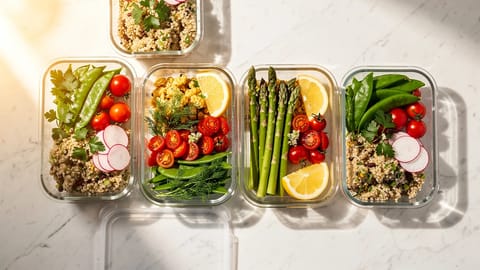
- Meal prep containers. Glass containers with snap-lock lids are ideal: microwave-safe, dishwasher-safe, and you can see what's inside without opening them. Start with 10-12 containers in the 3-cup (700 ml) size. BPA-free plastic works too if you're on a budget.
- Two sheet pans. Half-sheet pans (18 x 13 inches) are the workhorse of meal prep. You will roast proteins on one and vegetables on the other, both at the same time.
- A large pot. For grains, pasta, soups, and boiling eggs.
- A sharp knife and a large cutting board. A dull knife slows everything down and makes prep day miserable. If you want to level up your knife cuts, that helps too, but any rough chop works for meal prep.
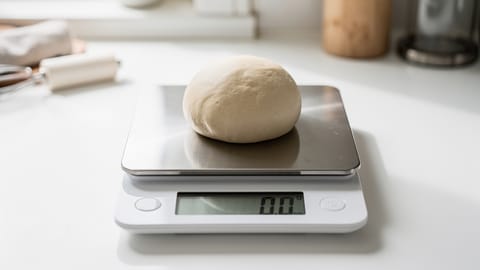
- Optional but helpful: a kitchen scale for accurate portioning, an instant-read thermometer for proteins, and a slow cooker or pressure cooker for hands-off cooking.
Your first shopping list
Keep your first meal prep simple. Buy ingredients that cross over between meals and store well for 4-5 days. Here's a solid beginner shopping list:
Proteins: 2 lbs (900g) chicken thighs, 1 dozen eggs, 1 can black beans
Grains: 2 cups dry rice, 1 lb pasta
Vegetables: 2 heads broccoli, 3 bell peppers, 2 sweet potatoes, 1 bag spinach
Pantry: olive oil, salt, pepper, garlic, soy sauce, one lemon
That list costs roughly $25-35 at most grocery stores and yields 8-10 portioned meals.
How to meal prep step by step
Five steps follow, and only one of them involves heat. That ratio catches people out. Prep days usually fail on the planning rather than the cooking: meals that share no ingredients, or a shopping list assembled from memory at the store. Work through the first three steps properly and the fourth mostly runs itself.
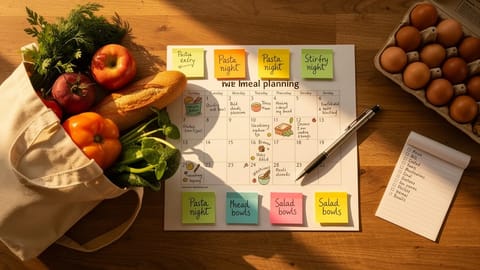
Step 1: Pick your meals for the week
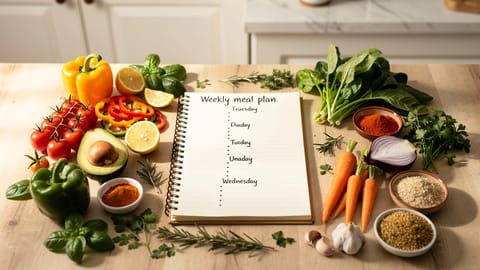
Start with 4-5 lunches and 3-4 dinners. Not 21 meals. Trying to prep every single meal your first week is the fastest path to burnout. Leave room for meals out, leftovers, and nights when you just want toast. If you need a framework for weekly meal planning, start there before diving into prep.
Choose recipes that share ingredients. If chicken thighs appear in your grain bowls and your pasta, you buy one protein instead of three. If rice shows up in two meals, you cook one big batch instead of two small ones.
A good starter week looks like this: two lunches built around the same protein and grain, two dinners with a shared vegetable base, and one soup or one-pot meal that makes great leftovers.
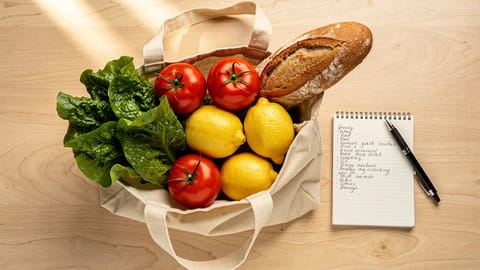
Step 2: Build your shopping list
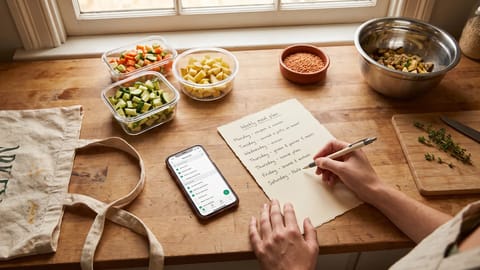
Go through each recipe and write down every ingredient with the quantity you need. Then consolidate. If three recipes call for onions, add up the total and buy that amount, not three separate entries on your list.
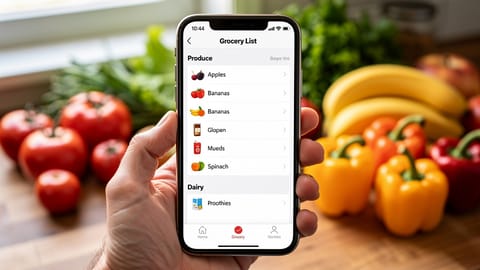
This is where most people waste money. Without a consolidated list, you overbuy, forget things, and make a second trip to the store midweek. For more ways to save at the store, see our grocery shopping tips. A recipe manager handles this automatically: import your recipes, select the ones you're prepping, and generate one unified shopping list.
Step 3: Scale your recipes
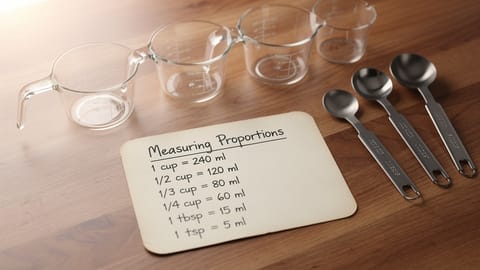
Most recipes serve 4. If you need 10 portions for the week, you're not simply doubling, you're multiplying by 2.5. That means 2.5 times the chicken, 2.5 times the rice, but not always 2.5 times the salt. Seasonings scale at about 1.5-2x when you double a recipe, because flavors concentrate differently in larger batches.
Recipe scaling matters more than people think. Guessing leads to under-seasoned proteins, overcooked grains, and pans too crowded to brown anything properly. If a recipe calls for one sheet pan, a 2.5x batch needs two sheet pans (the recipe scaling guide covers pan sizes and the ingredients that refuse to multiply cleanly), not one overloaded one where everything steams instead of roasts.
Step 4: Prep day, the 2-hour timeline
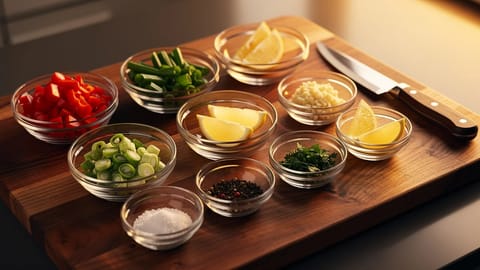
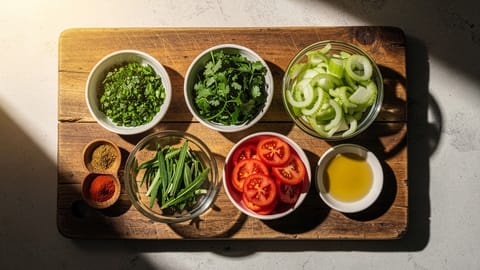
This is where meal prep either clicks or falls apart. The key is mise en place, the professional kitchen principle of having everything prepped, measured, and in position before you start cooking. Meal prep day is mise en place for your entire week.
Here's a minute-by-minute timeline for a typical Sunday session:
Expect a first run at closer to 2.5 hours. Second-guessing seasoning amounts and fussing over how the containers look is where the extra half hour goes, and both stop happening once the sequence is familiar. The timing above assumes one oven and one cook.
Step 5: Store and label everything
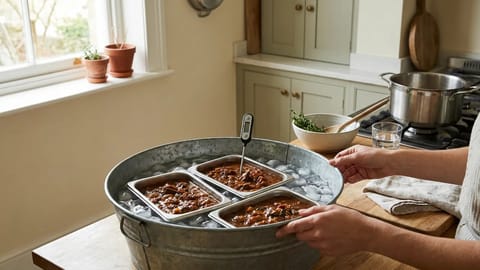
Proper storage is non-negotiable. The USDA recommends refrigerating cooked food within 2 hours of cooking. Let hot food cool uncovered for 20-30 minutes before sealing containers. Trapping steam creates condensation that makes food soggy and encourages bacterial growth.
How long does meal prep last?
This is the most common question beginners ask, and the answer depends on what you cooked. Here's a reference table:
| Food | Fridge (40°F / 4°C) | Freezer (0°F / -18°C) |
|---|---|---|
| Cooked chicken or turkey | 3-4 days | 2-3 months |
| Cooked ground meat | 3-4 days | 2-3 months |
| Cooked rice or quinoa | 3-4 days | Up to 3 months |
| Cooked pasta | 3-5 days | 1-2 months |
| Roasted vegetables | 3-4 days | 1-2 months |
| Soups and stews | 3-4 days | 2-3 months |
| Hard-boiled eggs | 5 days | Not recommended |
| Cooked seafood | 2-3 days | 2-3 months |
| Vinaigrettes and cooked sauces | 5-7 days | 1-3 months |
| Cut raw vegetables | 3-5 days | Not recommended |
The practical takeaway: prep enough meals for 4-5 days, not a full week. If you want meals for days 5-7, freeze them on prep day and move them to the fridge the night before you plan to eat them. Wrap or seal frozen meals tightly to prevent freezer burn. The FDA's safe food handling guidance sets the limits this table is built around: keep the fridge at 40°F (4°C) or below, the freezer at 0°F (-18°C) or below, and get cooked food into one of them within two hours.
Rice deserves its own note. Uncooked rice carries Bacillus cereus spores that survive cooking, so cooled rice needs to get cold faster than most leftovers and is best eaten sooner. Our guide to cooking rice explains what the UK and US agencies each recommend and why their numbers differ. If rice is the base of several containers, spread it thin to cool before you portion.
How to reheat meal prep
Reheating seems obvious until you nuke a container of rice and chicken for three minutes and end up with rubber chicken and crunchy rice. Different foods reheat differently, and getting this right is the difference between enjoying your prepped meals and dreading them.
One detail worth adopting: leave the lid slightly cracked when reheating a grain bowl. A sealed container traps the steam it generates and any topping with texture goes soft. Small change, noticeable difference.
Meal prep tips that actually help
Avoiding meal prep boredom
The number one complaint after the first month: "I'm sick of eating the same thing." Fair. Here is how to build variety without doubling your prep time.
Keep your base protein and grain neutral. Salt, pepper, garlic, maybe a little olive oil. Then rotate your sauces weekly: teriyaki one week, chimichurri the next, peanut sauce after that. Same chicken, completely different meals.
Give one slot per week to something you haven't made before. It doesn't need to be ambitious. A harissa yogurt sauce takes about four minutes and changes the flavor of an otherwise identical grain bowl completely. Looking for seasonal ideas? Our spring meal prep ideas can help you rotate with the calendar.
Common meal prep mistakes
Prepping too much food. Start smaller than you think you need. You can always prep more next week once you know your rhythm.
Storing hot food in sealed containers. Condensation makes everything soggy, and a deep sealed pot lingers in the danger zone. Cool food uncovered for 20-30 minutes first, then seal and refrigerate.
Making everything the same flavor. If every container tastes like garlic and Italian herbs, you will dread meal four. Keep base ingredients neutral and vary the sauces.
Skipping the shopping list. Wandering the grocery store without a plan leads to impulse buys, missing ingredients, and a second trip midweek. Write the list. Follow the list.
Not accounting for texture changes. Crispy roasted broccoli on Sunday becomes soft broccoli by Wednesday. That's fine, but don't prep foods where texture is the whole point (fried items, crispy toppings) days in advance. Add those fresh at mealtime.
How a recipe manager makes meal prep easier
Planning is the hardest part of meal prep, not the cooking. Deciding what to make, finding the recipes, scaling them for the right number of servings, and building a shopping list without missing anything: that takes more time than most people expect.
A recipe organizer like Fond handles the organizational side so you can focus on the cooking. Import recipes from any URL instead of bookmarking pages you will never find again. Scale a recipe from 4 servings to 10 with accurate ingredient adjustments, not guesswork. Generate a single, consolidated shopping list from all your planned meals. Access every recipe on your phone while you cook.
If you want the planning half worked out in more depth before prep day, our guide to meal planning from your own recipe collection walks through building a week that repeats without feeling repetitive.
Meal prep is a system, and like any system, it works better with the right tools. The cooking part is straightforward. The planning part is where things fall apart, and that's exactly the problem a good recipe manager solves.
Start this Sunday
Meal prep doesn't require a perfectly organized kitchen, a collection of matching containers, or a culinary degree. It requires two hours, a plan, and the willingness to eat the same lunch three days in a row (with different sauces, of course).
Pick three recipes that share at least two ingredients. Write your shopping list. Block off Sunday afternoon. Follow the 2-hour timeline above, and by Monday morning you will open the fridge to find a row of meals waiting for you, no decisions required.
The first week is always the hardest. By the third week, it feels automatic. And that's the whole point: turning dinner from a nightly problem into something that's already solved.