 Bastien
How to store spices so they actually stay fresh
A practical guide to storing spices for maximum freshness and flavor. Covers why spices lose potency, the best containers and locations, shelf life by type, and how to tell when it's time to replace them.
TL;DR: Store spices in airtight glass jars, in a cool dark spot away from the stove. Whole spices last 2-4 years; ground spices lose punch after 6-12 months. The nose test tells you everything: if it doesn't smell like much, it won't taste like much either.
A magnetic strip right above the stove is the most common spice setup, and the worst one. Six months in, the smoked paprika smells like cardboard and the cumin has the flavor intensity of sawdust. Moving everything to a closed drawer is one of the cheapest upgrades a kitchen can get.
Why spices lose their flavor
Spices get their flavor from volatile oils and compounds like eugenol (cloves), cinnamaldehyde (cinnamon), and piperine (black pepper). These compounds are called "volatile" because they evaporate. That is also why when you add a spice during cooking matters as much as how much you add. Four things speed up that evaporation:
Heat accelerates chemical breakdown. That spot above the stove? It's the worst place in your kitchen for spices. Every time you cook, rising heat and steam hit those jars.
Light degrades both flavor compounds and color pigments. UV light does the most damage, but even regular kitchen light wears spices down over time. If your paprika has faded from deep red to dull brown, that's food science in action — the carotenoid pigments have broken down.
Air carries away volatile oils every time you open the jar. This is why airtight containers matter and why you should close the lid immediately after each use.
Moisture causes clumping, caking, and in extreme cases mold. The most common source? Shaking spices directly over a steaming pot. That steam enters the jar and condenses inside once you close the lid.
The best containers for spices
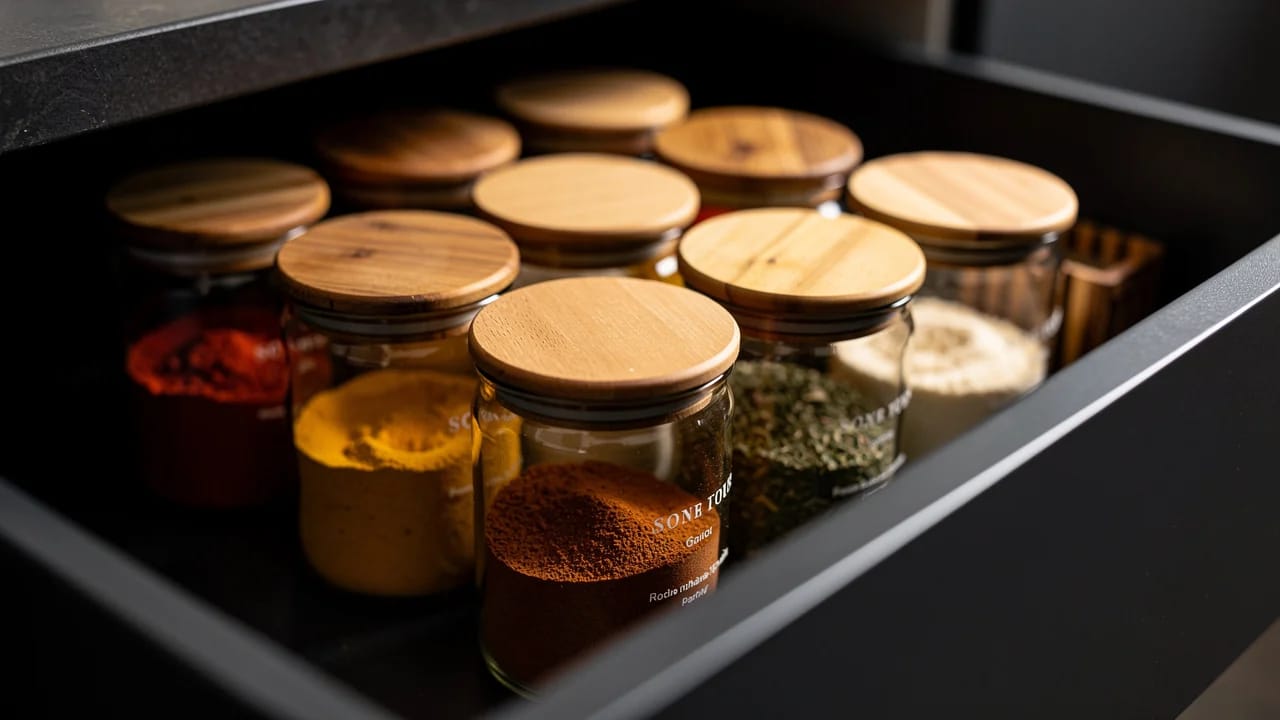
Glass jars with airtight lids are the gold standard. Four-ounce amber glass jars with screw-top lids do the job well: the amber glass blocks UV light, and the narrow opening limits air exposure.
Metal tins with tight-fitting lids work well too, especially for spice drawers. They're light, stackable, and block all light.
Tip: Skip the matching spice jar sets you see on Instagram. Buy jars in the sizes you actually need: a big one for the cumin that goes every week, a small one for the cardamom that comes out once a month.
Where to store spices
The ideal spot has three qualities: cool, dark, and dry.
Best locations:
- A closed cabinet away from the stove and dishwasher
- A dedicated spice drawer (the most practical setup)
- Inside a pantry door with narrow shelves
- A closed cupboard at counter height
Worst locations:
- Above the stove (heat and steam)
- On an open countertop rack (light exposure)
- Next to the dishwasher (heat and humidity)
- In the window (direct sunlight)
- In the fridge (humidity causes clumping)
The fridge might seem logical, but the humidity inside most refrigerators works against spice freshness. The exception: whole spices you're storing long-term (6+ months) can go in the freezer in airtight containers.
Whole vs. ground: shelf life comparison
The difference comes down to surface area. Grinding a spice exposes all its internal oils to air, light, and heat at once. A whole cumin seed keeps most of its oils locked inside until you crack it open. That's why grinding spices fresh with a mortar and pestle or a spice grinder makes such a big difference.
Spice shelf life chart: 25 common spices
The complete reference for how long each spice stays at peak flavor, the best way to store it, and what to look for when it's time to replace it. All shelf lives assume airtight storage in a cool dark place; cut times in half if stored above the stove or in clear jars on the counter.
| Spice | Form | Shelf life | Best storage | Signs it's done |
|---|---|---|---|---|
| Black peppercorns | Whole | 3-4 years | Airtight glass, dark cabinet | No bite when freshly ground |
| Black pepper | Ground | 6-9 months | Airtight, away from stove | Dusty smell, no heat |
| Cumin seeds | Whole | 3-4 years | Glass jar, cool drawer | Faint earthy aroma |
| Cumin | Ground | 6-12 months | Airtight, dark spot | Pale color, weak nose test |
| Coriander seeds | Whole | 3-4 years | Glass jar, dark cabinet | Citrus note disappears |
| Coriander | Ground | 6-12 months | Airtight, cool drawer | Flat, dusty smell |
| Cardamom pods | Whole | 3-4 years | Sealed glass, dark spot | Husk dries grey, weak aroma |
| Cardamom | Ground | 6 months | Small airtight jar | Loses sharpness fast |
| Cloves | Whole | 3-4 years | Glass jar, dark cabinet | Brittle stems, faint warmth |
| Cinnamon sticks | Whole | 3-4 years | Airtight, cool spot | Snaps without aroma |
| Cinnamon | Ground | 1-2 years | Glass, away from heat | Faded color, no warmth |
| Mustard seeds | Whole | 3-4 years | Sealed glass, cool spot | No pungency when crushed |
| Star anise | Whole | 3-4 years | Glass jar, dark drawer | Brittle, weak licorice note |
| Whole nutmeg | Whole | 3-4 years | Airtight, dark cabinet | Soft, no oil when grated |
| Nutmeg | Ground | 6-9 months | Small jar, cool drawer | Flat, papery smell |
| Paprika | Ground | 1-2 years | Dark glass, away from light | Brown-grey color |
| Smoked paprika | Ground | 6-12 months | Airtight, dark spot | Smoke note disappears |
| Turmeric | Ground | 1-2 years | Airtight, dark cabinet | Faded gold to dull yellow |
| Cayenne | Ground | 1-2 years | Glass, dark drawer | No heat on the tongue |
| Chili powder | Ground (blend) | 6-12 months | Airtight, cool spot | Muted color, dusty smell |
| Garlic powder | Ground | 1-2 years | Airtight, low humidity | Clumps, weak aroma |
| Ginger | Ground | 1-2 years | Glass jar, dark spot | Flat, no warmth |
| Bay leaves | Dried whole | 1-2 years | Airtight, cool spot | Brittle, no aroma when crushed |
| Oregano | Dried | 6-12 months | Airtight, dark cabinet | Pale green, dusty smell |
| Thyme | Dried | 6-12 months | Glass jar, dark drawer | Fragile leaves, faint scent |
| Rosemary | Dried | 6-12 months | Airtight, cool spot | Dry needles snap with no aroma |
| Curry powder | Blend | 6 months | Small airtight jar | Color shift, flat aroma |
| Garam masala | Blend | 6 months | Small jar, dark spot | Faint warmth, no complexity |
Here's a rough guide by category:
Whole spices (2-4 years): peppercorns, cumin seeds, coriander seeds, cloves, cardamom pods, mustard seeds, cinnamon sticks, star anise, whole nutmeg.
Ground spices (6-12 months): ground cumin, ground coriander, paprika, turmeric, cayenne, chili powder, garlic powder, ground ginger, ground cinnamon.
Dried herbs (6-12 months): oregano, thyme, rosemary, bay leaves (these last longer, up to 2 years), sage, dill, tarragon.
Spice blends (6 months): curry powder, garam masala, Italian seasoning, taco seasoning, everything bagel seasoning. Blends fade faster because they combine already-ground spices.
Note: These are peak-flavor windows, not safety dates. McCormick's own guidance runs longer, 3-4 years for whole spices and 2-4 years for ground, because a best-by date describes a sealed jar rather than an open one shaken over a steaming pot. Spices don't become unsafe to eat. They just stop tasting like anything.
The freshness test
You don't need to track dates if you trust your senses. Here's how to check:
The nose test: Rub a small pinch between your fingers and bring it to your nose. Fresh spices hit immediately with a strong, clear aroma. If you have to really search for a scent, or it smells flat and dusty, replace it.
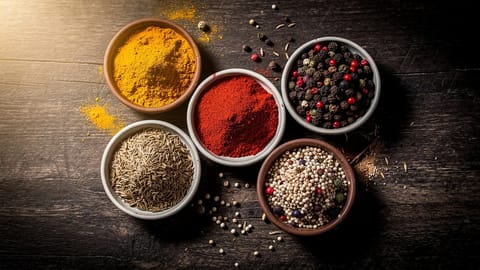
The visual test: Ground spices should look bright. Paprika should be deep red, turmeric bright gold, cumin warm brown. Faded or grayish color means the pigments and oils have degraded together.
The taste test: Put a tiny amount on your tongue. Fresh spices deliver a punch. Stale ones taste papery or bland. This works especially well for heat-bearing spices like cayenne and black pepper. If cayenne doesn't burn, it's done.
A pass through the drawer every 6 months, nose test on everything, takes 5 minutes and saves months of cooking with dead spices.
Organization that actually works
Forget alphabetical order. Organize by frequency of use.
Front row (daily use): The spices you reach for every day. For most home cooks, that's salt, pepper, garlic powder, and whatever essential spices match your cooking style.
Second row (weekly use): Cumin, paprika, oregano, chili flakes, cinnamon. Spices that show up in most weekly cooking.
Back row or separate area (occasional): Cardamom, cloves, nutmeg, specialty blends. Things you use monthly or for specific recipes.
Label the bottom of each jar with the purchase date. Not the front label, which you'll cover with the spice name. The bottom. This way, during your twice-yearly freshness audit, you can quickly check ages.
Storing spices in humid climates
Humidity above 60% creates specific problems: clumping, caking, and in severe cases, mold growth on dried herbs. If you live somewhere humid, take extra precautions.
Moisture has entered the container. Spread the spice on a baking sheet and dry it in a 170°F (75°C) oven for 10 minutes. Transfer to a new, dry airtight jar. Add a food-safe silica gel packet to prevent recurrence.
The spice absorbed too much moisture over time. You can break it up and still use it, but the flavor is likely compromised. For oils and fats that also degrade in humidity, the same storage principles apply.
This may be mold. Discard the herbs. Mold on dried spices is rare but can happen when moisture gets trapped in sealed containers. Clean the jar thoroughly before reusing.
Other humidity tips: Never store spice containers near the sink, dishwasher, or coffee maker. Use jars with rubber gaskets instead of simple screw tops. If your kitchen is consistently humid, consider storing your collection in a closed cabinet in a different room.
When to buy whole vs. pre-ground
For your most-used spices, ground is fine. Garlic powder, paprika, turmeric, and chili powder lose potency slower than you'd expect when stored well.
For spices where freshly ground flavor makes a real difference, buy whole: black peppercorns, cumin seeds, coriander seeds, and nutmeg. The flavor gap between fresh-ground and pre-ground is night and day for these four. Fresh herbs have a similar story — storage method determines whether you get flavor or filler.
For seldom-used spices, buy the smallest quantity available. An ounce of saffron threads or whole star anise from a bulk bin costs a fraction of a jarred version and won't sit forgotten for years.
- Airtight glass jars in a cool, dark spot (not above the stove)
- Whole spices last 2-4 years; ground spices 6-12 months
- The nose test beats expiration dates: if it doesn't smell strong, replace it
- Never shake spices over a steaming pot (moisture kills freshness)
- Organize by use frequency, not alphabetically
- Do a 5-minute freshness audit every 6 months