 Bastien
Banneton
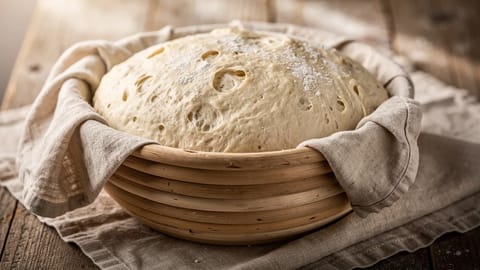
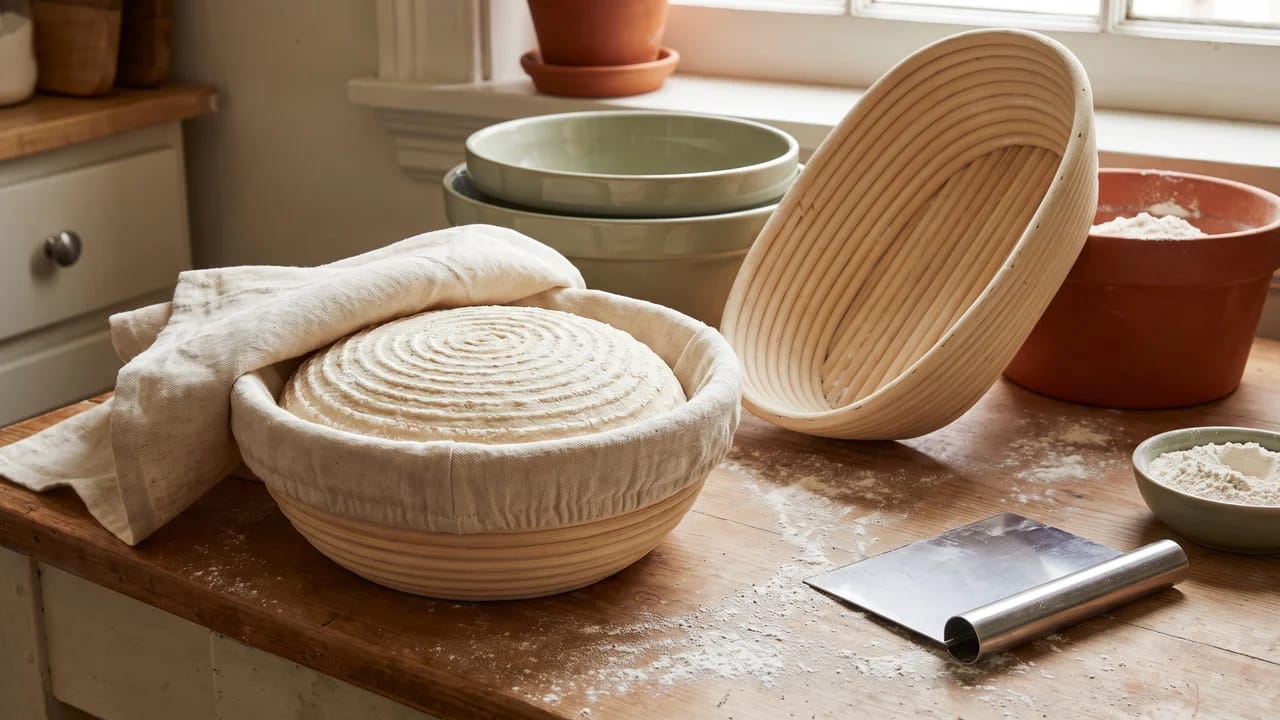
A banneton is a rattan proofing basket that holds shaped bread dough during its final rise, wicking moisture from the surface so the loaf holds shape, scores cleanly, and wears spiral flour rings.
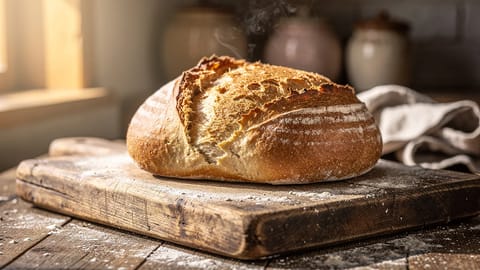
A banneton is a basket, traditionally coiled rattan cane, that holds shaped bread dough during its final proof. It solves the wet-dough problem: a slack, high-hydration loaf proofed on a countertop spreads sideways, while one cradled in a banneton rises upward and comes out holding its shape, wearing the spiral flour rings that mark artisan bread.
For many home bakers it is the purchase that moves sourdough from "rustic" to recognizable. Same recipe, same oven; the difference is a loaf that stands tall enough to score properly.
What does a banneton do?
Two jobs, one passive, one chemical-free. The structural job: high-hydration doughs (70%+) lack the strength to hold a tall shape unsupported, so the basket acts as a mold during the 1-4 hour final rise, or overnight in the fridge for a cold proof. The surface job: raw cane is thirsty, and it pulls moisture from the dough's outer few millimeters. That slightly leathery skin is what lets a razor drag cleanly across the top instead of catching, and it browns into a deeper crust.
The spiral rings are a side effect that became a signature. Flour settles into the coil grooves, transfers to the dough, and bakes into the concentric pattern people now buy the basket for.
How do you use a banneton, step by step?
The flip intimidates everyone once. Commit: invert the basket in one motion close to the parchment, and a well-floured loaf drops free with its rings intact. Hesitate, and gravity does the shaping. A dough that's finished its bulk fermentation properly will also feel noticeably less sticky at this stage, which makes everything more forgiving.
Why rice flour and not regular flour?
Rice flour has no gluten and absorbs water slowly, so it sits as a dry, powdery barrier between wet dough and cane for hours. Wheat flour does the opposite: it hydrates on contact, turns to paste, and glues the loaf into the basket, which is how most first bannetons end up with a torn loaf and a bad reputation.
The working mix in most bakeries is 50/50 rice and wheat flour: cheap, plenty non-stick, and it builds the seasoned layer that makes an old banneton release better than a new one. Dust more than feels polite for the first several bakes; you can brush out the excess, but you can't un-stick a proofed loaf.
Can you use a bowl instead of a banneton?
Yes, and it's the right first move before spending money. Line a mixing bowl or colander with a smooth cotton or linen tea towel and flour it hard with the rice mix. The towel handles release, the bowl handles shape, and a colander even adds airflow. You lose the rings and some of the cane's wicking, which is a cosmetic loss more than a structural one.
The real upgrade case for cane arrives with wetter doughs and cold overnight proofs, where the basket's breathability keeps the skin from going clammy. If you bake once a week, the beginner bread path works fine with the bowl-and-towel rig for months; buy the banneton when the hobby sticks. Buy it before your sourdough starter gets a name, and you've read the order of operations wrong.
How do you clean and store a banneton?
Dry everything. Knock out the loose flour after each bake, give the coils a pass with a stiff brush, and let the basket air-dry before it goes back in the cupboard; a cupboard is better than a sealed container, since cane likes airflow. Washing is the one way to ruin it: soaked cane swells, warps, and invites mold into the crevices.
Mold, if it shows up, isn't a funeral. Brush the basket out, mist it with white vinegar, and dry it in full sun or a 100°C oven for 45 minutes. If the liner molds, wash the liner alone; it's fabric, it can take it. The rhythm of shape, basket, fridge, flip, score is the one every bread recipe in Fond follows, and Cook mode keeps the steps and timers on screen so the basket does its quiet work on schedule.