 Bastien
What is a sourdough starter? Definition and how it works
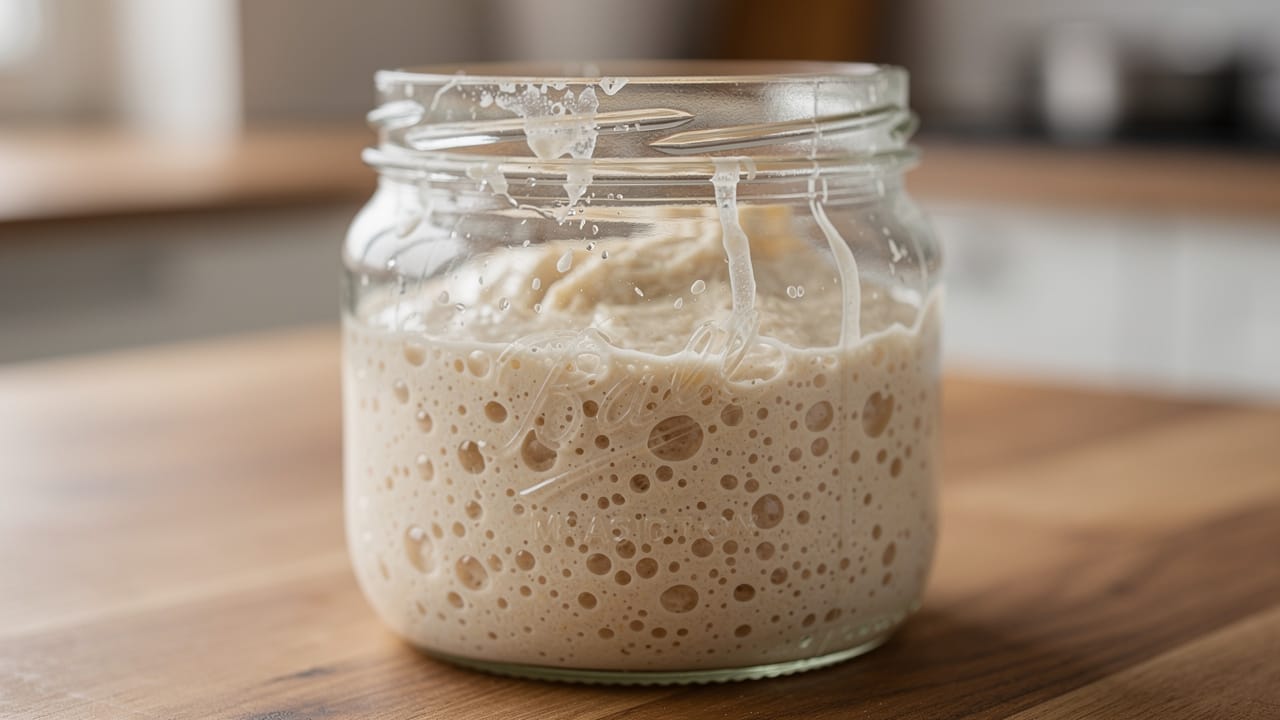
A sourdough starter is a living culture of wild yeast and lactic acid bacteria, kept alive with regular feedings of flour and water, that leavens bread without commercial yeast.
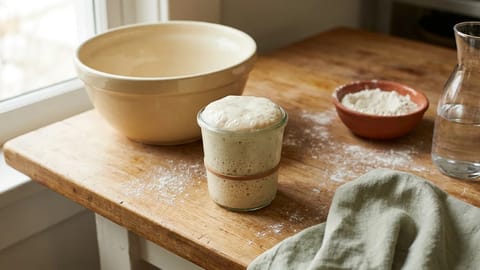
A sourdough starter is a living culture of wild yeast and lactic acid bacteria kept alive with regular feedings of flour and water. Bakers use it in place of commercial yeast to leaven bread, and it is what gives sourdough its tangy flavor, chewy crumb, and long-keeping crust. A portion of starter built up and ready to bake with is often called a levain.
To make one from scratch, follow the day-by-day sourdough starter guide.
Starters can be kept going indefinitely. Boudin Bakery in San Francisco says it still bakes with a mother dough descended from a gold-rush starter from 1849, and the Puratos Sourdough Library in Belgium preserves dozens of cultures collected from bakers around the world.
What is a sourdough starter made of?
Only two ingredients go in: flour and water. Everything else arrives on its own. Flour carries wild yeasts and bacteria on the grain, and once it is mixed with water at room temperature those microbes wake up, eat the starches and sugars in the flour, and multiply. Over a week or two of regular feedings, two groups come to dominate:
Wild yeast, mainly Saccharomyces and Kazachstania species, produces carbon dioxide gas. This is what makes the dough rise.
Lactic acid bacteria, such as Fructilactobacillus sanfranciscensis and related species, produce lactic and acetic acids. These acids give sourdough its characteristic tang and slow down staling and mold.
The two groups work together. The acids produced by the bacteria make the culture too sour for most competing organisms, while the yeast tolerates that acidity well. This is why a mature starter is stable and resistant to contamination. The Puratos library has catalogued more than 700 wild yeast strains and 1,500 lactic acid bacteria across the cultures it holds, which gives a sense of how varied "flour and water" can become.
What is a sourdough starter used for?
Its main job is leavening: a ripe starter mixed into dough produces the gas that raises the loaf during fermentation. It also shapes flavor, since the acids and the byproducts of long fermentation are what make sourdough taste like sourdough. Most recipes use starter at 10-30% of the flour weight in baker's percentage, and because a starter contains flour and water of its own, those amounts count toward the formula's totals.
Starter also turns up outside bread: sourdough pizza dough, pancakes, crackers, and flatbreads all use either active starter or the discard from feedings.
How do you make a sourdough starter?
Mix equal weights of flour and water, leave the jar loosely covered at room temperature, and start daily discard-and-feed cycles after a couple of days. Whole wheat or rye flour gets things moving faster than white flour because it carries more nutrients and microbes. Expect an early burst of bubbles, a quiet stretch around days three to five while the culture shifts toward lactic acid bacteria, then a predictable rise-and-fall pattern by the second week. The step-by-step sourdough starter guide walks through each day, what you should see, and how to tell when it is ready.
How do you feed a sourdough starter?
Feeding means discarding part of the culture and adding fresh flour and water. The discard keeps the volume manageable and the acidity in check; the fresh flour replenishes the food supply.
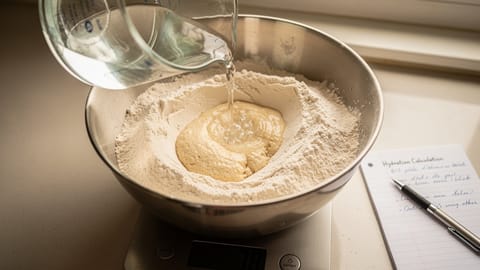
The standard feeding ratio is 1:1:1 by weight. Keep 50g of starter, add 50g flour and 50g water, stir, and cover loosely. Use a kitchen scale; volume measurements are too imprecise for consistent results. Equal weights of flour and water make a 100% hydration starter, the most common style and the easiest to fold into recipe math.
Flour choice matters. Unbleached all-purpose or bread flour works well for maintenance. Whole wheat or rye accelerates fermentation because it brings more nutrients and microbes. Many bakers feed a blend, around 80% white flour and 20% whole wheat, for a balance of activity and mild flavor.
How often should you feed a sourdough starter?
It depends on where you keep it.
| Storage | Feeding frequency | Best for |
|---|---|---|
| Room temperature (21-26°C / 70-78°F) | Once or twice a day | Bakers who bake several times a week |
| Refrigerator (3-4°C / 38-40°F) | Once every 5-7 days | Occasional bakers who bake once a week or less |
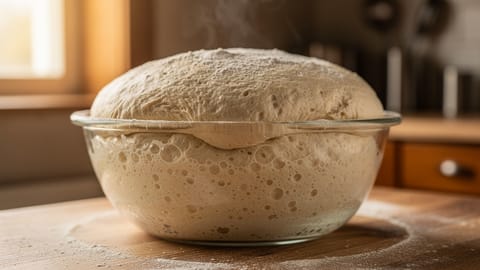
At room temperature the starter peaks 4-8 hours after a feed and then starts to collapse and turn sour, so once a day is the minimum and twice a day keeps it milder and more vigorous. In the fridge, fermentation slows enough that a weekly feed is plenty.
How much should you feed a sourdough starter?
The ratio sets how long the starter takes to peak. 1:1:1 is the everyday default. A larger feed such as 1:2:2 or 1:5:5 gives the microbes more food relative to their numbers, so the starter takes longer to peak, stays milder, and can go longer between feeds. That is useful when you want it to peak overnight, or when a warm kitchen is pushing it to peak too fast. Whatever the ratio, keep the flour and water amounts equal to hold hydration at 100%.
You only need to keep as much starter as you bake with. A 50g maintenance starter is enough for most home bakers; build a larger amount in the feed before bake day.
How do you feed a sourdough starter from the fridge?
Take the jar out, discard down to your usual amount, and feed at 1:1:1. Leave it at room temperature and watch for it to double. A starter that has been cold for a week usually wakes up in one to three feedings; one that has been neglected for a month may need several days of twice-daily feeds. Bake with it only once it rises predictably and smells pleasantly sour again. Feeding it once more after it peaks, then returning it to the fridge, sets it up for the next week.
What are the signs of a healthy sourdough starter?
A new starter typically shows a consistent rise-and-fall pattern after 7-14 days, but it often needs a few more weeks of regular feeding before it is strong enough to reliably leaven bread. Patience during this phase is the biggest factor in success.
What are the most common sourdough starter problems?
Most likely too cold or still too young. Move it to a warmer spot (24-27°C / 75-80°F). The top of your fridge, a turned-off oven with the light on, or near a radiator all work. If it's under two weeks old, keep feeding daily and wait.
Your starter is hungry. The food supply ran out. Pour off the hooch (or stir it back in for more tang), feed immediately, and increase your feeding frequency.
Severely underfed. Feed twice daily for 2-3 days until the smell shifts back to a pleasant sourness. Use warm water (around 27°C) to boost activity.
It peaked before you caught it. Give it a bigger feed (1:2:2 instead of 1:1:1) or use cooler water to slow things down.
Contamination by unwanted bacteria or mold. Discard the entire starter and begin again. This is rare with a mature culture but can happen early on.
What is the difference between sourdough starter and commercial yeast?
Neither is "better." Commercial yeast is convenient and predictable. Sourdough rewards patience with flavor and texture you can't get any other way. Many bakers keep both in rotation.
On the health side, be careful with the claims you'll see online. Sourdough fermentation does reduce phytate, the compound in whole grains that binds minerals, and it does so more than plain yeast fermentation. Whether that translates into better mineral status for people eating sourdough regularly is still unsettled: a 2026 systematic review found short-term absorption gains but inconsistent long-term results. Sourdough bread is also not gluten-free, and it is not a safe choice for coeliac disease.
What can you do with sourdough discard?
Every feeding produces discard: the portion of starter you remove before adding fresh flour and water. It doesn't have to be waste. Sourdough discard works in:
- Pancakes and waffles, where it adds tang and tenderness
- Crackers, thin, crisp, and deeply flavored
- Pizza dough, where discard replaces some of the flour and water in a standard recipe
- Quick breads and muffins, for complexity without long fermentation
- Flatbreads such as naan, tortillas, and pita
Discard doesn't have enough leavening power to rise bread on its own, but it adds flavor and acidity to anything that uses baking soda or baking powder as the primary leavener.
Sourdough starter in Fond
Fond hasn't launched yet. This is how it will work at launch. Join the waitlist for early access.
Fond's Bread Studio is coming soon. It is planned to include a starter log where you record each feeding, set reminders on your preferred schedule, and track how your starter rises over time. In the meantime, the baker's percentage entry shows how to account for the starter's flour and water in any formula so you always know how much to build and how much to keep.
Sources
- Sourdough Library — Puratos
- Sourdough Starter Recipe and Maintenance — King Arthur Baking
- Prolonged fermentation of whole wheat sourdough reduces phytate level and increases soluble magnesium — Journal of Agricultural and Food Chemistry (PubMed)
- Effects of sourdough- or regular-bread fermentation, and phytate reduction on iron bioavailability, absorption, and iron status in humans: a systematic review — Frontiers in Nutrition
- Our Story — Boudin Bakery