 Bastien
Hydration (Bread)
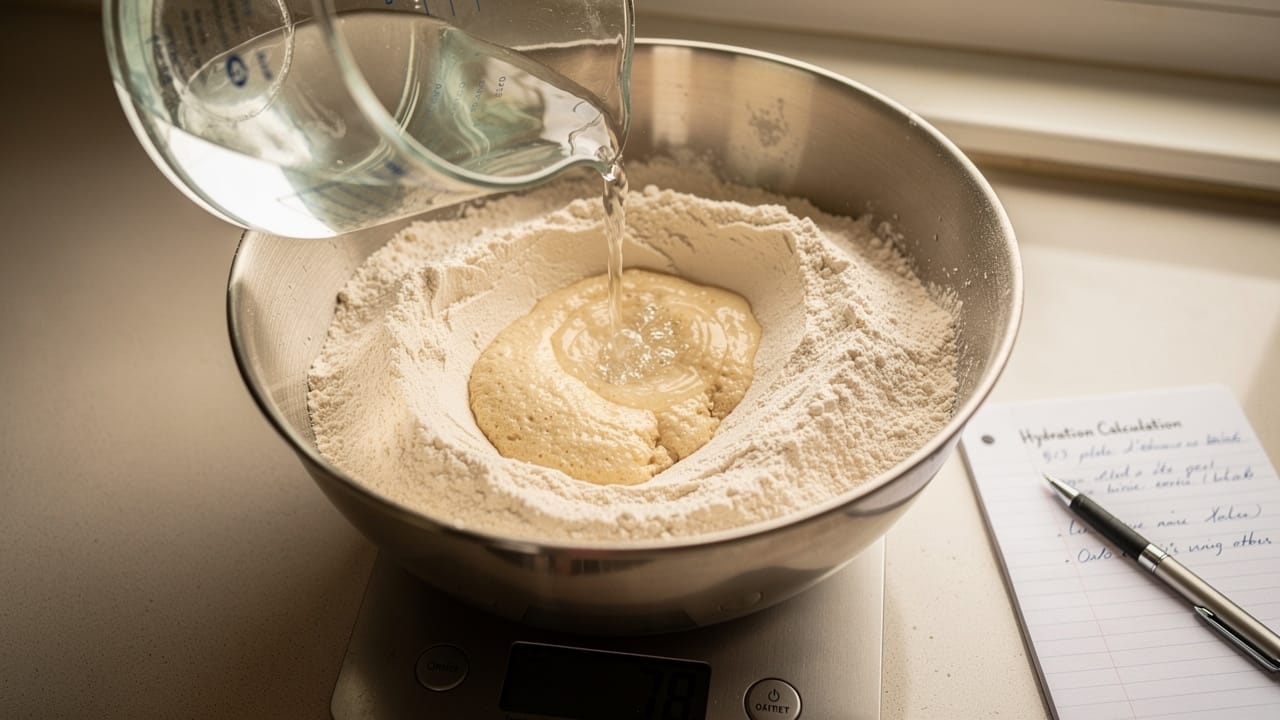
Bread hydration is the weight of water in a dough expressed as a percentage of the flour weight: 700 g of water with 1,000 g of flour is a 70% hydration dough. Higher hydration opens the crumb; lower hydration tightens it.
Bread hydration is the weight of water in a dough expressed as a percentage of the flour weight. A dough made with 1,000 g of flour and 700 g of water sits at 70% hydration. This one number tells you more about how your bread will look, feel, and taste than almost any other variable in the recipe. It matters in pizza too; see how water for pizza dough shapes the crust.
Hydration is part of the baker's percentage system, where every ingredient is expressed as a percentage of total flour weight. Flour is always 100%, and everything else is relative to it. Understanding hydration is the key to reading bread formulas, adapting recipes, and troubleshooting dough behavior.
How do you calculate bread hydration?
The formula is straightforward:
Hydration % = (total water weight ÷ total flour weight) × 100
For a recipe with 500 g flour and 350 g water: 350 ÷ 500 × 100 = 70% hydration.
When calculating, include all sources of water and flour:
- Water in a poolish, biga, or sourdough starter counts toward total water
- Flour in the pre-ferment or starter counts toward total flour
- Eggs and milk are mostly water, so in enriched doughs count part of their weight as water and treat the result as an approximation
Going the other way, from a target hydration to a water weight, is a multiplication: flour weight × hydration. The baker's percentage calculator does both directions for you.
How much water for 500 g of flour?
The most common version of the hydration question is a practical one. Multiply the flour by the hydration you want:
| Hydration | Water for 500 g flour | Water for 1 kg flour | Typical use |
|---|---|---|---|
| 60% | 300 g | 600 g | Sandwich bread, beginner pizza dough |
| 65% | 325 g | 650 g | Everyday white loaves, baguettes |
| 70% | 350 g | 700 g | Country loaves, sourdough |
| 75% | 375 g | 750 g | Ciabatta, focaccia |
| 80% | 400 g | 800 g | High-hydration artisan loaves |
For a first loaf with bread flour, 325-350 g of water per 500 g of flour is a comfortable starting point. Whole grain flours want more; see the flour-type table below.
The bread hydration chart
| Hydration | Dough feel | Crumb structure | Typical breads |
|---|---|---|---|
| 50-55% | Stiff, dense | Tight, uniform | Bagels, pretzels |
| 55-60% | Stiff, smooth | Close, even | Challah, brioche, sandwich bread |
| 60-65% | Standard, slightly tacky | Even with small holes | Dinner rolls, baguettes (traditional) |
| 65-70% | Soft, moderately sticky | Open with medium holes | French bread, country sourdough |
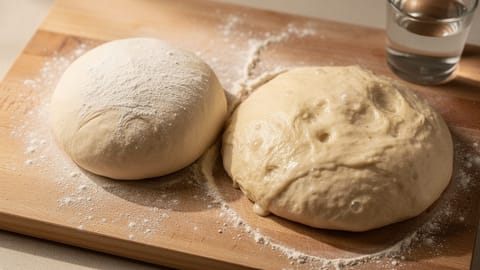
| 70-75% | Wet, sticky | Open, irregular holes | Ciabatta, high-hydration sourdough |
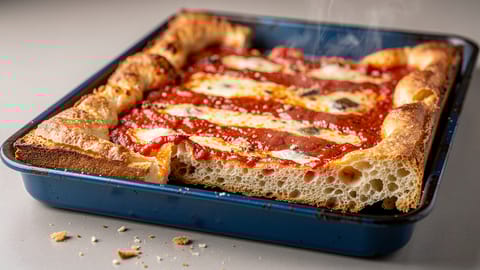
| 75-80% | Challenging to handle | Large irregular holes | Focaccia, pan pizza |
| 80-85% | Extremely wet | Open, almost translucent | Some artisan loaves |
| 85%+ | Batter-like, pours | Ultra-open | Specialty breads, some focaccia |
Most beginner-friendly bread recipes sit at 60-68% hydration. Once you're comfortable with dough handling, working your way up to 72-75% unlocks the open, airy crumb structure that many bakers aspire to.
Hydration by flour type
The same percentage behaves differently depending on the flour, because bran, protein, and damaged starch all absorb water. These are starting points, not rules:
| Flour | Starting hydration | Why |
|---|---|---|
| All-purpose (10-12% protein) | 60-68% | Less gluten to hold water; goes slack above this quickly |
| Bread flour (12-14% protein) | 65-75% | Stronger gluten absorbs and holds more water |
| Whole wheat | 70-80% | Bran and germ soak up water; feels drier at the same percentage |
| Rye (as the main flour) | 75-85%+ | Pentosans in rye bind a lot of water; dough is more paste than gluten network |
When swapping a whole grain flour into a white-flour recipe, expect to add roughly 5-10% more water to reach the same feel, and give it time: an autolyse lets the bran hydrate before mixing.
How does hydration affect your bread?
Crumb structure
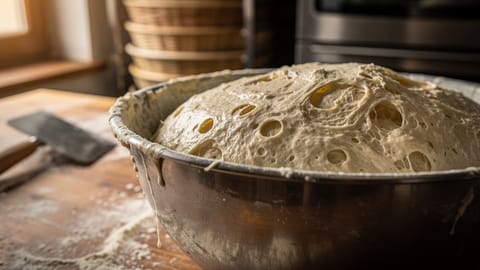
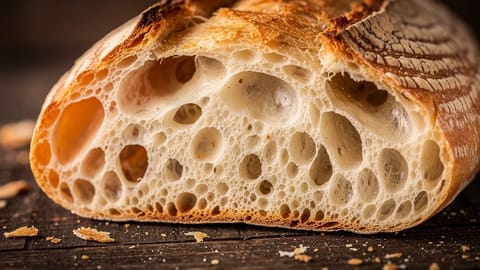
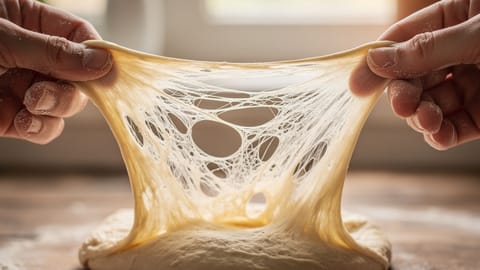
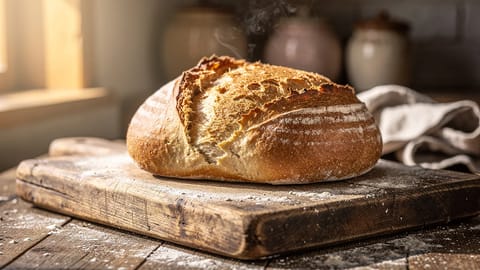
Higher hydration produces larger, more irregular holes in the crumb. A wetter dough is more extensible, so the gas produced during fermentation can stretch the gluten network into bigger cells, and the extra water turns to steam in the oven and expands them further. The gluten stretches thinner around these larger bubbles, creating the translucent, slightly glossy cell walls you see in well-made ciabatta.
Crust
Wetter doughs tend to bake into thinner, more blistered crusts. Part of that is oven behavior: the dough surface stays moist longer, which delays setting and lets the loaf expand more before the crust firms up. A hot oven with steam for the first part of the bake does the rest.
Flavor
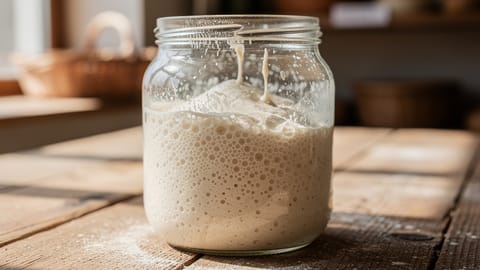
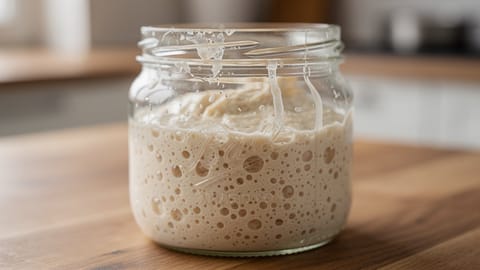
Higher hydration doughs ferment a little faster and differently. Enzymes and microbes work more freely in a wetter dough, so long fermentations tend to develop more organic acids. This is one reason high-hydration sourdoughs often taste more complex and tangy.
Keeping quality
More water in the dough means more moisture in the baked loaf, so high-hydration breads generally stay soft for longer than lean, low-hydration loaves, which dry out sooner. Crust type, loaf size, and storage still matter as much as the percentage.
Handling difficulty
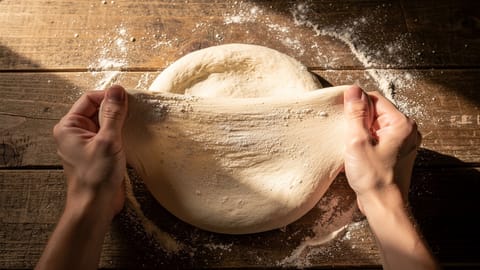
Higher hydration dough is stickier and harder to shape. This is the tradeoff: the bread you want (open crumb, crisp crust) requires dough that doesn't cooperate during handling. Technique, particularly stretch and folds during bulk fermentation, compensates for this.
Is high-hydration bread better?
Not necessarily. Higher hydration isn't a universal upgrade. A 65% sandwich loaf needs a tight, even crumb so it holds fillings without falling apart. A bagel at 80% hydration would be a shapeless puddle. The "best" hydration depends on the bread you're making.
That said, if you want open crumb and a crisp crust, you do need to push hydration higher. The trick is finding the highest hydration you can handle reliably with your flour and technique. For most home bakers, that sweet spot lands between 70% and 76%.
What factors change effective hydration?
The same 70% hydration feels different depending on several variables:
Flour type. Whole wheat and rye absorb significantly more water than white flour. A 70% whole wheat dough feels drier than a 70% white flour dough. When using whole grains, increase hydration by 5-10% to compensate. An autolyse gives whole grain flours time to absorb water fully before mixing.
Protein content. Higher-protein bread flour (12-14% protein) absorbs more water and produces stronger gluten than lower-protein all-purpose flour (10-12%). If your dough feels wetter than expected, your flour may have less protein than the recipe assumes.
Humidity. On humid days, flour has already absorbed moisture from the air. Your dough may feel wetter at the same hydration percentage. Some bakers hold back 2-3% of the water and add it only if the dough seems dry after mixing.
Inclusions. Seeds, nuts, dried fruit, and olives absorb water from the dough. If adding inclusions, either soak them first or increase hydration slightly to compensate.
Temperature. Warmer water makes dough feel stickier. This doesn't change the actual hydration but affects how the dough handles.
Bassinage: adding water in phases
Bassinage is the technique of holding back 5-10% of the water during initial mixing and adding it later, after the gluten network has started to develop. It is the standard way to push a dough past the point where it would otherwise refuse to come together.
Here's why it works: gluten forms more readily in a slightly stiffer dough. Mix at a lower hydration first (say 68%), develop the gluten with a few minutes of mixing, then slowly work in the remaining water. The dough accepts it more readily, and you end up with a stronger, more extensible dough than if you'd added all the water at once. For an 80% ciabatta, holding back around 50 g of water per 500 g of flour and adding it after the first few minutes of mixing is a typical approach.
Tips for working with high-hydration dough
Common hydration problems
Weak gluten development or over-fermentation. Add more folds during bulk fermentation (every 30 minutes for the first 2 hours). If the dough was already well-folded, it may be over-proofed. Shorten the bulk or lower the dough temperature.
Check your flour's protein content. Low-protein flour (under 11%) can't handle the same hydration as bread flour (12-14%). Try reducing hydration by 3-5% or switching to a stronger flour. Also make sure your hands and bench scraper are wet, not dry.
High hydration alone doesn't guarantee open crumb. You also need proper fermentation (enough time for gas production) and good shaping tension. Check that your sourdough starter or yeast is active and that you're not under-fermenting.
The oven may not have enough steam. High-hydration doughs produce steam naturally, but you still need a hot oven (230-250°C / 450-480°F) and ideally a Dutch oven or steam injection for the first 15-20 minutes.
Hydration for pizza dough
Pizza dough hydration varies by style:
| Style | Hydration | Why |
|---|---|---|
| New York | 60-65% | Easy to stretch by hand, foldable slice |
| Neapolitan | 58-65% | Traditional, soft but not too wet |
| Roman al taglio | 75-85% | Light, airy, rectangular pan pizza |
| Detroit | 70-75% | Thick, focaccia-like, crispy bottom |
For detailed pizza dough hydration guidance, see our pizza dough hydration guide. Use our pizza dough calculator to see exact water amounts for any hydration level and style.
Hydration in Fond
Fond hasn't launched yet. This is how it will work at launch. Join the waitlist for early access.
Fond's Pizza Workshop lets you set hydration as a percentage and recalculates the water and flour for your dough ball count and weight as you adjust it. Bread Studio, which is coming soon, will bring the same hydration control to bread formulas. For a quick standalone check, the baker's percentage calculator converts between water weight and hydration in either direction.