 Bastien
Crumb Structure
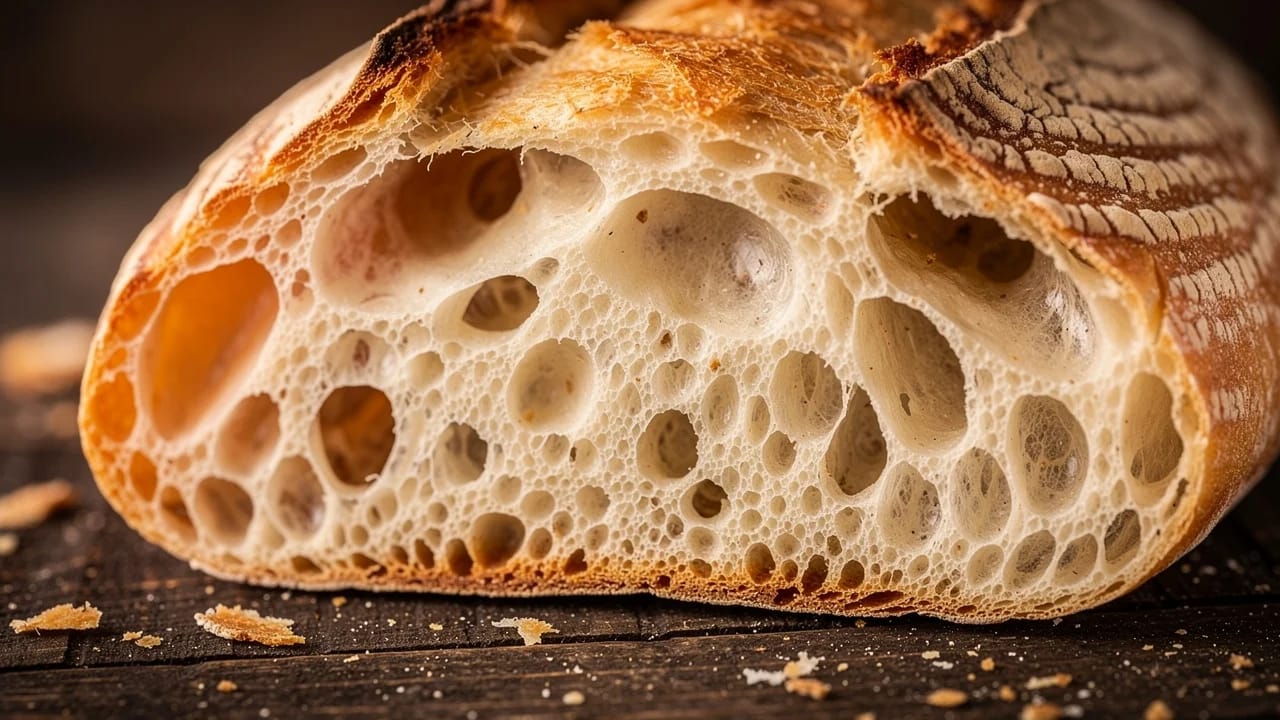
The internal texture of bread defined by the size, shape, and distribution of air pockets — ranging from tight and uniform to open and irregular.
Crumb structure refers to the internal texture of bread — the pattern of holes (alveoli) you see when you slice a loaf open. It tells you everything about how the dough was mixed, fermented, shaped, and baked. Experienced bakers can diagnose exactly what went right or wrong in a bake just by looking at a cross-section.
Crumb is not about aesthetics. A wild, open crumb looks impressive on social media, but it makes a terrible sandwich. The goal is always the right crumb for the bread you are making.
Open crumb vs tight crumb
These terms describe the two ends of the spectrum:
| Characteristic | Tight (closed) crumb | Open crumb |
|---|---|---|
| Hole size | 1-3 mm, uniform | 5-30 mm, irregular |
| Texture | Soft, even, springy | Chewy, slightly glossy |
| Moisture feel | Drier, more absorbent | Moist, custard-like |
| Typical breads | Sandwich bread, brioche, challah | Ciabatta, baguette, high-hydration sourdough |
| Hydration range | 55-65% | 72-85%+ |
| Best for | Sandwiches, toast, slicing | Dipping, tearing, open-faced |
Most bread falls somewhere between these extremes. A country sourdough at 70% hydration will have a moderately open crumb — holes ranging from 3-15 mm with a few larger pockets scattered throughout. That is the sweet spot for a versatile loaf.
What determines crumb structure
Four factors control your crumb. Change any one and the result shifts.
1. Hydration
Water is the single biggest lever. More water means more steam during baking, which expands air pockets further before the crust sets.
| Hydration | Expected crumb | Example breads |
|---|---|---|
| 55-60% | Very tight, fine | Bagels, pretzels |
| 60-65% | Tight, even | Sandwich loaves, dinner rolls |
| 65-70% | Moderate, some openness | Country bread, pain de campagne |
| 70-75% | Moderately open | Sourdough boules, batards |
| 75-80% | Open, irregular | Baguettes, high-hydration sourdough |
| 80-85%+ | Very open, large holes | Ciabatta, focaccia, pan de cristal |
Higher hydration dough is harder to handle. If you are chasing a more open crumb, increase hydration by 2-3% at a time. Jumping from 68% to 80% overnight will give you a sticky mess, not better bread.
2. Fermentation
Fermentation creates the gas that becomes your crumb. Under-ferment and there is not enough gas — tight, dense crumb. Over-ferment and the gluten network collapses — flat, gummy crumb with large, irregular tunnels.
During bulk fermentation, yeast produces CO2 that gets trapped by the gluten network. The longer and warmer the bulk, the more gas accumulates. But the gluten network has a limit — push past it and the structure breaks down.
For open crumb, aim for 75-80% volume increase during bulk. For tight crumb, 50-60% is plenty. Watch the dough, not the clock.
3. Gluten development
The gluten network is the scaffold that holds gas in place. Strong gluten = gas stays put = even crumb. Weak gluten = gas migrates and merges = uneven holes or collapse.
Build gluten through:
- Kneading (5-8 minutes by hand, 4-6 minutes by mixer)
- Stretch and folds during bulk (3-4 sets, 30 minutes apart)
- Autolyse (30-60 minutes of flour + water rest before adding salt and starter)
- Time — gluten develops passively during fermentation
Whole wheat and rye flours contain bran particles that physically cut gluten strands. Breads with more than 30% whole grain will always have a tighter crumb unless you sift out some bran or use a very long autolyse to soften it.
4. Shaping and handling
Shaping is where most home bakers lose their open crumb. Aggressive degassing during pre-shape or final shape pushes out the gas you spent hours building.
For open crumb:
- Handle the dough gently — no punching down
- Pre-shape loosely, rest 20-30 minutes, then shape with minimal pressure
- Use a bench scraper to move dough instead of your hands
- Flip dough as few times as possible
For tight crumb:
- Degas more thoroughly during pre-shape
- Shape tightly with good surface tension
- Use a rolling pin if the bread style calls for it (sandwich loaves)
Flour and its effect on crumb
| Flour type | Protein content | Crumb tendency |
|---|---|---|
| Cake flour | 7-9% | Very tight, tender |
| All-purpose | 10-12% | Moderate, versatile |
| Bread flour | 12-14% | Open capable, chewy |
| High-gluten flour | 14-15% | Very open capable, strong chew |
| Whole wheat | 13-14% | Tighter due to bran, denser |
| Rye | 8-12% | Tight, gummy if over 40% |
Bread flour (12-14% protein) gives you the best chance at an open crumb because it builds a strong, elastic gluten network. All-purpose works fine for moderate crumb. Mixing 10-20% whole wheat into bread flour adds flavor without sacrificing much openness.
Reading your crumb: diagnosing problems
Slice your loaf through the middle and read it like a map.
| What you see | What happened | Fix |
|---|---|---|
| Dense throughout, few holes | Under-fermented or under-hydrated | Extend bulk fermentation or increase hydration by 3-5% |
| Large holes at top, dense at bottom | Gas migrated up during proof — under-shaped or over-proofed | Shape more tightly, reduce proof time |
| One or two huge tunnels, rest tight | Air pocket trapped during shaping | Shape more carefully, degas gently before shaping |
| Gummy, wet-looking crumb | Under-baked or over-fermented | Bake longer (internal temp should hit 96-99°C / 205-210°F) or shorten bulk |
| Even holes but too tight | Low hydration or heavy-handed shaping | Increase hydration 2-3%, handle dough more gently |
| Crumb tears when slicing | Cut too soon — still steaming inside | Wait at least 1 hour before cutting (2 hours for sourdough) |
| Uneven — open patches and tight patches | Inconsistent folding or uneven fermentation | More consistent folding during bulk, check dough temperature |
What crumb to aim for by bread style
| Bread style | Target crumb | Hole size | Key techniques |
|---|---|---|---|
| White sandwich loaf | Tight, uniform | 1-2 mm | 60% hydration, thorough kneading, tight shape |
| Brioche / enriched | Very tight, pillowy | 1-2 mm | Butter and eggs tighten crumb naturally |
| Country sourdough | Moderate open | 3-15 mm | 68-72% hydration, good bulk, gentle shaping |
| Baguette | Open, irregular | 5-20 mm | 70-75% hydration, long cold proof, gentle handling |
| Ciabatta | Very open, glossy | 10-30 mm | 80%+ hydration, minimal shaping, wet dough |
| Focaccia | Open, airy | 5-25 mm | 75-80% hydration, olive oil, dimpling spreads gas |
| Whole wheat | Moderate tight | 2-8 mm | Bran limits openness — long autolyse helps |
| Rye bread | Tight, moist | 1-3 mm | Rye gluten is weak — tight crumb is correct |
| Pizza dough | Moderate open at cornicione | 3-15 mm in rim | 65-70% hydration for Neapolitan, proper fermentation |
There is no universal "good" crumb. A ciabatta with a tight crumb failed just as much as a sandwich loaf with huge holes. Know what you are baking and aim for the right texture.
Tips for better crumb
Be patient with cooling. Crumb structure is not set when the bread comes out of the oven. Starch is still retrograding and moisture is still redistributing. Cutting a sourdough boule after 30 minutes gives you gummy crumb — wait 2 hours minimum. For bread baking, this is the hardest part.
Use a thermometer. Internal temperature of 96-99°C (205-210°F) means the crumb is fully set. Pull the bread early and no amount of good fermentation will save it from gumminess.
Score with purpose. Scoring controls where the bread expands. A single deep score (ear cut) lets the loaf spring open on one side, which encourages a more open crumb in the area beneath the ear. Multiple shallow scores create more even expansion and a more uniform crumb.
Keep notes. Track hydration, bulk time, dough temperature, and proof time. When you get a crumb you love, your notes let you repeat it. When something goes wrong, your notes tell you what changed.
Preheat thoroughly. A hot oven (230-250°C / 450-480°F) with steam creates strong oven spring — the last burst of gas expansion before the crust sets. Weak oven spring means a tighter crumb regardless of how well you fermented and shaped.
Frequently asked questions
Why is my sourdough crumb gummy even though it looks done?
Most likely under-baked. Sourdough holds more moisture than yeasted bread. Bake until the internal temperature reaches 98°C (208°F) and the crust is deeply colored. Then let it cool completely — at least 2 hours — before slicing.
Can I get an open crumb with all-purpose flour?
Yes, but it is harder. AP flour has less protein (10-12%) so the gluten network is weaker. Compensate with a longer autolyse (45-60 minutes), more folds during bulk, and very gentle shaping. Hydration above 75% with AP flour becomes difficult to handle.
Does steam affect crumb?
Indirectly. Steam keeps the crust flexible during the first 15-20 minutes of baking, allowing maximum oven spring. More oven spring means more gas expansion, which means a more open crumb. No steam = crust sets early = gas cannot expand = tighter crumb.
Is sourdough crumb different from yeasted bread crumb?
Sourdough crumb tends to be slightly more irregular and has a more translucent, glossy quality at the cell walls. This comes from the acidity — lactic and acetic acids modify gluten, making it more extensible. Commercial yeast bread tends toward a more uniform hole structure with matte cell walls.
Cook smarter
Join the waitlist for Fond. Recipes, meal plans, and a little AI sous-chef that learns how you cook.
Related terms
Bulk Fermentation
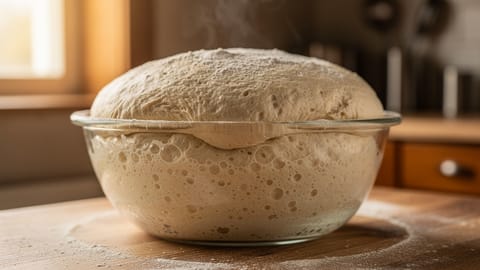
The primary rise of bread dough after mixing, where yeast or starter ferments the dough as a single mass before shaping.

Fermentation
A metabolic process where microorganisms convert sugars into acids, gases, or alcohol — the basis of bread, yogurt, kimchi, and beer.
Gluten Development
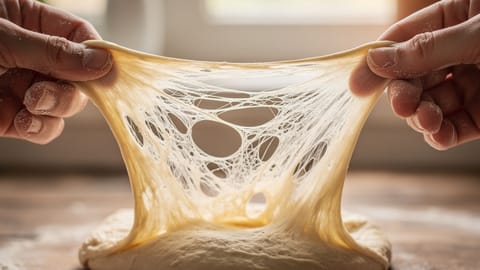
The process of building a protein network in dough through kneading, folding, or time, creating the structure that gives bread its chew and allows it to rise.
Hydration (Bread)
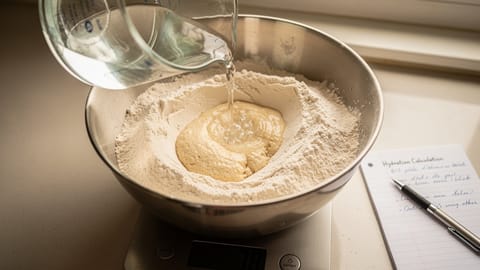
The ratio of water to flour in bread dough, expressed as a percentage. Higher hydration means wetter, more open-crumb bread.
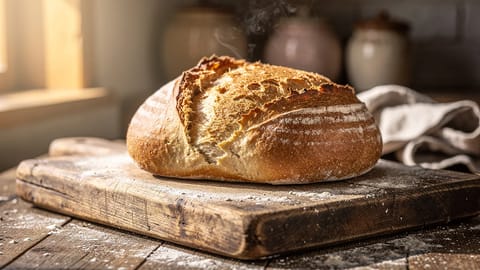
Bread baking for beginners: your first loaf, start to finish
A complete walkthrough for baking your first loaf of bread at home. Covers the four core ingredients, kneading by hand or mixer, proofing, shaping, and baking, with temperatures, times, and troubleshooting for every step.