 Bastien
Folding
Folding is a gentle mixing technique that preserves air in delicate batters by cutting through and turning the mixture rather than stirring. It is used for soufflés, mousses and macarons, and the stretch-and-fold version builds structure in high-hydration bread dough.
Folding is a gentle mixing technique designed to combine ingredients while preserving as much incorporated air as possible. Unlike stirring or beating, which develop gluten and deflate bubbles, folding uses a slow, deliberate motion that keeps the mixture light and airy.
The motion is the whole point. Stir whipped egg whites into a soufflé base in circles and you get a dense pudding. Cut, sweep and turn, and the base rises.
Folding appears in two very different parts of the kitchen. In pastry, you fold whipped egg whites, cream, or meringue into batters. In bread baking, you fold dough onto itself to build gluten structure without kneading. The motion looks similar, but the purpose is different.
When should you fold?
In pastry and desserts
- Adding whipped egg whites to a soufflé base, mousse, or sponge cake batter
- Incorporating whipped cream into a mousse, ice cream base, or filling
- Combining sifted dry ingredients (flour, cocoa) into a delicate batter
- Adding fruit, nuts, or chocolate chips to a batter without deflating it
- Mixing macaron batter (macaronage) to the right consistency
In bread baking
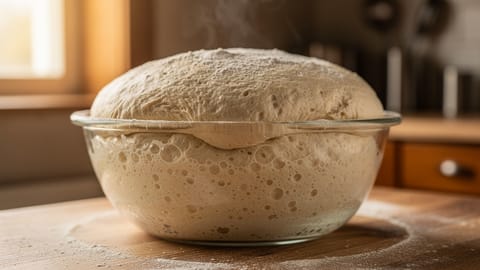
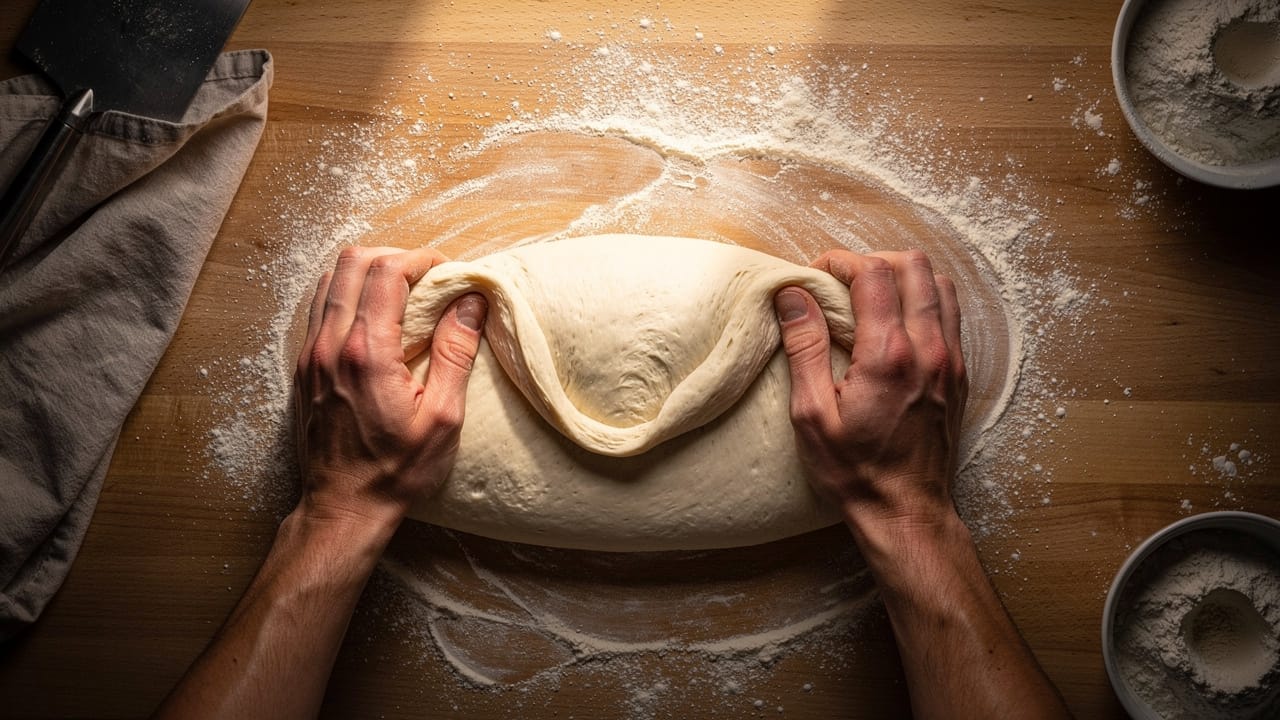
- Building gluten structure during bulk fermentation with stretch and fold sets
- Incorporating mix-ins (seeds, dried fruit, olives) into bread dough
- Redistributing fermentation gases and equalizing dough temperature
How do you fold in baking?
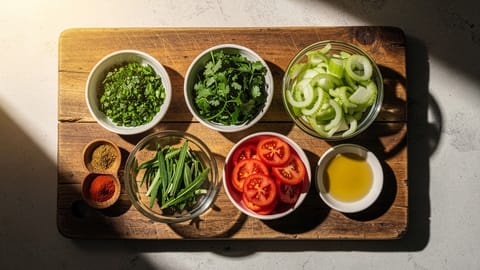
Have your mise en place ready. Once you start, speed matters.
The properly folded batter should look billowy and hold some volume. If you see a few pale streaks of meringue, that's a sign you stopped at the right moment. A perfectly uniform color often means you went too far.
America's Test Kitchen and King Arthur Baking both describe the same three-part motion (cut, sweep, turn) and both warn against a tall, narrow bowl. King Arthur's advice is to fold in a bowl that is wider than it is tall, so the spatula reaches everything in few strokes.
How do you stretch and fold bread dough?
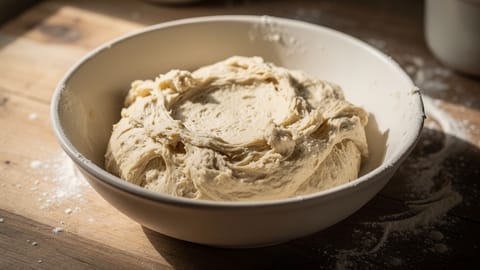
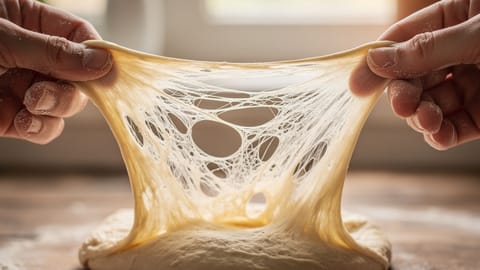
In bread baking, folding means a series of stretch-and-fold sets performed during bulk fermentation. This technique is particularly important for high-hydration doughs that are too wet to knead traditionally.
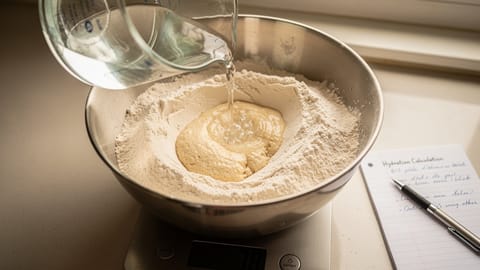
Each set builds gluten structure incrementally. After the first two sets, the dough transforms from a shaggy, sticky mass into a smooth, cohesive ball. An autolyse before adding salt and yeast gives the flour time to hydrate, making the first fold much easier.
The Perfect Loaf's guide starts from three sets, about 30 minutes apart, and adds or drops sets depending on how the dough looks. When the dough holds defined edges and sits gathered up in the bowl instead of spreading flat, it has enough strength and further sets add nothing.
Coil fold (alternative method)
For very wet doughs (80%+ hydration), coil folds are gentler than stretch and folds. Slide your hands under the center of the dough, lift it up so the ends drape down, then lower it back into the container so the ends tuck underneath. Rotate a quarter turn and repeat. Because the dough is never pulled hard, coil folds tighten it without tearing the gluten that earlier sets built, which is why many bakers use them for the last set or two.
Why fold instead of whisk?
Whisking creates structure by trapping air in tiny bubbles. That's what you want when making meringue or whipped cream. But once that structure exists, whisking again destroys it. Folding preserves the bubbles you already created while gently combining two mixtures of different densities. Think of it this way: whisking builds air, folding moves air from one place to another without popping it.
Where is folding used in cooking?
| Dish/Context | What you fold | Into what | Technique | Key tip |
|---|---|---|---|---|
| Soufflé | Whipped egg whites | Flavored base | Pastry fold | Lighten base with a third of the whites first |
| Chocolate mousse | Whipped cream | Melted chocolate ganache | Pastry fold | Chocolate must be warm, not hot |
| Angel food cake | Sifted flour | Whipped egg whites | Pastry fold | Sift flour several times for lightness |
| Macarons | Almond flour + sugar | Italian or French meringue | Macaronage | Test with the ribbon, not a stroke count |
| Chiffon cake | Whipped whites | Yolk batter | Pastry fold | Fold in two additions |
| Sourdough bread | Dough onto itself | n/a | Stretch and fold | 3-6 sets, about 30 min apart |
| High-hydration ciabatta | Dough onto itself | n/a | Coil fold or stretch and fold | Wet hands, gentle tension |
| Pancakes | Dry ingredients | Wet ingredients | Gentle fold | Stop while still lumpy |
What tools do you use for folding?
Large flexible spatula. The standard tool for pastry folding. Silicone holds up to heat and cleans easily. Choose one with a thin, flexible edge. Stiff spatulas push through the mixture rather than cutting. King Arthur Baking makes the case for a balloon whisk instead, dragged through the batter rather than beaten, because its wires cut through with less pressure. Either works if the motion is right.
Your hands. Traditional for bread doughs. Hands give you direct feedback on the dough's texture and tension. Wet them first when working with sticky dough.
Bench scraper. Useful for coil folds and for turning very wet bread doughs.
Folding in Fond
Fond hasn't launched yet. This is how it will work at launch. Join the waitlist for early access.
Fond's Cook mode shows one step at a time and keeps the screen awake, so a recipe that says "fold in the whites" stays in front of you while your hands are busy. For bread, the rest between stretch-and-fold sets runs as a timer from the step itself, so you can walk away and come back when the next set is due.