 Bastien
Fermentation
Fermentation is the metabolic process where bacteria, yeast, or molds convert sugars into acids, alcohol, or gases. It is the basis of bread, yogurt, kimchi, beer, and hundreds of other foods.
Fermentation is a metabolic process in which bacteria, yeast, or molds convert sugars into acids, alcohol, or gases. In cooking it produces bread, beer, wine, yogurt, cheese, sauerkraut, kimchi, miso, soy sauce, vinegar, and hundreds of other foods, through three main families: lactic, alcoholic, and acetic.
The microbes do this work in the absence of oxygen, or close to it. A published definition used across the research literature is deliberately broad: foods and beverages made through controlled microbial growth, where enzymes convert the food's own components. That breadth is the point. Fermentation predates written history, and it still underpins staples on nearly every table.
For cooks, it does two jobs at once. It preserves, and it builds flavor. The acids, alcohols, and aromatic compounds microbes leave behind create the tang of yogurt, the umami depth of miso, and the sour complexity of sourdough. Understanding fermentation helps you read a rising dough, choose between fermented ingredients, and know which jars in your fridge still contain anything alive.
What are the main types of fermentation?
Alcoholic fermentation
Yeast, typically Saccharomyces cerevisiae, consumes sugar and produces ethanol and carbon dioxide. This is the fermentation behind bread, beer, wine, and cider.
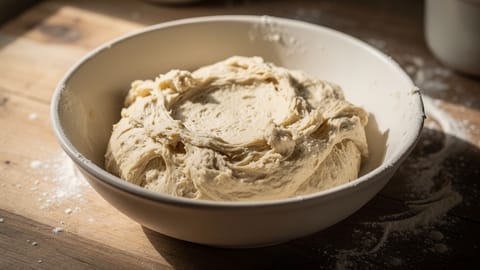
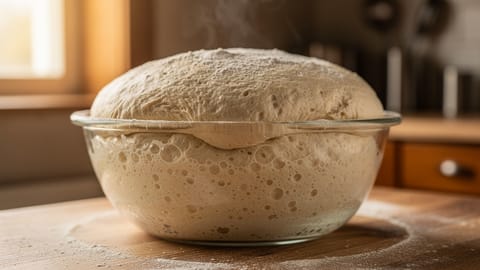
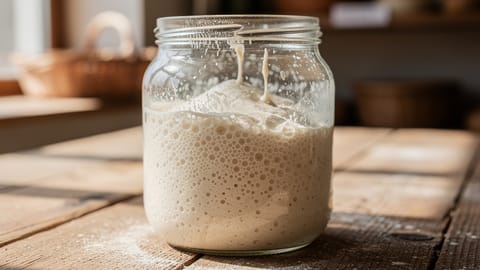
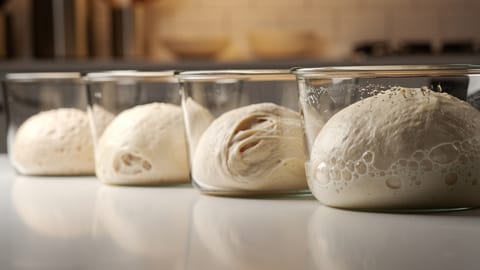
In bread baking the CO₂ is the goal. It inflates the dough during bulk fermentation and proofing, and the alcohol mostly bakes off. Speed and character depend on temperature, hydration, and whether you use commercial yeast or a sourdough starter.
Lactic acid fermentation
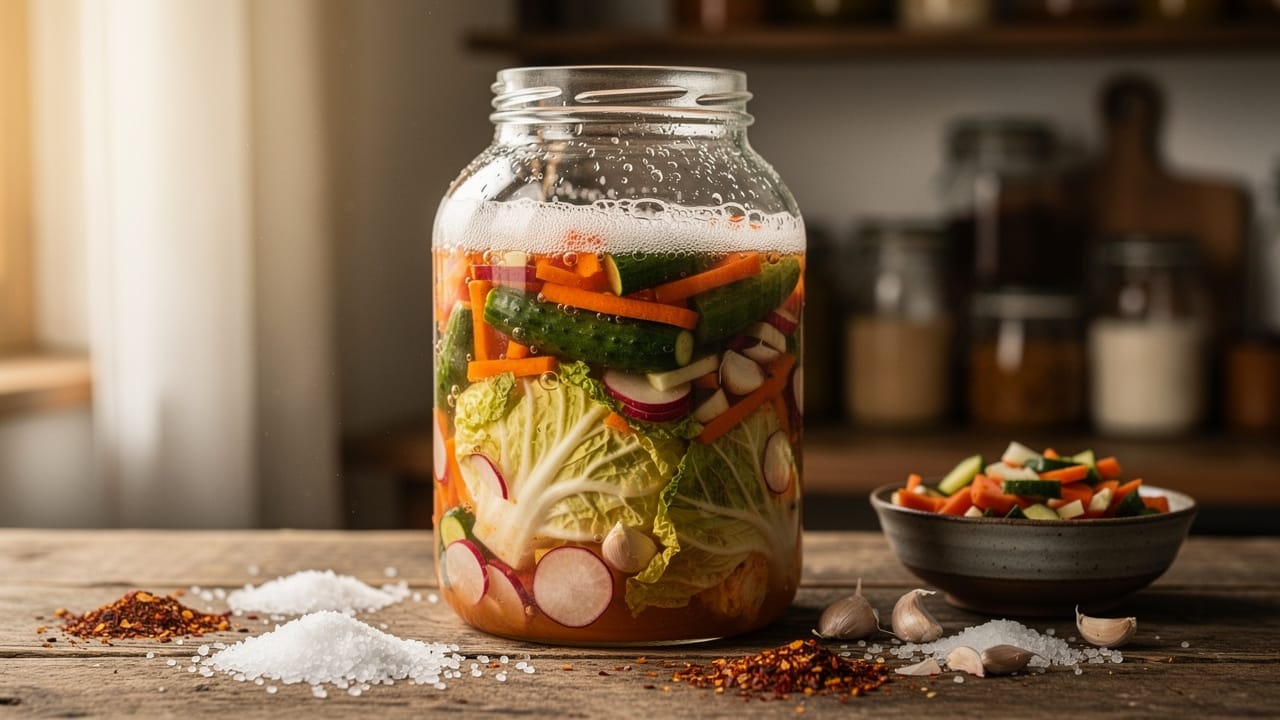
Lactic acid bacteria (LAB) consume sugar and produce lactic acid. This is the fermentation behind yogurt, sauerkraut, kimchi, brined pickles, and sourdough's tang. The acid lowers pH, which preserves the food by making it inhospitable to spoilage organisms.
It comes in two forms:
- Homofermentative produces mainly lactic acid (yogurt, some cheese)
- Heterofermentative produces lactic acid plus CO₂ and other compounds (sourdough, kimchi), which reads as more complex flavor
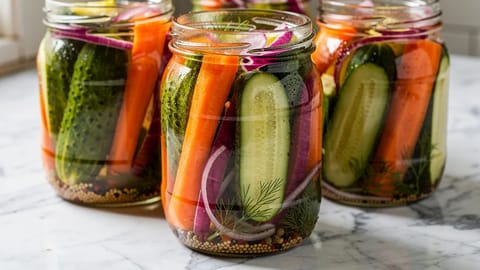
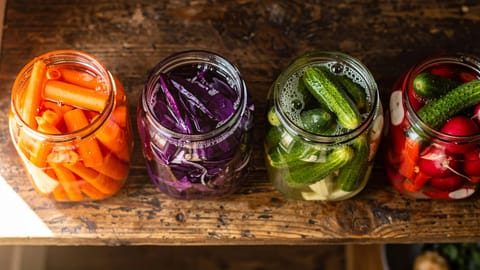
When this happens to vegetables in a salt brine, cooks usually call it lacto-fermentation, and that page covers the brine ratios and jar mechanics in detail.
Acetic acid fermentation
Acetic acid bacteria convert alcohol into acetic acid, which is vinegar. It runs in two stages: alcoholic fermentation makes the alcohol, then Acetobacter converts it. That sequence is why vinegar-making always starts from wine, cider, beer, or another alcoholic liquid.
Mixed fermentation
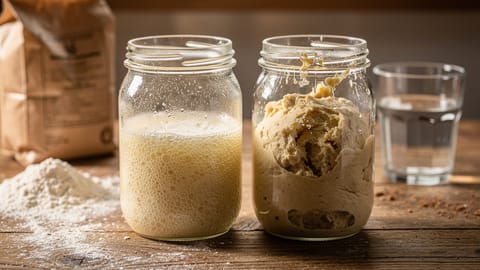
Plenty of traditional foods run several fermentations at once or in sequence. Sourdough bread combines alcoholic fermentation from wild yeast with lactic acid fermentation from LAB. Soy sauce and miso start with a mold fermentation (Aspergillus oryzae) and continue with bacteria and yeast for months.
What are common examples of fermented foods?
A tour of the most common fermented foods and the microorganism driving each one:
| Food | Fermentation type | Key microorganism | Time |
|---|---|---|---|
| Bread (yeasted) | Alcoholic | S. cerevisiae | 1-24 hours |
| Sourdough | Alcoholic + lactic | Wild yeast + LAB | 4-48 hours |
| Yogurt | Lactic acid | L. bulgaricus, S. thermophilus | 4-12 hours |
| Sauerkraut | Lactic acid | L. plantarum and others | 3-6 weeks |
| Kimchi | Lactic acid | L. mesenteroides and others | 1-4 weeks |
| Miso | Mold + lactic | Aspergillus oryzae + LAB | 3 months-3 years |
| Soy sauce | Mold + lactic + alcoholic | A. oryzae + LAB + yeast | 6-18 months |
| Wine | Alcoholic | S. cerevisiae | 2 weeks-months |
| Vinegar | Acetic acid | Acetobacter | 1-3 months |
| Cheese | Lactic acid (+ others) | Various LAB | Hours-years |
| Table olives | Lactic acid | LAB in the curing brine | Weeks-months |
| Coffee | Lactic + alcoholic | Wild yeast + LAB | 12-72 hours |
Is it actually fermented?
The label gets applied loosely, and a few cases are worth pinning down.
Greek yogurt is fermented milk like any other yogurt, made with the same S. thermophilus and L. bulgaricus cultures. Straining changes the texture, not the process.
Olives depend on the curing route. Naturally brine-cured olives ferment, with bacteria in the brine converting the olives' sugars to lactic acid. UF/IFAS Extension describes four curing methods, and salt-cured and air-cured olives rely on dehydration rather than fermentation.
Vinegar pickles are not fermented. They are preserved by acid you added from a bottle. Brined pickles that sour on their own are fermented. Both keep well, but only one grows its own acid; the pickling guide walks through both methods.
Bread is fermented, then baked. The dough ferments, and oven heat then substantially reduces microbial viability. Sourdough is a fermented food that arrives at the table without meaningful live cultures.
Coffee and cocoa both ferment after harvest. For cocoa this is not optional: research on spontaneous cocoa fermentation calls it the most crucial stage influencing the aromatic potential of the beans, and unfermented beans never develop chocolate aroma during roasting.
The distinction that matters for gut-health claims is whether a food still contains live organisms when you eat it. A survey of commercial fermented foods found viable counts vary widely between products, and pasteurized or filtered items may carry none.
Fermentation in bread baking
Fermentation drives bread baking. Mixing, bulk fermentation, shaping, and proofing are all arranged around controlling it.
What happens during dough fermentation
- Yeast consumes sugars in the flour, producing CO₂ and alcohol
- CO₂ gets trapped in the gluten network, inflating the dough
- Enzymes break down starches into simpler sugars, feeding the yeast
- Organic acids accumulate, developing flavor, especially in long fermentations
- The gluten network matures, becoming more extensible and easier to shape
Temperature controls speed
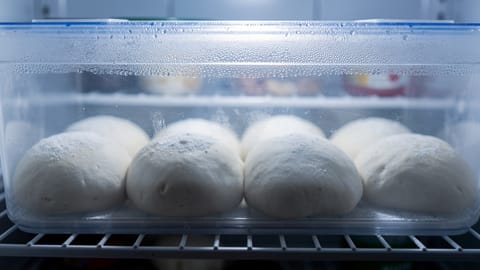
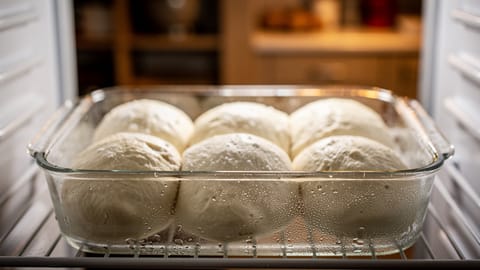
Temperature is the strongest lever you have. Cold fermentation in the refrigerator at 38-40°F (3-4°C) stretches a bulk ferment that would take 1-4 hours at room temperature into 12-72 hours.
The change is not only about time. LAB stay active in the cold while yeast slows sharply, so the dough accumulates more lactic and acetic acid relative to CO₂. That is the mechanism behind the sourer, more layered flavor of cold-fermented pizza dough and overnight bread. The pizza dough calculator lets you set a fermentation window and see how the yeast quantity moves to match it.
Pre-ferments
A poolish or biga is a pre-fermented mix of flour, water, and a small amount of yeast, left for 8-16 hours before it joins the final dough. Pre-ferments develop flavor, strengthen gluten, and improve keeping quality by giving fermentation more time to work. Our poolish vs biga guide compares them properly.
How do you control fermentation?
Bread, yogurt, sauerkraut: the same handful of variables run all of them.
Temperature sets the pace. Warmer is faster, cooler is slower. The National Center for Home Food Preservation puts full sauerkraut fermentation at 3 to 4 weeks at 70-75°F (21-23°C), stretching to 5-6 weeks at 60-65°F (16-18°C), with little reliable fermentation below 60°F (16°C).
Salt slows microbial activity selectively. In bread, salt at 1.8-2.2% of flour weight tempers fermentation speed while strengthening gluten. For vegetables, the NCHFP sauerkraut ratio of 3/4 cup canning salt per 25 lb of cabbage works out to roughly 2% of the vegetable weight, and their fallback brine runs near 3%. That range favors LAB over the organisms you don't want.
Sugar availability determines how fast things get going. Autolyse gives enzymes time to break complex starches into simple sugars before active fermentation begins.
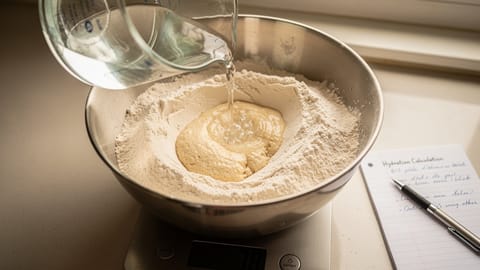
Hydration matters too. Higher hydration generally speeds fermentation, because water makes sugars easier for microbes to reach.
Starter quantity is your time dial. More yeast or culture means faster fermentation. Less of it buys time, and time buys flavor.
How does fermentation change flavor?
Fermentation builds umami and complexity through several mechanisms:
- Protein breakdown: enzymes cut proteins into amino acids, notably glutamate, the molecule behind umami. This is why aged cheese, miso, and soy sauce taste so savory
- Acid production: lactic and acetic acids add a tang that cuts richness. Deglazing a pan with wine puts the acids of alcoholic fermentation to work
- Ester formation: yeast produces fruity esters, a large part of wine and beer aroma
- Maillard precursors: fermentation leaves behind amino acids and sugars that feed the Maillard reaction during baking or searing, for deeper browning and better crust flavor
The same chemistry explains why fermented ingredients do so much work in savory cooking. A spoonful of miso or a splash of soy sauce brings glutamate that a long-simmered stock would otherwise have to build from scratch.
What does the research say about fermented foods and gut health?
The most-cited trial here is the Stanford study published in Cell in 2021. Thirty-six healthy adults followed either a high-fermented-food or a high-fiber diet for 10 weeks. In the fermented-food group, gut microbial diversity rose and 19 inflammatory proteins measured in blood fell, including interleukin 6. None of those markers dropped in the fiber group.
That is one well-run trial, not a settled question. Much of the wider evidence is epidemiological, and researchers reviewing fermented foods as a source of live organisms note that few randomized trials have tested fermented foods on their own. The strongest single finding is an old and narrow one: yogurt cultures improving lactose digestion.
So the honest version is that fermented foods look promising, several of them are pleasant to eat daily, and none of them is a treatment. If you want the effect studied at Stanford, the variable was fermented food eaten consistently over weeks, not a single jar of kimchi.
Who should be careful with fermented foods?
Fermentation produces biogenic amines, and histamine is the one that matters most for tolerance. EFSA's assessment concluded that healthy people showed no adverse effects up to 50 mg of histamine per person per meal, while the tolerated level for people with histamine intolerance was below detectable limits. Aged cheese, cured fish, wine, and long-fermented vegetables sit at the higher end.
A few other cautions worth knowing:
- People with histamine intolerance often react to aged cheese, wine, and long-fermented vegetables
- Some people with SIBO report that fermented foods worsen bloating
- Anyone immunocompromised or pregnant should ask their doctor before adding unpasteurized ferments
- Sourdough is not safe in coeliac disease, since fermentation does not fully hydrolyze gluten
If you are starting from a low baseline, a tablespoon of sauerkraut or a small glass of kefir is a reasonable place to begin.
Is fermentation safe to do at home?
Vegetable fermentation is safe when the acid arrives fast enough. In a study of artisanal sauerkraut, pH fell from 5.7 to between 3.8 and 4.0 within the first seven days and settled near 3.5 by day 35. Once a ferment is that acidic, the organisms that cause serious foodborne illness cannot establish themselves. The pH 4.6 line that regulators use for shelf-stable acidified foods exists for the same reason: below it, Clostridium botulinum spores do not germinate.
Four principles carry most of the risk:
- Salt concentration: too little salt lets unwanted bacteria multiply before LAB acidify the jar
- Keep it submerged: vegetables above the brine grow mold
- Trust your senses: a healthy ferment smells sour and clean, never putrid
- Temperature: hold the 70-75°F (21-23°C) window; above it, kraut goes soft and spoilage organisms compete harder
Two limits are worth stating plainly. Home fermentation is not home canning, and an acidic ferment does not make an improperly canned jar safe. And low-acid foods such as meat, fish, and mushrooms carry real botulism risk when fermented without training. Our beginner's guide to fermentation walks through a first batch with the equipment and checks in order.
Fermentation in Fond
Fond hasn't launched yet. This is how it will work at launch. Join the waitlist for early access.
Fond's Pizza Workshop is the module that ships today, and it includes fermentation tracking alongside baker's percentages, hydration control, and oven presets. The pizza dough calculator on this site does the same yeast-and-time math without an account.
Two more modules are on the roadmap rather than in your hands: Bread Studio, which will cover starter logs, baker's math, and proofing schedules, and Fermentation Station for kimchi, sauerkraut, kombucha, and pickles, with salt ratios, timelines, and batch logs.
Sources
- Fermented-food diet increases microbiome diversity, decreases inflammatory proteins — Stanford Medicine (2021)
- Fermented foods: definitions and characteristics, impact on the gut microbiota — Nutrients (2019)
- Fermented foods as a dietary source of live organisms — Frontiers in Microbiology (2018)
- Scientific opinion on risk based control of biogenic amine formation in fermented foods — EFSA (2011)
- Sauerkraut — National Center for Home Food Preservation, University of Georgia
- Microbial and metabolic characterization of organic artisanal sauerkraut fermentation — Frontiers in Microbiology (2022)
- Fermented foods: olives — University of Florida IFAS Extension