 Bastien
How to Make Fresh Pasta from Scratch
A complete guide to making fresh pasta at home, covering flour choice (00 vs all-purpose), the base egg dough recipe, kneading and resting, rolling by machine or hand, shaping, cooking times, storage and freezing, and troubleshooting common dough problems.
TL;DR: Fresh pasta takes about an hour, uses 4 ingredients (flour, eggs, salt, olive oil), and the technique is more forgiving than you think. The ratio is 100g flour to 1 large egg. Rest the dough for 30 minutes, roll it thin, cook for 2-3 minutes. Once you've made it twice, you won't need to look at a recipe again.
Why make pasta from scratch?
A typical first batch: flour on every surface, a rolling pin that is slightly too short, fettuccine strips of three different widths, and the whole lot sticking together in the pot because nobody told you to flour it after cutting. It is still better than anything from a box.
That's the thing about learning how to make fresh pasta: even a mediocre first attempt produces something noticeably better than dried. Fresh pasta has a tender, silky bite that dried pasta can't replicate. It absorbs sauce differently and cooks in minutes, with a richness from the eggs that changes the entire dish.
The process is also simpler than most people expect. Four ingredients with no special equipment, and a technique that rewards feel over precision. If you can knead bread dough, you can make pasta.
Choosing your flour
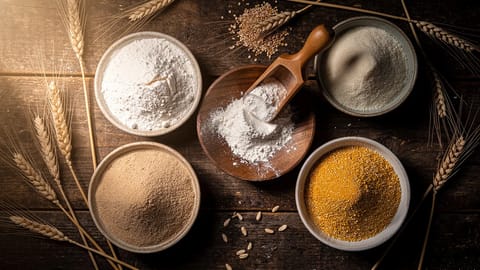
Flour choice is the single biggest variable in your pasta's texture. The two main options are Italian 00 flour and all-purpose flour, and both work well, but they produce different results.
00 flour has an ultra-fine grind that produces the smoothest, most tender pasta. It's what you'll find in most Italian kitchens. The fine particles hydrate quickly and create a dough that rolls out like silk. If you're serious about pasta, keep a bag on hand. For a deeper dive on types of flour and protein content, our flour guide covers it in detail.
All-purpose flour is a perfectly good alternative. It produces pasta with slightly more bite, closer to what you'd get at a rustic trattoria. The higher gluten development gives the noodles more structure, which helps if you're a beginner because the dough is more forgiving during rolling and cutting.
Avoid bread flour for pasta. Its high protein content (12-14%) creates too much gluten development, making the dough elastic and snappy. You'll fight it the entire time you're trying to roll it thin, and the finished pasta will be tough and chewy rather than tender.
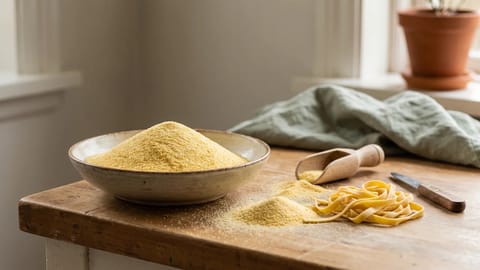
Semolina is sometimes added at 10-20% of the total flour for more texture and a golden color. It's traditional in some southern Italian pastas. Leave it out of your first few batches and master the basic dough first.
The base recipe
Ingredients
- 400g (3¼ cups) 00 flour or all-purpose flour
- 4 large eggs
- 1 tablespoon extra-virgin olive oil
- 1 teaspoon fine salt
Method
- Mound the flour on a clean work surface and make a wide well in the center
- Crack the eggs into the well, add olive oil and salt
- Beat the eggs with a fork, gradually pulling flour from the inner walls
- When the dough becomes too stiff to mix with a fork, bring it together with your hands
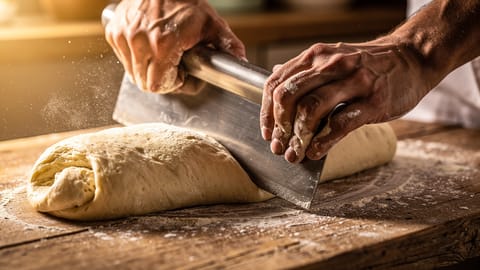
- Knead for 8-10 minutes until smooth and elastic
- Wrap tightly in plastic wrap and rest at room temperature for 30-60 minutes
- Divide into 4 portions, roll thin, cut into desired shape
- Cook in heavily salted boiling water for 2-3 minutes
Notes
- Egg sizes vary. If the dough feels dry, wet your hands and continue kneading. If it's sticky, dust with a tablespoon of flour at a time.
- The dough should feel like Play-Doh when properly kneaded: smooth and pliable, slightly tacky but not sticky.
- For richer pasta, use 4 whole eggs plus 2 extra yolks. The additional fat makes the dough more tender and golden.
Scaling the recipe
The ratio is dead simple: 100g flour to 1 large egg. Scale up or down as needed.
| Servings | Flour | Eggs | Olive oil | Salt |
|---|---|---|---|---|
| 2 | 200g | 2 | 1 tsp | ½ tsp |
| 4 | 400g | 4 | 1 tbsp | 1 tsp |
| 6 | 600g | 6 | 1½ tbsp | 1½ tsp |
| 8 | 800g | 8 | 2 tbsp | 2 tsp |
Making the dough step by step
1. Build the well
Pour the flour directly onto a clean countertop or large wooden board. Make a crater in the center, wide enough to hold the eggs without breaking through the walls. Think volcano, not teacup. The walls should be about 1 inch thick.
If the well breaks and egg runs everywhere during mixing, don't panic. Scrape it all together with a bench scraper and work it into a shaggy mass. It'll come together.
2. Mix and incorporate
Crack eggs into the center, add oil and salt. Use a fork to beat the eggs, then start pulling flour from the inner edges of the well in small amounts. Work in circles, gradually incorporating more flour. The mixture goes from liquid to paste to a rough, shaggy dough over about 3-4 minutes.
Once it's too stiff for the fork, push remaining loose flour to the side (you might not use all of it) and start working the dough with your hands.
3. Knead the dough
This is where the pasta goes from a rough lump to something beautiful. Push the dough away from you with the heel of your palm, fold it back over itself, rotate a quarter turn, and repeat. Eight to ten minutes of this and the dough transforms.
You're building gluten development, the protein network that gives pasta its structure and chew. At first the dough feels rough and dry. Around minute 5, it starts to smooth out. By minute 8, it should feel like a firm, smooth ball that's elastic when you poke it, and not sticking to your hands or the counter.
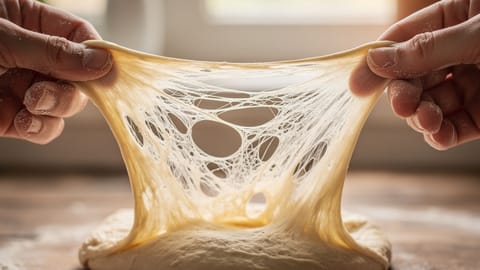
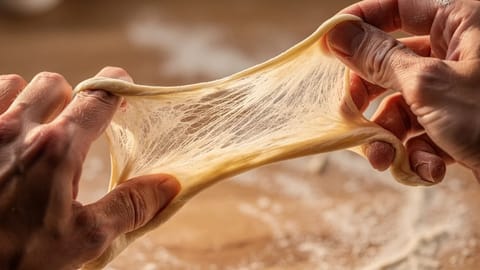
How to tell it's ready: Do the gluten window test. Pull off a small piece and stretch it gently between your fingers. If you can stretch it thin enough to see light through it without it tearing, the gluten is developed. If it tears immediately, knead for another 2-3 minutes.
4. Rest the dough
Wrap the dough ball tightly in plastic wrap and let it sit at room temperature for at least 30 minutes. An hour is better.
Resting relaxes the gluten, which makes the dough dramatically easier to roll out. Skip this step and you'll spend twice as long fighting dough that springs back every time you roll it, shrinking like a rubber band after every pass. Thirty minutes of rest changes everything; King Arthur's recipe rests its dough at least 30 minutes for the same reason.
Rolling: machine vs hand
Rolling with a machine
A hand-crank pasta machine (Atlas-style) is the easiest way to get consistent, thin sheets. Here's the process:
- Cut the rested dough into 4 pieces. Keep unused pieces wrapped so they don't dry out.
- Flatten one piece into a rough rectangle with your hands, about 1cm thick.
- Start at the widest setting (usually 0 or 1). Feed the dough through, fold it in thirds like a letter, and feed it through again on the same setting. Repeat 3-4 times. This is your final lamination step and builds structure.
- Reduce the setting by one notch and pass the dough through once (no folding from here on).
- Continue reducing one setting at a time until you reach your target thickness:
- Setting 5-6 (about 1mm): Fettuccine, tagliatelle, pappardelle
- Setting 6-7 (under 1mm): Filled pastas like ravioli, tortellini
- Setting 7-8 (paper-thin): Lasagna sheets, stuffed pasta where you want to see the filling
- Dust sheets lightly with semolina as you work to prevent sticking.
The sheet will get long. Drape it over the back of a chair or lay it on a floured towel between passes. Don't let sheets pile on top of each other or they'll fuse.
Rolling without a machine
No machine? No problem. A long rolling pin and some patience are all you need. This is how pasta was made for centuries before anyone invented a crank.
- Lightly flour your work surface and the dough.
- Start from the center and roll outward in one direction. Lift the pin at the edge. Don't roll back and forth, which can toughen the dough.
- Rotate the sheet a quarter turn after each pass. This keeps the shape roughly circular and ensures even thickness.
- Roll, rotate, roll, rotate. The dough will resist at first. If it springs back aggressively, cover it with a towel and rest it for 5 minutes, then continue.
- Target thickness: About 1-2mm for cut pastas, slightly thinner for filled pastas. You should be able to see the shadow of your hand through the sheet (but not clearly read through it).
- Keep dusting with flour to prevent sticking.
Hand-rolling takes more effort but gives you slightly more rustic, textured pasta that grabs sauce beautifully. The uneven thickness is a feature, not a bug.
Cutting shapes and sauce pairing
Once your sheets are rolled, the fun part begins. Here are the most common shapes you can cut at home and what sauces suit them:
| Shape | How to Cut | Width | Best Sauces |
|---|---|---|---|
| Fettuccine | Roll sheet loosely, slice into strips | 6-8mm | Alfredo, butter and sage, cream-based ragus |
| Tagliatelle | Same as fettuccine, slightly wider | 8-10mm | Bolognese, mushroom ragu, brown butter |
| Pappardelle | Cut with knife or fluted wheel | 20-25mm | Braised meat sauces, wild boar, duck ragu |
| Lasagna | Cut sheets to fit your baking dish | Full sheet | Bechamel, meat sauce, vegetable layers |
| Maltagliati | Cut irregular, random shapes | Mixed | Bean soups, light broths, chunky vegetable sauces |
| Ravioli | Fill and seal two sheets | 7-8cm squares | Butter and sage, light tomato, browned butter and walnuts |
Homemade ravioli from this dough: roll to the second-thinnest setting, pipe teaspoon-sized mounds of filling 4 cm apart on one sheet, brush the gaps with water, lay a second sheet on top, press the air out around each mound, then cut with a wheel. A ricotta filling (250 g ricotta, 40 g grated Parmesan, one yolk, salt, nutmeg) is the forgiving one to start with. Ravioli cook in 3-4 minutes and are done when they float and stay floating.
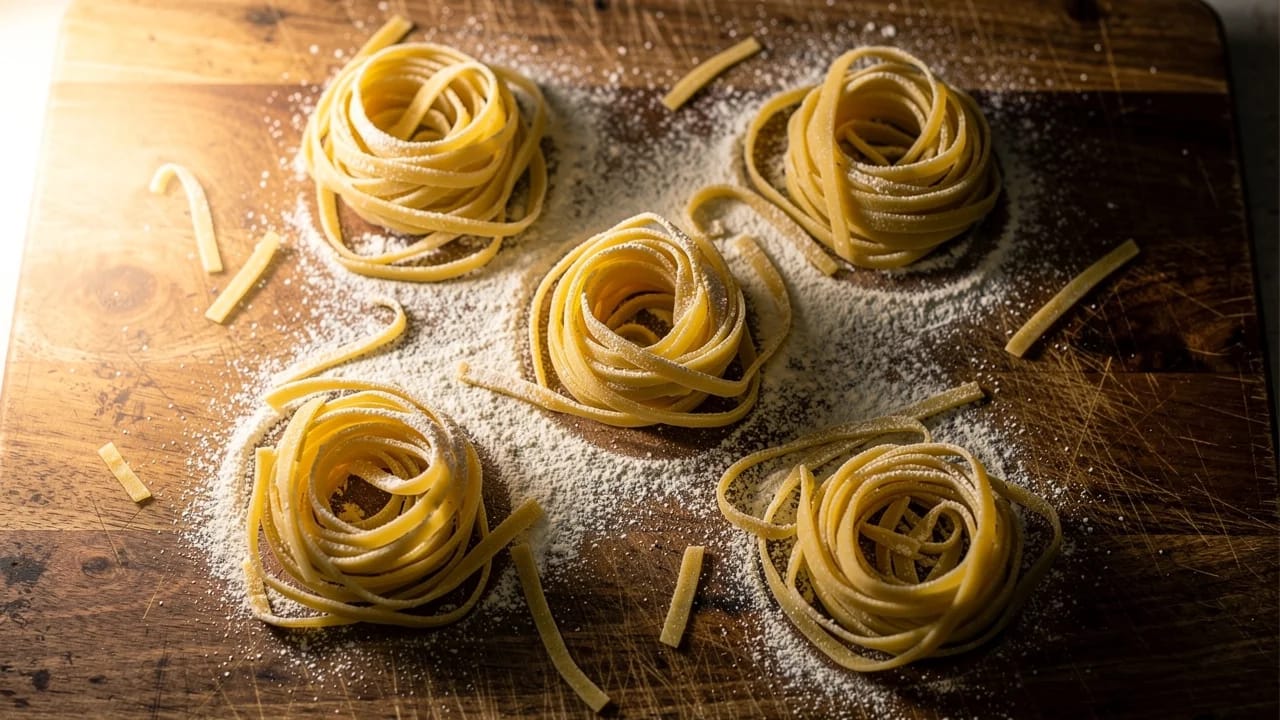
After cutting, toss the pasta shapes in semolina flour to prevent sticking. For long noodles like fettuccine and tagliatelle, twirl them into loose nests on a semolina-dusted tray.
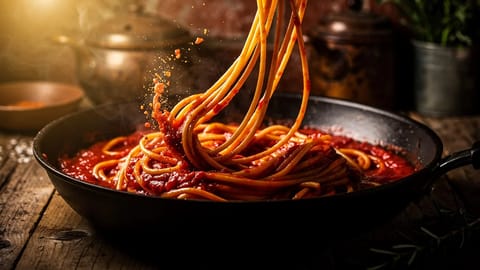
A note on sauce pairing: Fresh egg pasta is rich. It's best with sauces that complement that richness rather than compete with it: butter, cream, light meat ragus, simple olive oil and garlic. Heavy tomato sauces with lots of acidity tend to overwhelm fresh pasta's delicate flavor. Save the marinara for dried pasta.
Cooking fresh pasta
Fresh pasta cooks fast, much faster than dried. This is where most first-timers overcook it.
- Use a large pot with plenty of salted water. The water should taste like the sea. For 400g of pasta, use at least 4 liters of water with 2 tablespoons of salt.
- Bring to a rolling boil before adding pasta.
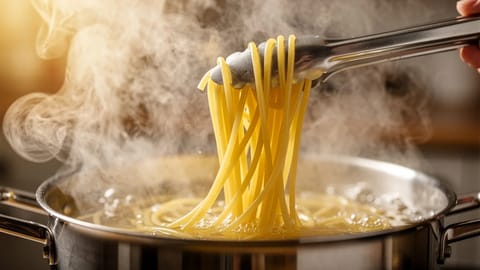
- Cook for 2-3 minutes for most cut shapes. Filled pastas like ravioli take 3-4 minutes. The pasta is done when it floats and feels tender but still has the faintest resistance when you bite through it. That's al dente.
- Taste constantly. Start checking at 90 seconds. Fresh pasta goes from perfect to overcooked in about 30 seconds, and the other pasta cooking mistakes (oil in the water, rinsing, saucing on the plate) apply just as much to fresh as to dried.
- Reserve a cup of pasta water before draining. The starchy water emulsifies and thickens any sauce you toss the pasta with.
Fresh pasta vs dried pasta cooking differences: Dried pasta made from semolina and water needs 8-12 minutes and holds its structure aggressively. Fresh egg pasta is more delicate and absorbs sauce more readily. They're not interchangeable in most recipes. A dish designed for fresh pasta will be wrong with dried, and vice versa.
Storing and freezing fresh pasta
Short-term storage (1-2 days)
Toss cut pasta in semolina flour, form into nests on a parchment-lined sheet tray, and refrigerate uncovered for 30 minutes to let the surface dry slightly. Then cover with plastic wrap. It'll keep for up to 2 days in the fridge.
Uncut dough balls keep well wrapped in plastic wrap in the fridge for up to 24 hours. Let them come to room temperature (20-30 minutes) before rolling.
Freezing (up to 2 months)
Freezing is the best way to batch-prep pasta for weeknight dinners.
- Form cut pasta into nests on a semolina-dusted, parchment-lined tray
- Freeze uncovered until solid (about 2 hours)
- Transfer frozen nests to a zip-lock freezer bag, pressing out excess air to prevent freezer burn
- Label with the date. Frozen pasta keeps for up to 2 months
To cook from frozen: Drop the frozen nests directly into boiling salted water. Don't thaw first. Thawed fresh pasta turns into a gummy clump. Frozen pasta takes 4-6 minutes to cook, about 2 minutes longer than fresh.
What not to do
Don't leave fresh pasta sitting at room temperature for more than an hour after cutting. The eggs in the dough make it perishable, so treat it like any other egg-based product. Cook it right away, or refrigerate or freeze it.
Troubleshooting common problems
Cause: Not enough moisture. Egg sizes vary, and a "large" egg can range from 46g to 64g depending on the brand and country.
Fix: Wet your hands with water and continue kneading. The moisture from your hands absorbs slowly and evenly. If it's still dry, drizzle a teaspoon of water at a time. Don't add a whole egg. That's too much liquid and you'll overshoot.
Cause: Too much egg relative to flour, or high ambient humidity.
Fix: Dust your work surface and hands with flour, a tablespoon at a time. Knead the flour in rather than coating the surface. After 2-3 additions, the dough should firm up. In humid weather, you may need up to 20g extra flour.
Cause: The gluten is too tight, either from under-resting or over-kneading.
Fix: Cover the dough and let it rest for another 15-20 minutes. Gluten relaxes over time. If you've been fighting it for a while, walk away completely for 30 minutes. It'll cooperate when you come back.
Cause: The dough dried out, or you're rolling too thin too fast.
Fix: If the surface is dry and cracking, mist lightly with water and knead briefly. When using a machine, never skip more than one setting at a time. Jumping from 1 to 4 tears the gluten network. Work gradually thinner.
Cause: Not enough flour between the layers, or the pasta sat too long before separating.
Fix: Toss cut pasta immediately in semolina flour (it's coarser than regular flour and prevents sticking better). Form into loose nests right after cutting. If noodles are already stuck, don't try to pull them apart. Drop the whole clump in boiling water and stir vigorously in the first 10 seconds.
Cause: Overcooked. Fresh pasta goes from done to overdone in about 30 seconds.
Fix: Start tasting at 90 seconds. Fresh pasta should be tender but still have a slight resistance (al dente). Use a timer for your next batch and pull the pasta 30 seconds earlier than you think you should. It'll continue cooking slightly in the sauce.
Final tips
Making fresh pasta from scratch is one of those kitchen skills that feels intimidating until you've done it once. After that, it's flour and eggs plus a bit of arm work. Make your first batch on a Sunday afternoon when there's no pressure. Accept that the shapes will be ugly. Focus on the dough. Once you understand how it should feel under your hands, everything else follows.
The second batch will be better. The tenth will be effortless. And at some point, you'll realize you haven't bought dried fettuccine in months.