 Bastien
Al Dente
Al dente is Italian for "to the tooth": food cooked so it still offers slight resistance when bitten. It applies most often to pasta, where a thin pale core of not-yet-gelatinized starch is still visible at the center of a cut strand.
Al dente is an Italian phrase that translates literally to "to the tooth." It describes food, most often pasta, cooked so that it still offers slight resistance when you bite through it: not crunchy, not soft, but firm enough that the texture has real presence in your mouth. The term is pronounced "al DEN-teh."
Pasta served al dente has a satisfying chew. Pasta cooked a minute or two past that point turns limp and starchy, and it loses the texture that makes a simple plate of spaghetti worth eating. The concept sounds fussy, but once you know what to look for, hitting al dente becomes routine.
What does al dente feel like?
Bite through a piece of pasta. If it is al dente, you will feel slight firmness at the center. Not a hard crunch, just the faintest pushback before the noodle gives way. Cut a strand of spaghetti in half and you will see a thin white dot or line at the core. That pale center is starch that has not fully gelatinized yet, and it is exactly what you want. With commercial dried pasta, the al dente stage comes right before that white center disappears (Wikipedia).
If there is no resistance at all, the pasta is overcooked. If there is a distinct chalky snap, it needs more time. Al dente sits in the narrow window between those two.
Italian has words for the neighbors on either side. "Molto al dente" is slightly undercooked, the firmer stage some cooks use when the pasta will finish in a sauce. "Ben cotta" (well cooked) is soft, and "stracotta" is overcooked. Some people genuinely prefer softer pasta, and that's fine. But if a recipe calls for al dente, it means the texture matters for the dish.
Where does al dente come from?
Firm pasta is a modern Italian preference. For centuries the ideal was very soft: the 15th-century cook Martino da Como recommended cooking pasta for hours, and the soft result shaped how it was served (Wikipedia). Al dente became the standard in contemporary Italian cooking, and today it is what most Italian recipes assume when they give a cooking time.
What is the science behind al dente?
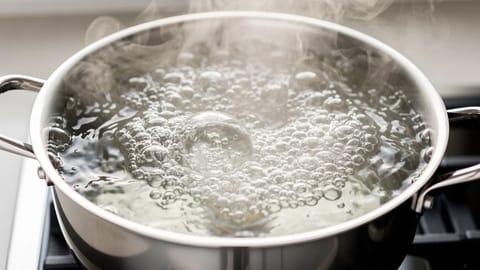
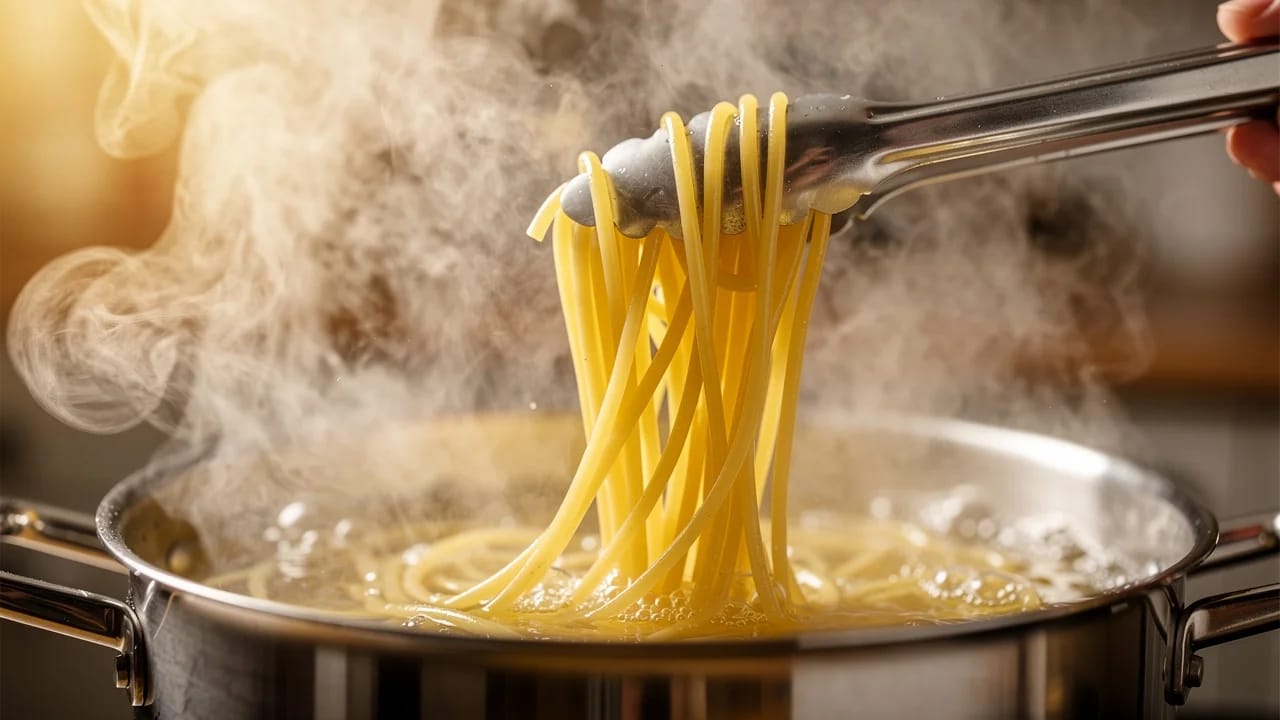
When dried pasta hits boiling water, two things happen at once. Water penetrates the noodle from the outside in, and heat makes the starch granules absorb water and swell, a process called gelatinization. At the same time, the gluten protein network firms up as it cooks, giving the noodle structure.
Al dente pasta has a fully hydrated, gelatinized exterior with a slightly under-hydrated core. That gradient is what creates the textural contrast. Cook it longer and the entire cross-section gelatinizes uniformly, producing a softer, mushier noodle.
This is also why al dente pasta has a lower glycemic index than fully cooked pasta, a point the American Diabetes Association makes (Wikipedia). The less-gelatinized starch at the center digests more slowly, so blood sugar rises more gradually. The effect is modest, and portion size still matters more, but it is one of the rare cases where the tastier option is also the gentler one.
How do you test for al dente?
Forget throwing pasta at the wall. That tells you nothing useful. Three methods work.
Remember that pasta keeps cooking after you drain it. This is carryover cooking. If the pasta will go into a hot sauce or a baking dish, pull it while it is still a touch firmer than your target.
How long does each pasta shape take to reach al dente?
The package gives a range calibrated for that brand's thickness. For al dente, treat the low end as your first taste and the printed time as the upper limit. These are typical figures for dried pasta and starting points only, so always taste.
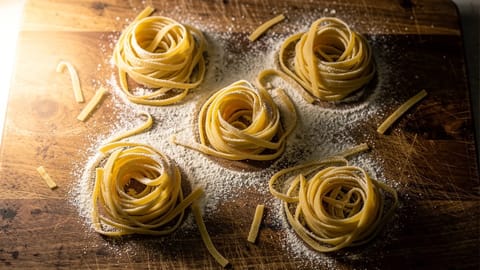
Fresh pasta cooks much faster and has a narrower al dente window. Thirty seconds of inattention can take fresh tagliatelle from perfect to overcooked, so stay at the pot.
What other foods are cooked al dente?
Al dente is not limited to noodles. The concept applies anywhere you want firm-but-tender texture.
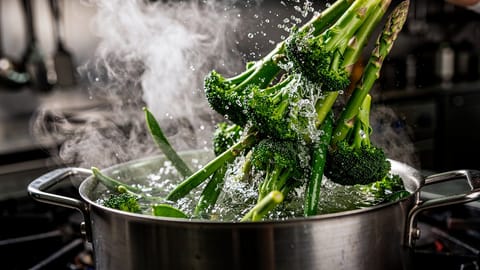
Vegetables. Green beans, broccoli, asparagus: cooked al dente, they keep their snap and bright color. This is closely related to blanching, where vegetables are briefly boiled and then shocked in ice water to lock in that crisp-tender state.
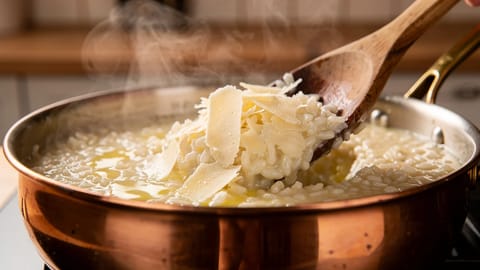
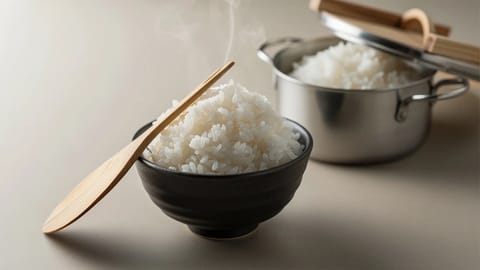
Rice. Risotto is traditionally cooked al dente. Each grain should be creamy on the outside with a subtle bite at the center, and overcooked risotto turns to porridge. The same idea applies to pilafs and grain bowls where you want grains to hold their shape. For more detail, see our guide to cooking rice.
Grains. Farro, barley, and freekeh are all better with a bit of chew. Cook them al dente and they hold their shape in salads and soups instead of turning to mush.
What are the best tips for consistent al dente pasta?
That starchy pasta water deserves special mention. It emulsifies sauces, helping them cling to the noodle without adding fat. A ladle kept in the pot makes it easy to scoop some out before draining.
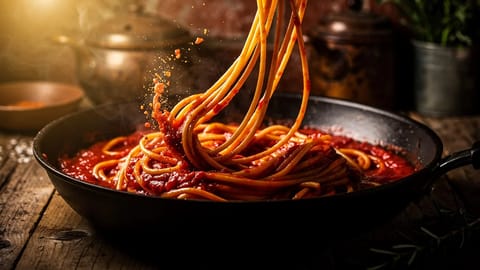
Finishing pasta in the sauce is the single biggest upgrade most home cooks can make. Drain the pasta while it is a touch firmer than al dente, then toss it in the sauce over heat for 1-2 minutes. The pasta finishes cooking while absorbing flavor from the sauce. This is how Italian cooks do it. Avoid common pasta cooking mistakes like draining too late or skipping this step.
Al dente in Fond
Fond hasn't launched yet. This is how it will work at launch. Join the waitlist for early access.
Package times vary by brand, so the useful number is the one you find at your own stove. In Fond, a recipe step like "boil the penne for 9 minutes" carries its own timer in Cook Mode, and you can start it from the step itself. When you land on the time that gives you al dente with your usual brand, record it in the recipe's notes so the next cook starts from your number instead of the package's.