Pizza dough hydration: complete guide to water ratios
How the water-to-flour ratio shapes your crust. 60% gives you a stiff, easy-to-handle dough; 75%+ gives you open, airy crumb but requires more technique. Includes baker's percentages by style, a decision framework, bassinage technique, and fermentation interaction.
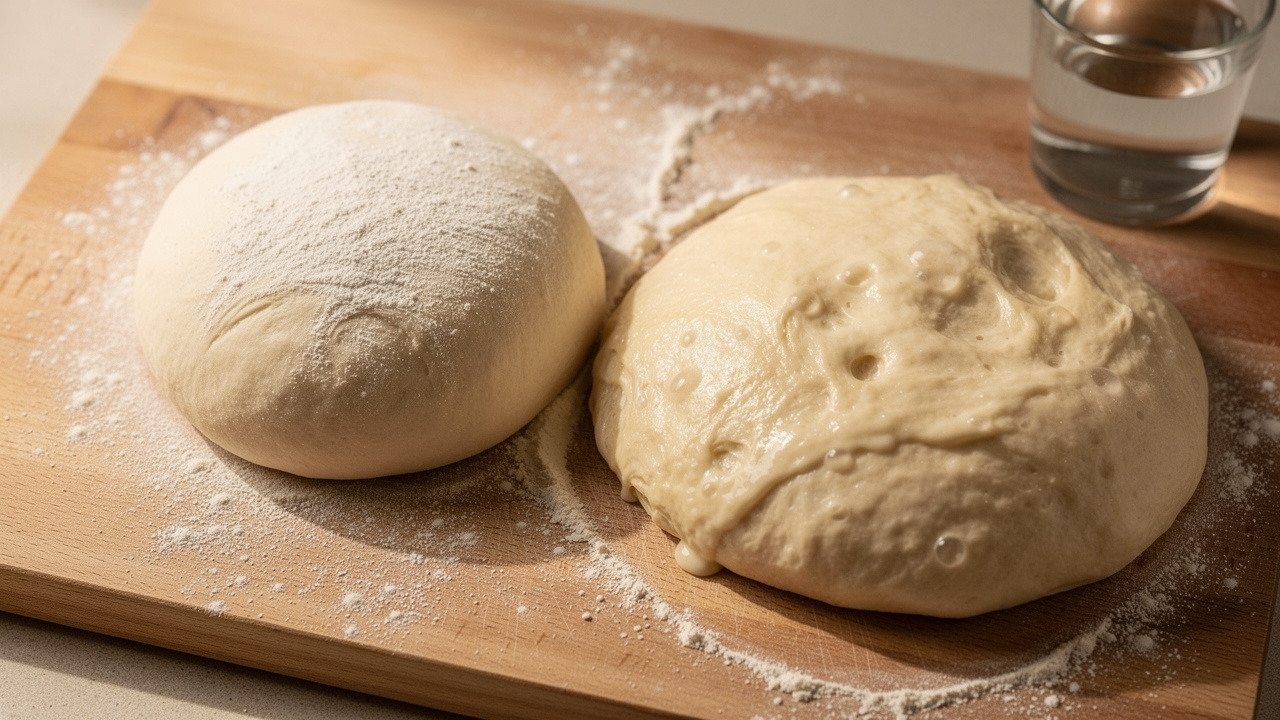
TL;DR: Hydration is the water-to-flour ratio in your dough, expressed as a baker's percentage. For most home bakers, 60-65% hydration is the sweet spot -- easy to handle and producing great texture. Reserve higher hydration (75%+) for pan styles like Detroit or Roman al Taglio, and always match hydration to your flour's protein content and oven temperature.
What is pizza dough hydration?
Hydration is the ratio of water to flour in your pizza dough, expressed as a percentage. This measurement, called baker's percentage, is how bakers talk about and control dough behavior. A 65% hydration dough means you're using 65 grams of water for every 100 grams of flour. Use our pizza dough calculator to compute exact water weights for any batch size.
Pizza dough hydration directly affects your dough's texture, extensibility, oven spring, and final crust. Different pizza styles need different hydration levels, and even a 5% change can shift the result noticeably.
Hydration levels by pizza style
| Pizza Style | Hydration Range | Typical Hydration | Crust Characteristics |
|---|---|---|---|
| Neapolitan | 60-65% | 62-63% | Soft, chewy, leopard spotting |
| New York Style | 58-62% | 60% | Foldable, crispy bottom, chewy |
| Detroit Style | 70-75% | 72% | Airy, crispy edges, soft interior |
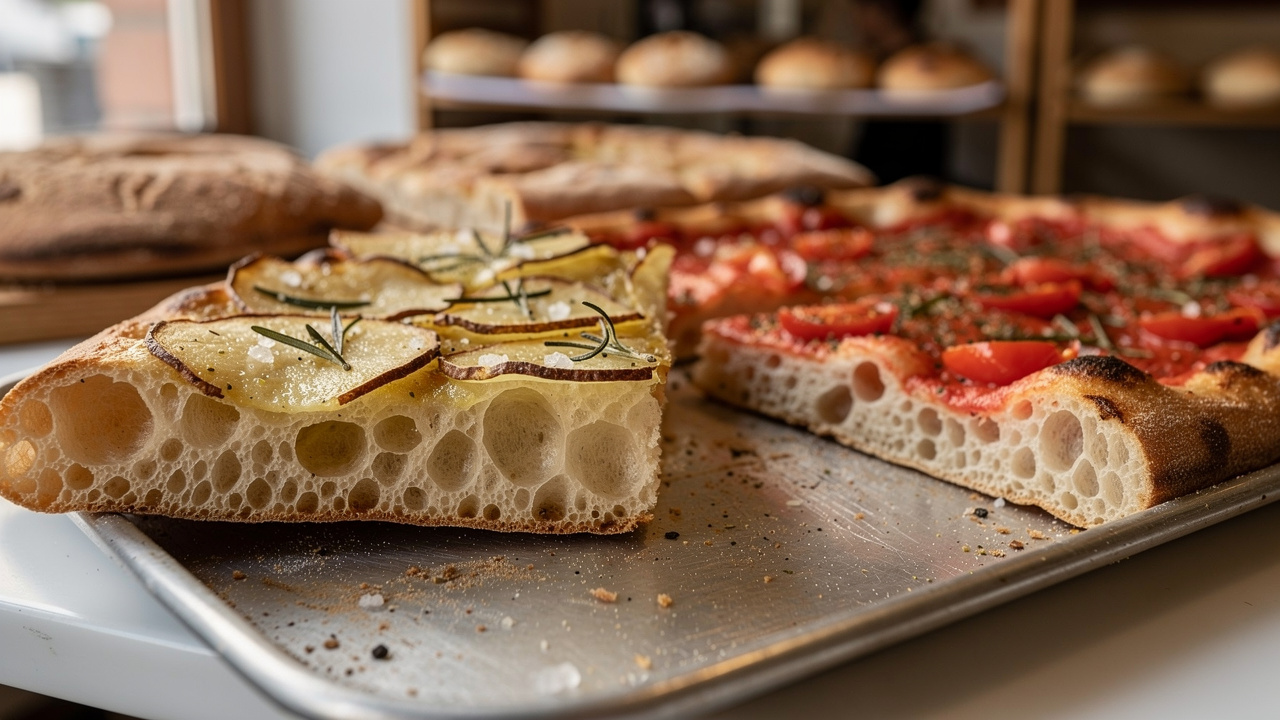
| Roman al Taglio | 75-85% | 80% | Light, airy, large holes |
| Sicilian | 65-70% | 67% | Thick, fluffy, breadlike |
| Thin Crust | 50-55% | 52% | Cracker-crisp, sturdy |
Choosing your hydration: a decision framework
Most hydration guides say "it depends" and leave you there. Here's a concrete starting point based on your actual situation:
| Oven max temp | Flour type | Experience level | Start here |
|---|---|---|---|
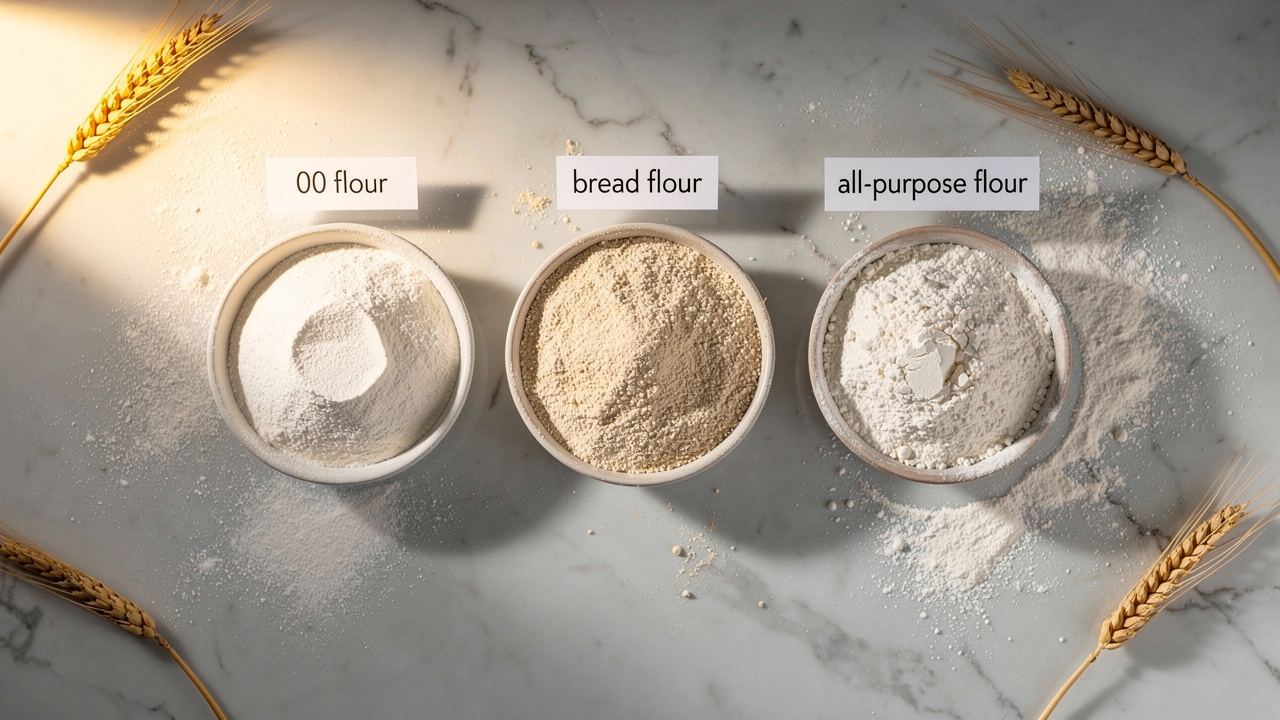
| 450°C+ (wood-fired) | 00 flour (W300+) | Any | 62-65% |
| 300-450°C (pizza oven) | 00 or bread flour | Intermediate | 62-65% |
| 250°C (home oven, baking steel) | Bread flour (13%+) | Intermediate | 60-63% |
| 250°C (home oven, baking steel) | All-purpose (11%) | Beginner | 58-62% |
| 250°C (home oven, no steel) | Any | Beginner | 56-60% |
| Any | Any (pan pizza) | Any | 70-80% |
The key insight: your oven temperature constrains your hydration more than anything else. Neapolitan dough at 62% works because the crust bakes in 60-90 seconds at 450°C -- the steam escapes fast enough to crisp the exterior before the inside gums up. In a home oven at 250°C, that same dough takes 7-10 minutes. Too long at lower heat with too much moisture means a pale, gummy undercarriage regardless of how well you mixed the dough.
Note: These are starting points, not rules. Once you've baked a dough three times at a given hydration and understand how it behaves, adjust by 2-3% in either direction.
The sweet spot: what actually works
60-70% hydration is the sweet spot for pizza. Higher hydration numbers sound impressive, and you'll see plenty of people online boasting about 80%+ doughs, but above 70% the dough becomes unmanageable for most home bakers. You end up with free-form pizzas that cook unevenly, stick to every surface, and frustrate you into ordering delivery. Reserve 75%+ for pan styles only (Detroit, Sicilian, focaccia) where the pan does the shaping work.
Tip: If you're just starting out, try a 62% hydration dough and bake it three times before changing anything. Consistency teaches you more than chasing higher numbers.
How hydration affects your dough
Lower hydration (50-60%)
- Easier to handle and shape
- Denser, more bread-like crumb
- Less oven spring
- Crispier, sturdier crust
- Shorter mixing and fermentation time
Medium hydration (60-70%)
- Balanced workability and texture
- Good for beginners
- Moderate oven spring
- Chewy yet crispy crust
- Works in most home ovens
High hydration (70-85%)
- Hard to handle without experience
- Open, airy crumb with large holes
- Maximum oven spring
- Light, crispy exterior with soft interior
- Requires extended mixing or folding
- Benefits from cold fermentation
- Needs a hot oven for best results
- Warning: Above 70%, the dough sticks to everything, tears easily, and won't hold a round shape on a peel. Start at 62% and work up gradually over many bakes — high-hydration doughs handle very differently from what most recipes suggest.
A counter-intuitive fact: Higher hydration creates a crispier exterior, not sogginess. The extra water generates more steam during baking, pushing outward to create bubbles and a thin, crackling shell. If your high-hydration pizza comes out soggy, you under-baked it or your oven wasn't hot enough. The hydration level isn't the problem.
Hydration vs. flavor: A common mistake is thinking higher hydration means better-tasting pizza. It doesn't. Hydration affects workability and texture far more than flavor.
Flavor comes primarily from fermentation time and technique, salt ratios, and flour quality. A well-fermented 60% dough will taste vastly better than a poorly fermented 80% dough.
Hydration and fermentation: how they interact
Hydration and fermentation affect each other directly, and this is where most intermediate bakers get tripped up.
Cold fermentation (48-72 hours)
A long cold ferment changes how your dough handles at any hydration level. Extended enzymatic activity breaks down gluten slightly, making the dough more extensible and relaxed. This means:
- A 63% cold-fermented dough handles more like a 65-66% same-day dough
- High-hydration doughs (70%+) become even slacker after 72 hours cold -- plan accordingly
- The dough needs a longer bench warm-up (60-90 minutes out of the fridge) before shaping, or it'll tear
Over-fermentation at high hydration
This is the failure mode nobody warns you about. At high hydration (70%+), the gluten network is already under more stress. If you over-ferment -- too warm, too long, or too much yeast -- the gluten breaks down faster than at lower hydration. Signs: the dough spreads immediately when you try to shape it, feels almost liquid, and has a sour or alcoholic smell beyond normal tang. It won't hold a shape and will produce a flat, dense pizza.
Warning: If you're doing a 72-hour cold ferment, reduce your yeast by 30-40% compared to a same-day recipe, especially at hydrations above 65%.
Same-day vs. cold ferment starting point
| Fermentation | Recommended starting hydration |
|---|---|
| Same-day (4-6 hours, room temp) | 60-63% |
| Overnight (12-16 hours, cold) | 62-65% |
| 48-72 hours (cold) | 60-65% (dough relaxes significantly) |
| Sourdough (natural leavening) | 62-68% (starter adds hydration) |
Note on sourdough: your starter contributes water to the total. A 100% hydration starter at 20% inoculation adds roughly 10g water per 100g flour -- effectively 10% extra hydration you need to account for in your calculation.
Bassinage: adding water incrementally
Bassinage is a French mixing technique where you hold back 5-10% of your total water and add it gradually at the end of mixing once the dough has come together. It's one of the most practical skills for home bakers working with higher hydration.
Here's why it works: flour absorbs water unevenly at the start of mixing. If you dump all the water in at once, some flour gets oversaturated before it's had time to hydrate properly, making the dough feel wetter and stickier than its actual hydration suggests. By letting the dough develop structure first, then incorporating the remaining water slowly, you get better gluten development and a more manageable dough.
How to do it:
Frequently Asked Questions
Hydration is the ratio of water to flour by weight, expressed as a percentage. A dough made with 1000g flour and 650g water is 65% hydration. It's one of the most important variables in pizza making because it directly controls how the dough handles, ferments, and bakes.
For most home bakers, 60–65% is the most practical range — the dough is strong enough to shape without tearing and doesn't stick aggressively to your hands or work surface. Higher hydrations (68–75%) produce a more open crumb and better blistering, but they require more experience to handle and shape correctly.
Traditional Neapolitan dough (per the AVPN standard) targets 55–62% hydration, which produces a tight, smooth dough that holds its shape through hand stretching. The dough's strength comes from long fermentation at room temperature, not high water content. Higher hydrations are used by some modern Neapolitan pizzerias, but they deviate from the classic style.
70% is manageable but noticeably stickier and harder to shape without experience. At that level, the dough benefits from slap-and-fold development and a well-floured bench during shaping. For beginners, the extra handling difficulty usually outweighs any texture gains — start lower and work up once you understand how the dough behaves.
Overly wet dough spreads and flattens on the peel instead of holding its shape, and it tends to stick, making a clean launch into the oven difficult. The crust can also bake up dense and gummy if the dough hasn't developed enough gluten structure to trap steam properly. High-hydration doughs require thorough mixing and folding to build that structure.
Home ovens top out around 260–280°C (500–550°F), which is significantly cooler than a wood-fired oven. At lower temperatures, a drier dough in the 62–65% range tends to perform better — it browns more evenly and crisps up before the center turns gummy. Very high-hydration doughs are optimized for fast, high-heat baking and can underperform in a standard oven.
Higher hydration speeds up fermentation because water makes sugars and enzymes more accessible to the yeast. A 70% hydration dough will typically proof faster than a 60% one at the same temperature with the same yeast quantity. When you increase hydration, it's worth reducing your yeast slightly or shortening bulk fermentation time to avoid over-proofing.