 Bastien
Baker's Percentage
Baker's percentage is a notation system that expresses every bread or pizza ingredient as a percentage of total flour weight (flour = 100%) — making any recipe infinitely scalable.
Baker's percentage (also called baker's math or baker's formula) is a notation system where every ingredient in a bread recipe is expressed as a percentage of the total flour weight. Flour is always 100%. This single convention makes any recipe instantly scalable, comparable, and reproducible, which is why professional bakeries, bread books, and pizza communities worldwide rely on it.
How does baker's percentage work?
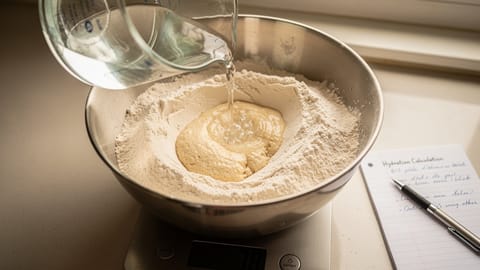
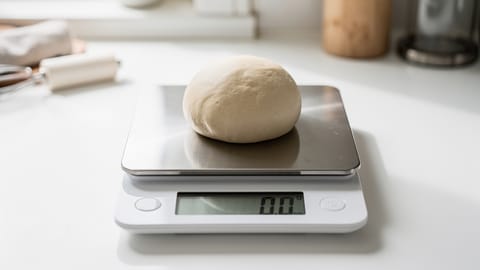
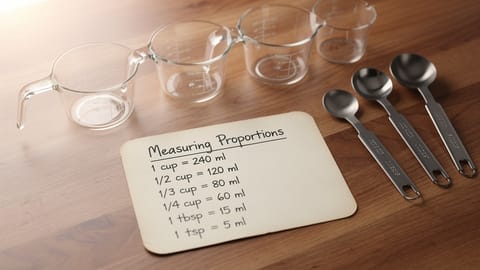
In baker's percentage, flour is always the reference at 100%. Every other ingredient is expressed relative to it by weight. You need a kitchen scale. Volume measurements don't work here.
Weight-only recipes hide this information. A pizza dough written as "500g flour, 300g water" and another written as "800g flour, 560g water" look unrelated until you convert them: the first is 60% hydration and the second is 70%, which is exactly why they handle so differently.
Basic formula
Ingredient % = (ingredient weight / total flour weight) x 100
Example: a simple bread dough
| Ingredient | Weight | Baker's % |
|---|---|---|
| Bread flour | 1000g | 100% |
| Water | 650g | 65% |
| Salt | 20g | 2% |
| Instant yeast | 5g | 0.5% |
| Total dough | 1675g | 167.5% |
This recipe has 65% hydration, the most commonly discussed baker's percentage. The total dough weight equals the sum of all percentages applied to the flour weight.
Multiple flours
When a recipe uses more than one flour, the combined weight of all flours equals 100%. Each flour gets its own percentage that adds up to 100%.
| Ingredient | Weight | Baker's % |
|---|---|---|
| Bread flour | 800g | 80% |
| Whole wheat flour | 200g | 20% |
| Total flour | 1000g | 100% |
| Water | 700g | 70% |
| Salt | 20g | 2% |
The 20% whole wheat means one-fifth of the total flour is whole wheat. Whole wheat absorbs more water, so this recipe needs higher hydration (70%) than a 100% white flour dough at the same consistency. The autolyse technique helps whole wheat flour hydrate fully before mixing.
Why do bakers use percentages instead of weights?
| Benefit | Explanation |
|---|---|
| Infinite scaling | Change flour weight to any amount, apply percentages, done |
| Universal language | A "65% hydration dough" means the same thing everywhere |
| Recipe comparison | Instantly see if a recipe is wetter, saltier, or has more yeast than another |
| Consistency | Ratios stay identical whether you make 2 dough balls or 200 |
| Troubleshooting | If bread is too salty, you know 2.5% salt is high, reduce to 2% |
| Pre-ferment math | Calculating poolish or biga contributions is straightforward |
Weight-based recipes break when you scale them. A recipe for "500g flour, 325g water" requires manual math to make 6 pizza dough balls. With baker's percentage (65% hydration), you set your target dough weight or ball count and the numbers follow. Our baker's percentage calculator automates this, but understanding the math yourself catches mistakes.
Bread is not the only place this notation shows up. Coffee runs on a brew ratio, grounds against water by weight, for exactly the same reason: pin the proportion and batch size stops mattering.
Baker's percentage chart: common ratios by bread type
| Bread | Hydration | Salt | Yeast (instant) | Notes |
|---|---|---|---|---|
| Basic white bread | 60-65% | 2% | 0.5-1% | Good starting point |
| French baguette | 65-68% | 2% | 0.3-0.5% | Long fermentation preferred |
| Ciabatta | 75-85% | 2% | 0.3% | Very wet, open crumb |
| Neapolitan pizza | 58-65% | 2.5-3% | 0.1-0.3% | 24h+ cold fermentation |
| NY-style pizza | 63-67% | 2% | 0.3-0.5% | 1-3 day cold ferment |
| Focaccia | 75-80% | 2% | 0.5% | High hydration, olive oil 5-10% |
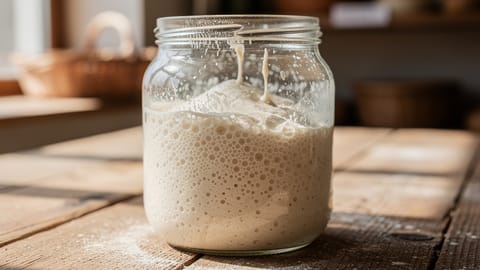
| Sourdough | 70-78% | 2% | 0% (20% starter) | No commercial yeast |
| Brioche | 55-60% | 2% | 1% | Plus 40-60% butter, 10-15% eggs |
| Whole wheat | 70-80% | 2% | 0.5% | Higher hydration for bran absorption |
These ranges are starting points. Flour protein content, ambient temperature, and technique all shift what works best. A strong, high-protein flour holds more water than a weaker supermarket flour at the same handling feel, so the same style can sit a few points apart depending on the bag you're using.
How do you scale a recipe with baker's percentage?
From percentages to weights
Example: You want 4 dough balls at 250g each = 1000g total dough.
Total percentage = 100% + 65% + 2% + 0.5% = 167.5%
Flour = 1000g / 1.675 = 597g. Water = 597 x 0.65 = 388g. Salt = 597 x 0.02 = 12g. Yeast = 597 x 0.005 = 3g.
From weights to percentages
Divide each ingredient by the flour weight and multiply by 100.
Example: A recipe says 500g flour, 350g water, 10g salt, 3g yeast.
Water: 350 / 500 x 100 = 70%. Salt: 10 / 500 x 100 = 2%. Yeast: 3 / 500 x 100 = 0.6%.
Now you can scale this recipe to any size or compare it to other formulas. This is the core of baker's math, and once the formula clicks, you'll never go back to weight-only recipes.
Pre-ferments and baker's percentage
Pre-ferments like poolish and biga contain flour and water that count toward the total formula. The overall baker's percentage stays the same. You split ingredients between the pre-ferment and the final mix.
Example: 30% poolish
For a dough with 1000g total flour at 67% hydration:
| Component | Flour | Water | Yeast |
|---|---|---|---|
| Poolish (30% of flour) | 300g | 300g (100% of poolish flour) | 0.3g |
| Final mix | 700g | 370g | 4.7g |
| Total | 1000g | 670g (67%) | 5g (0.5%) |
The poolish uses 30% of the total flour. Its water (300g) plus the final mix water (370g) equals 670g, still 67% of the total flour.
Swapping in a biga changes only where the water sits, never the totals. A 30% biga at 50% hydration would carry 300g flour and 150g water, so the final mix takes 520g of water instead of 370g. The poolish vs biga guide works through the swap in both directions.
Key percentages explained
Hydration (most important)
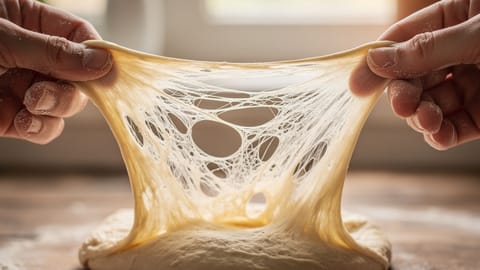
Hydration is the water percentage and the single most important number in a bread formula. It determines dough consistency, crumb structure, and crust character. Good gluten development depends on getting hydration right for your flour.
| Hydration range | Dough feel | Typical use |
|---|---|---|
| 50-58% | Stiff, easy to handle | Bagels, pretzels |
| 60-65% | Moderate, good for beginners | White bread, pizza |
| 66-72% | Soft, slightly sticky | Baguettes, artisan loaves |
| 73-80% | Very wet, sticky | Ciabatta, focaccia |
| 80%+ | Batter-like | Some ciabatta, specialty breads |
Salt
Most bread uses 1.8-2.2% salt. Below 1.5% tastes bland. Above 2.5% can inhibit fermentation and taste overly salty. Pizza dough often runs 2.5-3% because it's eaten with toppings.
Yeast
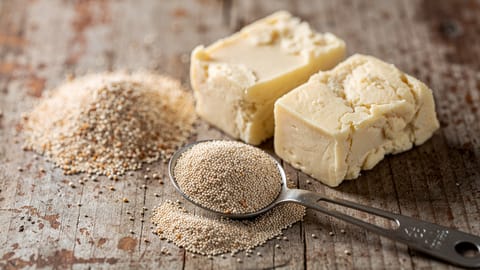
Yeast percentage controls fermentation speed. Lower percentages (0.1-0.3%) with longer fermentation produce more complex flavors. Higher percentages (0.5-1%) give faster results with less flavor development. See the yeast types guide for conversions between instant, active dry, and fresh.
Troubleshooting with baker's percentage
Hydration may be too high for your flour. Reduce by 2-3% or switch to a stronger flour with higher protein. Some flours just can't hold 65%+ without turning into a puddle.
Hydration is likely too low. Increase by 3-5% and make sure you're giving the dough enough time for bulk fermentation.
Check your salt percentage (target 2%) and yeast amount. Too much yeast with a short ferment produces bread that tastes like flour and nothing else. Extend fermentation time or use cold fermentation.
Hydration is too high for your dough's gluten development. Reduce hydration by 3-5% or add more folds during bulk fermentation.
Yeast percentage is too high for the time and temperature you're working with. Reduce yeast or move to a cold fermentation schedule.
What are common mistakes with baker's percentage?
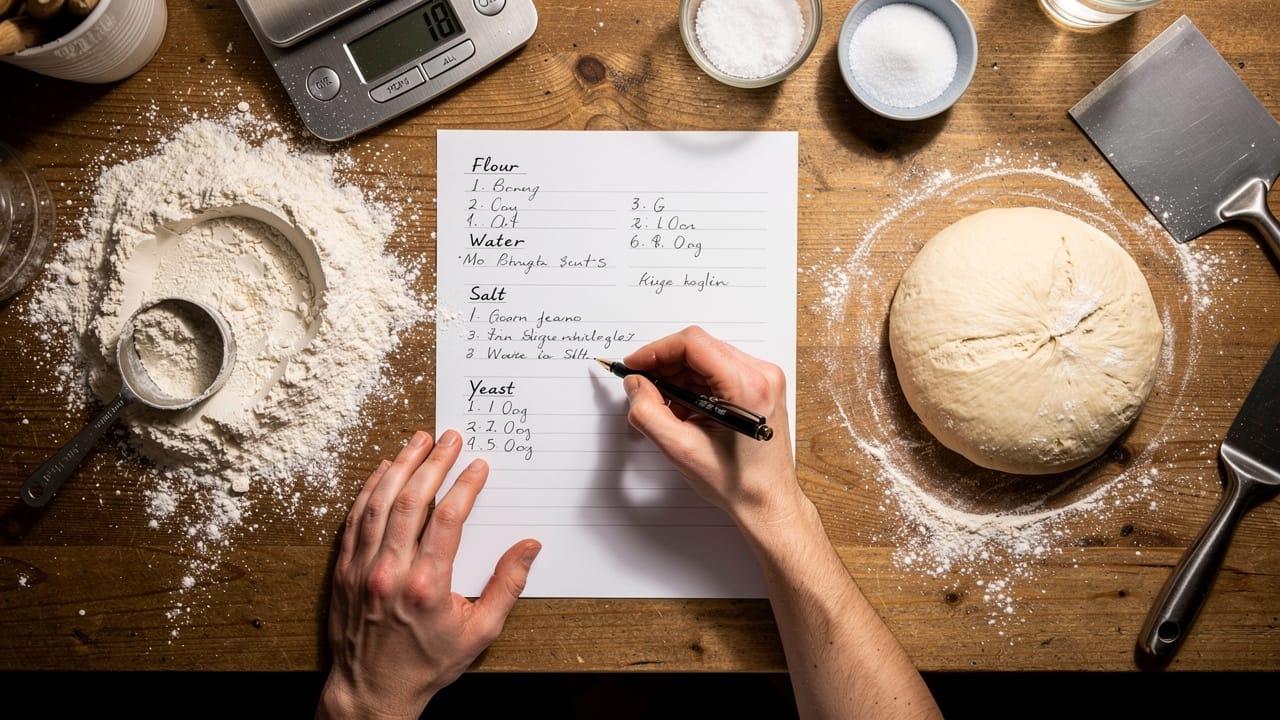
A common trap is adjusting hydration and yeast at the same time, then having no idea which change caused the difference. Change one variable per bake and write the formula down. Boring but effective.
Baker's percentage in Fond
Fond hasn't launched yet. This is how it will work at launch. Join the waitlist for early access.
Fond's Pizza Workshop works in baker's percentages. Set your target dough ball count and weight, adjust hydration, salt, and yeast as percentages, and it computes every ingredient weight for the batch. Bread Studio, which is coming soon, brings the same math to bread formulas. For a quick standalone conversion, use the baker's percentage calculator, and see recipe scaling for how Fond handles quantities in regular recipes.