 Bastien
How long to ferment pizza dough, at room temperature and in the fridge
Room temp or fridge, 4 hours or 72, and how to tell when the dough is actually ready. Time and temperature are the two levers, and yeast dose is what ties them together.
TL;DR: Pizza dough fermentation runs on two dials, time and temperature, and the yeast dose ties them together. At room temperature (68-78°F / 20-26°C) a same-day dough is ready in 4-8 hours with about 0.3-0.5% instant yeast. In the fridge (38-42°F / 3-6°C) the same dough stretches to 24-72 hours on about 0.1-0.15%. The Neapolitan standard sits between the two, at 12 to 24 hours total. Whichever you pick, read the dough rather than the clock.
What is pizza dough fermentation?
Pizza dough fermentation is the biological process where yeast consumes sugars in the flour and produces carbon dioxide, ethanol and a range of minor compounds. Those minor compounds, including organic acids, are what separate a dough that tastes of fermentation from one that tastes of flour. BAKERpedia describes the same set of products across yeast and lactic acid bacteria: CO2 for lift, and everything else for flavor and dough character.
Several things run at once while it happens. Gluten develops and the dough becomes more extensible, flavor builds, the structure strengthens, and enzymes in the flour break complex starches into simpler sugars the yeast can reach.
Time and temperature are the two levers you actually control. Everything else on this page is about how to set them.
Proofing vs fermentation: what's the difference?
These terms get used interchangeably, but they mean different things. Fermentation is the entire biological process. It starts the moment yeast meets water and flour, and continues until the heat of the oven kills the yeast.
Proofing (also called the "final proof" or "apprêt") specifically means the last rise after you've shaped your dough balls. Bulk fermentation is the first rise before dividing.
In practice: all proofing is fermentation, but not all fermentation is proofing. When someone says "I ferment my dough for 48 hours," they usually mean the total time from mixing to baking, including both bulk and ball stages.
How long should pizza dough ferment?
There is no single right answer, because the number is set by temperature and yeast dose together. Three reference points cover most of what home bakers actually do:
- 4-8 hours at room temperature, 68-78°F (20-26°C), with about 0.3-0.5% instant yeast. Mild, bread-like flavor. Mix in the morning, bake for dinner.
- 12-24 hours total, the window the AVPN International Regulation sets for Neapolitan pizza, split between the bulk rest and the second rise of the shaped balls, adjusted for the flour, the room temperature and the humidity.
- 24-72 hours in the fridge, 38-42°F (3-6°C), with about 0.1-0.15% instant yeast. More fermented flavor, and a schedule you can plan a weekend around.
Longer is not automatically better. What longer time buys you is the ability to use less yeast, and a smaller yeast dose spread over more hours generally gives a wider window in which the dough is usable rather than a single sharp peak. BAKERpedia puts the relationship plainly: the higher the yeast level, the shorter the total fermentation time a dough needs to mature. Past a point that depends on your flour and your fridge, extra hours stop adding flavor and start costing structure.
The AVPN numbers are worth sitting with, because they are the opposite of the multi-day schedules that dominate online pizza advice. A professional Neapolitan dough is a same-day-to-next-day dough. Its yeast dose is what makes that work: 0.1 to 3 grams of fresh yeast per litre of water, against 1.6 to 1.8 kg of flour. At the low end that is a fraction of what most home recipes call for.
Choosing the right yeast for pizza dough fermentation
Not all yeast behaves the same way, and the choice matters more for a long schedule than a short one.
Rapid-rise (instant rapid-rise) yeast is a poor fit for pizza. It is formulated to work fast, which is the opposite of what a fermentation schedule is trying to do, and doughs made with it can carry a pronounced yeasty note that sits over the wheat character of good flour.
The three worth using:
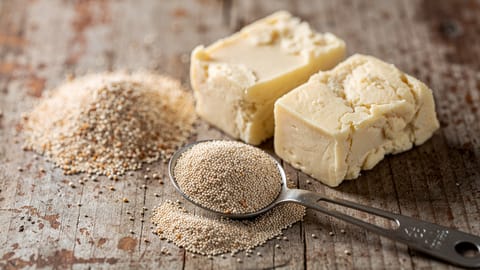
- Active dry yeast: the reliable default. Dissolve it in warm water at the temperature its packet specifies before it goes into the dough.
- Fresh compressed yeast (cake yeast): the professional's choice, and the form the AVPN regulation is written around. It is more perishable, and unlike active dry yeast it needs no activation or hydration step before use. AVPN puts the conversion at 3:1, where 1g of dry yeast equals 3g of fresh.
- Instant dry yeast (not rapid-rise): fine for cold fermentation, since the fridge slows it down anyway. Mixes straight into the flour.
The goal is control. You want yeast that lets you dictate the pace, not the other way around.
Control factors for pizza dough fermentation
Understanding the levers you can pull gives you precise control over pizza dough fermentation timing. Two of them are about where the dough sits:
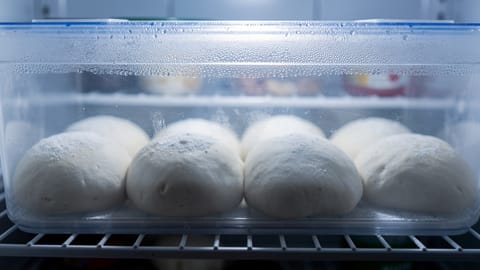
- Moisture: keep the dough in a covered, lightly oiled container. Exposed dough forms a skin that blocks even fermentation and creates dry spots.
- Warmth: room temperature (70-78°F / 21-26°C) drives active fermentation. The fridge (38-42°F / 3-6°C) slows it down for a longer schedule. Choosing where the dough sits is how you choose its pace.
The rest sit in the mix itself:
- Sugar: feeds the yeast. A small amount of sugar or honey (1-2% of flour weight) can push fermentation along, though the Neapolitan standard bans added sugar and fat outright.
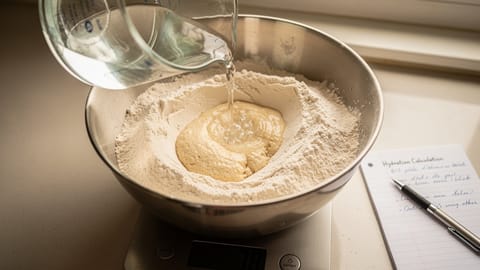
- Water: mixing with cold water holds yeast activity down from the start, which widens the window before fermentation takes off. Useful when you plan to ball the dough immediately and refrigerate.
- Salt: slows fermentation and tightens gluten. The concrete rule from the AVPN regulation is about contact rather than timing: keep salt and yeast from touching directly for more than 5 minutes, because the salt damages the yeast cells.
- Diastatic malt: supplies enzymes that convert starches to sugars, giving the yeast more to feed on and leaving residual sugars for browning through the Maillard reaction.
Get comfortable with these levers and you can ferment dough on your schedule rather than the yeast's.
Tip: If your kitchen runs warm in summer, use cold water and cut the yeast by 20-30% to compensate. In winter, a slightly warmer spot can keep fermentation moving without overshooting.
The mixing order for fermenting pizza dough
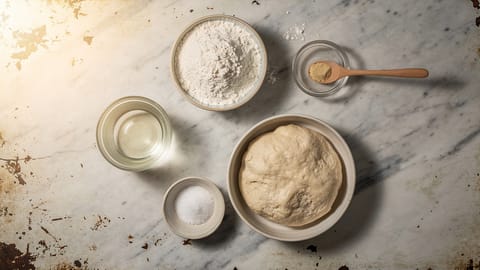
The order you combine ingredients is not arbitrary. This sequence suits a home mixer and a long schedule:
- Flour + diastatic malt powder (if using): combine the dry ingredients first so the malt distributes evenly
- Cold water: hydrate the flour. Cold water holds yeast activity down, buying you time for handling
- Yeast: crumble fresh yeast in directly, or add your rehydrated active dry yeast
- Starter (if using a preferment like poolish or biga): incorporate it now while the dough is still shaggy
- Salt: after 5-10 minutes of mixing, once the flour has taken up the water and the salt will not land straight on the yeast
- Oil: last. Oil coats flour particles and interferes with hydration, so adding it after the dough has come together means fuller water absorption and better gluten formation
That is one workable order, not the only one. AVPN's own method runs the other way around: water first, salt dissolved into it, then 10% of the flour, then the yeast, then the rest of the flour. Both work, because what matters is not when the salt arrives but that it does not sit against the yeast.
Room temperature vs cold fermentation
Room temperature fermentation details
Room temperature fermentation, also called same-day fermentation, means letting the dough rise at 68-78°F (20-26°C) through both its bulk stage and its final proof. It is faster and more forgiving of planning, which makes it the sensible default for same-day pizza.
Typical timeline:
- Hour 0: mix dough, initial development
- Hour 1-3: bulk fermentation, dough expands toward double
- Hour 3-4: divide and shape into balls
- Hour 4-8: final proof, dough ready to stretch
Best practices:
- Hold the room in the 70-75°F range rather than chasing a number on a timer
- Cover the dough to prevent a skin forming
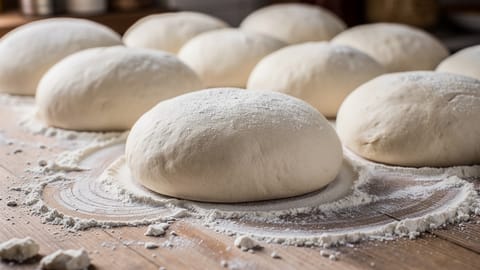
- Watch for expansion, not just elapsed time
- Use it within about 8 hours, then judge whether the next batch wants more or less yeast
Cold fermentation details
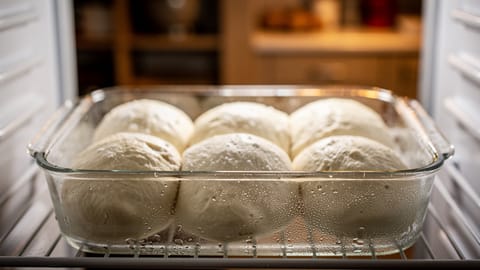
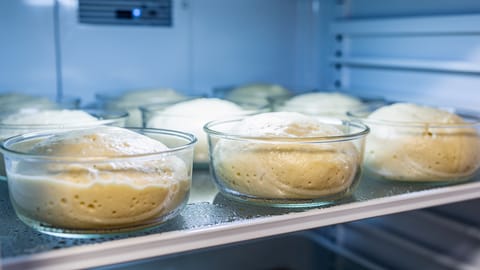
Cold fermentation means refrigerating the dough at 38-42°F (3-6°C) for 24-72 hours or longer. Cold does not switch fermentation off; it slows the yeast enough that a schedule can stretch across days. For the fridge-specific detail, including a reference 48-hour formula and fridge temperature guidance, see the cold fermentation guide.
Cold fermentation duration guide:
- 24 hours: enough to notice a difference from a same-day dough, and the easiest long schedule to fit into a working week.
- 48-72 hours: where most cold-ferment recipes land. Flavor reads as more fermented and the dough often opens more willingly. This is the range worth learning first.
- 4-5 days: possible for Neapolitan and NY style with a much smaller yeast dose, and worth attempting only once you know how your fridge behaves.
- 7+ days: some bakers go there. The dough becomes much less predictable, and a yeast dose that was right at 72 hours will be too high at 168.
Bulk fermentation vs ball fermentation
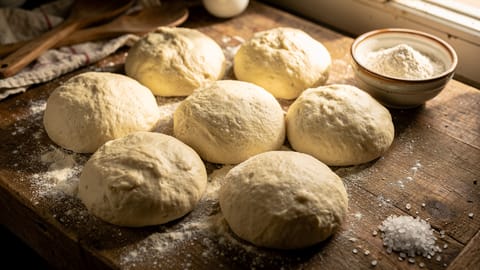
This distinction matters more than most home bakers realize. Bulk fermentation (also called "pointage" in French baking) is when all the dough ferments together in one container. Ball fermentation (or "apprêt") happens after you divide and shape individual dough balls.
Each stage does different work:
- Bulk stage: most flavor development happens here. Yeast is active, enzymes break down starches, and organic acids accumulate. This is also when you build gluten strength through stretch-and-fold sets.
- Ball stage: structure and extensibility develop. The dough relaxes after shaping, which makes it easier to stretch, and gas distribution evens out.
The AVPN method splits its 12-24 hours across exactly these two stages: a covered rest for the whole mass, then the staglio into 200-280g balls, then a second rise in lidded boxes. How the time divides is left to the flour and the room.
A hybrid schedule:
The ratio between bulk and ball time changes the result. More bulk time tends toward flavor complexity; more ball time tends toward extensibility and easier stretching. A short bulk of 2-4 hours followed by 24-72 hours cold as balls is the version most people settle on.
The time-temperature relationship
Warmer dough ferments faster, colder dough ferments slower, and the change is not gentle. The planning rule bakers use is that roughly 8-10°C (15-18°F) warmer runs about twice as fast, and the same shift downward roughly halves the pace. Treat that as a rule of thumb for scheduling, not a formula. Yeast dose, flour, hydration and the dough's own temperature coming out of the mixer all move it.
The cold end has a floor. Near freezing, yeast activity drops close to nothing, which is why a fridge running at 2°C can leave a dough looking untouched after a day. That is also why fridge temperature matters more than the number of hours on the schedule.
Yeast quantity starting points (as baker's percentage of flour weight):
| Fermentation Schedule | Fresh Yeast | Instant Dry Yeast |
|---|---|---|
| Same-day (6-8 hours) | 1.0-1.5% | 0.3-0.5% |
| Overnight (12-18 hours) | 0.5-1.0% | 0.15-0.3% |
| 2-3 days cold | 0.3-0.5% | 0.1-0.15% |
| 4-5 days cold | 0.1-0.2% | 0.03-0.06% |
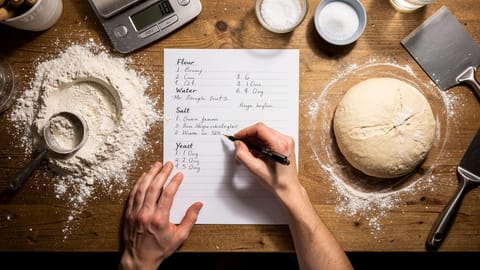
These are practical home-baking starting points, not a standard. The AVPN specification works from a much smaller and much wider professional range, 0.1-3g of fresh yeast per litre of water against 1.6-1.8kg of flour, chosen for the temperature, humidity and timing of the day. Adjust one variable per batch and keep notes.
Weigh the yeast on a kitchen scale that reads 0.1g. At these amounts, a gram either way is the whole difference.
Signs your pizza dough fermentation is complete
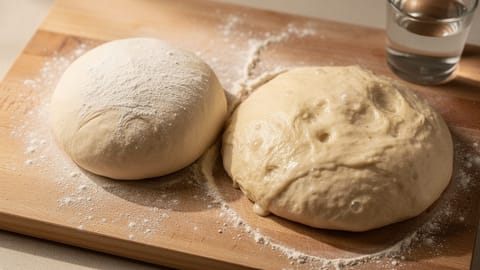
Learning to read your dough is more useful than following exact times. No two kitchens hold the same temperature, and no two bags of flour carry the same enzyme load, so visual and tactile cues beat the clock.
Visual indicators:
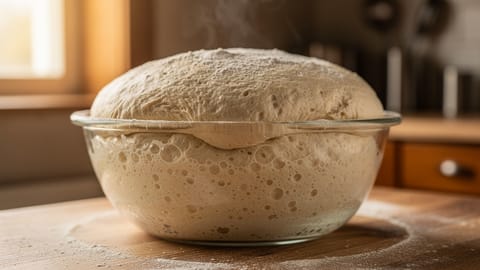
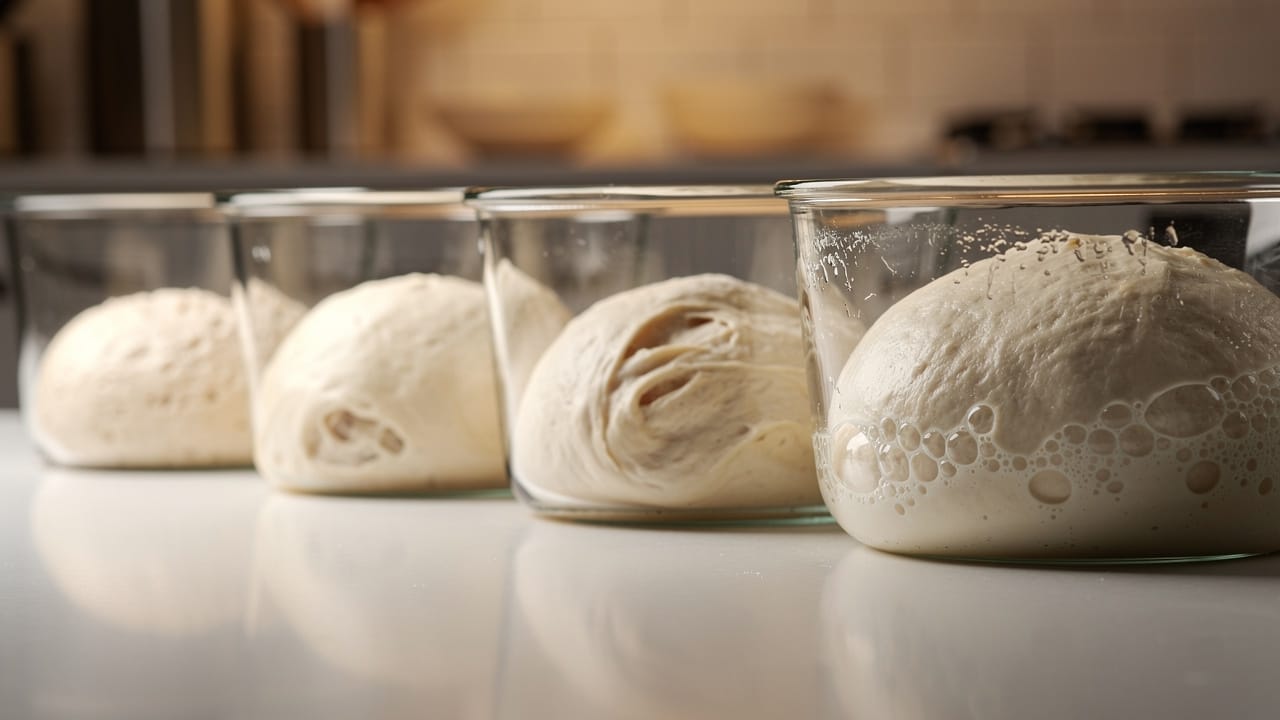
- Volume: dough has expanded toward double, though a cold ferment often stops short of it
- Surface: smooth, slightly domed, not collapsed
- Bubbles: small bubbles visible on the surface and when cut
- Color: slight deepening, a creamy look
Tactile indicators:
- Poke test: the indent springs back slowly and only partway
- Feel: soft and pillowy rather than dense or tight
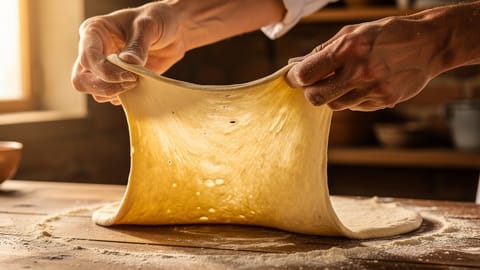
- Stretch: extends without tearing
- Gas retention: holds its shape when handled gently
Smell indicators:
- Pleasant aroma: slightly sweet, bready, yeasty
- No sharp alcohol smell: a strong alcoholic note usually means it has gone far
- Mild tanginess: normal on longer schedules
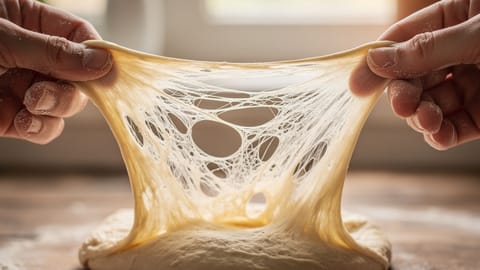
The windowpane test:
Take a small piece of dough and stretch it gently between your fingers. Dough with a well-developed gluten network should thin out enough to see light through it before it tears.
Tip: Photograph the dough at each stage. Over a few batches you build a visual reference for your own kitchen, which is more reliable than any timer.
Over-fermentation and under-fermentation
Knowing the signs of improper fermentation helps you troubleshoot and adjust future batches. For more diagnostic techniques and fixes, see the pizza dough troubleshooting guide.
Signs of over-fermentation:
- Collapsed structure, dough that spreads flat
- Strong alcohol smell, fermentation well past its peak
- Extremely sticky, and it tears as soon as you pull it
- Sour taste, and little lift left for the bake
If you catch it there, use the dough now rather than letting it sit. Reshape gently to keep whatever gas it still holds, expect less rise, and move it into an oiled pan as flatbread or focaccia if it will not hold a ball at all.
Signs of under-fermentation:
- Dense texture: it hasn't expanded enough
- Resistant to stretching: snaps back aggressively
- Flat flavor: tastes mostly of flour
- Yeasty flavor: raw yeast note dominates
The fix for that one is patience. Give it more time, move it somewhere warmer if the room is cool, and add a stretch-and-fold set if the gluten still feels slack. A dough pulled early is usually recoverable; a dough pulled late usually is not. When you are unsure, waiting is the cheaper mistake.
Pizza dough fermentation and maturation
Fermentation and maturation are not the same thing, and the difference explains why a long schedule changes the dough beyond making it rise.
Fermentation is the yeast's work: sugars in, CO2 and ethanol out. Maturation is the flour's own enzymes at work. The AVPN regulation defines it as a series of biochemical and enzymatic processes that break the more complex structures, proteins and starches, into simpler elements, and notes that maturation times shift with the amount of enzyme the flour carries. Those processes are what leave the dough less tenacious and more extensible.
The same regulation adds that a well-fermented, matured dough asks less of the digestive system, because part of the work of breaking down long chains has already happened before the pizza reaches the plate. That is a claim about the dough. It is not a health claim, and it is not advice for anyone with coeliac disease or a wheat allergy: fermented wheat dough still contains gluten, and this page does not suggest otherwise.
What matters practically is coordination. Fermentation and maturation run on different clocks, and a dough that has fermented fully but matured barely, or the reverse, handles badly. That is the real argument for matching the yeast dose to the time you intend to give the dough, rather than adding hours and hoping.
Master pizza dough fermentation: key takeaways
- Set the yeast dose to the schedule, not the other way around. Same-day pizza wants roughly 0.3-0.5% instant dry yeast; a 48-72 hour cold ferment wants around 0.1-0.15%.
- Time and temperature trade against each other. Warmer is faster, colder is slower, and a step of 8-10°C is worth roughly a factor of two either way.
- The Neapolitan standard is shorter than the internet suggests. AVPN sets 12-24 hours total, which is a useful reminder that longer is a choice, not an upgrade.
- Read the dough, not the clock. Expansion toward double, a smooth surface, and a poke test that springs back halfway.
- Split the time between bulk and balls. A short bulk followed by a long cold rest as dough balls is the schedule most people end up preferring.
Ready to dial in your next batch? The pizza dough calculator works out flour, water, salt and yeast for a given schedule, whether that's beginner pizza dough or a 72-hour cold ferment. For hydration levels and overnight methods, or quick answers to everything else, there's the pizza dough FAQ.