 Bastien
How to Grill Vegetables: The Complete Guide
A practical guide to grilling vegetables: how to prep, oil, and marinate them, the right heat for each type, timing by vegetable, skewers, grill basket vs foil, and the mistakes that lead to soggy or charred results.
TL;DR: Oil the vegetables, not the grate. Grill over medium-high direct heat (200-230°C / 400-450°F). Don't crowd the grate. Flip once, after each piece releases naturally. Use foil packets or a basket for tiny or soft items. Most vegetables take 3-6 minutes per side.
Most people treat vegetables as the afterthought side dish that goes on the grill after the meat. They come off limp and gray. The zucchini is soggy, the peppers are raw in places and charred in others, and the asparagus has fallen through the grate. Vegetables need as much intention as a steak.
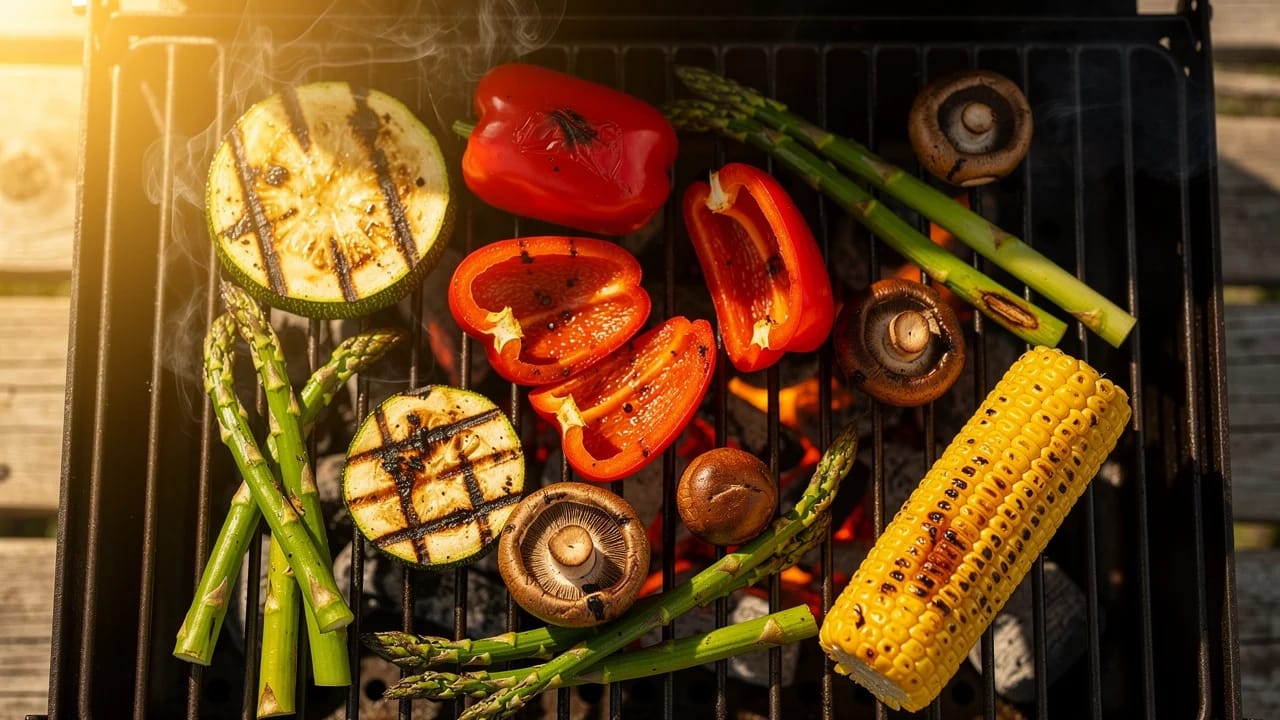
Grill them first, with proper heat and prep, and the difference is obvious. A charred bell pepper tastes sweeter than any pepper cooked in a pan. Asparagus picks up a smoky edge that makes it taste almost meaty. Eggplant goes from watery and spongy to creamy and deeply flavored. This guide walks through the things that matter: how to prep, how to oil, what temperature to use, and how long each type takes.
Why most grilled vegetables disappoint
Before the how-to, a quick diagnosis. Most home-grilled vegetables fail for the same few reasons: wet surfaces, lukewarm heat, overcrowded grates, and too much marinade. Three of those four are on the list of common grilling mistakes that ruin meat too.
Water on the surface of a vegetable is the enemy of browning. Heat has to evaporate the water first before the surface can get above 100°C and start caramelizing or hitting the Maillard reaction window around 150-200°C. Wet vegetables steam. They go gray, soft, and flavorless. That's why you pat vegetables dry before oiling and salting.
Lukewarm heat is the second killer. A grate at 150°C will cook a zucchini through without ever browning it. The center softens, the outside stays pale, and you get steamed zucchini with grill marks. You need real heat to drive the browning that makes grilled vegetables taste grilled.
Overcrowding creates a microclimate. Each vegetable releases steam as it heats up. With pieces touching, that steam stays trapped around them and slows down surface browning. Space matters as much as heat. Leave at least 2 cm between pieces, and cook in batches if you have to.
Too much marinade is the final mistake. Thick marinades or excess oil drip down onto the flames, cause flare-ups that scorch the outside, and leave the inside uncooked. Less is more.
Prep: cutting and drying
Dry vegetables brown. Wet vegetables steam. After washing, pat everything dry with a clean kitchen towel. For mushrooms and eggplant specifically, leaving them uncovered in the fridge for 20-30 minutes dries them further, because they hold so much water.
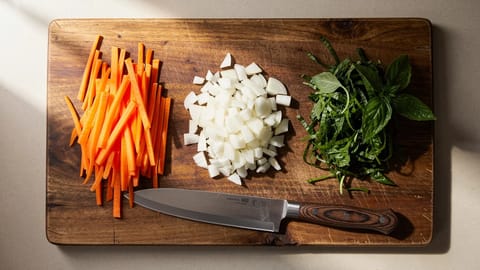
Cut everything into uniform pieces so it cooks evenly. Uneven cuts mean some pieces are overcooked while others are raw. A sharp knife matters here. If you struggle with clean cuts, the knife cuts guide covers the basics.
Here's how to cut each type:
- Zucchini / summer squash: 1-1.5 cm thick rounds or lengthwise planks
- Eggplant: 1.5 cm rounds or lengthwise planks, salted and drained if bitter
- Bell peppers: halved, seeded, then quartered or cut into wide strips
- Asparagus: whole spears, bottom 2-3 cm snapped off
- Onions: thick rings (1.5 cm) so they don't fall apart, or wedges with root attached
- Mushrooms: whole if small, halved if large; never sliced thin (they shrink to nothing)
- Corn: whole ears, husked; or kept in husk for steam-grilling
- Tomatoes: cherries whole, larger tomatoes halved cut-side up
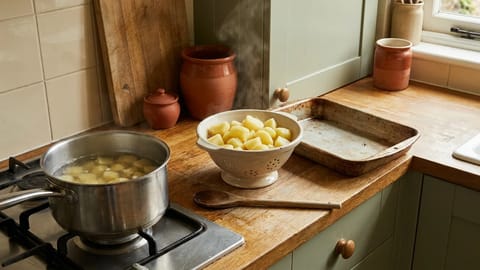
- Sweet potatoes / winter squash: 1 cm slices, parboiled 3-4 minutes first
- Romaine hearts: halved lengthwise, kept intact at the stem
Tip: Eggplant is the one vegetable worth salting before cooking. Sprinkle slices with salt, let them sit for 20 minutes, then pat dry. It draws out water and firms up the texture so the slices brown instead of steaming. Whether it also reduces bitterness is debated; modern varieties are bred mild, so treat that as a bonus rather than the goal.
Oil and marinade: less than you think
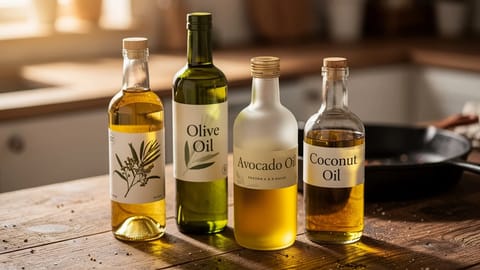
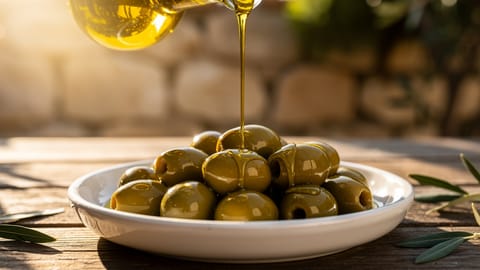
Olive oil is the standard. It has a smoke point around 190-210°C, which is right in the zone where grilled vegetables cook. You can use avocado oil if you're pushing higher temperatures. Check the cooking oil smoke points guide if you're unsure which oil handles what heat.
A practical ratio is about 1-2 tablespoons of oil per pound (450g) of vegetables. That's enough to coat every surface without pooling or dripping. Toss in a large bowl with salt and pepper. Traeger's grilling guide makes the same point: lightly oil the vegetables themselves so seasoning sticks and they don't dry out or grab the grate. Don't oil the grate; oil on hot metal smokes and polymerizes into that black residue that sticks to everything.
For marinades, keep them light. A good grilling marinade has three parts: oil (for heat conduction), acid (for flavor and slight tenderizing), and seasoning (salt, herbs, garlic). Here's a base ratio to start from:
That's enough to marinate about 450g of vegetables. Toss and let sit for 15-30 minutes. Don't go over 60 minutes. The acid will start to break down cell walls and turn vegetables mushy before they even hit the grill.
For a flavor upgrade, try these combinations:
- Zucchini: balsamic, garlic, thyme
- Eggplant: white miso, sesame oil, rice vinegar, ginger
- Bell peppers: olive oil, sherry vinegar, smoked paprika, garlic
- Asparagus: olive oil, lemon zest, black pepper
- Mushrooms: soy sauce, garlic, a touch of honey
- Corn: butter, lime juice, chili powder, cotija (after grilling)
Heat setup: direct, indirect, or both
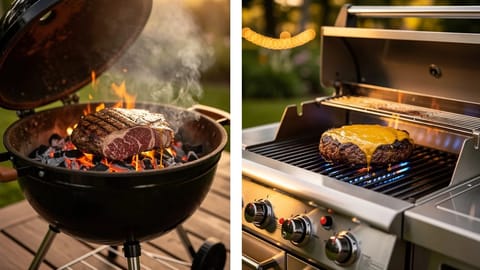
Most grilled vegetables want medium-high direct heat, around 200-230°C (400-450°F) at the grate. Traeger's recipes run most vegetables at 400°F (about 205°C), which sits right in that band. This is the same heat zone you'd use for chicken breasts or thin steaks. If you're new to the grill, start with our grilling for beginners guide for the two-zone setup. If you're coming from the charcoal vs gas grill debate, both fuels work fine for vegetables as long as you control the temperature.
Harder and denser vegetables are the exception. Whole potatoes, whole onions, beets, or winter squash halves won't cook through at high direct heat before the outside burns. For those, use indirect heat around 175-200°C (350-400°F) with the lid closed, treating the grill like an oven. This can take 25-45 minutes depending on size, but the texture is worth it.
A two-zone setup gives you the best of both. Light one side of the grill hot for quick-cooking vegetables, leave the other side cooler for denser items or for moving vegetables that are getting too dark before they're tender.
Don't forget to preheat fully. Ten to fifteen minutes with the lid closed lets the grate itself reach cooking temperature. A cold grate won't sear, and a cold grate is much more likely to stick. Brush the hot grate clean right before the vegetables go on.
Grill basket, foil, or bare grate
The bare grate is your default. Most vegetables cut into reasonable pieces cook fine directly on a clean, hot grate. You get the best char and the best flavor this way.
A grill basket helps when you have small or slippery items. Cherry tomatoes, diced peppers, corn kernels, green beans, mushroom caps. Anything that would roll through the grate gaps or be annoying to flip individually. A flat perforated basket covers most jobs, and a deeper one suits mixed vegetable medleys. A basket also lets you shake and toss the vegetables mid-cook.
Foil packets are a different tool. They steam more than they grill, so you lose the char but gain tenderness and retained flavor. Good for:
- Mixed vegetable medleys with butter and herbs
- Corn on the cob with butter and salt (10-12 minutes in foil)
- Delicate items like fresh peas or zucchini coins
- Campfire-style cooking where cleanup matters
To build a good foil packet: use heavy-duty foil or double layer regular foil. Oil the inside lightly. Add a single layer of vegetables. Top with butter or oil, seasonings, and a splash of water or wine to generate steam. Seal tight with folded seams. Grill 10-15 minutes over medium-high.
Skewers and vegetable kabobs
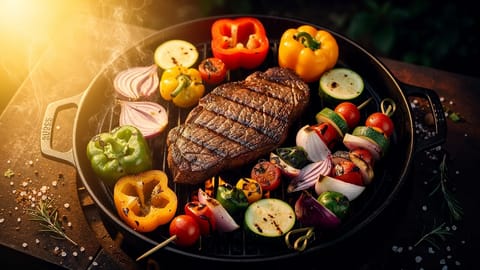
Skewers solve the same problem as a basket, with better char. A few rules make them work. Cut everything into chunks of a similar size, about 2.5-3 cm, so the pieces cook at the same rate. Group by cook time rather than by color: mushrooms, zucchini, peppers, and onion chunks on one skewer; parboiled potato or sweet potato on another. Mixing a mushroom with a raw potato chunk means one is mush before the other is tender.
Thread the pieces with a little space between them so heat reaches every side. Soak wooden skewers for 30 minutes first so they don't burn through, or use flat metal ones. Two parallel skewers through each row stop the pieces spinning when you turn them. Grill over medium-high direct heat for 8-12 minutes, turning a quarter turn every 2-3 minutes, and brush on any sweet glaze only in the last minute.
Timing chart by vegetable
All times are for medium-high direct heat (200-230°C), cut as described in the prep section. Published charts disagree by a minute or two in each direction (Traeger, for example, gives peppers 6-8 minutes per side at 400°F), so treat these as starting points and cook by look and feel.
The exact time varies with thickness and grill temperature. Use these as starting points and trust your eyes. Char marks, softened centers, and the smell of sweet caramelization are the real signals.
Note: If you're also grilling meat, cook vegetables first. Meat has a rest time anyway, and fresh hot vegetables straight off the grill are better than ones held in a warm oven. Plus your grate stays cleaner for the protein.
Troubleshooting
Most problems have simple causes. Here are the most common ones and the fix for each.
Three causes: the grate isn't hot enough, the vegetables weren't oiled properly, or you tried to flip too early. Preheat 10-15 minutes with the lid closed, toss vegetables in oil before they touch the grill, and wait until the vegetable releases naturally before flipping. If it resists, give it 30 more seconds.
Heat is too high, or the vegetables are too thick for direct grilling. Drop the heat to medium or move to indirect heat to finish. For dense items like sweet potatoes or large onions, parboil 3-4 minutes first or switch to lid-closed indirect cooking.
Overcrowding or wet vegetables. Make sure each piece has 2 cm of space on the grate, and dry thoroughly before oiling. Cook in batches if your grill is small. Also check your heat: if the grate is below 175°C, it's too cool for browning.
Too much oil or sugar in the marinade. Shake off excess marinade before the vegetables go on, and move them to indirect heat if flames flare. Sweet marinades with honey or balsamic reduction will burn fast, so use them sparingly or brush on only in the last minute of cooking.
Use a grill basket or lay them perpendicular to the grate bars. Thread cherry tomatoes, mushrooms, or cut onion pieces onto skewers. For asparagus specifically, bundle 4-5 spears with two skewers side by side so you can flip them as a unit.
Common mistakes
The biggest upgrade for grilled vegetables is treating them like the main event. Grill them first, season them properly, and taste as you go. A platter of grilled vegetables with flaky salt, good olive oil, and torn basil is one of the best things you can put on a table in summer. For temperature targets across all grilled foods, including meats, the grilling temperature guide has everything in one place.
- Oil the vegetables, not the grate; 1-2 tablespoons per 450g
- Medium-high direct heat (200-230°C / 400-450°F) is the sweet spot
- Pat dry before oiling so the surface can brown, not steam
- Leave 2 cm between pieces to avoid steaming
- Flip once, after the vegetable releases naturally
- Use a grill basket for small items and foil packets for soft mixed medleys
- Cook dense vegetables (sweet potato, winter squash) with indirect heat or parboil first