 Bastien
Cooking oil smoke points: a practical chart and guide
Smoke-point charts are useful only when their numbers are treated as approximate. Learn how refinement, oil condition, and cooking method affect the oil you should choose.
TL;DR: A smoke point is the temperature at which an oil begins to smoke continuously, but a chart can only give an approximate reference. Refinement, age, previous heating, and product quality can shift the value. Choose an oil that the label recommends for your method, control frying temperature with a thermometer, and stop heating if the oil smokes. Never put water into hot oil or onto a grease fire.
Cooking oil smoke points help answer a narrow question: is this oil likely to tolerate the heat of this cooking method? They do not rank flavor or nutrition, and they are not identical for every bottle carrying the same oil name.
That distinction matters because online charts often present one precise temperature per oil. A refined product and an unrefined product can behave very differently. Oil that has aged or gone through a frying cycle may also smoke sooner than fresh oil.
What is a cooking oil smoke point?
The smoke point is the temperature at which oil begins to give off a continuous visible smoke. Reaching it usually brings an acrid smell and can give food an unpleasant flavor. Colorado State University describes smoke-point values as guides for choosing a cooking fat, not guarantees for every kitchen.
Several factors can change when an oil smokes:
- Refinement: removing free fatty acids and other components often raises the smoke point.
- Oil condition: light, air, heat, and time can degrade an opened oil.
- Previous use: frying introduces food particles and heat damage that may lower the threshold.
- Product variation: cultivar, processing, blend, and quality standards differ between bottles.
- Measurement: published sources do not always use the same laboratory method.
Smoke point is therefore more like a product specification than a permanent identity. When a bottle states that it is intended for frying or high-heat cooking, that guidance is more specific than a generic value for “sunflower oil” or “olive oil.” Product quality remains a separate consideration.
Practical cooking oil smoke point chart
The table below combines approximate published references from Colorado State University and the USDA. Ranges appear where reputable sources or product types differ. They are useful for comparison, but they should not override a product label.
| Oil or product type | Approximate published range | Practical note |
|---|---|---|
| Refined avocado oil | Around 520°F / 271°C | Often listed for high heat; verify that the bottle is refined and labeled for cooking |
| Refined peanut oil | About 428-450°F / 220-232°C | Common neutral option for frying; suitability still depends on the product |
| Refined sunflower oil | About 410-450°F / 210-232°C | Refinement and variety can produce a wide range |
| Refined canola oil | About 400-435°F / 204-224°C | Common all-purpose option for baking, sautéing, and frying |
| Soybean or corn oil | About 410-450°F / 210-232°C | Often sold alone or in blends labeled “vegetable oil” |
| Olive oil | About 350-470°F / 177-243°C | Extra-virgin, virgin, and refined products should not be treated as one oil |
These figures do not mean oil must reach its smoke point to cook well. Deep frying normally runs below the upper end of these ranges. Pan surfaces can also develop hot spots, so oil may smoke even when the burner setting sounds moderate.
Why do smoke point charts disagree?
Sometimes two charts describe different products. “Olive oil” may mean extra-virgin oil in one source and refined or light-tasting olive oil in another. “Sunflower oil” may refer to a conventional or high-oleic variety. One chart may report a laboratory result while another summarizes a manufacturer specification.
The disagreement is a reason to use a range and read the bottle. It is not evidence that smoke point is useless. The number remains a helpful constraint when its uncertainty is visible.
How to choose oil by cooking method
Start with the actual method, then consider flavor and the label. The temperature printed on an oven dial is not necessarily the temperature of oil inside a batter or on a roasting tray. On a stovetop, an empty or lightly coated pan can heat far beyond a typical frying temperature.
Sautéing and pan-frying
Many refined oils and numerous olive oils work for ordinary stovetop cooking. Use enough heat to cook efficiently without producing steady smoke. If the recipe depends on the taste of the oil, choose for flavor within the product's stated cooking range.
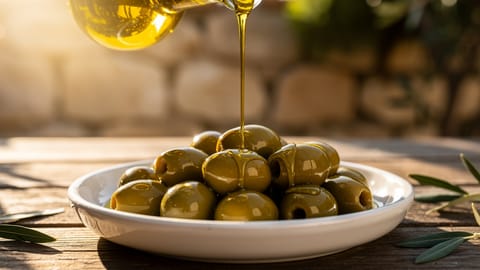
Extra-virgin olive oil is not automatically limited to cold food. Its suitability depends on the oil and the temperature. The guide to olive oil explains how product categories differ.
Deep frying
The USDA gives roughly 325-375°F (163-191°C) as a common deep-frying range, depending on the food. Choose a neutral oil labeled for frying with a published smoke point above the target temperature. Peanut, canola, sunflower, soybean, and vegetable-oil blends are common options, but no single one is mandatory.
Never test frying oil by flicking in water. The USDA warns that water can make hot fat splatter, and water must never be used on a grease fire.
High-heat searing
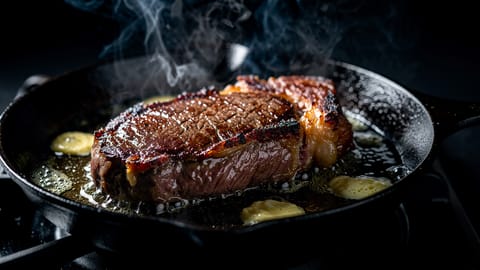
For searing, a refined oil labeled for high heat gives more margin than a delicate finishing oil. Use only a thin film and watch it closely because the pan surface may be hotter than the oil's average temperature. Browning comes from the Maillard reaction; pushing the oil into continuous smoke does not improve that reaction.
Baking and roasting
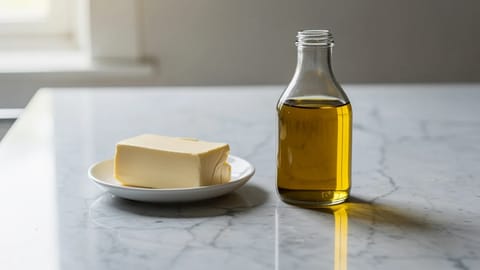
For baking, the recipe's texture and flavor often matter more than selecting the highest smoke point on the shelf. Canola, blended vegetable oil, refined olive oil, or another recipe-appropriate oil may work. Substituting a liquid oil for solid butter changes more than heat tolerance, as the guide to butter versus oil explains.
For roasting, coat food lightly and avoid leaving pools of oil on an empty tray. Follow the recipe and the bottle rather than assuming that a 450°F (232°C) oven requires an oil with a smoke point above 450°F. Food, moisture, airflow, and pan contact affect the oil's actual temperature.
Dressings and finishing
Smoke point is irrelevant when no heat is involved. Choose a fresh oil whose flavor fits the dish. Extra-virgin olive oil, toasted sesame oil, walnut oil, and other aromatic oils are often most expressive here.
Is the highest smoke point always best?
No. A very high smoke point is useful only when the cooking method needs that heat tolerance. Four other questions belong in the decision:
- Does the label recommend this use? A generic chart cannot identify the exact processing of your bottle.
- Will the flavor fit the dish? A neutral frying oil and a peppery finishing oil solve different problems.
- What fat profile do you want? Smoke point is not a nutrition score.
- How much oil does the method require? Deep frying and a light sauté are different choices even with the same oil.
The American Heart Association recommends choosing non-tropical liquid oils that contain less saturated fat for general cooking. That does not make one bottle universally “healthiest,” and it does not turn a high smoke point into a health claim. Coconut oil, butter, and other fats higher in saturated fat can still have a culinary role; frequency and overall eating pattern provide the context.
What to do when oil starts smoking
A faint wisp can appear as residue or a local hot spot heats, but continuous smoke is a clear signal to stop adding heat. Do not lean over the pan to investigate.
Turn off or reduce the heat. Move the pan only if the route is clear and the pan can be handled safely. Let the oil cool before deciding whether it smells burnt and needs to be discarded.
Do not cook with it. Once fully cool, place it in a suitable container for disposal according to local guidance. Do not pour cooking oil down the drain.
Turn off the heat if it is safe. Cover the pan with a metal lid to deprive the flame of oxygen. Never use water and never carry a burning pan. Leave the area and call emergency services if the fire is not immediately controlled.
Keep a fitting metal lid nearby before deep frying. Good preparation matters more than improvising after the oil is hot.
Storing oil and deciding about reuse
Heat, light, and air shorten the useful life of cooking oil. Store bottles tightly closed in a cool, dark place and follow the manufacturer's directions. Buy a size that can be used while the oil still smells and tastes fresh.
There is no universal “two uses” or “three uses” rule for frying oil. Food particles, frying temperature, time, and storage all affect its condition. Authorities also differ on whether home cooks should reuse it at all. The conservative approach is not to plan on repeated reuse.
If local guidance and the product instructions permit reuse, let the oil cool, strain out food particles, transfer it to a sealed light-resistant container, and store it as directed. Discard it if it becomes cloudy, develops foam or an off odor, or smokes earlier than it did when fresh. Never mix questionable old oil into a fresh bottle.
A simple oil decision
Choose the method first. For dressings, choose for flavor. For moderate stovetop heat, many everyday oils work when the label permits it. For deep frying or a very hot pan, use a refined oil intended for high heat and control the temperature.
Seasoning is a separate decision. The right oil controls heat transfer and flavor; the guide to cooking with different types of salt covers when crystal size and timing matter.
- Treat every smoke-point number as an approximate product-dependent reference
- Check whether the bottle is refined, unrefined, or blended
- Use a thermometer instead of water to judge deep-frying temperature
- Separate heat tolerance from flavor and nutrition
- Stop heating oil that produces continuous smoke
- Never put water into hot oil or onto a grease fire
A good smoke-point chart narrows the choice; it does not make the choice by itself. The bottle provides the product information. The method and careful temperature control complete the decision.