 Bastien
Best meal prep containers for every budget and kitchen
A practical guide to choosing meal prep containers by material, size, and use case. Covers glass vs plastic vs stainless steel, container sizing for different meals, what features actually matter, how to organize prepped meals, and food safety storage times.
You spend Sunday afternoon cooking four dinners, portioning lunches, and prepping snacks for the week. Monday morning, you open the fridge. Three containers have leaked. The lids don't match. One container absorbed last week's tomato sauce so thoroughly it looks permanently stained orange. And the chicken you portioned smells faintly like the garlic hummus stored next to it.
Bad containers don't just make your fridge look chaotic. They ruin the food you worked hard to prep. Decent containers keep food fresh, stack neatly, and survive the microwave without warping. Bad ones waste your time and your groceries.
Best meal prep containers: glass vs plastic vs stainless steel
Every "best containers" list online tells you glass is superior. That's an oversimplification. Each material has real strengths and real drawbacks, and what works depends on how you cook and what you're storing.
Glass containers
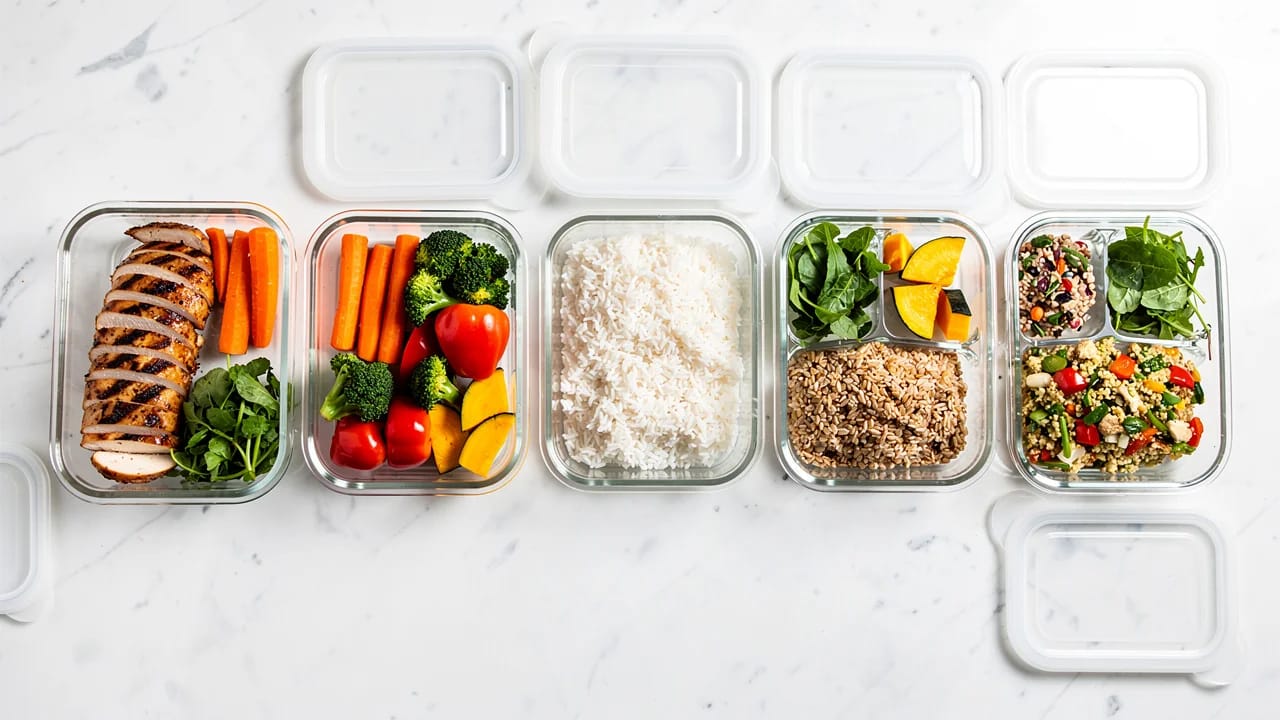
Glass is the most popular choice for home meal prep, and it earns that spot. It doesn't absorb odors or stains. It goes from fridge to oven to table without transferring anything to your food. You can see what's inside without opening the lid. Most glass meal prep containers with lids use snap-lock or silicone-sealed closures that keep liquids locked in, which makes them reliable for saucy dishes and soups.
Best for: Reheating in the microwave or oven, storing acidic foods (tomato sauce, citrus marinades), long-term storage, anyone who hates stained containers.
Drawbacks: Heavy. A stack of six glass containers weighs 8-12 pounds. They break if dropped. Not ideal for packed lunches if you're carrying them in a bag all day.
Price range: $20-40 for a set of 5-8 containers.
Top picks:
- Pyrex Simply Store (borosilicate glass, oven-safe to 450°F)
- Rubbermaid Brilliance Glass (leak-proof latch lids, stackable)
- IKEA 365+ (affordable, modular lids, surprisingly durable)
I switched from plastic to Pyrex after my third set warped in the microwave. That Pyrex set is still going four years later. I've dropped one once and it survived — the lids are the weak point, but replacements are cheap.
Plastic containers
Good plastic containers are lighter, cheaper, and hard to break. But "good" is doing a lot of work in that sentence. Thin deli containers from the grocery store crack after a few uses and leach chemicals when heated. Quality BPA-free meal prep containers that are also microwave-safe are a different category entirely.
Best for: Packed lunches, portioning dry or cold foods, meal prep on a budget, anyone who drops things regularly.
Drawbacks: Absorb stains and odors over time (especially tomato-based sauces and turmeric). Even microwave-safe plastic degrades with repeated heating. Cheaper options warp.
Price range: $10-25 for a set of 10-20 containers.
Top picks:
- Rubbermaid Brilliance (clear, leak-proof, BPA-free)
- Prep Naturals (compartment dividers, great for portioned meals)
- DashSafe Snap-Lock (budget-friendly, surprisingly durable)
If you use plastic, reserve it for cold storage and salads. Use glass for anything you'll reheat. Your plastic containers will last much longer this way.
Stainless steel containers
Stainless steel outlasts everything else. No stains, no odors, no chemical concerns. Professional kitchens and zero-waste advocates tend to prefer it. The tradeoff: you can't microwave it, you can't see what's inside without opening it, and a decent set runs $25-50 for 3-5 containers. They dent if you drop them, but it's cosmetic. Best suited for cold storage, kids' lunchboxes, and outdoor use.
What about stainless steel? It won't stain, shatter, or leach anything. But it can't go in the microwave or oven, and you can't see inside. Price: $$$ ($25-50 for 3-5). Best for cold storage and packed lunches.
What about silicone? Silicone containers and silicone bags are gaining ground as a flexible, lightweight alternative. They collapse flat for storage, tolerate freezer and microwave temperatures, and won't shatter or dent. Silicone lids also make good universal covers for bowls you already own. The downside: they're floppy when full, harder to stack, and pricier per unit than plastic. They work best as a complement to a glass or steel set rather than a full replacement.
Disposable vs reusable meal prep containers
Disposable meal prep containers (thin plastic clamshells, deli containers, foil pans) cost almost nothing upfront. They're popular with meal prep services and bodybuilders who prep in bulk and don't want to track lids. The tradeoff: they crack after 2-3 uses, warp in the microwave, and generate a lot of waste.
Reusable meal prep containers cost more at first but pay for themselves within a few weeks. A $30 glass set used for one year replaces 50+ disposable containers. If you prep consistently, reusable containers save money by month two.
My take: disposable containers are fine for one-off situations like bringing food to a potluck or sending leftovers home with guests. For weekly meal prep, invest in reusable containers. You'll spend less over time and your food stays fresher.
Ready to fill those containers? Check out our complete meal prep guide for step-by-step instructions on prepping a full week of meals.
What size containers do you actually need?
This is where most people get it wrong. They buy one size and try to force everything into it. Different meals need different volumes.
Tip: If you only buy one size, make it medium (32 oz / 3 cups). It handles most single-serve lunches and leaves room for sides.
A practical starter meal prep container set looks like this: 4 medium containers for weekday lunches, 2 large containers for batch-cooked proteins or grains, 4-6 small containers for sauces, dressings, and snacks, and 1-2 extra-large containers for one-pot meals or batch cooking storage. Most meal prep container sets from brands like Pyrex or Rubbermaid bundle these sizes together at a better price than buying individually.
Compartment containers: worth it or gimmick?
Compartment containers (bento-style) keep foods separated. Dry rice stays dry next to saucy chicken. Salad greens don't get soggy from the dressing. They also double as portion control containers — each section holds a measured amount, which makes it easier to balance proteins, carbs, and vegetables without eyeballing.
They're worth it for lunches where texture or portion control matters. A grain bowl with crispy chickpeas loses its appeal when the chickpeas sit in tahini dressing for six hours. Compartments solve that.
They're not worth it for soups, stews, or anything you'll dump into one bowl anyway. Don't buy a 10-pack of compartment containers thinking they'll handle everything.
What to look for in the best meal prep containers
Meal prep containers are marketed with dozens of features. Most are irrelevant. These five actually affect your day-to-day.
1. Leak-proof lids
This is the one you can't compromise on. If your container can't go sideways in a bag without leaking, it's useless for packed lunches. Look for snap-lock latches (4-sided) over push-on lids, and silicone gaskets built into the lid. Before you commit to a set, do the water test: fill one with water, close it, flip it upside down over the sink for 30 seconds. If it drips, return it.
I once packed chicken tikka masala in a push-on lid container for work. Somewhere between my car and the elevator, it popped open. The dry cleaning bill was $45. Snap-lock lids or nothing.
2. Stackability
You never have enough fridge space. Containers that nest when empty and stack cleanly when full make a real difference. Look for flat lids and straight sides. Round containers waste the most fridge space.
Square and rectangular containers are 30-40% more space-efficient than round ones. Your fridge shelves are rectangular. Your containers should be too.
3. Microwave and dishwasher safety
Check the bottom of every container before buying. You want the microwave-safe symbol (wavy lines), the dishwasher-safe symbol (plates with water droplets), and for glass, an oven-safe temperature rating.
If a container isn't dishwasher safe, you won't use it long-term. Nobody wants to hand-wash 10 containers after a meal prep session.
4. Lid compatibility
The best container systems use interchangeable lids across sizes. Pyrex does this well. So does IKEA 365+. When lids are interchangeable, you never have the "lid drawer of chaos" problem where nothing matches.
5. Visibility
Clear containers beat opaque ones for meal prep. When you can see what's inside without opening the lid, you actually eat what you prepped instead of forgetting about it. Forgotten leftovers are one of the biggest sources of food waste.
How to reheat by container material
Not every container handles reheating the same way. Using the wrong method warps lids, cracks glass, or sparks in the microwave.
| Method | Glass | Plastic | Stainless steel | Silicone |
|---|---|---|---|---|
| Microwave | Yes (vent lid) | Check symbol (remove lid) | No | Yes (remove lid) |
| Oven | Yes (up to 450°F) | No | Yes (no lid) | No |
| Stovetop | No | No | Yes | No |
| Straight from freezer to heat | No (thaw first) | No (thaw first) | Yes (oven only) | No (thaw first) |
Warning: Never move a frozen glass container straight into a hot oven or microwave. The thermal shock can crack it. Thaw in the fridge overnight first, or run warm water over the outside for a few minutes.
How to organize your prepped meals
Good meal prep containers help, but how you organize them in the fridge determines whether meal prep actually saves you time during the week.
The shelf system
Put ready-to-eat snacks and grab-and-go items (cut fruit, yogurt portions, energy bites) on the top shelf. Lunches for the week go on the middle shelf, labeled by day or just lined up in order. Keep dinner components on the bottom shelf: prepped proteins, cooked grains, roasted vegetables. Sauces, dressings, and small containers fit in the door.
Label or you'll forget
Even with clear containers, labeling saves mental energy. A strip of painter's tape and a Sharpie is all you need. Write the contents and the date. "Chicken + rice, 3/23" takes two seconds and prevents the Tuesday guessing game.
Prep day workflow
Never seal hot food in airtight containers. The trapped steam creates condensation that makes food soggy and promotes bacterial growth. The FDA's food safety guidelines recommend cooling food to room temperature within two hours before sealing and refrigerating.
Fond's meal planner makes prep day easier to plan. Drag recipes onto your weekly calendar, and it generates a consolidated shopping list so you buy exactly what you need.
How long do prepped meals last?
This is the question everyone asks. The answer depends on the food, your container seal, and your fridge temperature.
| Food type | Fridge life | Freeze? |
|---|---|---|
| Cooked grains (rice, quinoa) | 4-5 days | Yes, up to 3 months |
| Cooked chicken or turkey | 3-4 days | Yes, up to 4 months |
| Cooked beef or pork | 3-4 days | Yes, up to 3 months |
| Roasted vegetables | 4-5 days | Yes, but texture changes |
| Raw cut vegetables | 3-5 days | No (except for cooking) |
| Soups and stews | 4-5 days | Yes, up to 3 months |
| Salads (undressed) | 3-4 days | No |
| Cooked pasta | 3-5 days | Yes, but cook al dente |
| Cooked fish or seafood | 2-3 days | Yes, up to 2 months |
Airtight containers with silicone gaskets keep food fresh a day or two longer than loose-fitting lids. The seal limits oxygen exposure and prevents the fridge from drying out your food. Glass has a slight edge here since plastic is more oxygen-permeable over time, though for a typical 3-5 day prep window, the difference is minor.
The USDA recommends consuming meal-prepped food within 3-4 days when stored at 40°F or below. When in doubt, freeze it.
If you won't eat it within 3-4 days, freeze it on day one. Don't wait until day three when it's borderline. Freeze it fresh, and it'll taste fresh when you thaw it. Leave at least half an inch of headroom in containers for liquids to expand. And label everything going into the freezer. That mystery container from two months ago? It's going in the trash. To avoid freezer burn, press out excess air before sealing and use containers that are appropriately sized for the portion.
For guidance on meal planning that accounts for shelf life, plan meals with the shortest-lasting proteins early in the week (fish Monday, chicken Tuesday-Wednesday, beef or stews Thursday-Friday).
How to clean and maintain meal prep containers
The right cleaning habits add years to your containers' lifespan.
Soak overnight in a paste of baking soda and warm water. For stubborn stains, fill the container with water, add a tablespoon of white vinegar, and leave in direct sunlight for a few hours. The UV breaks down the lycopene pigment. Going forward, spray the inside with cooking spray before adding tomato-based foods.
Warped lids usually come from microwave or dishwasher heat. Replace just the lid if your brand sells them separately (Pyrex and Rubbermaid do). To prevent warping, always place lids on the top rack of the dishwasher and remove them from the microwave before reheating.
Crumple a sheet of newspaper inside, close the lid, and leave overnight. The paper absorbs odors. Alternatively, fill with a mix of baking soda and warm water and let it sit for 8 hours. If the smell persists after two attempts, the plastic has absorbed the odor permanently. Time for a replacement.
Thermal shock. This happens when a cold container hits sudden high heat. Always let refrigerated glass containers reach room temperature before heating. And never put a frozen glass container directly in the oven. If you need to go from freezer to heat, thaw in the fridge overnight first.
Sustainability: which containers are the greenest choice?
If environmental impact matters to you, the material you pick has long-term consequences beyond your kitchen.
Glass and stainless steel are infinitely recyclable and last years. A single glass container replacing 50+ disposable takeout boxes over its lifetime is a straightforward win. Stainless steel is even more durable and the preferred option for zero-waste kitchens.
Most plastic meal prep containers are #5 polypropylene, which is curbside recyclable in many areas. The catch: they degrade with use and need replacing every 1-2 years, so the cumulative waste adds up. Silicone is hard to recycle but outlasts plastic by several years.
The most sustainable choice is the one you'll actually use for years. A $30 glass set used weekly for five years beats a $10 plastic set replaced every year.
Start with what you have
You don't need to buy a $50 container set to start meal prepping. Most kitchens already have workable containers. Mason jars work for soups, overnight oats, and salads. Those takeout containers from last week's Thai food work for a few rounds. Even a muffin tin covered in foil works for portioning sauces.
Start prepping first. Upgrade your meal prep containers as you figure out what sizes and styles you actually reach for. If you're using a container five times a week, that's the one worth spending money on. Pair that with a solid grocery shopping strategy and you'll cut both waste and weekly spend.
- Glass is best for reheating and long-term storage; plastic is lighter and cheaper for cold foods and packed lunches
- Square or rectangular containers save 30-40% more fridge space than round ones
- Snap-lock lids with silicone gaskets are non-negotiable for leak-proof storage
- Start with 4 medium, 2 large, and 4-6 small containers for one person
- Reusable containers pay for themselves within weeks compared to disposables
- Store prepped meals 3-4 days max in the fridge; freeze anything beyond that on day one
Frequently asked questions about meal prep containers
Is it better to meal prep in glass or plastic?
Glass is better for reheating and storing acidic or oily foods because it won't stain, warp, or absorb odors. Plastic is lighter and more practical for packed lunches you carry to work. Many meal preppers use both: glass for meals they'll reheat, and plastic for cold items like salads and snacks.
How many meal prep containers do I need?
For one person prepping five lunches and a few snack portions, start with 4-6 medium containers and 4 small ones. Couples or families should double that. A rough formula: (meals per day) x (days you prep for) + 2-3 extra for sauces, dressings, and leftovers.
Can you freeze food in meal prep containers?
Yes, but not all meal prep containers handle freezing well. Glass is freezer-safe as long as you leave headroom for expansion and avoid sudden temperature changes (don't move a frozen glass container straight into a hot oven). Most BPA-free plastic containers are also freezer-safe. Avoid filling containers to the brim since liquids expand when frozen.
How long does meal prep last in the fridge?
Most cooked meal-prepped food stays safe for 3-4 days in the fridge at 40°F or below. Cooked grains and roasted vegetables can stretch to 5 days. If you won't eat something within that window, freeze it on day one for the best quality.
What are the best meal prep containers for portion control?
Compartment containers are the most practical option for portion control. Two- and three-compartment models let you measure proteins, grains, and vegetables into defined sections so you hit consistent serving sizes without a food scale. Look for containers with compartments in the 1-cup to 1.5-cup range per section. Brands like Prep Naturals and Bentgo offer sets designed specifically for portioned meals.
Are BPA-free plastic containers safe to microwave?
BPA-free doesn't automatically mean microwave-safe. Check the bottom of each container for the microwave-safe symbol (wavy lines). Even with the symbol, avoid microwaving plastic at high power for extended periods. When in doubt, transfer food to a glass or ceramic bowl before reheating.
How do I stop meal prep containers from smelling?
Glass and stainless steel resist odors naturally. For plastic containers that already smell, try soaking them overnight in a mix of baking soda and warm water (1 tablespoon per cup). Storing them with the lids off helps prevent trapped odors. Long-term, reserve plastic for non-aromatic foods and use glass for curries, garlic-heavy dishes, and tomato sauces.
What's the difference between meal prep and batch cooking?
Meal prep means preparing ready-to-eat or ready-to-heat individual portions for the week. Batch cooking means cooking large quantities of base components (grains, proteins, sauces) that you mix and match into different meals. Most people do a mix of both. Either way, the right containers make the process smoother.
Are disposable meal prep containers worth it?
For weekly meal prep, no. Disposable containers crack after a few uses, warp when microwaved, and generate unnecessary waste. They're fine for one-off situations like sending food home with guests. For regular prepping, reusable glass or BPA-free plastic containers pay for themselves within a few weeks and keep food fresher.
Should I buy a container set or individual containers?
Sets are usually 20-30% cheaper per container than buying individually. Start with a set that includes mixed sizes, then buy individual replacements for the size you use most. That way you're not stuck with five large containers when you really needed more medium ones.
The container you'll actually use every week is the right one. Start planning your prep day with Fond, free for 14 days.
Sources
Cook smarter
Join the waitlist for Fond. Recipes, meal plans, and a little AI sous-chef that learns how you cook.
Related articles
Batch cooking for beginners: how to cook once and eat all week
Batch cooking means dedicating a few hours to cooking large quantities of food that you portion and store for the week ahead. It's not the same as meal prep — instead of assembling complete meals, you cook versatile building blocks (grains, proteins, sauces, roasted vegetables) that mix and match into different dishes every night. This guide covers everything you need to start: planning, cooking, storing, and scaling.
How to meal prep: a practical guide for beginners
Meal prep means dedicating about 2 hours on a Sunday to planning, cooking, and portioning complete meals for the week ahead. Unlike batch cooking, which produces versatile components you mix and match, meal prep gives you finished meals ready to grab and eat. This guide covers everything from equipment and shopping lists to a minute-by-minute prep day timeline and safe storage practices.
How to reduce food waste at home (practical tips that work)
The average household throws away 30% of the food it buys, roughly $2,900 per year. This guide covers practical strategies to cut food waste at home: meal planning, proper food storage, the eat-me-first system, creative use of scraps and leftovers, understanding date labels, composting, and tracking your waste patterns.
One pot meals for beginners: a guide to easy weeknight dinners
A practical guide to one pot cooking for beginners. Covers equipment, essential techniques like browning and layering, common mistakes, and 12 easy recipes organized by category: pasta, soups and stews, rice dishes, and curries. Each recipe includes difficulty level, cook time, and cost per serving.