 Bastien
Batch cooking for beginners: how to cook once and eat all week
Batch cooking means spending a few hours cooking large quantities of versatile components (grains, proteins, roasted vegetables, sauces) that you portion, store, and combine into different meals all week. This guide covers what it is, how it differs from meal prep, how to plan a session, what to cook, how to store it safely, and a sample Sunday plan.
Batch cooking is how you eat well on busy weeknights without defaulting to takeout. The idea is simple: spend two to three hours, often on a Sunday, cooking large quantities of versatile ingredients (the spring meal prep plan is a worked example of one such session), then pull quick meals together from those building blocks all week.
What separates a smooth week from a chaotic one usually comes down to what is already in the fridge. A pot of rice, a tray of roasted vegetables, a container of shredded chicken, and a jar of sauce become a grain bowl on Monday, a wrap on Tuesday, and a stir-fry on Wednesday. No cooking from scratch each night. No standing in front of the fridge at 7 p.m. wondering what to make.
This guide covers what batch cooking is (and why it is not the same as meal prep), how to plan a session, what to cook, how to store it safely, and a sample Sunday plan you can try this week.
What is batch cooking (and how is it different from meal prep)?
Batch cooking means cooking food in large batches, ahead of time, to be reheated or assembled over the following days. It is usually a weekend job of a couple of hours, and what you end up with is components rather than finished plates.
Batch cooking and meal prep get lumped together, but they work differently in practice.
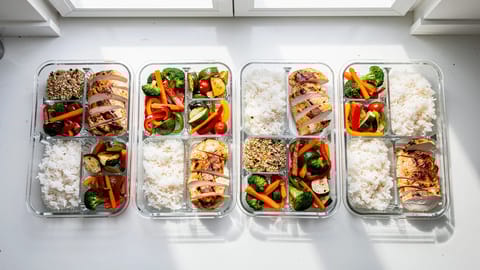
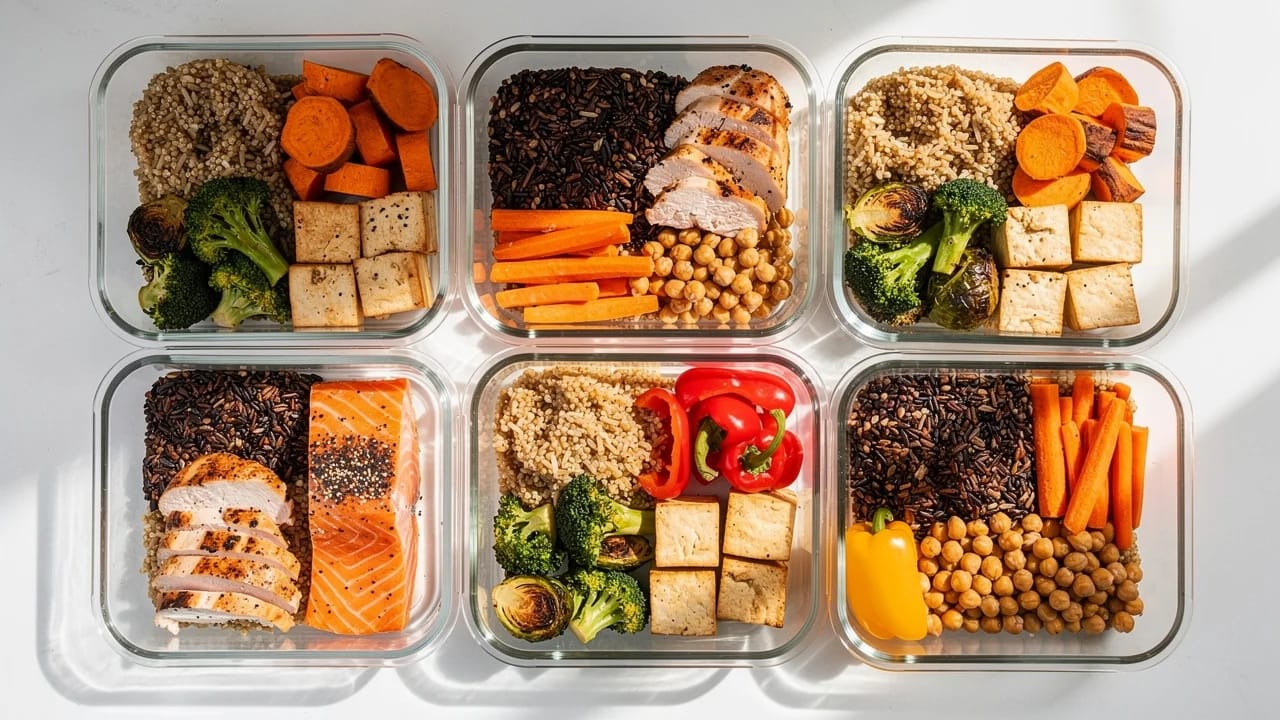
Classic meal prep means preparing complete, portioned meals in advance. Picture rows of identical containers: chicken, broccoli, rice, Monday through Friday.
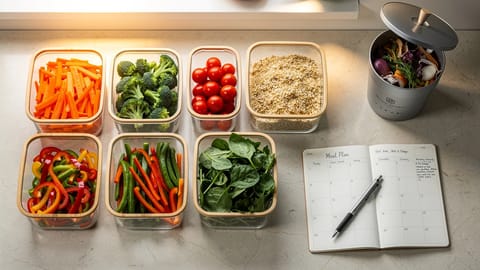
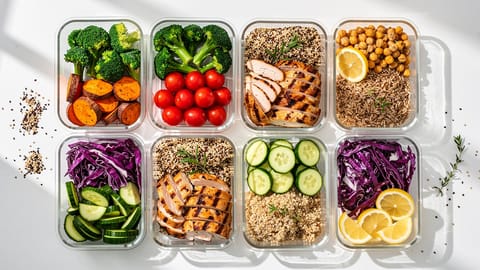
Batch cooking gives you more flexibility. You cook large batches of individual components (a big pot of grains, a sheet pan of roasted vegetables, a protein, one or two sauces) and combine them into different meals through the week. Same base ingredients, different dishes every night.
That is where the real advantage shows up: variety. Roasted sweet potatoes might go into a grain bowl with tahini dressing on Monday, a quesadilla on Tuesday, and a soup on Thursday. Three different meals, one batch of sweet potatoes. Batch cooking is also more forgiving: no exact macros for seven identical portions, just a big batch that gets used.
Why batch cooking saves more than time
The time saving is obvious. Cooking one large pot of rice takes about the same active effort as cooking a single portion. Do that across four or five components and you have knocked out five nights of prep in one go. The deeper benefits are what keep people doing it:
- Less decision fatigue. "What's for dinner?" is exhausting daily. With cooked components in the fridge, dinner becomes assembly.
- Less food waste. You buy with a plan, cook what you bought, and eat what you cooked.
- Lower grocery bills. Ingredients bought in quantity and cooked at home cost less per meal than takeout or last-minute runs for random items.
- Better eating. When cooked food is waiting, you eat it. When it is not, you order pizza at 8 p.m.
How to plan a batch cooking session
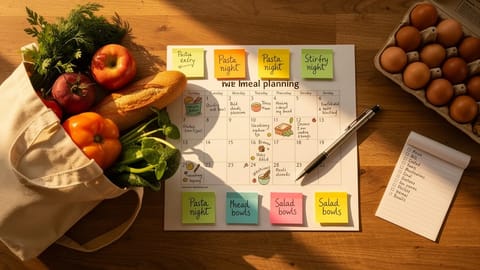
Beginners go wrong in one of two ways: overthinking it with spreadsheets, or skipping planning altogether. A solid batch cooking meal plan takes about 15 minutes.
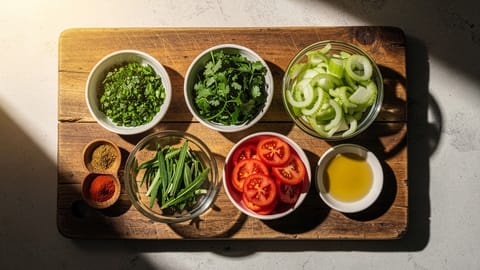
Step 1: Pick your building blocks
Choose one or two items from each category:
- Grains: rice, quinoa, farro, couscous, or pasta. Cook a large pot of rice; it works in almost anything.
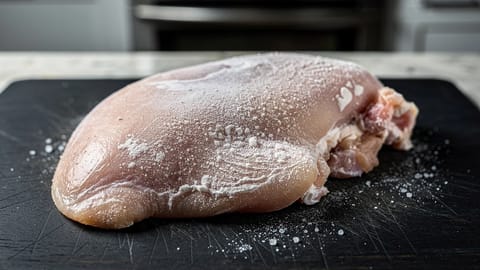
- Proteins: chicken thighs, ground meat, beans, lentils, tofu, or hard-boiled eggs. Pick proteins that reheat well; chicken breast dries out, thighs stay juicy.
- Vegetables: root vegetables (sweet potatoes, carrots, beets), cruciferous vegetables (broccoli, cauliflower, Brussels sprouts), and alliums (onions, garlic). Sheet-pan roasting is your friend.
- Sauces and dressings: one versatile sauce turns the same ingredients into different meals: a tahini dressing, a slow-cooked tomato sauce, a peanut sauce, a chimichurri.
Step 2: Check what you already have
Before shopping, open the fridge, freezer, and pantry. Batch cooking works best when you build around what needs using up.
Step 3: Write a cooking schedule
Order tasks by cook time, longest first. While the oven handles roasted vegetables (40–45 minutes), the rice cooks on the stove (15–20 minutes) and you make the sauce on the counter. This is mise en place thinking applied to the whole session.
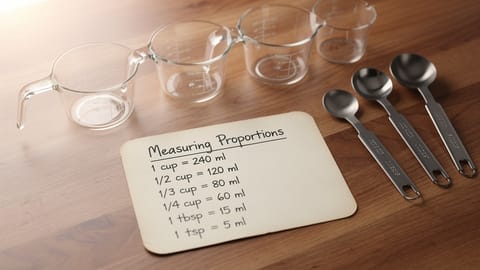
Step 4: Scale your recipes
A recipe that serves four does not always double cleanly: seasoning, pan size, and cook time need judgment, and the recipe scaling guide walks through each of them. The recipe scaling entry covers what multiplies as-is and what does not; the short version is below. Jot down what worked so you can repeat it next time.
What to batch cook: the best building blocks
The best candidates store well, reheat without losing texture, and cross over between cuisines.
Grains and starches
Grains are the backbone of batch cooking. They keep for days in the fridge, freeze for months, and show up in everything from salads to stir-fries to soups.
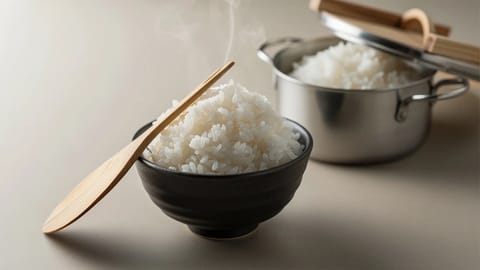
- White or brown rice: the universal base. Cook a double or triple batch using the absorption method.
- Quinoa: ready in 15 minutes, works hot or cold.
- Farro: chewy and nutty, holds up better than rice in salads because it does not go soft.
- Roasted potatoes or sweet potatoes: cubed, tossed with oil and salt, roasted at 220°C (425°F) for 30–35 minutes.
Proteins
Keep seasoning simple so the protein stays versatile. A chicken thigh with salt, pepper, and garlic works in tacos, grain bowls, salads, and sandwiches; a specific spice blend locks you into one cuisine all week.
- Chicken thighs: roast at 220°C (425°F) for 25–30 minutes, or pan-sear 6–7 minutes per side, until they read 74°C (165°F). Shred or slice once cool.
- Ground meat: brown a big batch with onions and garlic. Season half with cumin and chili for tacos, leave the other half plain for pasta sauce or bowls.
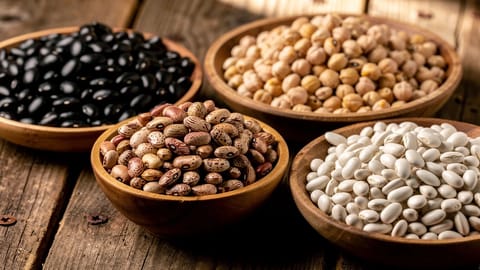
- Beans and lentils: cook dried beans from scratch for better texture and lower cost. About 450 g (1 lb) of dried beans yields roughly six cups cooked. Lentils need 20–25 minutes and no soaking.
- Hard-boiled eggs: boil a dozen at once and keep them in the shell until you need them.
Roasted vegetables
Roasting concentrates flavor and creates caramelized edges that still taste good days later. The method barely changes between vegetables: cut into even pieces, toss with olive oil and salt, spread on a sheet pan without crowding, roast at 200–220°C (400–425°F). Even knife cuts matter because even pieces cook evenly.
Best vegetables for batch roasting:
- Broccoli and cauliflower (20–25 minutes)
- Sweet potatoes and carrots (30–35 minutes)
- Brussels sprouts (25–30 minutes)
- Bell peppers and zucchini (20–25 minutes)
- Red onion wedges (25–30 minutes)
Sauces and dressings
Sauces do the heavy lifting. The same chicken and rice becomes a different dinner depending on what goes on top. A good default is two sauces per session: one oil-based (vinaigrette or chimichurri) and one creamy (tahini or peanut). That pair covers almost any direction you want to go.
Four sauces worth batch making:
- Simple vinaigrette: 3 parts olive oil, 1 part acid (lemon juice or vinegar), salt, pepper, Dijon mustard.
- Tomato sauce: canned tomatoes, garlic, olive oil, basil, simmered 30 minutes. Freezes well.
- Tahini dressing: tahini, lemon juice, garlic, water to thin.
- Peanut sauce: peanut butter, soy sauce, lime juice, sriracha, sesame oil.
Storage guide: fridge vs. freezer
Good storage is the difference between a system that works and a bag of forgotten leftovers on Friday night. The numbers below follow Health Canada's storage table and the FDA's storage guidance.
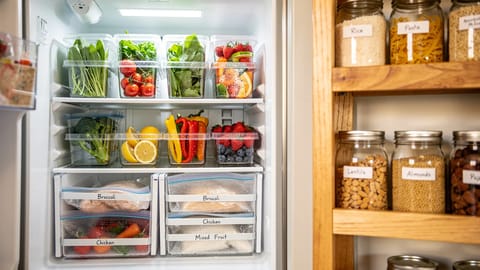
Refrigerator storage (3–4 days)
Key rules:
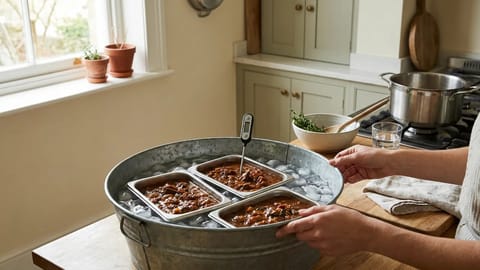
- Refrigerate within two hours of cooking (one hour if the room is above 32°C / 90°F). Spread food in shallow containers or on sheet pans so it cools fast; a deep hot pot takes hours to chill in the middle.
- Store components separately. Mixed dishes get soggy faster.
- For fridge zones, freezer wrapping, and how long each kind of leftover keeps, see the food storage guide.
- Label containers with the date. By Wednesday you will not remember when you cooked what.
- Newer items go in the back, older items up front.
Freezer storage (2–6 months)
Not everything freezes well. Grains, proteins, soups, sauces, and beans freeze beautifully. Crispy roasted vegetables, salad greens, and dairy-based sauces do not. Health Canada lists 2–3 months for cooked meat and stews and 4–6 months for cooked poultry and fish at -18°C (0°F).
Freezer tips:
- Lay freezer bags flat; they stack and thaw faster than rigid containers.
- Press out as much air as possible to limit freezer burn.
- Freeze in portions you will use. A one-litre bag of soup feeds two.
- Label everything with contents and date.
Containers that work
Glass containers with locking lids are the most versatile: microwave safe, dishwasher safe, and you can see inside. Deli containers are cheap and stackable for the fridge. For the freezer, freezer-grade zip bags or silicone bags work best.
Sample Sunday batch cooking plan
About 2.5 hours of active time, ending with enough components for roughly 15 meals.
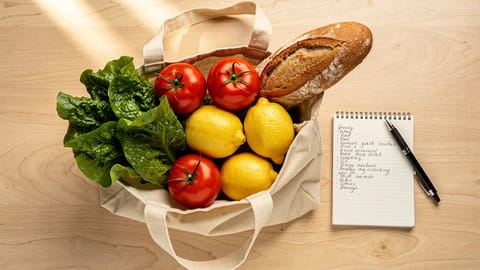
Shopping list:
- 600 g (3 cups) dry rice
- 900 g (2 lb) boneless skinless chicken thighs
- 2 sweet potatoes
- 1 head broccoli
- 1 head cauliflower
- 2 bell peppers
- 1 red onion
- 1 can (400 g) crushed tomatoes
- Tahini, lemons, garlic
- Olive oil, salt, pepper, cumin, paprika
What you can make this week
With these five components (rice, chicken, roasted vegetables, tomato sauce, tahini dressing), here are five different dinners:
- Monday: grain bowl: rice + roasted vegetables + chicken + tahini dressing
- Tuesday: chicken and vegetable wraps with tahini
- Wednesday: tomato sauce over rice with roasted broccoli on the side
- Thursday: stir-fry the remaining vegetables and chicken with soy sauce, over rice
- Friday: tomato chicken soup: simmer leftover chicken and vegetables in tomato sauce with broth
Thursday and Friday fall outside the fridge window for chicken cooked on Sunday, so freeze those portions on Sunday and move them to the fridge to thaw the night before.
Batch cooking for one
If you live alone, batch cooking can feel like overkill. It is not; you just scale down and lean on the freezer. Cook half the Sunday plan: 300 g of dry rice, 450 g of chicken, one sheet pan of vegetables. That gives you about seven meals. Eat four during the week and freeze three in single portions for the following week. Anything you will not eat within three days goes into freezer bags the same afternoon, so there is no Wednesday debate about whether the rice "still looks fine".
Common batch cooking mistakes
Cooling food properly
The FDA's rule is to never leave perishable food at room temperature for more than two hours, one hour if it is above 32°C (90°F). A deep pot of hot food put straight in the fridge also warms its neighbours. The fix is the same for both: spread food in shallow containers or on sheet pans so it cools fast, then refrigerate.
Reheating tips
Grains reheat best with a splash of water in a covered container in the microwave; the steam keeps them from drying out. Chicken stays juicier reheated in a skillet with a little oil. Roasted vegetables crisp back up in a hot oven (200°C / 400°F) for 5–7 minutes. Health Canada's rule for leftovers is to reheat until they reach 74°C (165°F).
Texture and what to skip
Some foods do not hold up for days. Crispy things go soggy, pasta absorbs sauce and turns to mush, avocado browns within hours. Focus on components that keep their texture in the fridge, and add anything fresh or delicate at serving time.
Scaling recipes for weekly batch cooking
Doubling a recipe is not always as clean as doubling every ingredient. A few things to watch, with the full explanation in the recipe scaling entry:
- Spices and salt: start around 1.5× when doubling, taste, then add.
- Baking: weigh ingredients and keep the ratios exact.
- Pan size: a recipe designed for one sheet pan does not fit doubled on the same pan. Crowded pans steam instead of roast. Grab a second pan.
- Cook time: larger batches often need a little longer. A single chicken thigh sears in 6 minutes per side; a crowded pan takes 8–9 because the pan temperature drops.
If you batch cook the same recipes regularly, keeping notes on what worked saves a lot of guesswork. A recipe manager makes that painless: store your scaled versions with notes on timing and ratios so you are not recalculating every Sunday.
Start small, build the habit
Batch cooking does not require a three-hour marathon. Start with two components: a grain and a protein. That alone cuts weeknight cooking time in half. Add roasted vegetables the next week, then a sauce. Within a month you will have a rhythm.
Batch cooking is a system, not a recipe. You are not following a rigid weekly meal plan; you are building a flexible inventory of cooked food that adapts to whatever sounds good on a given night.
- Batch cooking = cooking components, not complete meals
- A Sunday session of 2–3 hours produces around 15 weeknight meals
- Start with a grain and a protein, add more over time
- Always make at least one sauce to prevent monotony
- Refrigerate within two hours, eat within 3–4 days, freeze the rest
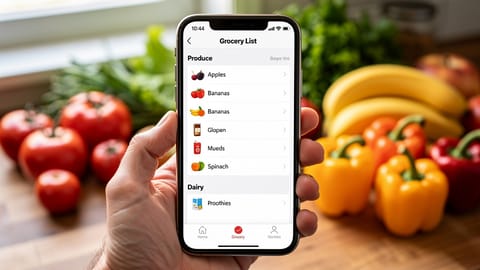
Fond, the app we are building, is designed to keep your go-to batch cooking recipes, scaling notes, and weekly plans in one place and turn the plan into a shopping list. It is not released yet; join the waitlist to hear when it opens.