 Bastien
One pot meals for beginners: a guide to easy weeknight dinners
A practical guide to one pot cooking for beginners. Covers equipment, essential techniques like browning and layering, common mistakes, and 12 easy recipes organized by category: pasta, soups and stews, rice dishes, and curries. Each recipe includes difficulty level and cook time.
A single Dutch oven, a wooden spoon, and a few pantry staples are enough to put a real dinner on the table. Chicken, rice, broth, and whatever vegetables are wilting in the crisper drawer become four servings in about half an hour, with one vessel to wash.
One pot meals are not a trend or a shortcut. They are a legitimate cooking method with real advantages, especially if you are still learning how a kitchen works.
TL;DR: One pot meals cook everything in a single vessel: less cleanup, fewer timers to manage, and flavors that build on each other. This guide covers equipment, the five techniques that matter, common mistakes, and 12 recipes organized by difficulty.
Why one pot meals work for beginners
The biggest obstacle for new cooks is not skill. It is coordination. Juggling a pot of pasta, a pan of sauce, and a side of vegetables means managing three different timelines simultaneously. Something always overcooks while you are dealing with something else.
One pot cooking eliminates that problem. You build the dish in layers inside a single vessel. Brown the protein, add aromatics, pour in liquid, add vegetables in order of cook time. Everything happens in sequence, not in parallel.
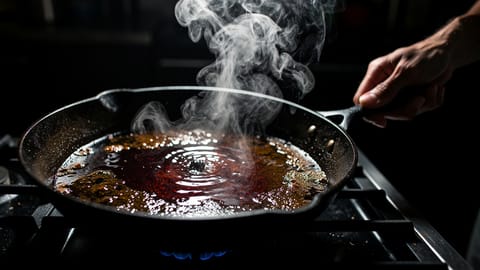
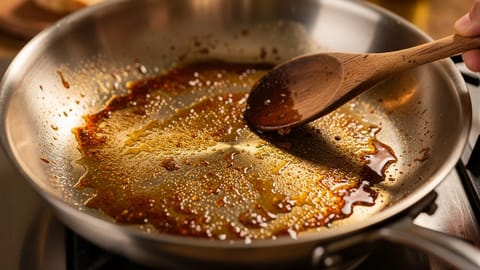
The other advantage: flavors compound. When you sear chicken in a pot, the browned bits, called fond, stick to the bottom. You deglaze with liquid and those bits dissolve into the sauce. Every layer adds depth to the final dish. Cooking in separate vessels means those flavors never meet.
Essential equipment
You don't need much. One good pot handles every recipe in this guide except the risotto, which wants a second pan for warm stock.
If you are buying your first pot, get a 5-6 quart enameled Dutch oven. The shape is wide enough for browning, deep enough for soup, and the heavy lid traps steam so rice cooks evenly. A secondhand one works just as well as new.
Five techniques that make one pot meals work
You don't need culinary school. These five techniques cover every recipe in this guide.
1. Brown the protein first
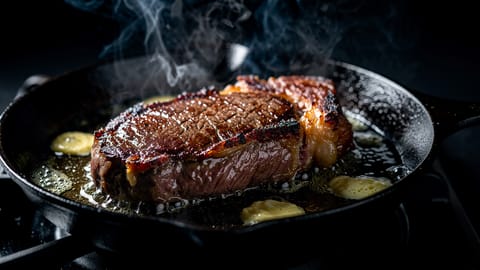
Drop chicken thighs, ground beef, or sausage into the pot over medium-high heat and leave them alone for 3-4 minutes. Don't move them around. That golden crust is the Maillard reaction, the single biggest source of flavor in your dish. Remove the protein, and build the rest of the dish in the same pot without cleaning it. Those browned bits on the bottom are flavor, not burnt food.
2. Sweat the aromatics
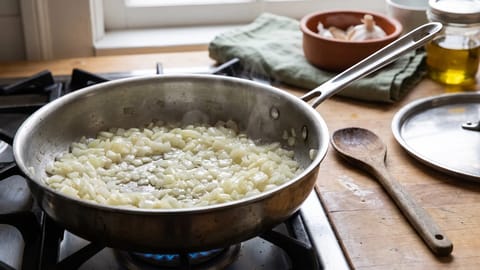
After the protein comes out, lower the heat. Add diced onion, garlic, ginger, or whatever aromatic the recipe calls for. Sweat the vegetables until the onion is tender and translucent without browning; the time depends on the cut and how much is in the pot. Add spices when the recipe calls for them.
3. Deglaze the pot
Pour in liquid (stock, broth, wine, crushed tomatoes, coconut milk) and scrape the bottom of the pot with your wooden spoon. Those browned bits dissolve into the liquid and become your sauce base. This is the step most beginners skip, and it's the difference between a flat-tasting dish and one with layers of flavor.
4. Layer by cook time
Add ingredients in order of how long they take to cook. Root vegetables go in first (potatoes, carrots: 20-25 minutes). Denser proteins go in next. Quick-cooking ingredients go in last: pasta, leafy greens, peas, fresh herbs. If you dump everything in at once, the potatoes will be raw when the spinach is mush.
5. Finish bright
Right before serving, add something acidic or fresh: a squeeze of lemon, a splash of vinegar, fresh herbs, a dollop of yogurt. Long-simmered one pot meals can taste flat without this final contrast. A teaspoon of red wine vinegar in a beef stew does more than an extra hour of simmering.
One pot pasta recipes
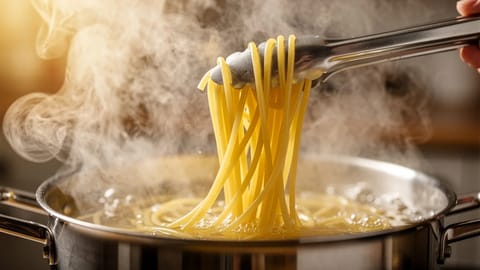
Pasta is the easiest category for beginners because the starchy cooking water creates a built-in sauce.
Creamy tomato basil one pot pasta
The gateway recipe. If you have never cooked a one pot meal, start here.
Ingredients
- 350 g penne or rigatoni
- 1 can (400 g) crushed tomatoes
- 2 cups (480 ml) vegetable stock
- 3 cloves garlic, minced
- 1 tsp dried oregano
- ½ cup (60 g) cream cheese or mascarpone
- Fresh basil, torn
- Salt, pepper, red pepper flakes
- 2 tbsp olive oil
Steps
- Heat olive oil in a Dutch oven over medium. Add garlic, cook 1 minute.
- Add crushed tomatoes, stock, oregano, salt, and pepper. Bring to a simmer.
- Add pasta, stir well. Cover and cook 12-14 minutes, stirring every 3 minutes.
- When pasta is al dente and liquid is mostly absorbed, stir in cream cheese until melted.
- Top with fresh basil and red pepper flakes. Serve immediately.
Difficulty: Beginner | Time: 20 min
Tip: If the pasta absorbs too much liquid before it's cooked through, add a splash of hot water. If it's too soupy, cook uncovered for 2-3 minutes to reduce the liquid.
Sausage and spinach one pot orzo
Same technique, different personality. Orzo cooks faster than penne and creates a creamier result.
Swap the penne for 300 g orzo, add 200 g sliced Italian sausage (brown first, remove, build sauce, add orzo and sausage back), and stir in two handfuls of baby spinach during the last 2 minutes. Finish with grated parmesan. 25 minutes, done.
Difficulty: Beginner | Time: 25 min
Cajun chicken pasta
Brown 500 g diced chicken thighs with Cajun seasoning. Remove. Sauté bell pepper and onion. Add 400 ml chicken stock, 200 ml cream, and 300 g penne. Simmer covered 12 minutes. Add chicken back, stir in a handful of sliced green onions.
Difficulty: Easy | Time: 30 min
One pot soups and stews
Soups and stews are the most forgiving one pot meals. Timing is flexible, and they taste better the next day.
Classic chicken noodle soup
Brown 4 bone-in chicken thighs in a Dutch oven. Remove. Sauté diced onion, carrot, and celery for 5 minutes. Add 6 cups chicken stock, thyme, and a bay leaf. Return chicken, simmer 25 minutes. Remove chicken, shred, return to pot. Add 150 g egg noodles, cook 8 minutes. Finish with lemon juice and parsley.
Difficulty: Beginner | Time: 45 min
Weeknight chili
Brown 500 g ground beef, drain excess fat. Add diced onion, garlic, chili powder, cumin, and smoked paprika. Cook 2 minutes. Add 1 can crushed tomatoes, 1 can kidney beans (drained), 1 cup beef stock. Simmer uncovered 30 minutes. The longer it sits, the better it gets, and timing mistakes barely register. It's genuinely hard to mess up.
Difficulty: Beginner | Time: 40 min
Red lentil soup
No browning needed. This is the gentlest one pot meal. Sauté diced onion and 2 cloves garlic in olive oil. Add 1 cup red lentils, 1 can crushed tomatoes, 4 cups vegetable stock, 1 tsp cumin, ½ tsp turmeric. Simmer 20 minutes until lentils dissolve. Blend if you want it smooth, or leave it chunky. Finish with lemon juice. High protein, dirt cheap, vegetarian.
Difficulty: Beginner | Time: 30 min
One pot rice and grain dishes
Rice absorbs flavor from everything it cooks with. The key is the right liquid-to-rice ratio and resisting the urge to stir.
Chicken and rice
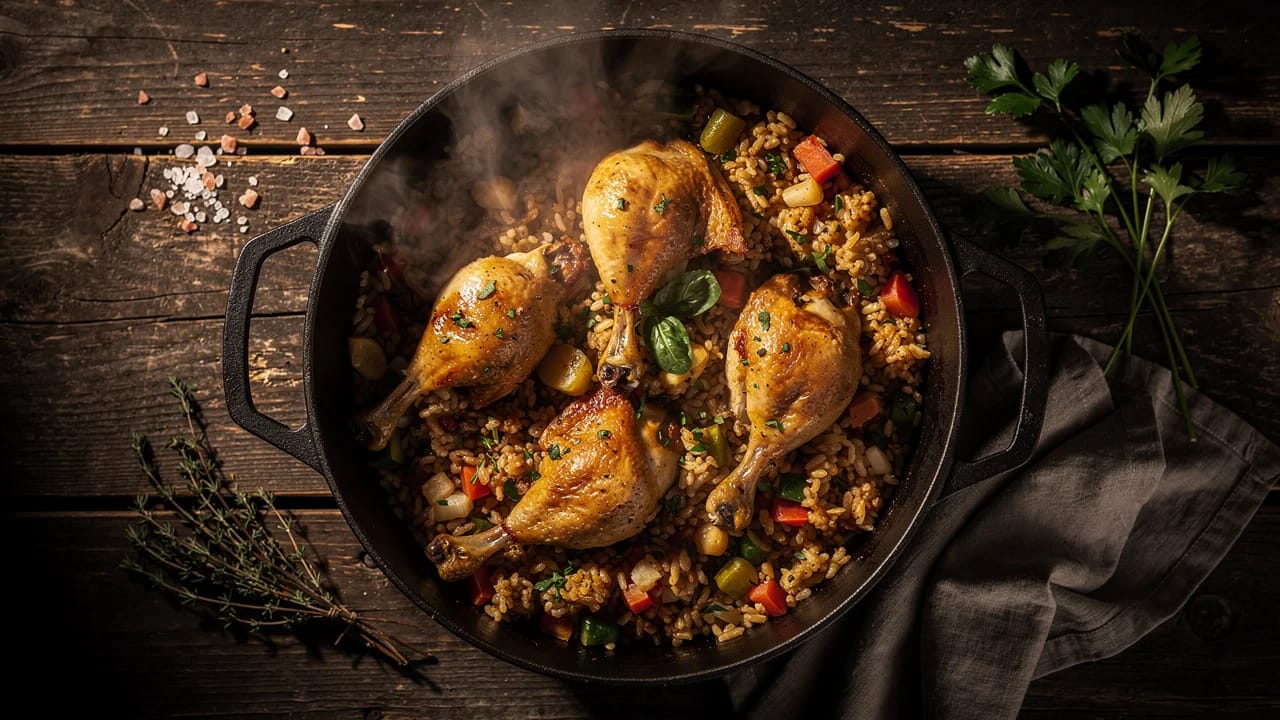
The classic first one pot meal, and the one that teaches browning and layering in a single go. Brown 4 chicken thighs skin-side down for 5 minutes (don't touch them). Remove. Sauté diced onion and garlic. Add 1½ cups long-grain rice, stir 1 minute to toast. Pour in 2½ cups chicken stock, scrape the bottom. Nestle chicken on top, skin-side up. Cover, reduce heat to low, cook 20 minutes. Don't lift the lid. Let rest 5 minutes, then fluff the rice with a fork.
Difficulty: Easy | Time: 35 min
One pot jambalaya
Brown 200 g andouille sausage (sliced) and 300 g chicken thighs (diced). Remove. Sauté the "holy trinity" (onion, celery, green bell pepper). Add 2 cloves garlic, 1 can diced tomatoes, 2 cups chicken stock, 1 tsp Cajun seasoning, and 1½ cups long-grain rice. Return meat, cover, simmer 20 minutes. Add 200 g raw shrimp in the last 5 minutes.
Difficulty: Easy | Time: 40 min
Mushroom risotto
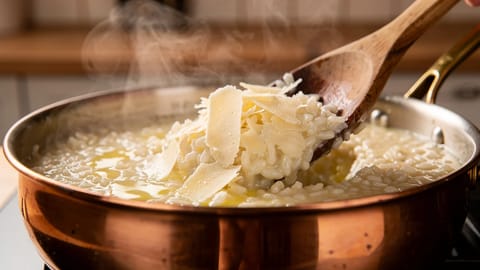
This one requires attention but produces restaurant-quality results. Heat 4 cups stock in a separate pot (the one exception to the "one pot" rule, since you need warm stock). Sauté sliced mushrooms in butter until golden. Remove. Sauté diced shallot, add 1½ cups arborio rice, stir 1 minute. Add ½ cup white wine, stir until absorbed. Add warm stock one ladle at a time, stirring frequently, for about 18 minutes until creamy. Stir in mushrooms, parmesan, and a knob of butter. The risotto technique is all about patience, so don't rush the stock additions.
Difficulty: Intermediate | Time: 35 min
One pot curries
Curries are criminally underrated one pot meals. Same technique as a stew, but the spice profile does all the heavy lifting.
Thai coconut chicken curry
Brown 500 g diced chicken thighs. Remove. Sauté diced onion, add 2 tbsp Thai red curry paste, cook 1 minute. Pour in 1 can (400 ml) coconut milk and ½ cup chicken stock. Return chicken, add diced bell pepper and a handful of green beans. Simmer 15 minutes. Finish with lime juice, fish sauce, and fresh cilantro. Serve over rice (or cook jasmine rice right in the curry by adding 1 cup rice and an extra cup of stock, then cover for 18 minutes).
Difficulty: Easy | Time: 30 min
Chickpea and spinach daal
Heat oil, add 1 tsp each cumin seeds, mustard seeds, and turmeric. When they pop (30 seconds), add diced onion, garlic, and grated ginger. Add 1 cup red lentils, 1 can chickpeas (drained), 3 cups vegetable stock, and 1 can diced tomatoes. Simmer 20 minutes. Stir in 2 handfuls of spinach, cook until wilted. Squeeze half a lemon over the top.
Difficulty: Easy | Time: 30 min
Common one pot cooking mistakes
The most common beginner mistake is skipping the browning step and dropping raw chicken straight into the liquid to save time. The result is bland, grayish meat floating in weak broth. Five minutes of browning first, searing the outside until golden, transforms the entire dish. It's the single most impactful thing you can do for flavor.
One pot meals and meal prep
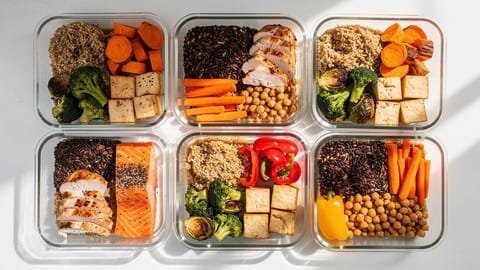
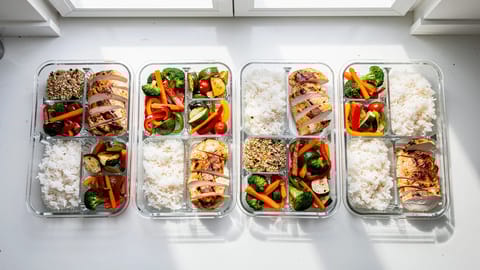
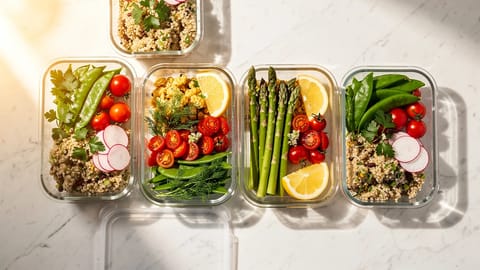
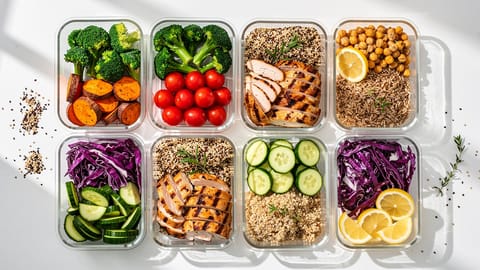
One pot meals are ideal for meal prep because they produce 4-6 servings in a single session.
| Recipe | Fridge life | Freezer life | Reheats well? |
|---|---|---|---|
| Chili | 3-4 days | 2-3 months | Excellent |
| Chicken noodle soup | 2-3 days | 4 months | Good (noodles soften) |
| Red lentil soup | 2-3 days | 4 months | Excellent |
| Chicken and rice | 3-4 days | 2-3 months | Good |
| Thai coconut curry | 3-4 days | 2-3 months | Excellent |
| Chickpea daal | 3-4 days | 2-3 months | Excellent |
| Tomato basil pasta | 3 days | Not recommended | Fair (pasta softens) |
The fridge and freezer windows follow Health Canada's storage chart: cooked meat, stew and vegetable dishes keep 3-4 days refrigerated and 2-3 months frozen, while soups get 2-3 days in the fridge and about 4 months in the freezer. Get leftovers into the fridge within two hours of cooking, and reheat them to 165°F / 74°C.
Tip: If you plan to freeze a pasta dish, undercook the pasta by 2-3 minutes. It will finish cooking when you reheat it.
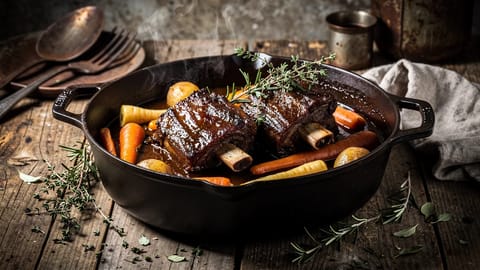
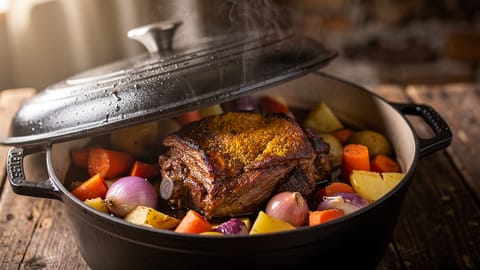
Soups, stews, and curries are the batch cooking champions. Make a double batch on Sunday and you have lunches sorted for the week. Braised dishes in particular improve with time as the collagen in the meat continues to break down and the flavors deepen overnight.
Getting started
Pick the simplest recipe that appeals to you, probably the tomato basil pasta or the chili, and make it this week. Don't worry about perfection. One pot meals are forgiving by nature. If the liquid reduces too fast, add more. If the vegetables are overcooked, call it rustic. Even a mediocre one pot dinner beats takeout on cost and cleanup.
Once you are comfortable with the technique — brown, sweat, deglaze, layer, finish bright — the recipes become suggestions rather than instructions. Swap chicken for shrimp. Use coconut milk instead of cream. Throw in whatever vegetables need using up. That flexibility is the real point of one pot cooking: a framework, not a formula.
Fond, the app we're building, is designed for this step: save the recipes you settle on and drop them onto the weekly calendar (join the waitlist to hear when it opens). The shopping list groups the same ingredient across every recipe you planned, so one onion line covers the chili and the chicken and rice.