 Bastien
How to find recipes with ingredients you already have
Start with the food that needs using, identify a meal anchor, search two to four defining ingredients, then choose a flexible dish.
The fastest way to find recipes with ingredients you have is to stop treating every item in your kitchen as an equal constraint. Start with the food that needs using first. Identify one or two ingredients that can carry the meal, search for a flexible dish, then verify that it fits your time and equipment.
That order matters. A search for "broccoli chicken rice" gives you a direction. A search containing every jar, spice, vegetable, and half-used condiment in the kitchen gives most recipe finders too many ways to miss.
Easy recipes with basic ingredients
Before any search, there is a short list of dishes that basic pantry ingredients can make on their own. They rely on food that keeps for weeks plus at most one or two fresh items.
| Basic ingredients | Dish | Time | Good additions |
|---|---|---|---|
| Eggs, cheese, butter | Omelet or frittata | 10-15 min | Leftover cooked vegetables, herbs, ham |
| Pasta, garlic, olive oil | Garlic-and-oil pasta (aglio e olio) | 15 min | Chili flakes, parmesan, parsley, canned tuna |
| Cooked rice, egg, onion, soy sauce | Fried rice | 15 min | Frozen peas, leftover meat, carrot |
| Potatoes, eggs, onion | Spanish tortilla | 30 min | Bell pepper, chorizo, cheese |
| Canned lentils or beans, onion, canned tomatoes | Lentil soup or bean chili | 25 min | Cumin, carrot, spinach, rice |
| Canned tomatoes, onion, garlic, pasta | Pasta with tomato sauce | 25 min | Basil, olives, mozzarella, ground meat |
| Eggs, canned tomatoes, onion, pepper | Shakshuka | 25 min | Cumin, feta, bread for dipping |
| Canned tuna, pasta or rice, onion | Tuna pasta salad or bake | 20-35 min | Corn, hard-boiled egg, cream, grated cheese |
| Stale bread, eggs, milk | French toast or savory bread pudding | 15-40 min | Sugar and cinnamon, or cheese and onion |
| Flour, eggs, milk | Pancakes or crêpes | 30 min | Sugar, jam, ham and cheese |
| Rice, milk, sugar | Rice pudding | 40 min | Vanilla, cinnamon, lemon zest |
| Yogurt, flour, eggs, sugar, oil | Yogurt cake | 45 min | Apple, chocolate, lemon |
Times assume the ingredients are already on hand. If a dish appeals but one item is missing, the rest of this article explains how to judge whether that item is structural or replaceable.
Start with an inventory, not a recipe search
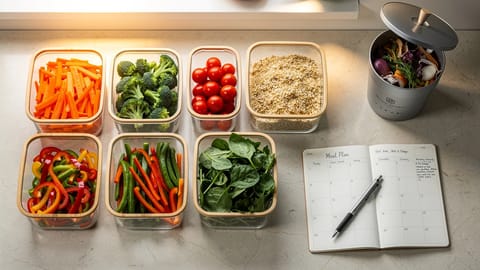
Open the fridge before opening a search engine. Then check the freezer and pantry. The goal isn't to catalog the whole kitchen. It is to spot the few foods that should shape dinner tonight.
The US Environmental Protection Agency recommends checking every food-storage area before planning meals. It also advises building upcoming meals around food that needs to be used. This small inventory prevents a common failure: buying or cooking around new ingredients while older food keeps moving toward the bin.
Sort what you find into four practical groups:
- Use first: opened dairy, cooked leftovers, cut produce, delicate herbs, and anything close to its labeled date.
- Main ingredients: eggs, beans, tofu, fish, meat, or another food that can anchor the meal.
- Bases: rice, pasta, bread, potatoes, tortillas, or another ingredient that turns the anchor into dinner.
- Flavor builders: sauces, aromatics, cheese, citrus, herbs, and condiments.
You don't need something from every group. The categories simply reveal the job each ingredient can do.
Food-safety note: "Use first" does not mean "use regardless." If you don't know how a perishable food was stored, do not let an anti-waste goal overrule safety.
Choose two to four ingredients that define the problem
Recipe searches work better when the query is selective. Begin with the food most likely to spoil. Add a main ingredient or base. If one more item strongly shapes the dish, include it too.
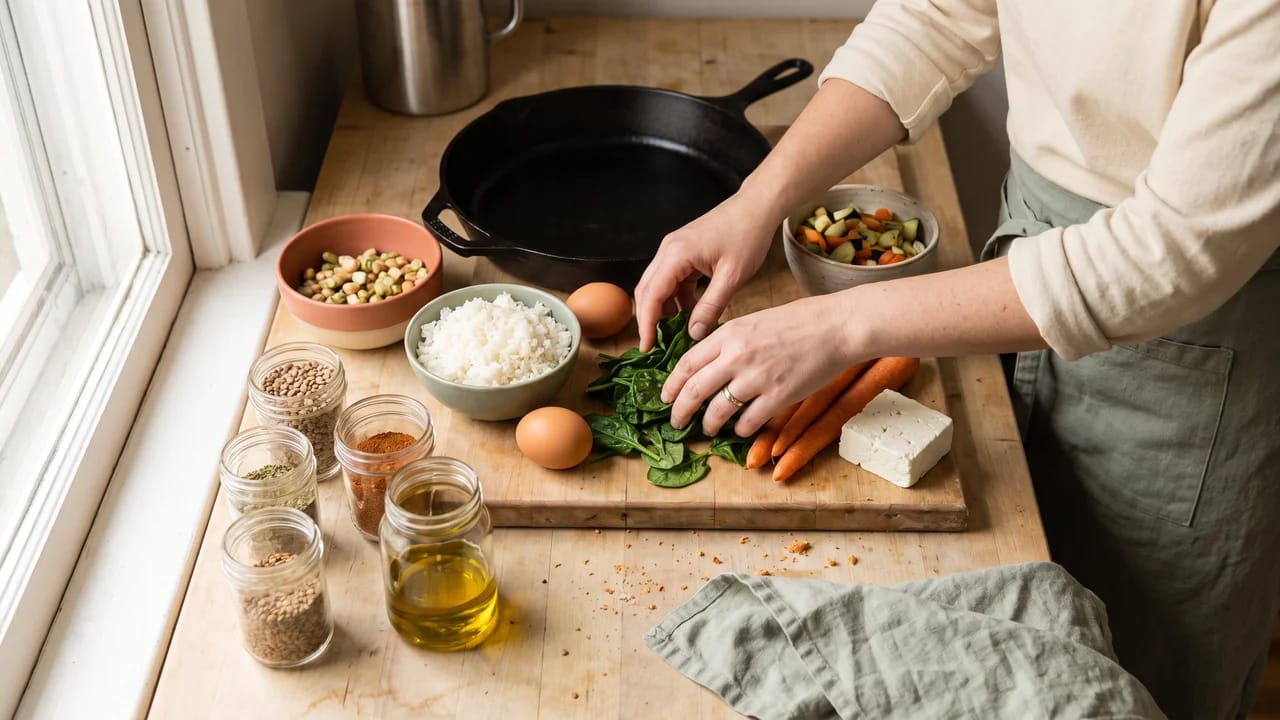
Suppose you have spinach, eggs, feta, cooked rice, carrots, yogurt, mustard, and a full spice drawer. Useful searches include:
spinach eggs fetaspinach rice eggscarrots yogurt rice bowlspinach feta quick dinner
The yogurt and mustard may still matter later. So may the spices. They don't all need to appear in the first query.
There are two reasons to keep the search short. First, recipes rarely match an entire household inventory. Second, many recipes assume common basics without putting them in the title. Treat cooking oil, salt, pepper, and water as available only if you have checked them, but don't force them into the query.
Add a constraint only when it changes the result
Good constraints remove recipes you cannot make. Add 30 minute, one pot, no oven, vegetarian, or the name of a cooking method when it is a real boundary.
Avoid stacking preferences that do not matter tonight. Searching easy healthy cheap quick high protein broccoli chicken rice dinner sounds precise, but it often produces broader, less useful results. Begin with the ingredients. Add one decisive constraint. Refine only after seeing what comes back.
Pick a flexible dish format
When no recipe matches perfectly, choose a type of dish that can absorb variation. This is more reliable than forcing a rigid recipe to accept several substitutions.
| Flexible format | What it needs | Good additions |
|---|---|---|
| Soup or stew | Liquid plus one substantial ingredient | Cooked grains, beans, vegetables, herbs |
| Frittata or omelet | Eggs and a suitable pan | Cooked vegetables, cheese, herbs |
| Stir-fry | Fast-cooking pieces and a hot pan | Protein, vegetables, noodles, sauce |
| Pasta dish | Pasta plus a sauce or emulsifying liquid | Greens, cheese, beans, cooked meat |
| Grain bowl | A cooked grain and one filling component | Raw or cooked vegetables, dressing, seeds |
| Tray bake | Ingredients that tolerate similar oven heat | Vegetables, sausages, tofu, sturdy herbs |
These are templates, not universal formulas. A watery vegetable may need cooking before it goes into eggs. A dense root vegetable needs a head start over quick-cooking greens on a tray. The format gives you a direction; the ingredient still determines the technique.
If you want the fewest moving parts, start with one-pot meals. They make it easier to adjust liquid, add a handful of vegetables, or stretch a smaller amount of protein with beans or grains.
Search tools in the right order
Different tools solve different versions of the question.
Search the recipes you already trust
Your own recipe collection is the best first stop. You already know which dishes fit your kitchen and skill level, as well as your household's taste. Search by the ingredient that needs using, then filter by time or meal type.
A searchable recipe organizer is useful here because it keeps the recipe itself rather than only a bookmark. In Fond, you can filter saved recipes by ingredient, cuisine, cooking time, difficulty, or your own tags. That turns "What can I make tonight?" into a search across food you chose to save.
Use a recipe finder for unfamiliar combinations
An ingredient-based recipe finder is helpful when your saved collection has no match. Enter the defining ingredients first. Treat pantry staples as optional filters instead of checking every box immediately.
Look at the results as a set of possible techniques. If several recipes combine chickpeas and tomatoes as a stew, that method may still help even when none uses the exact vegetables in your fridge.
Use an AI suggestion as a draft
An AI tool can propose a dish from an awkward combination, but a plausible recipe is not automatically a dependable one. Read the full method before cooking. Check whether the ingredient amounts fit the stated servings and whether a thickener or liquid is missing. Then confirm that the cooking instructions are safe for the protein involved.
This is the same habit that makes any unfamiliar recipe safer to follow: read the recipe from top to bottom before turning on the heat.
Check what the recipe assumes
A recipe can match your headline ingredients and still fail because it depends on something less visible. Before committing, scan for five roles:
- Cooking medium: oil, butter, stock, water, or another fat or liquid.
- Structure: eggs, flour, starch, cheese, or another binder.
- Balance: salt, acid, sweetness, heat, or bitterness as the dish needs.
- Equipment: the right pan, blender, baking dish, or thermometer.
- Time: thawing, marinating, simmering, resting, or preheating that the title did not reveal.
If one item is missing, decide whether it performs a structural or flavor role. Flavor ingredients are often easier to change. Structural ingredients need more care. Swapping parsley for another soft herb changes the profile; replacing eggs in a frittata changes the dish.
Handle leftovers as a safety question first
Cooked rice, roasted vegetables, opened sauces, and yesterday's chicken can turn into dinner. Their safety depends on how they were handled before they reached the fridge.
The FDA advises refrigerating or freezing leftovers within two hours. It recommends keeping the refrigerator at 40°F (4°C) or below and checking leftovers daily. The agency also points consumers to FoodKeeper for food-specific storage guidance.
Use a label or note with the date. Keep raw food separate from cooked food. If the storage history is unclear, a recipe suggestion cannot make the ingredient safe.
Once safety is settled, leftovers become useful components:
- Roasted vegetables can move into eggs, soup, pasta, or a grain bowl.
- Cooked beans can thicken soup or become a filling for tacos.
- Stale bread can become crumbs, croutons, a strata, or another baked savory pudding.
- Cooked meat can join a stir-fry, sandwich, soup, or tray bake near the end of cooking.
The EPA specifically recommends repurposing suitable odds and ends in dishes such as soups, casseroles, stir-fries, frittatas, sauces, baked goods, pancakes, or smoothies. For a broader system, see our guide to reducing food waste at home.
Build a small library of rescue meals
Searching from scratch every time is tiring. Save a few recipes that work with variable ingredients and tag them by format.
A useful rescue collection might include:
- A vegetable soup with clear guidance for adjusting liquid
- A frittata that explains which fillings need pre-cooking
- A fried-rice method for cooked rice and small amounts of vegetables
- A pasta formula that uses greens, beans, or leftover meat
- A grain bowl with interchangeable toppings and dressing
- A tray bake with timing notes for dense and quick-cooking vegetables
After cooking, note what you changed. "Used spinach instead of kale" is more valuable next month than trusting yourself to remember. If the result was poor, record that too.
This is where cooking from what you have becomes a repeatable habit. You are no longer asking the whole internet to solve a new puzzle each night. You are building a personal set of flexible recipes that fit the ingredients you buy.
Turn tonight's search into next week's plan
Finding one use-it-up dinner solves tonight. A short review prevents the same leftovers from becoming a problem again.
Ask why the ingredient was still there. Did a recipe use only half the package? Did the week change after shopping? Did you buy it without a specific meal? The answer tells you what to change.
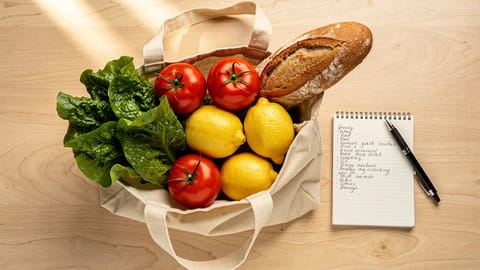
Before your next grocery trip, check what remains and plan around it. Our grocery shopping guide begins with the same inventory because the cheapest ingredient is often the one already in your kitchen.
The practical system is simple: inventory, prioritize, search, verify, then save. The more often you record what worked, the less often a nearly empty fridge feels like a dead end.