 Bastien
Grocery shopping tips that actually save money
A practical guide to saving money on groceries through meal planning, smart list-building, the 6-to-1 shopping method, understanding store layout psychology, buying smarter (unit prices, store brands, frozen produce), strategic shopping timing, and reducing waste. Includes USDA spending benchmarks and FAQ.
The USDA's food plans put a family of four at roughly $1,025 a month on the Thrifty plan and about $1,390 on the Moderate-Cost plan (July 2026 figures from the USDA Food Plans). On top of that, the EPA estimates the average family of four spends almost $3,000 a year on food that never gets eaten.
Most of that waste is a planning problem, not a grocery problem.
These grocery shopping tips target the habits that quietly inflate your bill, without changing what you eat.
Make a meal plan before your shopping list
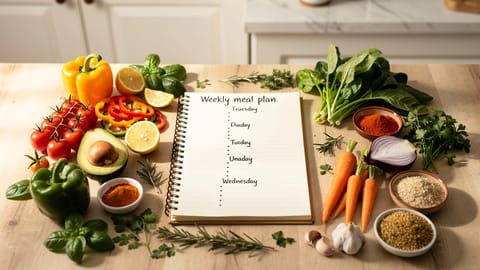
If you want to save money on groceries, this is the single most effective habit you can build. Every budgeting expert leads with it because it works better than everything else combined. When you have a meal plan, your grocery trip has a purpose.
Without a plan, you buy based on appetite and impulse. You grab ingredients that seem like good ideas in the store but don't fit into any specific meal. That bunch of kale? No plan for it. The fancy cheese? Ate a piece, forgot the rest. The avocados on sale? They turned brown before you got to them.
With a plan, every item in your cart has a purpose: a recipe, a day, a meal.
The first week of planning feels like homework. By the third week the bin is emptier and the receipt shorter, and the 15 minutes on Sunday pay for themselves before you leave the store.
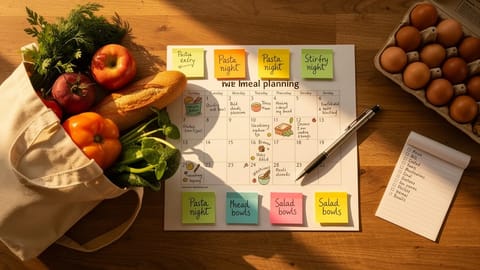
Here's the minimum viable version:
About 15 minutes on Sunday, and you'll spend less time wandering the store and less money on food that goes bad.
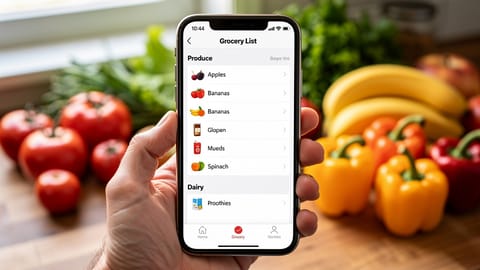
Fond's weekly meal planner makes this faster. Drag recipes onto a calendar, and it generates a consolidated meal planning grocery list automatically. Two recipes calling for onions? One line item: "Onions (3)."
For a deeper dive on getting started, check out our weekly meal planning for beginners guide.
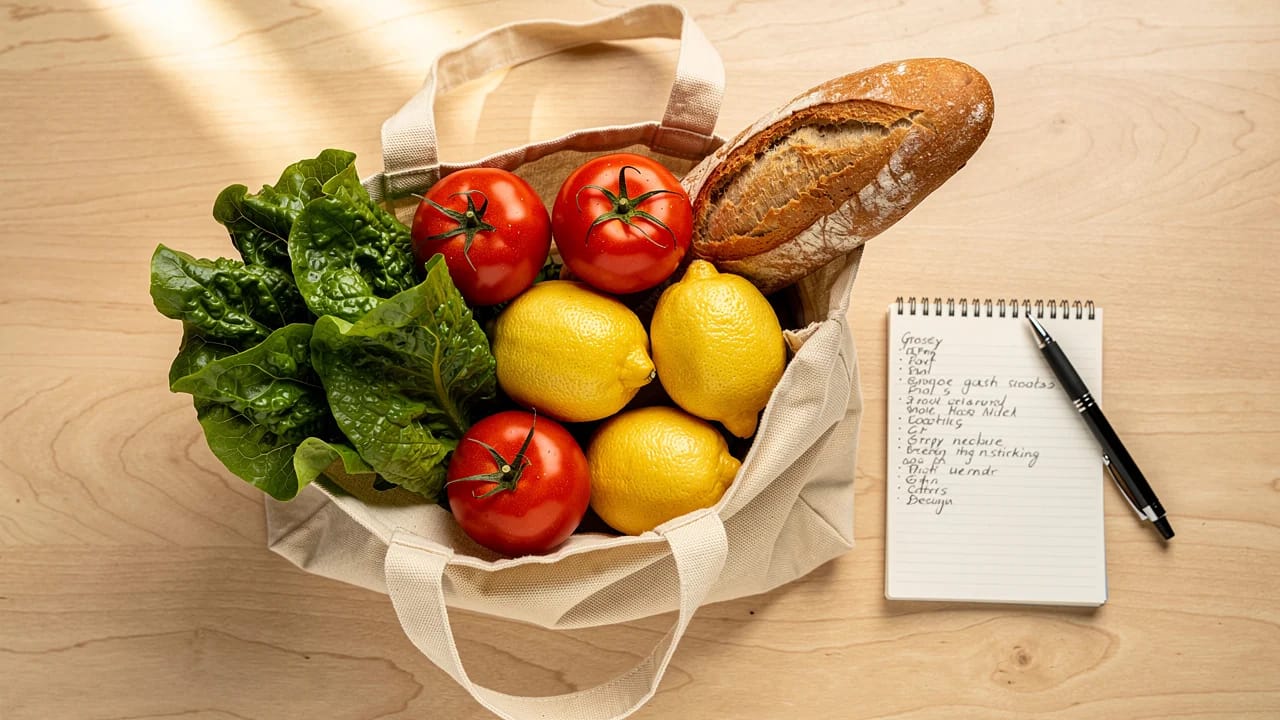
Shop with a list (and stick to it)
Treat the list as a boundary, not a suggestion.
A list blocks the two most expensive shopping behaviors: duplicate purchases (buying butter when you already have two sticks) and aspirational purchases (buying ingredients for meals you'll never make).
How to build a better grocery list
Start by organizing items by store section (Produce, Dairy, Meat, Pantry, Frozen, Other). This prevents backtracking through the store, which cuts down on exposure to impulse displays and speeds up the trip. Most grocery list apps will do that sorting for you, and several are free.
Be specific with quantities. "Chicken" on a list isn't useful. "2 lbs chicken thighs" is. When you write exact amounts, you avoid over-buying and the "better grab extra just in case" instinct.
Before writing anything, open the fridge, freezer, and pantry. The most expensive groceries are the ones duplicating what's already at home. That half-jar of marinara, the bag of frozen broccoli, the rice from last week's batch cook. Those are ingredients already waiting for a recipe.
If you're tempted by sales or seasonal items, add a "maybe" section at the bottom of your list. Review it at the end of your trip. If something fits into next week's meals, grab it. If not, skip it.
One low-effort trick: photograph the inside of the fridge before you leave. Checking the photo in the dairy aisle takes five seconds and ends the third open tub of sour cream.
Try the 6-to-1 grocery method
Chef Will Coleman's 6-to-1 method went viral for a reason: it gives aimless grocery trips a simple framework that naturally controls spending.
That's 21 items covering a full week of balanced meals. The magic isn't nutritional. It's behavioral. The structure eliminates the wandering that inflates grocery bills. You walk in with a count for each category, fill it, and leave. People who adopt it mostly report the same two things: shorter trips and fewer stray items in the cart, because there is no "just in case" category.
A related framework is the 5-4-3-2-1 rule: 5 vegetables, 4 fruits, 3 proteins, 2 starches, 1 treat. Same principle, slightly smaller haul. Pick whichever fits your household size.
The 6-to-1 method pairs well with meal planning. Use it as your shopping skeleton, then adjust quantities based on the specific recipes in your weekly meal plan. If your plan calls for 8 vegetables instead of 6, go with 8. The framework is a starting point for frugal grocery shopping, not a rigid cap.
Understand store layout (it's designed to make you spend)
Grocery stores are designed to get you to spend more. Knowing how helps you push back.
The perimeter trap
You've heard "shop the perimeter" as health advice. It's true that produce, meat, dairy, and bakery line the outer walls. But the perimeter is also where the highest-margin items live: pre-cut fruit ($6 for what costs $2 whole), marinated meats ($5 more per pound than plain), deli prepared foods, and artisan bakery items.
Shop the perimeter for raw ingredients. Skip the perimeter's convenience markups.
Eye level is buy level
Brands pay for shelf placement. The most expensive products sit at eye level. Store brands and better-value options are typically on the bottom shelf or the very top. Train yourself to scan all shelf levels, not just what's at eye height.
Endcap deception
Those displays at the end of each aisle look like deals. Often they are not: endcap space is sold to brands for visibility, and a spot on the endcap says nothing about the price. Check the unit price before assuming it's a bargain.
The checkout gauntlet
Candy, magazines, small impulse items. The checkout zone exists to squeeze a few more dollars out of every trip. Once you expect it, it's easier to ignore. Self-checkout lines tend to have fewer of these triggers, which is one reason budget-conscious shoppers prefer them.
Buy smarter, not just cheaper
Cutting your grocery bill isn't always about buying the cheapest option. Sometimes spending a bit more in the right places saves more overall.
Always check the unit price
A $3.99 jar of pasta sauce seems cheaper than the $5.49 jar. But if the expensive one is 32 oz and the cheap one is 16 oz, the bigger jar costs 40% less per ounce. Most US stores print the unit price on the shelf tag, and some states require it. Compare by cost per ounce, per pound, or per count, not by sticker price.
Buy whole, prep yourself
Pre-cut vegetables cost 2-4x more than whole ones. A bag of pre-cut butternut squash runs $4-5. A whole butternut squash is $1.50-2. The trade-off is 10 minutes of knife work. Same goes for:
- Block cheese runs 30-40% cheaper than shredded and melts better
- Whole mushrooms last longer than pre-sliced and cost less
- Baby carrots are just carved regular carrots at 3x the price
- Bone-in chicken thighs cost less per pound than boneless breast, and they're more flavorful
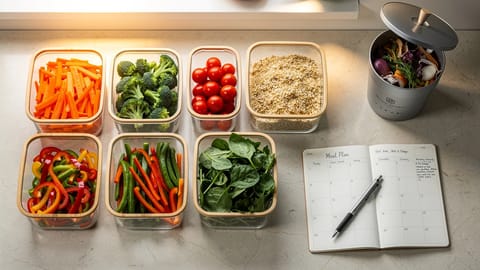
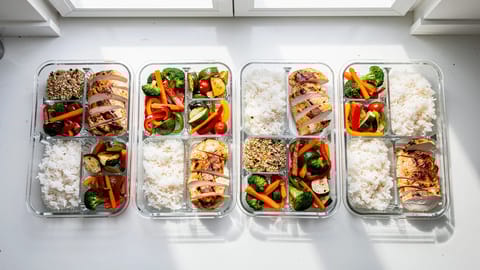
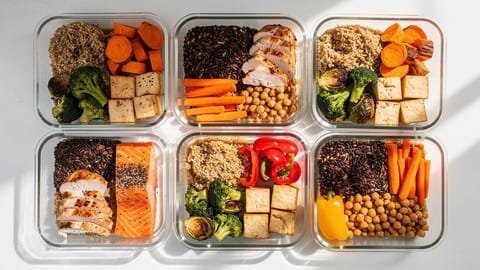
If you're already doing meal prep on Sundays, the prep time is already built into your schedule. Buy whole and prep in bulk.
Frozen produce is fine (really)
Frozen fruits and vegetables are picked ripe and flash-frozen within hours. Fresh produce in the store may have traveled 1,500+ miles over several days. For smoothies, soups, stews, and batch cooking, frozen produce is often just as nutritious as fresh, sometimes more so.
Frozen spinach, berries, peas, corn, and broccoli are consistently cheaper than fresh, and they don't go bad. You use what you need and the rest stays in the freezer.
Store brands save 20-40%
Most store-brand products (Kirkland, Great Value, Good & Gather, 365) are manufactured in the same facilities as name brands. For staples like canned tomatoes, pasta, rice, flour, sugar, olive oil, and frozen vegetables, store brands are functionally identical at 20-40% less. Dried legumes are one of the cheapest staples in the store, and learning how to cook dried beans from a 99-cent bag stretches your protein budget even further.
Go store brand for staples and put the savings toward ingredients where you can taste the difference: finishing olive oil, good Parmesan, fresh herbs.
Time your shopping strategically
When you shop affects what you spend. Timing is one of the most overlooked tips for grocery shopping on a budget.
Shop after eating
Shopping hungry pushes people toward more food, and more calorie-dense food, than the list called for. When you're hungry everything looks good, and grocery stores are full of good-looking food. Eat a meal or a snack before you go.
Shop midweek
Tuesday through Thursday mornings are typically the least crowded times. Fewer people means you get in and out faster, with less exposure to impulse buys. Weekend shopping puts you in the store at peak hours, surrounded by crowds and promotional displays.
Shop less often
Every trip to the store is a chance to impulse buy. Going three times a week means three rounds of temptation. Once-a-week shopping, guided by a meal plan, cuts that to one. Some families stretch to every 10-14 days for pantry and protein, supplementing with a quick produce run midweek.
A meal plan that covers Monday through Sunday means you only need one trip. One trip, one round of temptation.
Reduce waste to save more
Cutting waste is one of the fastest ways to save money on groceries. The cheapest groceries are the ones you actually eat. The EPA estimates the average family of four spends almost $3,000 a year on food that does not get eaten. That's food you already paid for.
Here's where meal planning connects back to savings:
- Plan meals around perishables first. Cook fish Monday, chicken Wednesday, and save pantry meals or freezer inventory for the weekend.
- Repurpose leftovers. Sunday's roast chicken becomes Monday's chicken salad and Tuesday's chicken soup. Three meals from one protein purchase.
- Freeze what you won't use. If you know you won't finish the bread loaf, freeze half right away. Same for herbs, broth, and extra portions.
- Track what you waste. Keep a note on the fridge. After two weeks, you'll notice patterns: the greens you always overbuy, the yogurt that always expires.
For a complete strategy on cutting food waste, read our guide on how to reduce food waste at home.
Fond's meal planner helps here directly: its shopping list consolidates ingredients across recipes, so you buy exactly what your meals need, nothing extra.
The 10-minute grocery routine
You don't need to overhaul your entire approach. Start with this 10-minute weekly routine:
No extreme couponing required. These grocery shopping tips work without coupons, without driving to three different stores for deals. A few minutes of planning that pays for itself every week, whether you're a frugal grocery shopping veteran or tackling your budget for the first time.
Know what you'll cook before you walk into the store. The savings follow.
- Meal planning is the single highest-impact habit for cutting grocery costs
- The 6-to-1 (or 5-4-3-2-1) method gives aimless trips structure and keeps stray items out of the cart
- Check unit prices, buy store brands for staples, and prep whole produce yourself
- Shop midweek, after eating, and once a week to reduce impulse spending
- Track food waste for two weeks to find your biggest money leaks
Frequently asked questions
What is the 6-to-1 grocery shopping method?
The 6-to-1 method is a shopping framework created by Chef Will Coleman. You buy 6 vegetables, 5 fruits, 4 proteins, 3 starches, 2 sauces or condiments, and 1 fun item. The structure keeps your cart focused and prevents impulse buying.
How much should a family of 4 spend on groceries?
USDA's July 2026 food plans put a family of four (two adults and children aged 6-8 and 9-11) at about $1,025 a month on the Thrifty plan, $1,130 on Low-Cost, $1,390 on Moderate-Cost and $1,680 on Liberal. Meal planning mostly moves a household down that ladder by cutting what gets thrown away and what gets bought twice.
What is the best day to buy groceries?
Tuesday through Thursday mornings tend to be the least crowded, which means faster trips and less exposure to impulse purchases. Many stores also mark down meat and bakery items early in the week to clear weekend inventory.
How much can meal planning save on groceries?
There is no reliable national figure, and the savings differ by household. They come from two places you can measure yourself: food thrown away (the EPA puts it at almost $3,000 a year for an average family of four) and unplanned purchases. Track both for two weeks and you will know your own number.
What is the 5-4-3-2-1 grocery shopping rule?
The 5-4-3-2-1 rule is a variation on the 6-to-1 method. You buy 5 vegetables, 4 fruits, 3 proteins, 2 starches, and 1 treat. Both methods cap how many items you pick from each category so you stop wandering and overspending.
Is it cheaper to buy groceries online?
Online grocery shopping can reduce impulse buys since you don't walk past endcap displays, but delivery fees and markups often cancel out the savings. The best approach for most people: build your list at home using a meal plan, then shop in-store once a week.
How do I grocery shop for one person on a budget?
Buy proteins in bulk and freeze individual portions. Use frozen vegetables instead of fresh to avoid waste. Pick 2-3 dinners per week and plan leftovers for lunch. A meal planning app that scales recipes down to single servings helps you buy the right quantities.
How do I grocery shop for the week?
Spend 10 minutes on Sunday: check what you have, pick 4-5 dinners, build a list organized by store section. Shop once, midweek if possible. That one trip, guided by a plan, covers all your meals and cuts impulse spending.
Fond, the app we're building, turns a week of planned recipes into one shopping list. It isn't released yet: join the waitlist to hear when it opens.