 Bastien
Recipe Manager
Software for storing, organizing, and accessing recipes digitally, replacing physical cookbooks, bookmarks, and scattered notes with a searchable, structured collection.
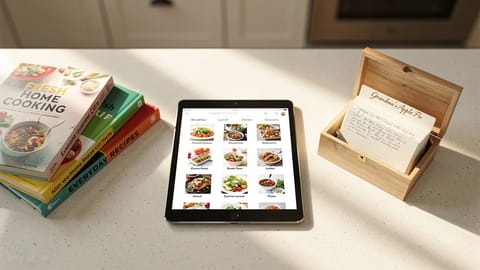
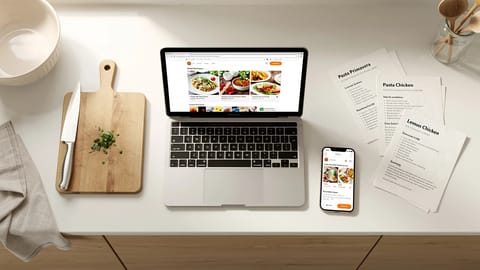
A recipe manager is software designed to be your digital cookbook. It stores all your recipes in one place and makes them searchable, scalable, and accessible from any device. Instead of juggling screenshots, browser bookmarks, paper printouts, and notes apps, a recipe organizer gives every recipe a permanent home and unlocks features that physical cookbooks can't match, like automatic shopping lists, recipe scaling, and step-by-step cook mode.
The usual trigger for switching is losing recipes: a food blog goes offline and a dozen bookmarks die with it. A recipe manager keeps the recipe itself, not just the address where you found it.
What does a recipe manager do?
A good recipe manager app handles every stage of the cooking workflow:
The core difference between a recipe manager and a notes app is structure. When ingredients, quantities, and steps are parsed (not stored as free text), the app can do useful work with your data automatically.
What are the types of recipe managers?
| Type | Examples | Pros | Cons |
|---|---|---|---|
| Cloud-based | Fond, Paprika, Samsung Food | Sync across devices, no setup | Subscription cost, data on servers |
| Self-hosted | Mealie, Tandoor, Grocy | Full data control, free | Requires a server, setup expertise |
| Platform-locked | Crouton (Apple only) | Deep OS integration | Only works on one ecosystem |
| Simple clippers | Copy Me That, Recipe Keeper | Easy to use, low cost | Limited features beyond saving |
| Plain-text based | Plain-text file apps | Portable files, version control | Fewer visual features |
Cloud-based managers
The most popular category. Your recipes sync across phone, tablet, and computer. The trade-off is a monthly or annual subscription, and your data lives on the company's servers. Look for apps that let you export your data in an open format so you're never locked in.
Self-hosted managers
You run the software on your own server (a Raspberry Pi, NAS, or cloud VPS). This gives you complete control over your data and costs nothing beyond hardware. The downside is setup and maintenance: you need to be comfortable with Docker, databases, and updates.
Plain-text recipe managers
Apps built on open plain-text formats store recipes as simple text files. You can edit them in any text editor, sync them with Dropbox or Git, and import them into any compatible app. The files are tiny, future-proof, and entirely yours.
What features should a recipe manager have?
Recipe import
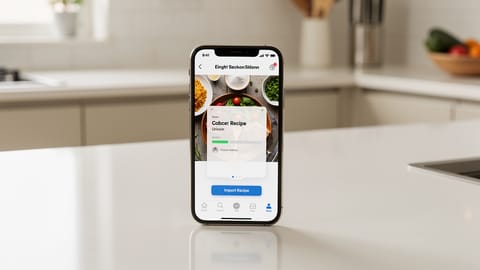
The fastest way to build your digital cookbook. A good recipe organizer app can import recipes from:
| Source | What good import looks like |
|---|---|
| Websites | Paste a URL, get a clean recipe with ingredients parsed |
| Photos | Take a picture of a cookbook page, OCR extracts the text |
| PDFs | Upload a PDF, get structured recipes |
| Other apps | Import from Paprika, Crouton, or other managers |
| Manual entry | A clean editor for typing your own recipes |
Poor import quality is the number one frustration with recipe manager apps. A weak parser will lump "2 cloves garlic, minced" into a single unparsed blob, and everything downstream (lists, filters, cook mode) suffers. Always test import with a few real recipes before committing.
Organization
| Feature | Why it matters |
|---|---|
| Tags | Flexible labeling (quick, weeknight, kid-friendly, dairy-free) |
| Collections | Group recipes for specific purposes (holiday dinner, camping) |
| Full-text search | Find recipes by any word in the title, ingredients, or instructions |
| Filters | Narrow by time, cuisine, dietary restriction, or ingredient |
| Favorites | Quick access to recipes you cook regularly |
Meal planning and shopping
The best recipe organizer apps connect planning to shopping smoothly:
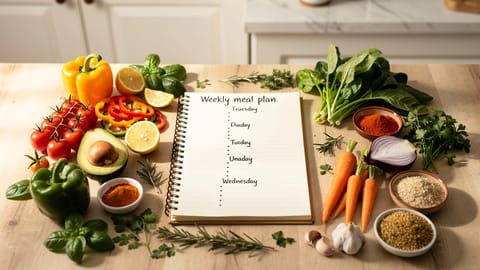
- Pick recipes for the week on a meal planning calendar
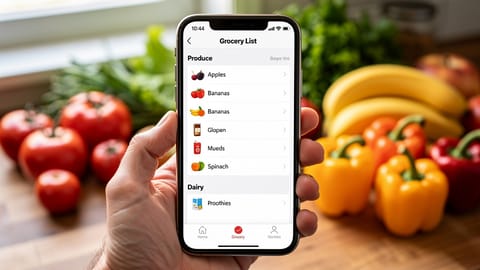
- The app generates a combined shopping list with the same ingredient grouped across recipes
- Check items off at the store, or share the list with someone else
- Notes on the calendar for leftovers or nights out keep the plan honest
Without this integration, you end up doing the same work manually: looking up each recipe, writing down ingredients, and cross-referencing what's already in the pantry.
Recipe scaling
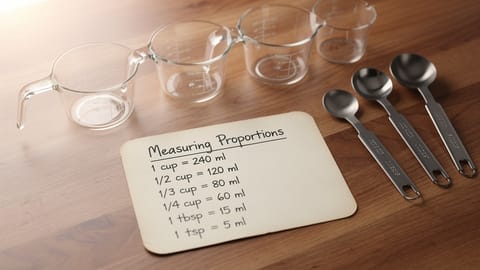
Recipe scaling adjusts every ingredient when you change the number of servings. This only works well if the app has parsed ingredients with quantities and units, not just a block of text. A recipe manager that uses structured formats can scale accurately because every ingredient is machine-readable.
Cook mode
A dedicated cooking view that:
- Shows one step at a time in large text
- Keeps the screen awake
- Includes built-in timers you can start with one tap
- Highlights ingredients in each step
- Lets you go hands-free with voice control (in some apps)
Cook mode transforms a recipe keeper from a reference tool into an active cooking assistant. Once you've cooked from a phone that stays awake and times each step, propping open a physical cookbook feels like a step backward.
What are the most common problems with recipe managers?
Usually caused by a weak parser with no AI assistance. Test import with a few real URLs before subscribing to any recipe organizer app.
Missing tags and weak search are the usual culprits. Look for full-text search plus filters and tagging.
Happens when ingredients aren't properly parsed into name, quantity, and unit. Apps with structured ingredient parsing handle this correctly.
Without ingredient consolidation, you get duplicates everywhere. Good apps merge identical ingredients and group by aisle.
Proprietary formats with no export are the cause. Use apps that support open formats or at least offer full data export.
Feature overload kills adoption. Choose a recipe manager with a simple daily interface and optional advanced features.
How does a recipe manager compare to other solutions?
| Solution | Good for | Limitations |
|---|---|---|
| Browser bookmarks | Saving links quickly | Recipes disappear when sites change, no scaling, no shopping lists |
| Notes app | Typing your own recipes | No structure, no import, no scaling |
| Pinterest boards | Visual inspiration | No ingredient parsing, not a cooking tool |
| Physical cookbook | Browsing and reading | Not searchable, can't scale, heavy to carry |
| Spreadsheet | Detailed meal planning | Poor recipe display, no cook mode |
| Recipe manager | Everything above, integrated | Subscription cost, learning curve |
How do you get started with a recipe manager?
Fond as a recipe manager
Fond hasn't launched yet. This is how it will work at launch. Join the waitlist for early access.
Fond does everything you expect from a recipe manager app. It structures every recipe automatically: ingredients, quantities, and step timers, all machine-readable, so shopping lists and Cook Mode work out of the box. Fond also imports recipes from links, Instagram and TikTok posts, photos, and pasted text (recipe import), includes August, an AI cooking assistant that works from your recipes, plans, and lists, ships a Pizza Workshop (bread and coffee workshops are coming soon), and puts your recipes on a weekly meal planning calendar with quick notes for leftovers.
- A recipe manager app replaces scattered bookmarks, screenshots, and paper with a searchable digital cookbook
- The best recipe organizer apps parse ingredients into structured data, enabling scaling, shopping lists, and cook mode
- Test import quality before committing to any app
- Look for open export formats to avoid data lock-in
- Start small with your 20 most-cooked recipes and build from there