 Bastien
Caramelization
Caramelization is the non-enzymatic browning reaction where sugars break down under heat (from about 110°C for fructose to 160°C for table sugar), creating new flavors, aromas, and golden-to-dark color. Unlike the Maillard reaction, it involves only sugars, no proteins.
Caramelization is the non-enzymatic browning reaction in which sugar molecules break down and recombine into a wide range of new compounds under heat. Fructose starts around 110°C (230°F); table sugar holds out until about 160°C (320°F). The reaction creates the golden color and bittersweet depth of caramel sauce, roasted vegetables, and slowly cooked onions. No proteins take part, and that is exactly what separates it from the Maillard reaction.
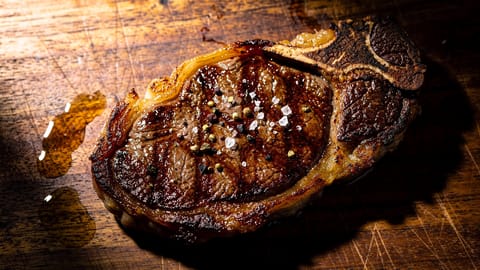
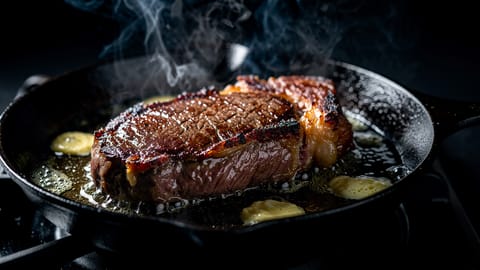
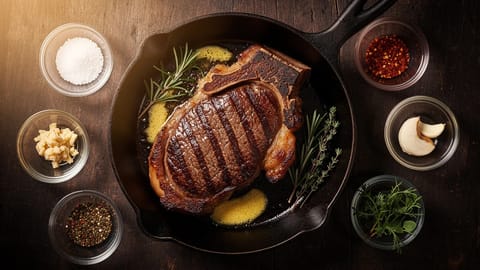
Brown food is not automatically caramelized food. Searing a steak browns it through the Maillard reaction, which needs protein. Caramelization is the sugar-only pathway: onions cooked low and slow for 45 minutes turn sweet and jam-like because their own sugars are breaking down, not because a crust is forming on protein.
How does caramelization work?
When a sugar passes its breakdown temperature, its molecules start to fragment. The fragments recombine into new molecules: some are volatile, and you smell them as buttery diacetyl, toasty maltol, and sweet, nutty furan compounds. Others are large brown polymers, traditionally named caramelan, caramelen, and caramelin, although food scientists now treat those as loose families of molecules rather than three exact species.
Heat drives the reaction faster as the temperature climbs, and the classic thresholds are not hard switches. Both acidic and alkaline conditions speed the breakdown, and sugar has been observed browning below 150°C (302°F) once the pH moves away from neutral. In practical terms: watch the color, not the clock.
Past dark amber there is no sourced cutoff to memorize, only a fast slide: bitter compounds accumulate, the sweetness fades, and within seconds the pan holds acrid, near-black sugar that nothing can fix.
What is the difference between caramelization and the Maillard reaction?
People confuse these constantly, and for good reason. Both produce browning. Both create new flavors. But they are different chemical pathways.
In practice, many foods undergo both reactions at once. Caramelizing onions involves the natural sugars breaking down (caramelization) while those sugars also react with the onion's trace proteins (Maillard). Roasted vegetables, baked bread, and pan-fried bananas all involve both processes working together. Browned butter and a dark roux sit in the same borderline zone: protein and starch mean the Maillard side does much of the work there, a useful reminder that not every browned food is caramelized.
The science of cooking relies heavily on understanding when each reaction dominates and how to control it.
What are common examples of caramelization in cooking?
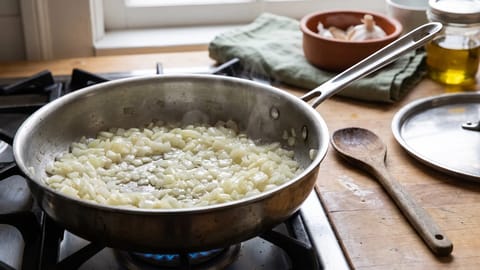
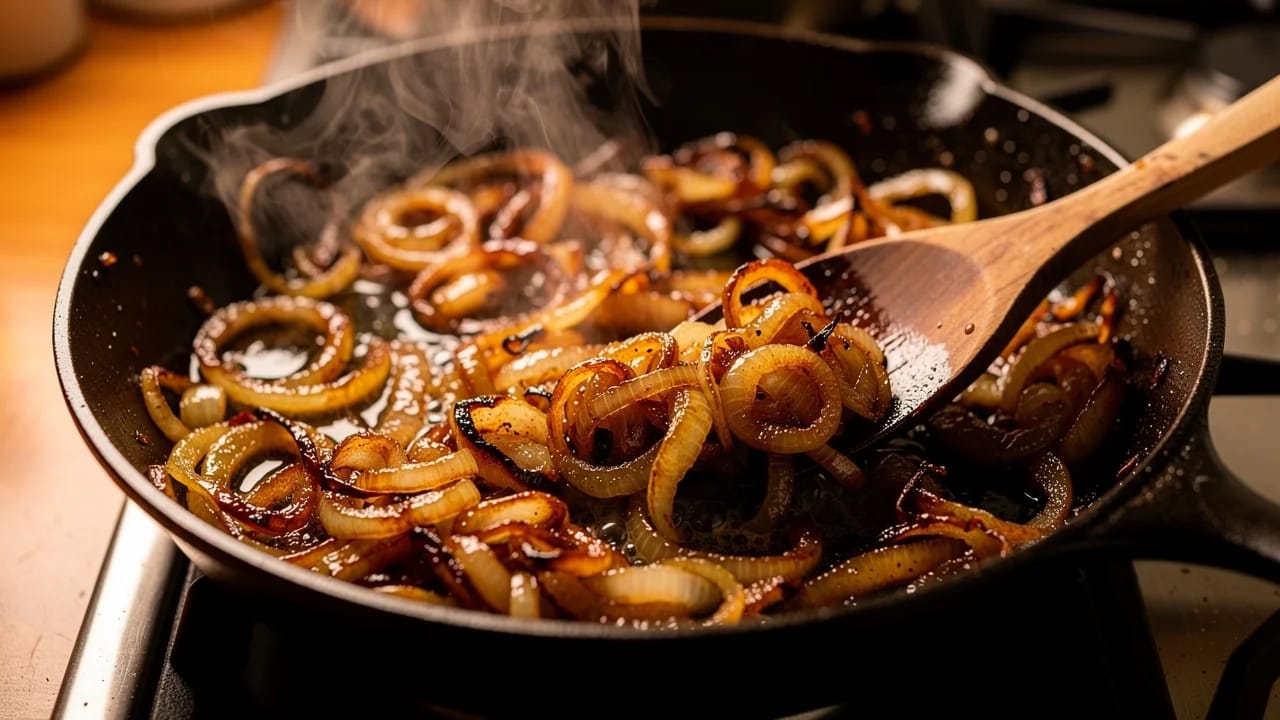
Caramelized onions are the classic example. Sliced onions cooked over low heat for 30-45 minutes lose water, concentrate their natural sugars, and turn from white to deep golden brown. The sharp, sulfurous raw onion flavor transforms into something rich and sweet. This is the opposite of sweating onions, where gentle heat softens them without any color; here you keep going past that point until the sugars actually brown. Rushing with high heat gives you browned onions (mostly Maillard) but not true caramelization.
Caramel sauce is pure caramelization. You heat granulated sugar until it melts, breaks down, and turns amber, then stop the cooking with cream and butter. The window between perfect amber caramel and bitter burnt sugar is a matter of seconds, so this is not the stage to leave the pan.
Roasted root vegetables caramelize at their cut edges where they contact the hot pan. The natural sugars in carrots, sweet potatoes, and beets concentrate as water evaporates, then brown. High oven heat (200°C+ / 400°F+) and a dry surface are the keys.
Creme brulee uses a torch or broiler to caramelize a thin layer of sugar on top of custard. The sugar melts, passes through the caramel stages in seconds, and hardens into a glassy shell.
How do you control caramelization?
Tip: A splash of water can help you control sugar caramelization. The "wet method" (dissolving sugar in a small amount of water before heating) slows the process down and gives you more control. The water boils off first, and then caramelization begins. It's more forgiving than heating dry sugar directly.
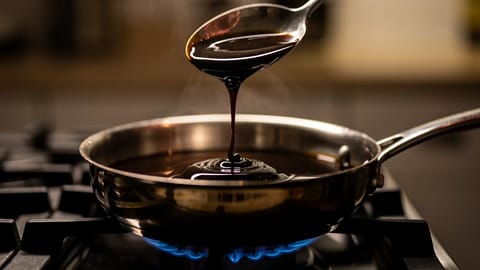
One related effect is worth knowing: a reduction of a sugary liquid, like balsamic vinegar or fruit juice, concentrates its sugars as the water leaves. While water remains, the temperature stays near its boiling point, well below caramel range. Push the reduction almost dry and the temperature climbs fast, which is why a forgotten reduction goes from glossy syrup to scorched pan so abruptly.
Understanding caramelization gives you control over browning in everything from sauces to roasted vegetables. Once you know it is a sugar-only reaction driven by temperature, you can predict when it will happen and push it in the direction you want. Pair it with what you know about the Maillard reaction and you have a solid grasp of the two main browning pathways in cooking.