 Bastien
How to reduce a sauce, and how long each type takes
Reduction is simmering a liquid uncovered to evaporate water — typically reducing volume by half in 5-15 minutes — to concentrate flavor and thicken consistency without adding starch.
Reduction is simmering a liquid uncovered so that part of the water leaves as steam. What stays in the pan is more concentrated than what went in: deeper in flavor, thicker in body, more strongly seasoned. No starch, no roux, nothing added at all.
Most reductions are quick. A cup of wine or stock in a wide skillet halves in 5-8 minutes; balsamic takes 15-20; the classical stock reductions run for hours. What sets the clock is how much liquid is in the pan and how wide the pan is. Heat matters less than either of those.
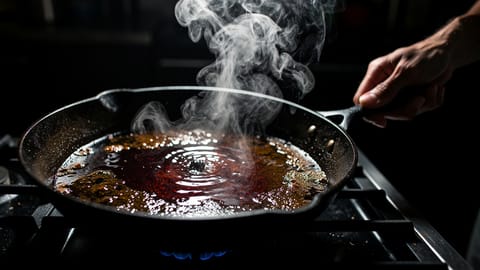
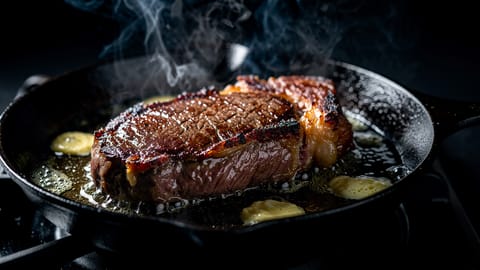
If you've ever deglazed a skillet with wine after searing a steak and let it bubble down into something glossy, you've already made one.
How does reduction work?
When a liquid simmers, water escapes as steam and everything dissolved in it stays behind: sugars, amino acids, gelatin from stock, acids and tannins from wine, aromatic compounds. Volume falls, concentration rises. That is the entire mechanism, and it explains the one rule the technique has. Reduction is done without a lid so the vapor can escape. Cover the pan and the steam condenses on the lid and drips straight back in.
Concentration does more than sharpen the taste. Gelatin from stock-based liquids thickens the sauce into something that coats a spoon, which is how you thicken a sauce without cornstarch or flour. Sugars left behind can reach caramelizing temperatures at the edge of the pan, where the liquid film is thinnest, and that adds color along with a little Maillard character. In wine and spirit reductions, the alcohol goes first and the acid, tannin and fruit stay.
Salt is the part that catches people out. If the liquid was already seasoned when it went in, halving the volume roughly doubles how salty it tastes, and soy sauce, reduced stock and cured-pork fat all push in the same direction. Season at the end, once the volume has stopped moving.
How do you reduce a sauce step by step?
How long does it take to reduce a sauce?
Volume, surface area and heat set the timing. Here's what to expect:
| Reduction type | Starting amount | Target | Time |
|---|---|---|---|
| Pan sauce (wine/stock) | 1 cup / 250 ml | Reduce by half | 5-8 min |
| Balsamic reduction | 1 cup / 250 ml | Reduce by half (syrupy) | 15-20 min |
| Red wine reduction | 1 cup / 250 ml | Reduce by two-thirds | 10-15 min |
| Demi-glace | 1 L stock + espagnole | Reduce by half | 1-2 hours |
| Glace de viande | 2 L stock | Reduce by 90%+ | 4-6 hours |
Those are estimates for a 25-30 cm pan over medium heat. Widen the pan and the times fall sharply, because a thin film of liquid across a large surface gives up its water fast. Move the same liquid into a tall, narrow saucepan and it can take twice as long. Long stock reductions sit at the other end of the scale entirely: classical sauces are simmered for one to ten hours rather than boiled.
What are the most common types of reduction?
Every reduction below works by the same mechanism. What separates them is how far you take it, and what was in the pan to begin with. A pan sauce loses half its volume in minutes and stays pourable. Demi-glace runs for hours. Glace de viande keeps going until the stock sets solid when it cools. Sweet-sour reductions behave differently again: sugar rather than gelatin does the thickening, so they set harder on cooling and they burn far more readily.
Pan sauce
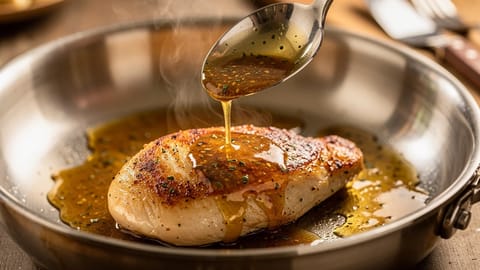
The everyday one. After searing meat or fish, take the protein out and deglaze the hot pan with wine or stock, scraping the browned bits loose. Reduce by about half, then swirl in a knob of cold butter off the heat. The butter emulsifies into the reduced liquid and turns it glossy. Under 10 minutes, start to finish. The pan sauce guide walks through it properly.
Balsamic reduction
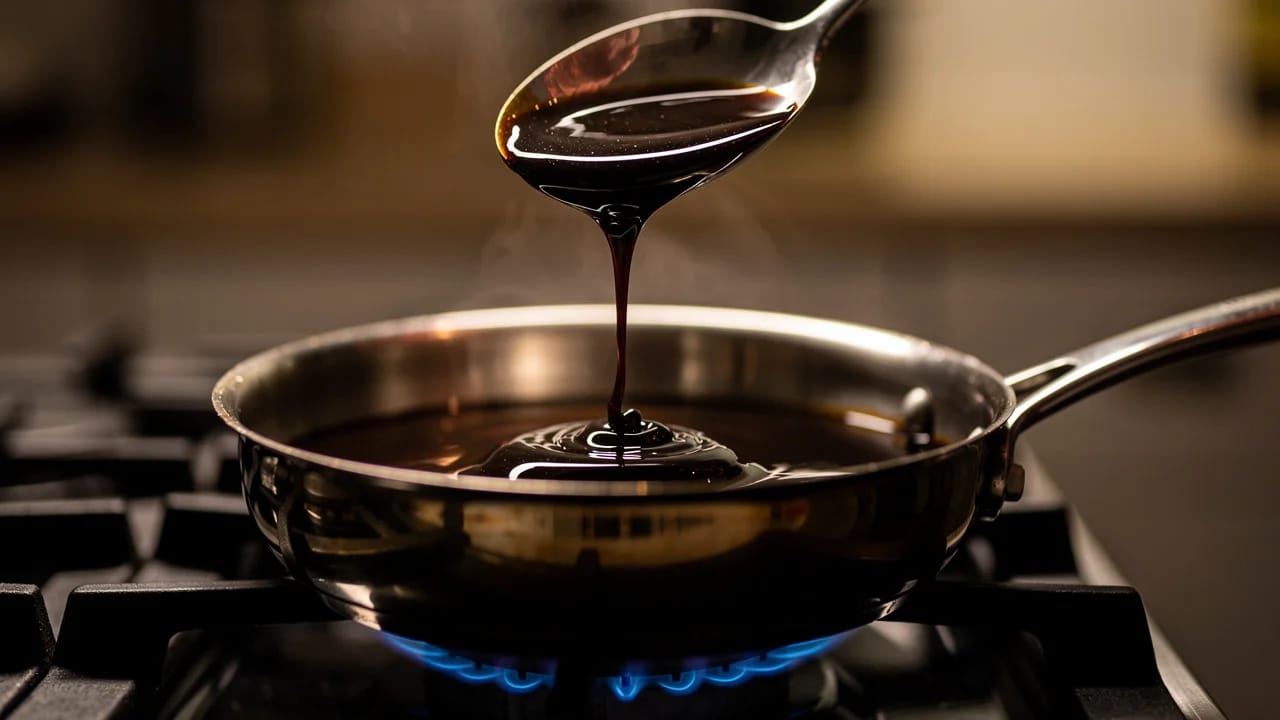
Balsamic vinegar simmered over medium-low heat until it halves and turns syrupy. The sharp acidity softens and the natural sugars concentrate into a thick, sweet-tart glaze for grilled vegetables, strawberries or a caprese salad. Watch the last few minutes. Balsamic goes from syrupy to burnt in well under a minute, and the smell arrives after the damage.
Wine reduction
Red or white wine taken down by roughly two-thirds. Alcohol evaporates first, then water. What's left is concentrated fruit, acidity and tannin without the boozy edge, which is why wine reductions sit under so many French mother sauces and their offspring, from bordelaise to beurre blanc.
Gastrique
Sugar caramelized in a dry pan, deglazed with vinegar, then reduced to a loose syrup. It's the sweet-sour base of duck à l'orange and a lot of fruit sauces, and it sits alongside pan sauces and gravies in the standard list of reduction preparations. Because sugar is doing the thickening here, a gastrique firms up noticeably as it cools. Pull it while it still looks slightly too thin.
Demi-glace and glace de viande
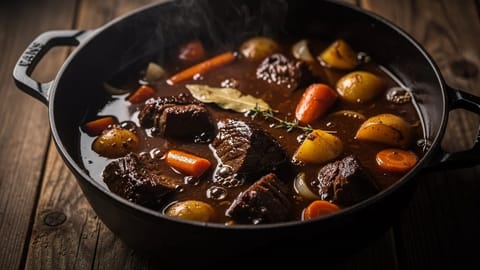
The deep end of classical French sauce work. Demi-glace is one part espagnole sauce to one part brown stock, reduced by half and strained. Glace de viande goes further: stock reduced by 90% or more, down to a thick, syrupy paste that sets firm and rubbery once chilled. A teaspoon of it stirred into a plain pan sauce gives that sauce a restaurant's depth. Both take hours and both keep for months in the freezer, which is the whole argument for making them in one big batch.
Reducing au sec
Au sec means "until dry". You reduce a liquid, usually wine or vinegar with shallots, until almost no moisture is left and only a concentrated paste sits in the pan. It's the standard first move in beurre blanc and other butter emulsions, and the acid left behind helps hold the emulsion together.
How do you fix a sauce that won't reduce?
Nine times out of ten it's the pan. A tall, narrow pot gives the steam a small opening and a lot of wall to condense against. Pour the same liquid into your widest skillet and it moves. The other likely cause is heat too low to hold a steady simmer: if the surface is barely twitching, no meaningful amount of water is leaving.
Widen the pan before you touch the burner. Doubling the surface area does more for the clock than turning the heat up, and it doesn't risk scorching the sugars on the base. If you're already in a wide pan, skim the fat off the top; a fat layer sits over the water and slows evaporation.
Add liquid back a spoonful at a time, off the heat, and stir it in before you judge. Stock or water for a savory sauce, cream for a cream sauce, wine only if you'll simmer it again long enough to cook the raw edge off. This works cleanly until the sauce has started to catch, at which point the bitterness comes back with the water.
Salt doesn't evaporate, so there is no way to take it back out. Dilute with unsalted stock or water, then reduce again to the body you wanted, and accept a slightly longer cook. A squeeze of acid or a knob of butter makes saltiness read less sharply, but it masks rather than fixes.
The heat was too high. Cream reductions need a bare simmer, because the fat separates from the proteins once you push past it. Take the pan off the heat and whisk in a spoonful of cold cream or cold butter; that rescues a sauce caught early. One that has fully broken and browned is a rebuild, not a repair.
How do you tell when a reduction is done?
Dip a wooden spoon in and lift it out. If the sauce clings in an even layer rather than running off like water, it has body. Draw a line with your finger across the back. If the line holds for a few seconds, you're there.
Measure it. If you started with 500 ml and the recipe says reduce by half, pour the sauce into a measuring cup to check. Or mark the starting level on a wooden spoon handle before you begin.
Large, lazy bubbles mean plenty of water remains. Small, tight bubbles mean concentration is increasing. This is a reliable visual indicator.
Pull it off the heat immediately. You've passed au sec and you're heading toward scorched. You can rescue it by adding a splash of stock or water, but act fast.
What are the most common reduction mistakes?
Reduction in Fond
Fond hasn't launched yet. This is how it will work at launch. Join the waitlist for early access.
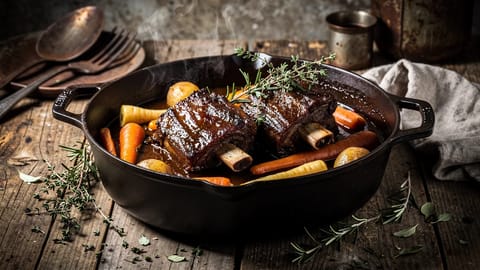
Fond's recipe timers track the reduction while you get on with the rest of the plate. Set the timer for the expected duration, check the pan as it counts down, and taste before the alarm rather than after. Recipe scaling adjusts the liquid volumes when you cook for a bigger table, which matters here because doubling a sauce does not double its reduction time. Reductions also pair naturally with braised meats, where the braising liquid becomes the sauce once the meat comes out.