 Bastien
Roux
A roux is a cooked mixture of equal parts fat and flour by weight used to thicken sauces, soups, and gravies. Three types (white, blond, brown) differ by cook time, from 2 to 45 minutes, and trade thickening power for flavor as they darken.
A roux (pronounced "roo") is a cooked mixture of equal parts fat and flour by weight, cooked together before adding liquid to thicken sauces, soups, and gravies. Three types, white (2-3 min), blond (4-5 min), and brown (15-45 min), differ by cook time and produce different flavors and thickening power.
Dumping raw flour straight into simmering stock is the classic way to get a lumpy, pasty sauce that tastes like wallpaper glue. Cooking the flour in fat first is what fixes it. The sauce comes together smooth, with no raw flour taste, every time.
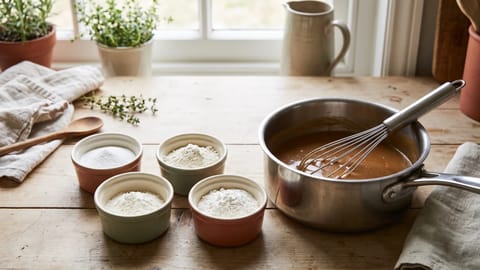
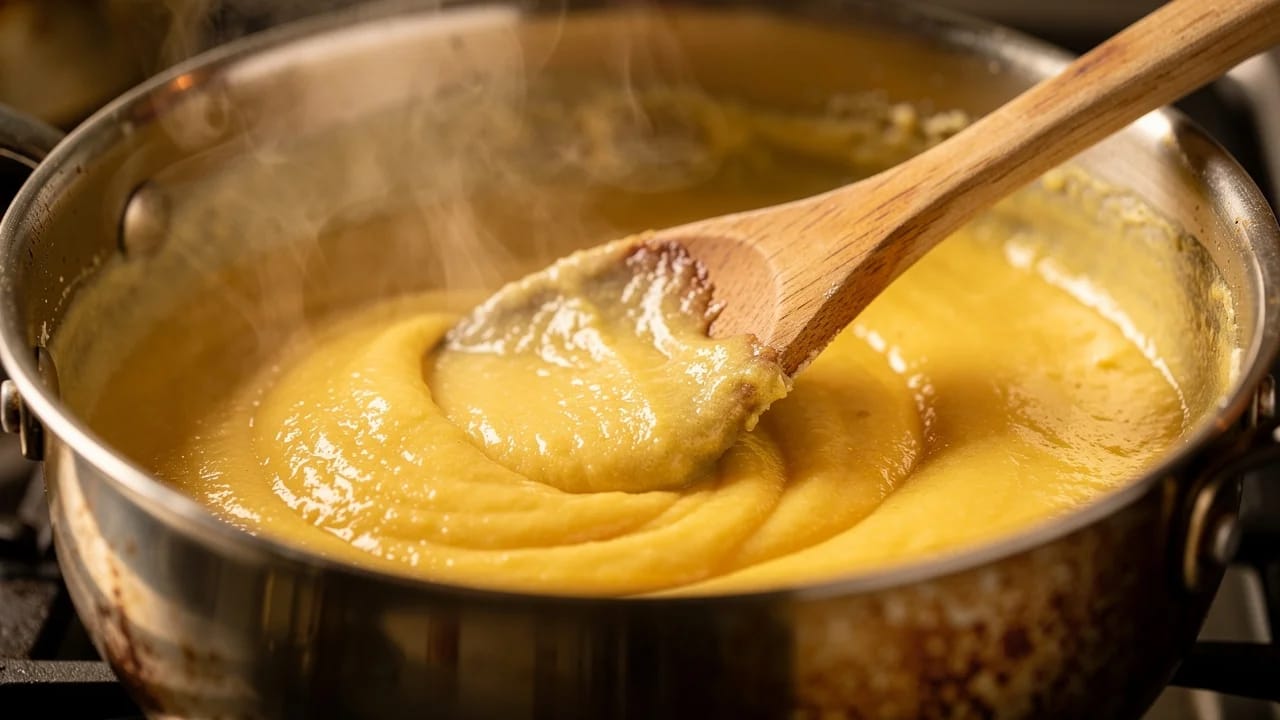
In a roux, you melt the fat, stir in the flour, and cook the paste for anywhere from 2 minutes to 45 minutes depending on the color and flavor you want. Then you add liquid gradually, whisking as you go. The starch in the flour absorbs the liquid and thickens it into a sauce, soup, or gravy.
What are the three types of roux?
The difference between white, blond, and brown roux is simply cook time. Longer cooking means more flavor from the Maillard reaction, but less thickening power because heat breaks down the starch molecules.
White roux cooks just long enough to remove the raw flour taste. It's what you use for béchamel and other mother sauces where you want thickening without color or competing flavor. Mac and cheese, cream soups, and white gravy all start here.
Blond roux goes a few minutes longer until it turns the color of wet sand and smells like toasting nuts. Velouté sauces use a blond roux with stock. It adds a subtle depth without overpowering the main ingredient.
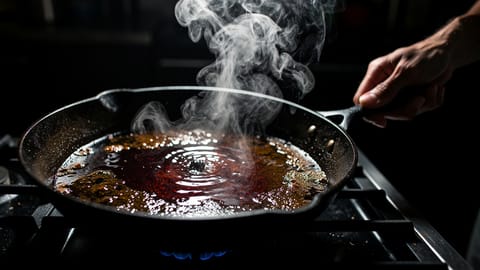
Brown roux is a Cajun and Creole specialty. You stir constantly for 15-45 minutes until the paste turns deep amber. Louisiana Cookin' puts a peanut-butter roux at 30 to 35 minutes and a dark brown one at about 45. The flavor is toasty and complex, almost like roasted coffee. It barely thickens at all, so you need roughly twice as much brown roux as white roux for the same consistency. Most cooks use oil here rather than whole butter, since the milk solids in butter would scorch over that long cook; clarified butter is another option because those solids have already been removed. Gumbo depends on it.
How do you make a roux?
Tip: Always add cool or room-temperature liquid to a hot roux, or hot liquid to a cooled roux. The temperature contrast prevents lumps. If you add hot liquid to a hot roux, it can seize up.
A jar of pre-made blond roux is worth keeping in the fridge. When a soup needs thickening or a quick pan sauce comes together after deglazing, a spoonful whisked into the liquid does the job in seconds. It keeps refrigerated for several days and freezes well in portions.
How to make a roux for mac and cheese, gumbo, and gravy
The method never changes. What changes is how far you cook it and what you add afterward.
Roux for mac and cheese
Cheese sauce wants full thickening power and no toasted flavor competing with the cheese, so stop at white or pale blond. Melt 3 tablespoons of butter over medium heat, whisk in 3 tablespoons (about 25 g) of flour, and cook for 1 to 2 minutes. Whisk in 500 ml (2 cups) of milk in splashes, simmer until it coats a spoon, then pull the pan off the heat before adding the cheese. Adding cheese to a boiling sauce is what makes it grainy.
Roux for gumbo
Gumbo is where brown roux earns its reputation. Use oil rather than butter, keep the heat at medium-low, and stir without stopping for 30 to 45 minutes until the roux is the color of milk chocolate. If constant stirring is not an option, America's Test Kitchen's oven method toasts the flour and fat in a covered Dutch oven at 350°F (175°C) for about 45 minutes with only occasional stirring. Once the roux is dark, stir in the onion, celery, and bell pepper straight away. The vegetables cool the pot and stop the roux from burning.
Roux for gravy
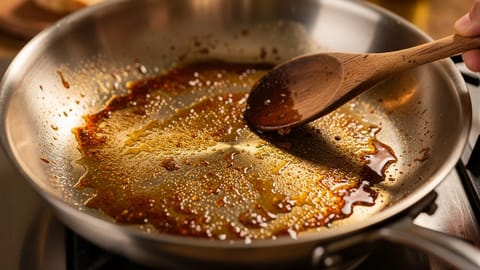
Pan gravy starts with the fat already in the roasting pan. Pour off all but 3 tablespoons of drippings, whisk in 3 tablespoons of flour, and cook to a blond color so the gravy tastes toasty rather than floury. Then whisk in 500 ml (2 cups) of warm stock along with any browned fond scraped from the pan. Simmer for 5 minutes, season, and strain if you want it glossy.
Why does a roux work to thicken liquids?
Flour contains starch granules. When you cook flour in fat, you coat those granules individually, which is why the sauce stays smooth instead of clumping. As the starch heats in liquid, the granules absorb water and swell (a process called gelatinization), thickening the sauce.
The fat also prevents the starch from hydrating too quickly, which would cause lumps. That's the whole reason you cook the flour in fat first rather than adding it directly to liquid.
The longer you cook a roux, the more the starch molecules break down. That's why a brown roux thickens less. America's Test Kitchen measured it with a viscometer: compared with a white roux cooked for one minute, a blond roux lost 14 percent of its thickening power and a peanut-butter-colored one lost 26 percent. You're trading thickening power for flavor, which is a fair trade when you're making gumbo.
What are the most common roux problems?
You added too much liquid at once. Next time, add it in small splashes while whisking vigorously. If you already have lumps, strain the sauce through a fine mesh sieve or blend it with an immersion blender.
The heat was too high. Brown roux needs medium to medium-low heat and constant stirring. Once burned, the flavor is bitter and can't be fixed. Start over with fresh fat and flour.
Either you didn't use enough roux, or you're using a brown roux that has reduced thickening power. Add a slurry of 1 tablespoon flour whisked into 2 tablespoons cold water, then simmer for a few more minutes. Or make a small additional white roux and whisk it in. Cornstarch or another starch works too; the cornstarch substitutes guide gives the amounts for each.
The roux wasn't cooked long enough before adding liquid, or the sauce hasn't simmered long enough after. Simmer for at least 10 more minutes. A white roux needs a minimum of 2 minutes of cooking before any liquid goes in.
A roux is one of the first techniques worth learning in the kitchen. Escoffier opened the sauce chapter of his Guide to Modern Cookery with the three roux for a reason. Once you can make one without thinking, you can thicken any sauce, build a fond-based gravy, or pull together a cream soup from whatever's in the fridge. It's a small skill that unlocks a lot of cooking.