 Bastien
Proofing
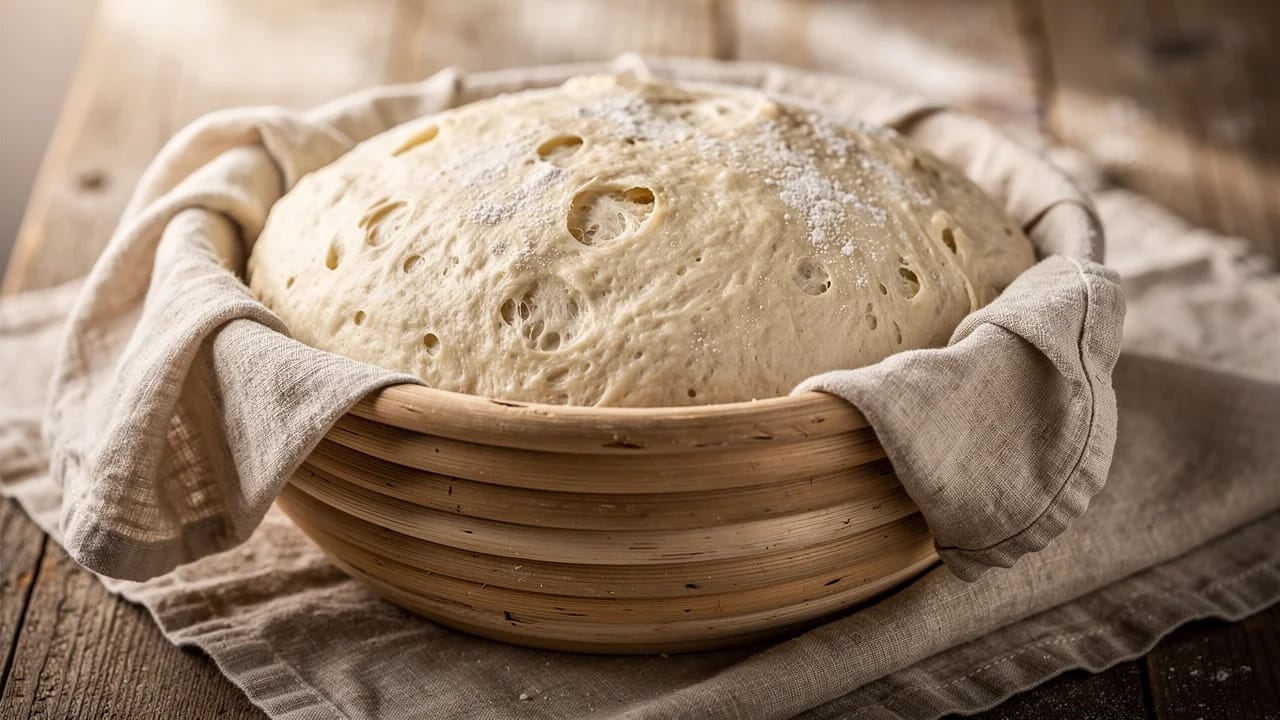
The final rise of bread dough after shaping, where the shaped loaf expands with gas before baking.
Proofing (also called the final proof, second rise, or simply "proof") is the last rise of bread dough after it has been shaped into its final form — a loaf, a boule, a baguette, or a dough ball. During proofing, the yeast continues to produce carbon dioxide, inflating the shaped dough so it bakes into a light, airy loaf instead of a dense brick.
Proofing is the step where your bread gets its final volume. Everything you did during mixing, gluten development, and bulk fermentation was preparation for this moment. The dough already has flavor and structure — now it needs to expand one last time before hitting the oven.
Proofing vs bulk fermentation
These two terms get mixed up constantly, so here is the difference:
| Bulk fermentation | Proofing | |
|---|---|---|
| When | After mixing, before shaping | After shaping, before baking |
| Dough state | One large mass | Individual shaped pieces |
| Purpose | Build flavor, develop gluten, create gas | Expand shaped dough to final volume |
| Duration | 1-12+ hours depending on method | 30 min to 4 hours (or overnight in the fridge) |
| Handling | Stretch and folds, degassing | Leave the dough alone |
Think of it this way: bulk fermentation builds the foundation. Proofing inflates the finished structure. You can have a perfect bulk and still ruin your bread by proofing incorrectly.
Ideal temperature and timing
Proofing speed depends almost entirely on temperature and the amount of yeast or starter activity in the dough:
| Dough type | Temperature | Typical proof time | Volume increase |
|---|---|---|---|
| Commercial yeast, standard | 24-27°C (75-80°F) | 45-90 minutes | 50-80% |
| Enriched dough (brioche, challah) | 26-29°C (78-84°F) | 1-2 hours | 75-100% |
| Sourdough, room temperature | 22-26°C (72-78°F) | 2-4 hours | 50-75% |
| Sourdough, cold proof | 3-5°C (38-41°F) | 8-16 hours | 30-50% |
| Pizza dough balls | 18-22°C (65-72°F) | 4-8 hours | 50-75% |
Warmer temperatures speed things up, but there is a ceiling. Above 30°C (86°F), yeast becomes stressed, off-flavors develop, and the dough can over-proof quickly. The sweet spot for most bread is 24-27°C (75-80°F).
If your kitchen is cold in winter, turn on your oven light and place the dough inside the closed oven. The light alone raises the temperature to about 27-29°C (80-84°F) — a perfect proofing environment. Some bakers place a pan of hot water on a lower rack to add humidity, which keeps the dough surface from drying out.
The poke test
The poke test is the most reliable way to check if your dough is proofed and ready for the oven. Lightly flour your fingertip and press about 1 cm into the surface of the dough:
- Dough springs back immediately and fully — under-proofed. The yeast has more work to do. Give it more time.
- Dough springs back slowly and leaves a small indent — properly proofed. This is your window. Get it in the oven.
- Dough barely springs back or the indent stays — over-proofed. The gluten is exhausted and cannot hold much more gas.
The poke test works because it measures the tension in the gluten network. Early in proofing, the gluten is tight and elastic — it pushes back. As fermentation continues, the gluten relaxes and stretches. At peak proof, it has just enough tension to spring back partially. Past that point, the gluten has stretched too thin and starts to break down.
Practice the poke test on every bake. After a few loaves, you will develop a feel for the right amount of spring-back.
Over-proofing vs under-proofing
Getting the proof right is one of the harder skills in bread baking. Here is what happens at each extreme:
Signs of under-proofing
- The shaped dough looks tight and has not grown much
- Poke test: springs back fast and fully
- After baking: dense, tight crumb with uneven holes
- The loaf may burst open along the sides or bottom (a blowout) because the trapped gas expands too aggressively in the oven
- Thick, chewy crust
Signs of over-proofing
- The dough looks puffy and fragile, may be starting to sag
- Poke test: the indent stays and the surface wrinkles
- After baking: flat loaf with poor oven spring
- Pale crust (the yeast consumed too much sugar)
- Gummy or collapsed crumb structure
- Sour or alcoholic smell (especially with sourdough)
Under-proofing is easier to recover from than over-proofing. If your dough is slightly under-proofed, the residual yeast activity during the first minutes of baking (called oven spring) can partially compensate. Over-proofed dough has no gas production left to give — it just deflates in the heat.
If you suspect your dough is over-proofed but has not completely collapsed, you can try gently reshaping it and giving it a shorter second proof. This does not always work, but it is better than baking a pancake.
Cold proofing
Cold proofing (also called retarding) means placing the shaped dough in the fridge at 3-5°C (38-41°F) for an extended proof, typically 8-16 hours overnight. This is one of the best techniques you can adopt for better bread. Here is why:
Flavor development. At fridge temperatures, yeast activity slows down dramatically, but bacterial activity continues at a reduced rate. This means the dough develops more complex flavors — particularly the mild lactic tang in sourdough — without over-fermenting. The result is bread that tastes noticeably better than a room-temperature proof.
Schedule flexibility. Shape your dough in the evening, put it in the fridge, and bake first thing in the morning. No waking up at 4 AM. No watching the dough for hours.
Better scoring and oven spring. Cold dough is firmer and holds its shape better on the way to the oven. Scoring patterns come out cleaner and sharper. The contrast between the cold dough and the hot oven creates more dramatic oven spring, giving you taller loaves with more pronounced ears.
Improved crust. Cold fermentation changes the sugar profile of the dough, leading to better Maillard browning and a deeper, more caramelized crust color.
For cold proofing, place the shaped dough in a banneton or on a tray, cover it tightly with plastic wrap or a shower cap, and put it straight into the fridge. Most sourdough bakers bake directly from the fridge without warming up first — the cold dough goes right into a preheated Dutch oven.
Proofing different dough types
Lean bread (sourdough, country loaf, baguettes)
Lean doughs proof faster at room temperature because there is nothing slowing the yeast down — no sugar, no fat, no eggs competing for water. Proof at 22-26°C (72-78°F) for 1-4 hours, or cold-proof overnight. Aim for 50-75% volume increase. Lean doughs are less forgiving of over-proofing because the gluten network has no fat to help it stay flexible.
Enriched dough (brioche, challah, cinnamon rolls)
Fat, sugar, and eggs slow down fermentation significantly. Butter coats gluten strands and yeast cells, reducing gas production. These doughs need warmer temperatures (26-29°C / 78-84°F) and longer proof times (1-2 hours or more). They are more forgiving of slight over-proofing because the fat keeps the crumb tender even if structure weakens.
Pizza dough
Pizza dough balls are typically proofed at room temperature for several hours after cold fermentation. The goal is a soft, extensible dough that stretches easily without snapping back. A well-proofed pizza dough feels pillowy and full of air when you press it. The pizza dough calculator provides proofing schedules tailored to each pizza style and your kitchen temperature.
Sandwich and pan bread
Proof in the loaf pan until the dough rises about 2-3 cm above the rim. This usually takes 60-90 minutes at room temperature. Pan breads are easier to judge because you have the rim as a reference point.
Proofing containers and tools
- Banneton (proofing basket): a rattan or wood-pulp basket that supports round or oval loaves during proofing and creates flour rings on the crust. Dust generously with rice flour to prevent sticking.
- Couche (linen cloth): used for baguettes and batards. The folds of the cloth support the dough on both sides, preventing it from spreading flat.
- Proofing box: a temperature-controlled enclosure. Great if you bake often, but the oven-light trick works fine for most home bakers.
- Plastic wrap or damp towel: cover the dough during proofing to prevent a dry skin from forming. A skin on the surface restricts expansion and causes splitting.
Common proofing problems
| Problem | Likely cause | Fix |
|---|---|---|
| Dough spreads flat instead of rising up | Over-proofed, or weak shaping | Shorten proof time; practice tighter shaping |
| Skin forms on top | Not covered, dry environment | Cover with plastic or damp cloth; add humidity |
| Dough sticks to banneton | Not enough flour, or wet dough surface | Use rice flour; dust more generously |
| Blowout during baking | Under-proofed | Extend proof time until poke test passes |
| No oven spring | Over-proofed | Reduce proof time or lower proof temperature |
| Uneven rise | Uneven shaping or drafty spot | Shape more evenly; proof away from drafts |
Proofing in Fond
Fond's Bread Studio includes a proofing timer that adjusts based on your dough type, kitchen temperature, and whether you are doing a room-temperature or cold proof. The app sends a notification when your dough is approaching the end of its proof window, so you can perform the poke test and decide when to fire up the oven. For recipes that benefit from overnight cold proofing, the schedule view shows exactly when to shape, refrigerate, and bake.
Frequently asked questions
Can I proof dough at room temperature overnight?
Only if your kitchen is very cold (below 15°C / 59°F) and you use a small amount of yeast. Otherwise, the dough will over-proof. For overnight proofing, use the fridge — it is far more reliable and produces better-tasting bread.
How do I know if my bread is under-proofed after baking?
Look at the crumb. Under-proofed bread has a dense, gummy center with a ring of larger holes near the crust. It may also have a large cavity just under the top crust. The bottom crust is often thicker and harder than expected.
Does proofing time change with altitude?
Yes. At higher altitudes (above 1,500m / 5,000 ft), lower air pressure means gas expands faster. Dough proofs quicker and over-proofing is more likely. Reduce yeast by 15-25% and watch the dough closely.
Should I proof seam-side up or seam-side down?
In a banneton, place the dough seam-side up. When you flip it out for baking, the seam is on the bottom and the smooth side faces up for scoring. On a baking sheet without a basket, place the dough seam-side down so the weight of the dough holds the seam closed.
Cook smarter
Join the waitlist for Fond. Recipes, meal plans, and a little AI sous-chef that learns how you cook.
Related terms
Bulk Fermentation
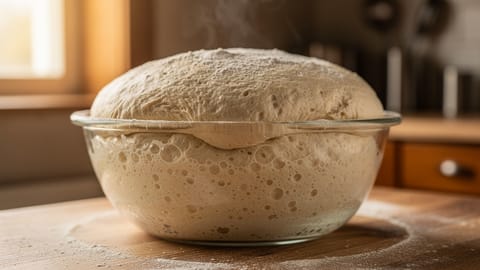
The primary rise of bread dough after mixing, where yeast or starter ferments the dough as a single mass before shaping.
Cold Fermentation
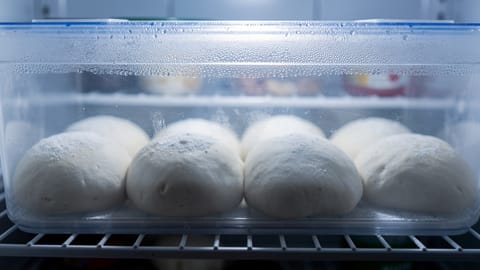
A technique of retarding dough in the refrigerator (2-5°C) for 24-72 hours, slowing yeast activity while allowing enzymes to develop deeper flavors and better texture.

Fermentation
A metabolic process where microorganisms convert sugars into acids, gases, or alcohol — the basis of bread, yogurt, kimchi, and beer.
Yeast Types
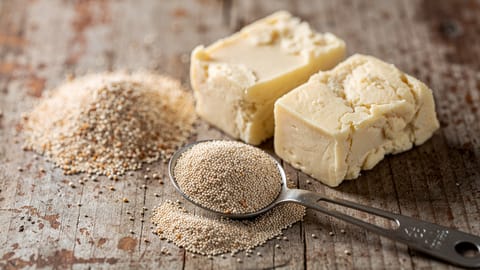
The three main bread yeasts — active dry, instant, and fresh — differ in how they're processed and used, but can be converted between each other.
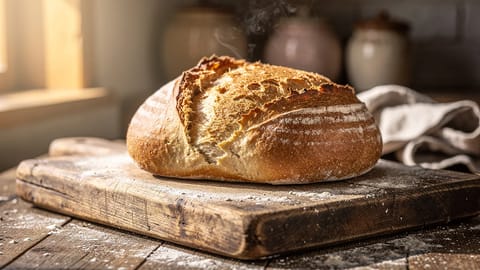
Bread baking for beginners: your first loaf, start to finish
A complete walkthrough for baking your first loaf of bread at home. Covers the four core ingredients, kneading by hand or mixer, proofing, shaping, and baking, with temperatures, times, and troubleshooting for every step.