 Bastien
Pizza dough ball weight and size chart
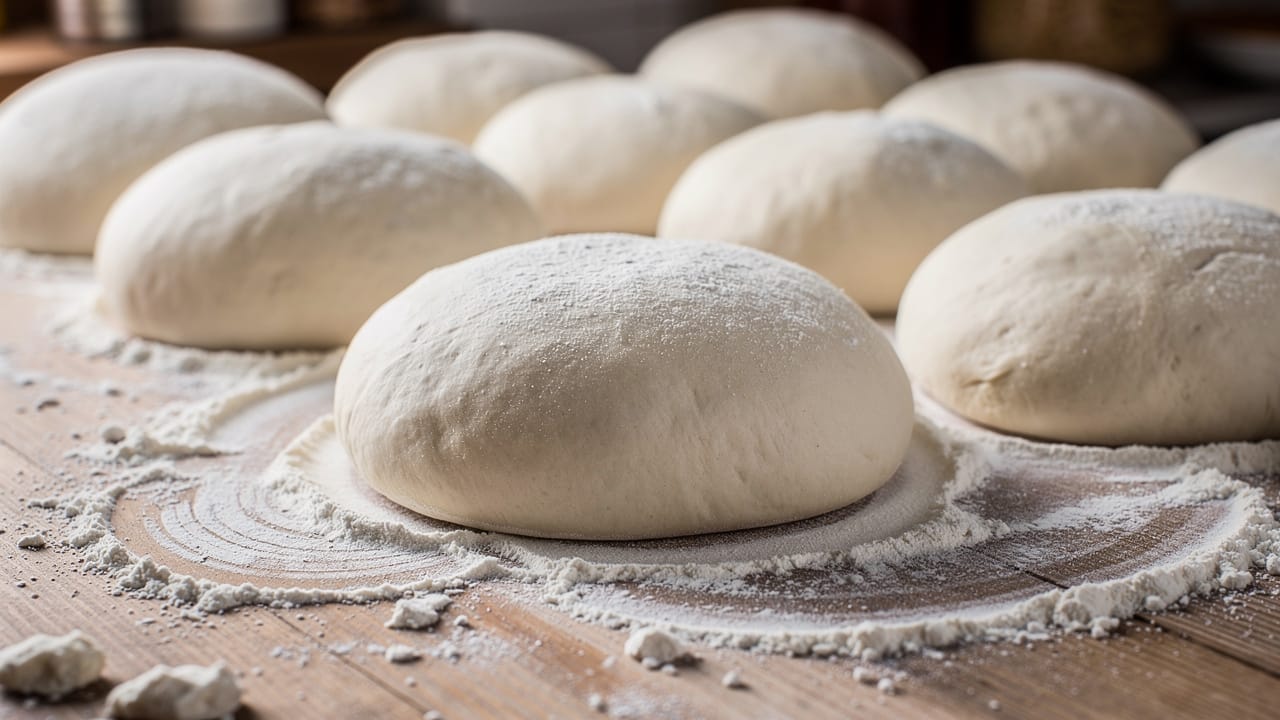
A dough ball is an individual portion of pizza dough shaped into a smooth sphere after bulk fermentation. Each one becomes a single pizza, at roughly 200-250g for Neapolitan, 280-350g for New York, and 400-600g for Detroit or Sicilian styles.
A pizza dough ball (Italian: panetto) is the individual portion of dough that becomes a single pizza, usually weighing 200-600g depending on the style. After bulk fermentation, the dough is divided by weight, shaped into smooth, taut spheres, and given a final proof before stretching and baking.
Shaping is the part that pays off later. A taut ball opens under your hands with even resistance and keeps a raised rim; a slack one spreads, tears at the thin spots, and bakes into a flat edge.
What weight should a pizza dough ball be?
The dough ball weight sets both the diameter and the thickness of the finished pizza. Choose based on your target style:
For Neapolitan, those numbers come straight from the AVPN specification, which puts the balls between 200 and 280g and the baked pizza between 22 and 35cm.
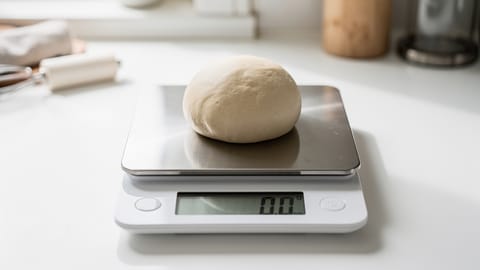
Use a kitchen scale for every divide. Eyeballing creates uneven pizzas, and the unevenness shows up as one pizza that bakes through while the next is still pale.
What size dough ball for a 12 inch pizza?
For a Neapolitan-style base at around 65% hydration, start here and adjust once you have baked a couple:
The relationship is close to linear across this range: about 50g more dough buys you 3-4cm (roughly an inch and a half) of diameter. Treat the column as a starting point rather than a formula. It assumes a Neapolitan-style base with a puffed rim; a thin, foldable New York base at the same diameter usually lands a little lower, and pan styles like Detroit or Sicilian are sized by the pan's volume, not by diameter at all.
You can work the same numbers from baker's percentages. Fond's Pizza Workshop does it automatically, and the pizza dough calculator will give you ball weights and a full ingredient list for any style.
When do you divide dough into balls?
Divide after the bulk rise, once the whole mass has fermented. The AVPN method for Neapolitan runs in that fixed order: mix, rest the whole mass under a damp cloth, cut and ball it (staglio), then let the balls take a second rise in covered food boxes. Total leavening in that method is 8 to 24 hours, split between the two stages according to the room's temperature and humidity.
Two schedules cover most home baking:
- Bulk warm, then ball, then chill. Let the whole mass ferment on the counter, divide and ball, then move the balls to the fridge for a cold proof. Temper them before stretching.
- Bulk cold, then ball on baking day. Keep the mass in the fridge overnight, divide and ball a few hours before dinner, then give the balls a short room-temperature proof.
The first schedule gives the balls more time to relax and takes more fridge space. The second frees up space and moves the flexible part of the timing to baking day. Neither is the "correct" one, so pick whichever fits the fridge you actually have.
How do you shape a pizza dough ball?
Shaping (also called balling or rounding) creates the smooth, taut surface that makes stretching possible. A well-shaped ball stretches evenly; a poorly shaped one tears or stretches unevenly.
Cut decisively in one stroke. Sawing back and forth tears the gluten network.
Surface tension
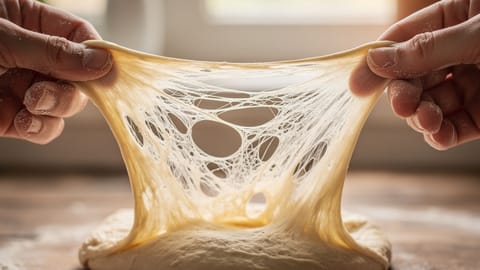
Surface tension is the key concept. The outer skin of the dough ball should be smooth and tight, like a drum. This tension holds the ball's shape during proofing, creates resistance that allows controlled stretching, prevents the dough from spreading into a flat disc, and helps form the cornicione during baking.
If the ball is not taut enough, it will spread flat during proofing. Too tight, and it will be hard to stretch and may spring back. Four to six rotations on a barely tacky surface is a reliable starting point for most doughs; wetter dough usually needs fewer, firmer ones.
Ball proof (final proof)
After shaping, dough balls undergo a final proof, the last fermentation stage before stretching and baking. Yeast continues to produce gas while the gluten relaxes, making the dough extensible enough to stretch into a pizza.
Proofing schedules
| Method | Temperature | Duration | Best for |
|---|---|---|---|
| Room temp, quick | 24-26°C / 75-79°F | 1-2 hours | Same-day pizza, commercial yeast |
| Room temp, long | 20-22°C / 68-72°F | 3-6 hours | Better flavor, moderate planning |
| Cold proof | 3-5°C / 37-41°F | 24-48 hours | Best flavor, weekend baking |
| Cold proof, extended | 3-5°C / 37-41°F | 48-72 hours | Maximum flavor complexity |
| Cold then room temp | Fridge then counter | Cold time + 1-2 hours at RT | Flexibility |
For cold-proofed balls, bring them to room temperature for 1-2 hours before stretching. Cold dough is tight and will resist stretching.
Signs the ball proof is done
- Puffy and light: the ball has visibly expanded and feels airy when lifted
- Poke test: press a floured finger gently into the ball. If the indent springs back slowly and mostly fills in, the ball is ready. If it springs back fast, it needs more time. If it does not spring back at all, it is over-proofed.
- Jiggly: the ball wobbles when you gently shake the container
- Slightly spread: the ball has relaxed and widened slightly from its original tight shape
Under-proofed. Give it more time at room temperature. The dough needs the gluten to relax before it will stretch without fighting you.
Over-proofed or under-shaped. If it happened fast (under 2 hours at room temp), the shaping was too loose. If it took many hours, reduce the proof time or use cold fermentation for a wider window.
Over-proofed. The gluten network has broken down. You can try to gently reshape and give it 20 minutes of rest, but the result won't be as good. Next time, shorten the proof.
Container was not airtight. The exposed surface dried out and won't stretch properly. Peel off the dry skin if possible, or fold it back into the ball and rest 15 minutes. Cover with a lid, plastic wrap, or a damp towel.
Storage and containers
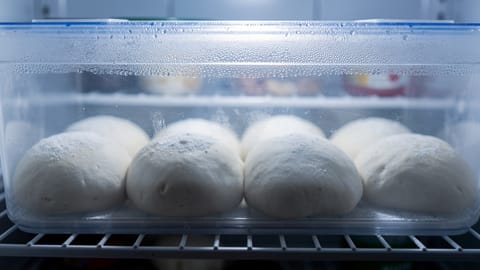
A shaped ball keeps fermenting until it reaches the oven, so the container has two jobs: hold the ball's shape and stop its surface drying out. Pizzerias working to the AVPN standard use lidded food-grade boxes, and that is still the setup worth copying at home. Whatever you use needs a lid or a tight cover, enough headroom for the ball to roughly double, and a base the ball will release from cleanly.
Container options
| Container | Pros | Cons | Best for |
|---|---|---|---|
| Individual deli containers (500ml) | Each ball separate, stackable, easy to grab | Need many containers | Cold fermentation, small batches |
| Proofing tray with lid | Fits multiple balls, professional | Balls can touch if too close | Pizzeria-style, large batches |
| Sheet pan with plastic wrap | Cheap, readily available | Wrap can stick | Room temp proof |
| Oiled bowl with cover | Works in a pinch | Hard to remove without deflating | Emergency only |
Preventing sticking
- Oil: lightly coat containers with olive oil. The ball slides out cleanly, and this holds up better than flour over a long cold proof, where flour tends to dry into a crust.
- Flour: dust the tray or container. Fine for short room-temperature proofs of a few hours.
- Semolina: coarser than flour, prevents sticking without absorbing into the dough as much.
Spacing and stacking
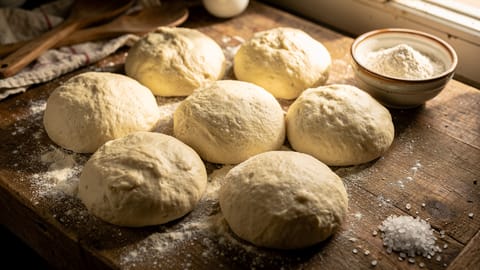
Leave at least 5cm between balls on a tray. During proofing they spread, and touching balls fuse together and cannot be separated without tearing.
Stack containers rather than balls. Lidded deli tubs and proofing boxes are designed to take the weight of the one above; a tray with only cling film on top is not, and anything resting on it will press the balls flat. Leave the top of each ball clear.
Fridge and freezer storage
Cold slows the yeast down, which is what makes a 24-72 hour cold proof possible in the first place. It also buys scheduling room: balls made on Friday can bake on Sunday. Keep them airtight the whole time, because fridge air is dry and a skin forms fast on an uncovered ball.
For longer storage, freeze the balls individually, each one sealed or tightly wrapped so no surface is exposed. Thaw in the fridge, then temper at room temperature for 1-2 hours before stretching. Expect a slightly denser result, since freezing costs the dough some of its rise.
Label containers with the date, time, weight, and recipe. Two batches at different hydrations look identical through a plastic lid.
Best practices
Dough balls in Fond
Fond hasn't launched yet. This is how it will work at launch. Join the waitlist for early access.
Fond's Pizza Workshop makes dough ball management simple. Set the number of pizzas and the ball weight, and all ingredient amounts calculate automatically using baker's percentages. The app suggests proofing schedules based on your recipe and kitchen temperature, sends proofing reminders, and tells you when to pull balls from the fridge for tempering. All quantities adjust when you change the batch size via recipe scaling.