 Bastien
Types of Salt for Cooking: How to Choose the Right One
The useful differences between cooking salts come from crystal structure, additives, and intended use. Learn which salts suit daily cooking, finishing, baking, and pickling.
TL;DR: Choose cooking salt by crystal size and task, not by a claim that one variety is universally better. Fine salt disperses easily. Coarse salt is convenient to pinch. Flaky salt adds texture at the table. For an exact formula, use the salt named by the recipe or measure the specified weight.
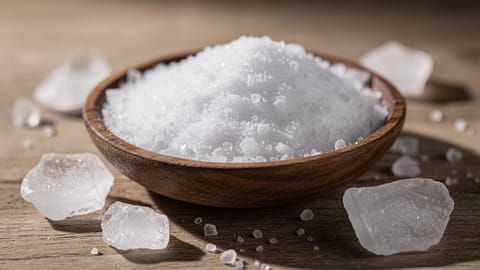
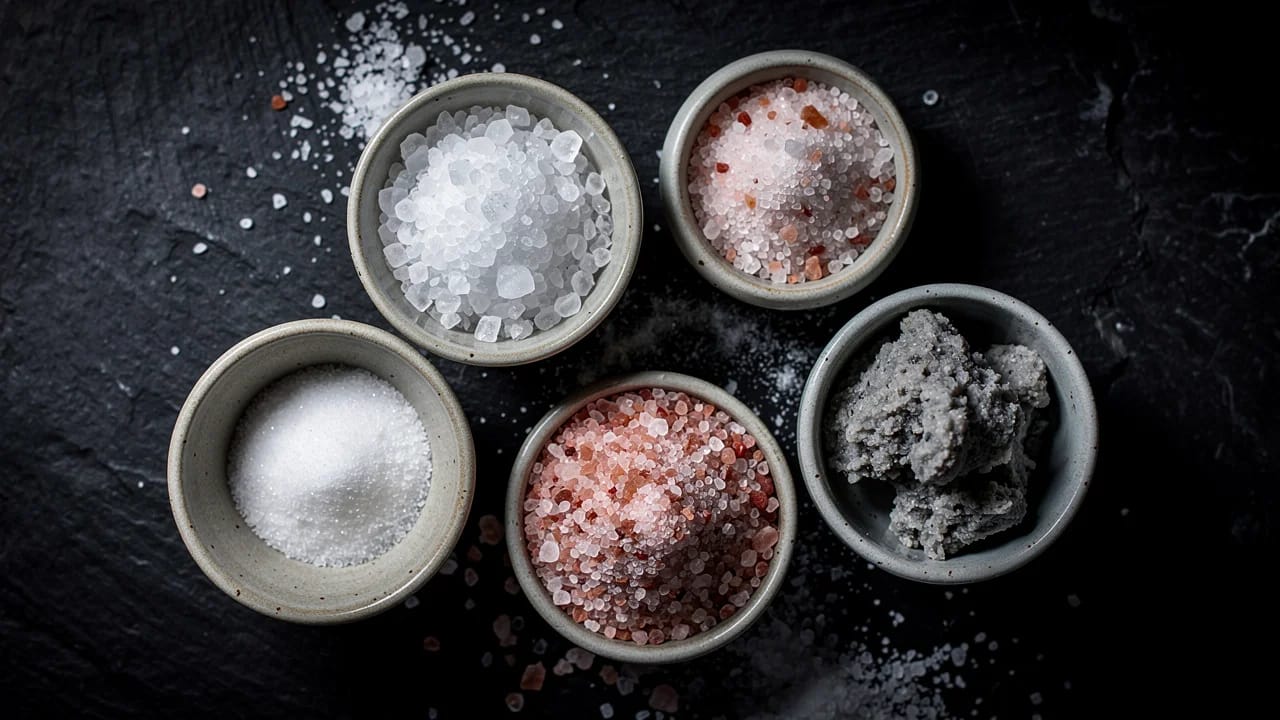
The many types of salt for cooking are mostly variations on the same ingredient: sodium chloride. What changes in the kitchen is the crystal. Fine grains pack tightly into a measuring spoon, while large flakes leave more air between them. That is why equal spoonfuls can deliver different amounts of salt.
Origin can affect moisture, color, and trace-mineral content, but it does not turn a specialty salt into a nutritional shortcut. The practical questions are simpler: How will you measure it? Does it need to dissolve? Should the crystals remain visible?
Why crystal size changes the result
A gram of one ordinary sodium-chloride salt is broadly comparable to a gram of another. A teaspoon is different. Small crystals settle into a compact layer; broad flakes occupy more space for the same weight.
The product labels show the issue. Morton lists 1.2 g for a quarter teaspoon of its coarse kosher salt. Diamond Crystal describes its kosher product as having 53% less sodium by volume than table salt because of its hollow crystal structure. Those figures apply to the named products. They are not a conversion law for every salt sold as kosher, coarse, or flaky.
This leads to a safer conversion method:
- Check whether the recipe names a salt or brand.
- Use that product when the quantity is important.
- If the recipe supplies grams, follow the weight.
- If it gives only volume and your salt differs, begin below the stated volume and adjust when tasting is safe.
For bread, brines, or preservation recipes, do not improvise a ratio when the salt quantity affects the formula. Follow the recipe's tested measurement.
Table salt and iodized salt
Table salt has small, regular crystals. It dissolves readily and disperses through batters, doughs, soups, and sauces. Its density also makes a spoonful heavier than many flake salts, so a direct volume swap can oversalt a recipe written for a lighter crystal.
Some table salt contains iodine and an anti-caking agent. Iodized salt is not an inferior cooking salt. The NIH iodine fact sheet identifies iodized salt as a dietary iodine source and notes that specialty salts such as kosher salt, Himalayan salt, and fleur de sel are not usually iodized. Check the package instead of guessing from the salt's color or origin.
The old advice to avoid iodized salt in all bread is too broad. Fine iodized table salt can be used in baking. What matters to the formula is using the quantity the recipe specifies and distributing it evenly. Our bread-baking guide explains where salt fits into the wider dough process.
Kosher salt
Kosher salt is a North American cooking category associated with coarse crystals that are easy to pick up by hand. The name refers to its traditional use in koshering meat, not to one standard crystal or density.
That lack of a density standard matters. Diamond Crystal and Morton have visibly different structures and different label weights per spoon. Neither is automatically the right choice for every cook. Familiarity is more useful than prestige: repeated use teaches you what a pinch of your salt does.
Use kosher salt when a broad crystal helps you distribute seasoning over a surface. If a recipe specifies a brand by volume, use the named brand or look for an accompanying gram amount. Avoid converting from memory across unrelated products.
Fine and coarse sea salt
Sea salt is made by evaporating seawater, but the label alone says little about grain size. Fine sea salt behaves more like table salt. Coarse sea salt may suit a grinder or a recipe designed for visible crystals.
Choose fine sea salt when you need quick, even dispersion. Choose coarse sea salt when the recipe calls for that texture or when the product is intended for grinding. If the grains remain hard in a quick sauce, the salt is too coarse for that moment; grind it first or use a finer product.
For a pan sauce, add a salt that dissolves quickly and taste after the liquid reduces. Reduction concentrates salt already present, so the final adjustment belongs near the end.
Flake salt, Maldon, and fleur de sel
Finishing salts are chosen for texture. Dry pyramid flakes crush easily and create a brief crunch. Fleur de sel is usually moist and irregular. Both can provide distinct crystals on roasted vegetables, eggs, chocolate desserts, or sliced tomatoes.
Add them after cooking or shortly before serving if you want that texture to remain. They are not damaged or made unsafe by heat; they simply dissolve, which removes the feature you paid for. If a finishing salt is all you have, it can still season a soup. It is just difficult to measure by volume with precision.
Himalayan pink salt
Pink salt gets its color from its mineral composition, which varies by product. That visual difference does not make it a low-sodium food or a meaningful mineral supplement.
A laboratory analysis of 31 pink salts sold in Australia found wide variation in mineral content. The researchers concluded that more than 30 g per day would be needed for the salts to make a meaningful contribution to nutrient intake, an amount that would supply excessive sodium. The study was specific to products available in Australia, but it is enough to reject a blanket health claim for all pink salt.
Use fine pink salt as you would another fine cooking salt, after checking the label and learning its density. Use coarse crystals in a suitable grinder. Choose it because you like the appearance or handling, not because the color promises a healthier dose.
Kala namak and other flavored salts
Kala namak has a sulfurous aroma that can evoke cooked egg. It is used in South Asian cooking and can bring that character to fruit, chaat, or plant-based egg dishes. Because its flavor is assertive, add a small amount and adjust to the dish rather than relying on a universal spoon measure.
Smoked salt and seasoned salt are flavor blends as well as sources of sodium. Read the ingredient list. A seasoned product may contain sugar, spices, or anti-caking agents, while a smoke-flavored salt may differ from one exposed to wood smoke. Treat each as its own seasoning, not as a neutral replacement in a baking or preserving formula.
Pickling and fermentation salt
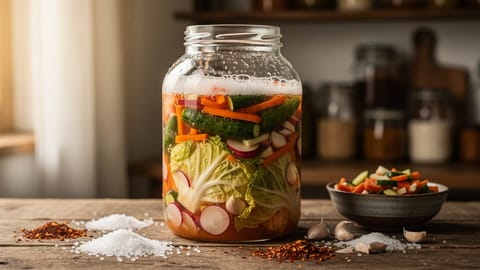
Canning and pickling require stricter instructions than ordinary dinner seasoning. The National Center for Home Food Preservation recommends canning or pickling salt. It states that iodized and non-iodized table salt can both be used safely, although anti-caking material may cloud the brine. It advises against flake salt because its density varies.
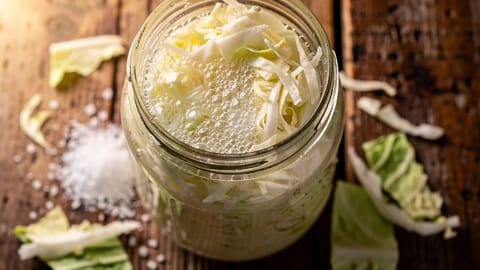
The important rule is to follow a current, tested recipe. In fermented pickles, the salt concentration supports safety and texture: it is what tips the balance toward the lactic acid bacteria that drive fermentation and away from the organisms you do not want. Do not reduce it or replace it with a lower-sodium salt unless the tested method explicitly allows that change.
Which salt should you keep?
You do not need a collection. One familiar cooking salt can handle most meals. Add a second product only when it solves a different problem, such as a fine salt for formula-based baking or a flake salt for texture.
Do not confuse salt choice with total salt intake. The World Health Organization recommends that adults consume less than 5 g of salt per day and advises that salt consumed should be iodized. Individual medical needs can differ, particularly when lower-sodium salts containing potassium are involved, so health-specific substitutions belong with a qualified clinician.
A reliable way to season
For food you can safely taste, add less than you think you need, allow the salt to dissolve, then taste again. For raw meat, dough formulas, or preservation work, use the recipe's measurement instead of tasting.
Salt is only one control in the cooking process. Heat and fat still determine how food browns, which is why the cooking-oil smoke-point guide belongs beside your seasoning knowledge. Learn the behavior of the salt you actually buy, and you will get more consistent results than any universal “best salt” list can promise.
- Match crystal size to the task
- Treat brand-specific spoon weights as product-specific
- Use grams when a tested formula provides them
- Keep finishing salt for texture, not nutritional claims
- Check the label if you want iodized salt
- Follow tested pickling instructions without improvising
Sources
- Sodium reduction - World Health Organization
- Iodine - Consumer - NIH Office of Dietary Supplements
- Salts Used in Pickling - National Center for Home Food Preservation
- An Analysis of the Mineral Composition of Pink Salt Available in Australia
- Morton Coarse Kosher Salt Nutritional Facts
- Diamond Crystal Kosher Salt