 Bastien
Egg substitutes for baking: ratios by recipe
A practical guide to egg substitutes for baking, with starting ratios for flax, applesauce, aquafaba, tofu, and more. Match each option to the egg's role and the type of bake.
You're halfway through a cake recipe and reach for the egg carton. Empty. Or maybe you're baking for a friend with an egg allergy, or you've gone plant-based and need to rethink your brownie recipe from scratch. Whatever the reason, you need egg substitutes for baking that produce good results, not dense bricks or crumbly messes.
Here's the thing most guides skip: the right substitute depends on what the egg was doing in your recipe. Eggs don't just add moisture. They bind, they leaven, they emulsify, and they add structure. Pick the wrong replacement and you'll know it after the first bite.
The ratios below are practical starting points, not universal one-for-one conversions. Results still depend on the recipe, the number of eggs replaced, and whether those eggs supplied structure, lift, moisture, or emulsification. Use the chart to choose a candidate, then test a half batch when the texture matters.
What eggs do in baking
Before picking a substitute, you need to understand what you're replacing. Eggs serve four distinct functions in baked goods, and most recipes rely on more than one.
Binding. Eggs hold ingredients together. The proteins coagulate (solidify) when heated, creating structure that keeps your muffin from falling apart. Without a binder, you get crumbles.
Leavening. Whipped eggs trap air. That air expands in the oven, helping cakes and souffles rise. This is why angel food cake depends on many whipped egg whites.
Moisture. Eggs contribute water as well as fat. Remove them without replacing enough moisture, and the result can become dry or crumbly.
Emulsification. Egg yolks contain lecithin, a natural emulsifier that helps fat and water mix evenly. This is what gives cake batter that smooth, uniform consistency.
Most recipes need eggs for more than one function. A brownie recipe relies on eggs mostly for binding and moisture. A sponge cake relies on their ability to trap air. Knowing which function matters most helps you choose a substitute for that recipe.
The master egg substitute chart
Every ratio below is a starting point for replacing one egg. The N.C. Cooperative Extension guide and King Arthur Baking's comparison support these amounts, but neither source treats them as universal across every recipe. The extension guide also notes that substitutes generally stop working once a recipe calls for more than 3 eggs.
| Substitute | Ratio (per 1 egg) | Best for | Adds flavor? |
|---|---|---|---|
| Flax egg | 1 tbsp ground flax + 3 tbsp water, sit 5 min | Cookies, muffins, pancakes | Mild nutty |
| Chia egg | 1 tbsp chia seeds + 3 tbsp water, sit 5 min | Cookies, muffins, quick breads | Minimal |
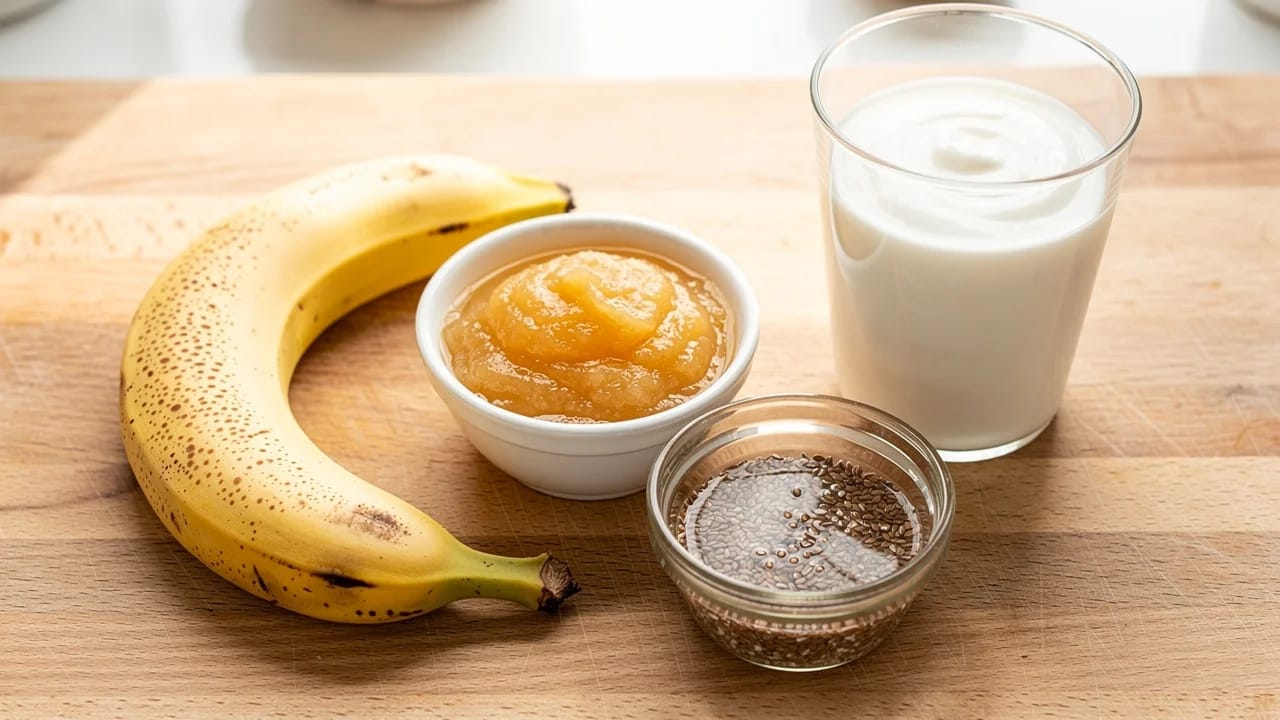
| Applesauce | 1/4 cup (about 60–70g) unsweetened | Cakes, muffins, quick breads | Slight apple |
| Mashed banana | 1/4 cup (half a medium banana) | Banana bread, muffins, pancakes | Strong banana |
| Silken tofu | 1/4 cup (about 50–60g), blended smooth | Dense cakes, quick breads, brownies | Mild |
| Aquafaba | 3 tbsp for 1 whole egg; 2 tbsp for 1 white | Batters, meringues, mousse | May retain a bean note |
| Yogurt | 1/4 cup (about 50–60g) plain | Cakes, muffins, quick breads | Slight tang |
| Commercial replacer | Per package directions | Varies by brand | Varies |
Best egg substitutes for baking by recipe type
The question isn't "what's the best egg substitute?" It's "what's the best egg substitute for what I'm making right now?"
Cakes and cupcakes
Cake recipes use eggs in different ways. A simple snack cake may need moisture and some binding, while a sponge or chiffon cake depends on egg foam for most of its structure.
Applesauce or plain yogurt can replace one egg in a sturdy cake or muffin batter when moisture is the main need. Neither can rebuild the egg structure in a sponge cake.
Flax eggs are not the first choice for airy sponge cakes: they bind well but provide little lift and can make a light batter gummy. They are more forgiving in denser, spiced, or chocolate cakes.
Cookies
Cookies often rely on eggs for binding and moisture. Flax is a useful starting point when binding is the main need.
Mix 1 tablespoon of ground flaxseed with 3 tablespoons of water and let it sit for at least five minutes, until it thickens into a gel. Hot water speeds the thickening, which is how the Illinois Extension and N.C. Extension guides write the flax egg. Chia works at the same starting ratio. Both add binding, but the seeds can remain visible and may change the texture.
For softer, chewier cookies, mashed banana adds moisture, but it also contributes a clear banana flavor. Flax is the more neutral choice for a classic chocolate chip cookie.
Brownies
Brownies use eggs for binding, moisture, and structure. Any substitution will shift that balance.
Silken tofu is a practical option for a dense brownie batter. Blend 1/4 cup until completely smooth before adding it. It supplies moisture and some binding, but King Arthur notes that tofu can make baked goods denser.
Applesauce is another starting option. Because both substitutions change the formula, expect a different crumb rather than an exact copy of the egg-based brownie.
Quick breads and muffins
Quick breads and muffins are relatively forgiving, but the best substitute still depends on whether the recipe needs more binding, moisture, or lift.
Applesauce and yogurt are useful when the batter needs moisture. If the egg mainly contributes lift or structure, use a recipe developed without it. Keep the recipe's existing baking powder unchanged for the first test.
Bread
Egg substitutes for bread depend on the dough. Enriched breads such as brioche and challah rely on eggs for more than binding, so use a recipe developed without eggs instead of making a direct swap.
For a simple bread recipe with one egg, flax or chia can supply binding. King Arthur includes yeast breads among the suitable uses for these gels, with enriched doughs as an important exception.
Meringues and whipped applications
Aquafaba is the most direct plant-based option when a recipe calls for whipped egg whites.
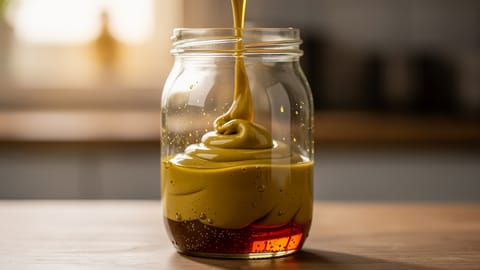
Aquafaba is chickpea cooking liquid. For a whole-egg replacement in a batter, use about 3 tablespoons. For whipped recipes, use 2 tablespoons to replace one egg white, then whip it with an electric mixer until it reaches the stage the recipe requires.
This works because aquafaba contains proteins and starches that help stabilize a foam. Canned chickpea liquid is the most consistent option. Homemade aquafaba can work, but its concentration varies; if it is thin, simmer it until it has a viscosity closer to egg white, cool it completely, and test a small amount before committing to the recipe. King Arthur Baking's aquafaba guide covers the basic ratios and technique.
Vegan egg substitutes for baking
For vegan baking, flax and chia gels provide binding, tofu and fruit purées add moisture, and aquafaba can replace egg white in some whipped recipes. No single option reproduces every function of an egg, and the N.C. Extension guide lists pound cakes, sponge cakes, and angel food cakes as bakes where substitutes don't work well.
Commercial vegan egg replacers can be a consistent option when they are formulated for baking. Follow the package directions because liquid and powdered products are not interchangeable.
Plain plant-based yogurt can replace dairy yogurt when its thickness is similar. Check the commercial replacer's label and follow its own ratio.
Scaling egg substitutes: the multi-egg problem
Most guides give you ratios for replacing one egg. Recipes that call for several eggs need a different decision.
Here's where egg-free baking gets tricky. The more eggs you replace, the further the result can move from the original. Multiplying a binding gel does not restore the aeration or protein structure supplied by several eggs.
For recipes built around eggs, first ask whether substitution is sensible. King Arthur specifically recommends using recipes developed without eggs for egg-heavy custards, sponge cakes, chiffon cakes, and angel food cakes.
Flavor impact: what to expect
Some substitutes have a subtle flavor. Others are easy to notice.
| Substitute | Flavor impact | Notes |
|---|---|---|
| Flax egg | Mildly nutty | Seeds can remain visible |
| Chia egg | Mild | Seeds can add texture |
| Applesauce | Slight sweetness, mild apple | Adjust sugar only if the finished bake tastes too sweet |
| Banana | Strong banana flavor | Only use when banana flavor is welcome |
| Silken tofu | Mild | Must be blended completely smooth |
| Aquafaba | Can taste bean-like | Flavoring may be needed in exposed applications |
| Yogurt | Slight tang | Works well in recipes already including dairy |
Unsweetened applesauce still contains natural sugar, but that does not mean every recipe needs less added sugar. Make the first batch without an automatic adjustment. If the result is too sweet, reduce the sugar slightly next time while watching for changes in spread, browning, and tenderness.
Tips for better egg-free baking
Don't overmix. Stir flour-based batters only until combined so you do not develop more gluten than the recipe needs, especially when using all-purpose flour.
Let flax and chia eggs gel fully. Five minutes is a useful starting point; wait longer if the mixture is still watery. The thickened gel supplies the binding.
Do not add baking powder automatically. First account for the leavener already in the recipe and the role of the egg. If a cake or muffin is dense, compare it with a recipe developed without eggs before changing the leavener.
Start at the recipe's stated oven temperature. If the surface browns before the center sets, verify the oven temperature, tent the bake loosely with foil, or try a slightly lower temperature on the next test.
Use the doneness cues appropriate to the recipe. A toothpick with a few moist crumbs works for many cakes and muffins; brownies, breads, and custards need different visual, touch, or temperature cues.
You may have used too much binder or too little lift. Check the recipe's existing leavener first. On the next test, reduce the flax or chia, choose a substitute that contributes lift, or use a recipe developed without eggs.
The substitution may have added more moisture or less binding than the original egg. On the next test, use a binding option such as flax and follow the recipe's normal chilling instructions.
The batter may need more moisture or binding, or the brownies may be overbaked. Try 1/4 cup of blended silken tofu for one egg and compare the result in a small batch.
Use canned aquafaba for the most predictable concentration, or reduce homemade aquafaba until it resembles egg white and cool it first. Keep the bowl and whisk completely clean and dry.
FAQ
Can I use flax eggs in recipes calling for 3+ eggs?
Not reliably as a direct swap. Flax eggs are strong binders but weak leaveners, and multiplying the ratio can make a cake gummy. If the recipe relies on several eggs for structure or lift, use a version developed without eggs or test a combination of substitutes in a half batch.
What's the best egg substitute for brownies?
Try 1/4 cup of silken tofu, blended smooth, for one egg. It provides moisture and some binding, but the brownie may be denser than the original. Applesauce is another starting option and will also change the crumb.
Do egg substitutes change the texture of cookies?
Yes. Flax and chia add a gel and visible seeds, applesauce adds moisture, and banana adds both moisture and flavor. None reproduces an egg exactly.
Can I combine different egg substitutes in one recipe?
Sometimes. A binder plus a moisture source can address different roles, but every addition also changes the batter. Keep the existing liquid, acid, baking soda, and baking powder in mind, then test a smaller batch before scaling up.
How many eggs equal 1 cup of egg substitute?
For a liquid commercial egg substitute, use the conversion printed on the carton; products differ. When measuring beaten shell eggs for scaling, weigh them or use the recipe's stated egg weight instead of assuming every egg or product fills the same volume.
What do vegan bakers use instead of eggs?
Vegan bakers choose by function: flax or chia for binding, aquafaba for some whipped recipes, tofu for moisture and density, or a commercial replacer used according to its label. Plant-based yogurt can work in sturdy cakes and muffins.
Start baking without the eggs
Start with the egg's main function. Flax can bind a cookie, applesauce can moisten a sturdy cake, tofu can add moisture to a dense batter, and aquafaba can foam for a meringue. Each one changes the original formula.
The biggest mistake is treating all egg substitutes as interchangeable. A flax egg in a sponge cake behaves differently from one in chocolate chip cookies. Read the recipe with the egg's function in mind, choose one starting substitution, and change only one variable at a time.
If you're scaling a recipe up or down, calculate the chosen starting ratio with the rest of the ingredients. Fond's baking calculator can scale those quantities after you decide which substitute fits the recipe.