 Bastien
Types of flour and their uses: a guide to 14 common flours
A breakdown of the flours worth knowing, ordered by protein content. Covers cake, pastry, all-purpose, self-rising, spelt, bread, whole wheat, 00, semolina and rye flour, plus the four gluten-free flours you meet most often, with substitution ratios and a protein chart for matching flour to recipe.
Flour is flour, right? Open a bag, scoop it out, and go. Except if you have ever used cake flour in a pizza dough or bread flour in a delicate sponge, you already know the results are wildly different. The reason comes down to one thing: protein content.
Protein in flour forms gluten when mixed with water. More protein means more gluten, which means more structure, more chew, and more elasticity. Less protein means a softer, more tender crumb. Every flour on the shelf exists somewhere on that spectrum, and picking the right one for the job is one of the simplest ways to improve your baking overnight.
This guide covers 14 types of flour and their uses, organized from lowest to highest protein content, with substitution ratios so you can adapt when your pantry does not match the recipe.
The ranges for cake, pastry, all-purpose and bread flour come from the Wheat Foods Council; the durum, whole wheat and rye figures are USDA FoodData Central reference values. Individual bags drift a little either way, which is why the nutrition panel on the back is worth reading.
What are the 3 main types of flour?
The three that cover almost everything a home kitchen bakes are all-purpose (9-12% protein), bread flour (12-14%) and cake flour (7-9%). All-purpose is the default in most recipes. Bread flour carries yeasted dough. Cake flour keeps a crumb tender. Buy those three and the other eleven below become optional rather than necessary.
The reason that trio works is that it samples the protein scale at the low end, the middle and the top. Everything else on this page is either a variation on one of those points (pastry flour, self-rising) or a different grain entirely (rye, spelt, semolina, the gluten-free flours), which is a different problem to solve.
Cake flour (7-9% protein)
Cake flour is the softest wheat flour you will find at a grocery store. It is milled from soft wheat varieties and often chlorinated, which weakens the proteins further and lets the flour absorb more liquid and fat. The result: cakes with a fine, tight crumb and a melt-in-your-mouth texture.
Swap cake flour into a yellow cake built for all-purpose and the crumb gets noticeably lighter. It is one of the few one-ingredient changes in baking that you can taste without a side-by-side.
Best for: Layer cakes, cupcakes, muffins, biscuits, scones, pancakes.
Not great for: Bread, pizza, anything that needs structure and chew.
If a recipe calls for cake flour and you only have all-purpose, you can make a reasonable substitute. For every cup (120g) of cake flour, measure one cup of all-purpose flour, remove two tablespoons, and replace them with two tablespoons of cornstarch. Sift the mixture twice. It will not be identical, but it works well enough for most recipes.
Pastry flour (8-9% protein)
Pastry flour sits between cake flour and all-purpose, at 8-9% protein. It produces baked goods that are tender but with slightly more body than what cake flour gives you. It is less common in supermarkets but worth seeking out if you bake a lot of pie crusts or tart shells.
Best for: Pie crusts, tart dough, cookies, quick breads, scones.
To substitute: blend equal parts cake flour and all-purpose flour. This lands you right in the pastry flour protein range.
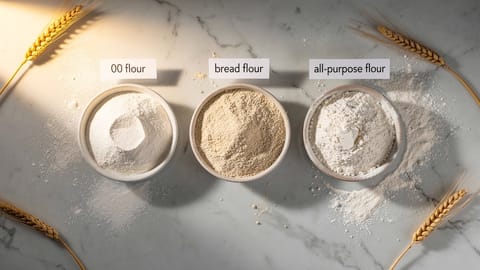
All-purpose flour (9-12% protein)
The workhorse. All-purpose flour is a blend of hard and soft wheat, designed to be exactly what the name says: good enough for almost anything. Most recipes assume you are using all-purpose unless they say otherwise.
Best for: Cookies, quick breads, pancakes, pie crusts, muffins, thickening sauces, coating fried food.
Protein is where brands separate. USDA lists white all-purpose flour at 10.3 g per 100 g as a reference value, and the Wheat Foods Council puts the category at 8-11%; some national brands sit above that, while Southern US soft-wheat brands sit below it. That gap is small on a nutrition panel and large in a biscuit, where tenderness is the whole point. The all-purpose flour entry goes into what the label does and does not tell you.
One thing to note: measuring flour by weight makes a real difference here. A cup of all-purpose flour should weigh about 120-125g. Scooping directly from the bag can pack it to 150g or more, which throws off your ratios and gives you dense, dry results. Flour is also the 100% reference in baker's percentages, so an inaccurate flour weight quietly moves every other number in the formula.
Self-rising flour (9-12% protein + leavening)
Self-rising flour is all-purpose flour with chemical leavening and salt already mixed in. A standard ratio is one cup flour, 1.5 teaspoons baking powder, and 0.25 teaspoons salt. It is popular in Southern US baking for biscuits, cornbread, and quick breads.
Best for: Biscuits, pancakes, simple cakes, cornbread.
Not great for: Yeast breads (the added baking powder interferes), recipes where you need to control leavening precisely.
If a recipe calls for self-rising flour, you can make your own: for every 125g of all-purpose flour, whisk in 1.5 teaspoons of baking powder and a pinch of salt. Going the other direction, if you have self-rising flour and want to use it as all-purpose, just omit the baking powder and salt from your recipe.
Spelt flour (11-13% white, higher whole grain)
Spelt is an ancient grain related to modern wheat. It has a slightly sweet, nutty flavor that adds character to baked goods. White spelt flour usually lands around 11-13% protein, and USDA lists whole-grain spelt flour higher again at 14.5 g per 100 g. None of that makes it behave like bread flour, because spelt gluten is more fragile and more water-soluble. Spelt doughs break down faster with aggressive kneading or long mixing, which is the one number the protein figure never tells you.
Blending 20-30% spelt into a sandwich loaf is the usual way in. You get a more complex, faintly honeyed flavor without asking weak gluten to hold up a tall loaf on its own.
Best for: Pancakes, muffins, quick breads, cookies, rustic bread (blended with wheat flour).
Not great for: High-rise sandwich bread at 100% spelt (the gluten is too weak). Recipes that need long, vigorous kneading.
To substitute spelt into a wheat recipe, start by replacing 25-50% of the wheat flour. Reduce the liquid by about 10% because spelt absorbs less water. Mix gently and keep kneading short. If you want to go 100% spelt, expect a denser, more tender result.
Bread flour (12-14% protein)
Bread flour, at 12-14% protein, has the highest protein content of the common white flours. That extra protein builds a stronger gluten network, which gives bread its chewy texture, open crumb, and the ability to trap gas during fermentation. If you are getting into bread baking, this is the flour you want. Outside the US the same thing is sold as strong flour or high-grade flour; the bread flour entry lists the names and what separates it from all-purpose.
Best for: Sandwich bread, baguettes, rolls, bagels, pizza dough, brioche, any yeasted dough.
The higher protein also means bread flour absorbs more water. If you substitute bread flour into a recipe designed for all-purpose, you may need to add a tablespoon or two of extra water to get the same dough consistency. For recipes that go through long bulk fermentation or use autolyse, bread flour holds up better than all-purpose.
Can you use all-purpose for bread? Yes. The loaf will be a bit less chewy and may not rise quite as high, but it will still be bread. Many professional bakers blend bread flour and all-purpose to hit a specific protein target for their recipes.
Whole wheat flour (13-15% protein)
Whole wheat flour is milled from the entire wheat kernel (bran, germ, and endosperm) rather than just the endosperm like white flours. This gives it more fiber, fat, vitamins, and a nutty flavor. It also makes it heavier and more absorbent.
Best for: Whole wheat bread, hearty muffins, pancakes, pizza dough (blended).
USDA lists whole wheat flour at 15.1 g protein per 100 g, with soft-wheat whole-grain flour much lower at 9.6 g, so the wheat class behind the bag matters more here than in any white flour. And the headline number lies a little either way: bran particles physically cut through gluten strands as the dough develops, so whole wheat dough feels weaker and denser than bread flour dough at the same protein level.
Most bakers do not use 100% whole wheat unless they specifically want a dense, hearty loaf. A 50/50 blend of whole wheat and bread flour gives you the flavor and nutrition without sacrificing too much structure. Whole wheat flour also absorbs about 10-15% more water than white flour, so increase your hydration accordingly.
White whole wheat is worth mentioning. It is milled from a lighter-colored wheat variety, so it has all the nutritional benefits of regular whole wheat but with a milder flavor and lighter color. Good option if you want to sneak whole grains into recipes without the heavy taste.
00 (Tipo 00) flour (8-14% protein)
Here is where it gets confusing. 00 flour is an Italian classification that refers to how finely the flour is milled and how much of the grain's mineral content is left in it, not its protein content. 00 is the finest grade, producing a silky, powdery flour. The protein behind it is set by the mill for a specific job, so 00 spans roughly 8-14%: low-protein 00 goes into pasta, pastries and cakes, high-protein 00 into pizza and bread. Two bags marked 00 can behave nothing alike. The pizza flour guide compares specific 00 flours and explains the W value that Italian bags print alongside protein.
Best for: Neapolitan pizza, fresh pasta, focaccia, Italian pastries.
The fine grind of 00 flour produces a smoother, more elastic dough that stretches without tearing. For pizza, it handles the high heat of a pizza oven (400-500°C) better than regular bread flour. If you are making pizza at home in a standard oven (250°C max), bread flour works fine and is cheaper. But if you have a pizza steel or outdoor pizza oven, 00 pizza flour makes a noticeable difference. Use the pizza dough calculator to build a Neapolitan recipe with 00 flour and see exact ingredient amounts.
For fresh pasta, 00 flour gives you silky, smooth sheets. Some recipes use a blend of 00 and semolina for pasta with more bite.
French flour classification (T-numbers)
France grades flour the same way Italy does, by ash content (the mineral residue left after a sample is burned), not by protein. The T-number is that percentage multiplied by a hundred: a flour leaving 0.55 g of minerals per 100 g is a T55. Higher number, more of the outer grain still in the bag.
| French type | Ash content | Typical use |
|---|---|---|
| T45 | under 0.50% | Pastry, viennoiserie |
| T55 | 0.50-0.60% | Everyday bread, biscuits |
| T65 | 0.62-0.75% | Pain de campagne, baguette tradition |
| T80 | 0.75-0.90% | Semi-whole grain breads |
| T110 | 1.00-1.20% | Whole grain breads |
| T150 | over 1.40% | Dense wholemeal breads |
Ranges as published by the French mill Moulins Antoine and the cereal interbranch body Intercéréales; uses follow the French millers' association, ANMF.
The trap in every conversion chart is treating T45 as cake flour and T65 as bread flour. Ash and protein are independent scales. A T45 milled from strong wheat, sold in France as farine de gruau, runs around 12-13 g protein per 100 g and is what French bakers reach for to make brioche. Match the protein to the job first, then the grade.
Semolina flour (about 12.7% protein)
Semolina is milled from durum wheat, the hardest wheat variety. It is golden-yellow, coarse, and high in protein. The gluten in durum wheat is strong but not very elastic. It stretches less than bread flour gluten. This makes it better for shapes that need to hold their form rather than rise.
Best for: Dried pasta (the classic choice), couscous, gnocchi, some Italian breads, dusting pizza peels.
USDA gives unenriched semolina 12.7 g protein per 100 g, right in bread-flour territory, which is exactly why the protein number alone is a poor guide to what a flour will do. The semolina entry covers the grind sizes and where each one belongs.
Semolina is not a good substitute for regular wheat flour in most baking recipes. Its coarse texture and different gluten behavior produce results that are too dense and gritty for cakes or standard bread. But for pasta, it is unmatched. It gives dried pasta its firm, al dente bite.
Semolina rimacinata (re-milled semolina) is a finer grind that works well in bread and pizza dough, especially for Southern Italian styles.
Rye flour (9-16% protein, low gluten)
Rye flour contains proteins, but they do not form gluten the same way wheat proteins do. The result is a denser, stickier dough that does not rise as much. Rye bread gets most of its structure from starches rather than gluten, which is why it tends to be compact and moist.
Best for: Rye bread, pumpernickel, Danish rugbrod, mixed-grain breads, crackers.
Protein climbs steeply with the extraction rate. USDA reference values run 9.8 g per 100 g for light rye, 10.9 g for medium and 15.9 g for dark rye. Ignore the way that top figure looks next to bread flour: these proteins do not build structure like wheat gluten does.
Most rye bread recipes use a combination of rye and bread flour because 100% rye produces a dense, heavy loaf that many people find too intense. A 30-40% rye blend gives you the distinctive sour, earthy flavor without the brick-like texture. Rye pairs naturally with sourdough starters because wild yeast and bacteria thrive in rye doughs.
If you work with rye, expect the dough to be sticky. Do not add extra flour trying to make it feel like wheat dough. That stickiness is normal and goes away during baking.
Gluten-free flours
Gluten-free baking is its own discipline. There is no single flour that replicates what wheat does, so most gluten-free recipes use blends. If you are adapting wheat-based recipes, you will also want to look at egg substitutes for baking since many GF recipes adjust eggs and binders together. Here are the most common individual flours:
Almond flour: Ground blanched almonds. High in fat, adds moisture and richness. Good for cookies, cakes, macarons. Not a 1:1 sub for wheat flour because it behaves completely differently.
Coconut flour: Extremely absorbent (use about 25-30% of the amount you would use for wheat flour). Adds slight sweetness. Needs extra eggs or liquid to compensate for absorption.
Oat flour: Made from ground oats. Adds a mild, slightly sweet flavor. Works well in pancakes, muffins, and cookies. Certified gluten-free oats are necessary for celiac-safe baking.
Rice flour: Available as white or brown. White rice flour is a neutral base for blends. Brown rice flour has more fiber and a slightly gritty texture. Neither works well alone. They need starches (tapioca, potato) and binders (xanthan gum) to approximate wheat flour behavior.
Pre-made GF blends (Bob's Red Mill 1:1, King Arthur Measure for Measure) are the easiest option for adapting wheat-based recipes. They include the starches and binders already balanced. Results vary by recipe, but for simple cakes, cookies, and quick breads, they work reasonably well.
Protein content comparison
Substitution guide
Not every substitution works perfectly, but these will get you through in a pinch:
| If you need... | Use instead | Adjustment |
|---|---|---|
| Cake flour | All-purpose minus 2 tbsp per cup + 2 tbsp cornstarch | Sift twice |
| Bread flour | All-purpose | Add 1 tsp vital wheat gluten per cup (optional) |
| Pastry flour | 50/50 blend of cake + all-purpose | None |
| Self-rising flour | All-purpose + 1.5 tsp baking powder + pinch salt per cup | None |
| 00 flour (pizza) | Bread flour | Slightly different texture, still works well |
| 00 flour (pasta) | All-purpose | Pasta will be slightly less silky |
| Whole wheat flour | 50/50 whole wheat + all-purpose | Reduce to avoid density; add more liquid |
| Spelt flour | All-purpose (reduce liquid 10%) | Mix gently, less kneading |
| Semolina | Cannot easily substitute | Use the right flour for pasta |
Which flour for what? Quick reference
Still not sure which flour to grab? Here is the short version:
- Chocolate cake, birthday cake, cupcakes: Cake flour
- Pie crust, galette, tart shell: Pastry flour or all-purpose (cold butter matters more than flour choice here)
- Cookies: All-purpose. Bread flour if you want chewy cookies. Cake flour if you want thin, crispy ones.
- Sandwich bread, dinner rolls: Bread flour
- Sourdough: Bread flour (with optional 10-20% whole wheat for flavor)
- Pizza dough: Bread flour for home ovens, a pizza-grade 00 for pizza ovens. The pizza flour guide picks between them properly.
- Fresh pasta: 00 flour, or all-purpose, or a blend with semolina
- Dried pasta: Semolina
- Biscuits: All-purpose or self-rising (Southern style). Low-protein brands work best.
- Pancakes, waffles: All-purpose
- Rustic bread with more flavor: Spelt blend (25-50% spelt + bread flour)
You likely used a flour with too much protein. Switch to cake flour (7-9% protein) or make the cornstarch substitute described above. All-purpose can work for cakes, but bread flour tends to give tough results.
Check your flour's protein content. If you used all-purpose below 10%, the gluten network may not be strong enough. Switch to bread flour (12-14%) or add a teaspoon of vital wheat gluten per cup. Also check that your yeast is still active.
If gritty, your semolina grind may be too coarse. Try semolina rimacinata (re-milled) or switch to 00 flour for a silkier result. If falling apart, the dough needs more kneading to develop gluten, or you need to add an egg for binding.
This is normal. Bran particles cut through gluten strands during mixing. Blend 50/50 with bread flour for better structure, and add 10-15% more water since whole wheat absorbs more liquid.
Spelt gluten breaks down with over-mixing. Reduce kneading time, handle the dough gently, and cut liquid by about 10% compared to a wheat recipe. Keep spelt at 50% or less of the total flour for best results.
Storing flour
One last thing. Flour goes stale and can go rancid, especially whole grain flours that still contain the oil-rich germ.
White flours (all-purpose, bread, cake): Last 6-12 months in a cool, dry pantry. Longer in the freezer.
Whole wheat, rye, spelt, and nut flours: Refrigerate or freeze them. At room temperature, they go rancid within a few months. Smell an opened bag of whole wheat before you use it: musty or bitter instead of mildly nutty means it has turned. In the freezer, these flours keep for up to a year. Let them come to room temperature before baking because cold flour throws off dough temperature, which affects fermentation timing.
All flour should be stored in an airtight container. The paper bag it comes in lets in moisture and pantry pests. A simple plastic or glass container with a tight lid solves both problems.
None of this is worth memorizing as a table. What is worth keeping is the shape of it: protein drives texture, the grade printed on a European bag describes the milling rather than the strength, and almost every flour has a workable stand-in. Next time a recipe disappoints, check which bag you reached for before you blame the method.
FAQ
What are the 3 main types of flour?
The three main types of flour most home bakers need are all-purpose (9-12% protein), bread flour (12-14% protein), and cake flour (7-9% protein). All-purpose handles most recipes. Bread flour gives yeasted doughs the structure they need. Cake flour produces tender, fine-crumbed cakes. If your pantry only has room for one, all-purpose is the safest bet.
How many types of flour are there?
There is no fixed number, because flour can be graded by grain, by milling and by protein all at once. This guide profiles 14 that turn up in home kitchens: cake, pastry, all-purpose, self-rising, spelt, bread, whole wheat, 00, semolina and rye, plus almond, coconut, oat and rice among the gluten-free flours. Regional grading systems add more names for the same thing, which is where the French T-numbers and the Italian 00 come in.
Which is the best flour for baking?
It depends on what you are baking. There is no single best flour. For cakes and pastries, cake flour wins because of its low protein and fine texture. For bread and pizza, bread flour or 00 flour gives the best chew and rise. For general use, all-purpose flour covers most recipes without any issues.
Can I use bread flour instead of all-purpose?
Yes, but expect chewier results and slightly more rise. Bread flour absorbs more water, so you may need to add a tablespoon or two of extra liquid. For cookies and quick breads this swap works fine. For delicate cakes, the extra protein gives a tougher crumb, so it is not ideal.
What can I use if I don't have cake flour?
For every cup (120g), take one cup of all-purpose flour, remove two tablespoons, and replace them with two tablespoons of cornstarch. Sift twice. The result is close enough for most cake and muffin recipes.
Is 00 flour the same as all-purpose flour?
No. 00 refers to how finely the flour is milled and how little of the outer grain it keeps (an Italian grading system), not the protein content. Low-protein 00 flour (8-10%) is closer to pastry flour. High-protein 00 flour (11-14%) is closer to bread flour. The ultra-fine grind of 00 produces smoother, more elastic doughs than any standard American flour.
Can I substitute spelt flour 1:1 for wheat flour?
Not directly. Spelt gluten is weaker and more water-soluble, so 100% spelt doughs tend to be stickier and less structured. Start by replacing 25-50% of the wheat flour with spelt, reduce your liquid by about 10%, and knead gently. For quick breads and pancakes, 100% spelt works well since gluten strength matters less.
How long does flour last?
White flours (all-purpose, bread, cake) keep 6-12 months in a cool, dry pantry and up to two years frozen. Whole grain flours (whole wheat, rye, spelt) go rancid faster because they contain the oil-rich germ. Store them in the fridge or freezer, where they last up to a year. Always smell whole grain flour before using it.
Why did my bread turn out dense?
The most common flour-related cause is using a low-protein flour when the recipe needs bread flour. All-purpose at 10% protein produces a weaker gluten network than bread flour at 12-14%. Other culprits: old yeast, under-kneading, or not enough fermentation time. If you are stuck with all-purpose, add a teaspoon of vital wheat gluten per cup to boost protein.