 Bastien
How long to boil eggs for soft, jammy, and hard yolks
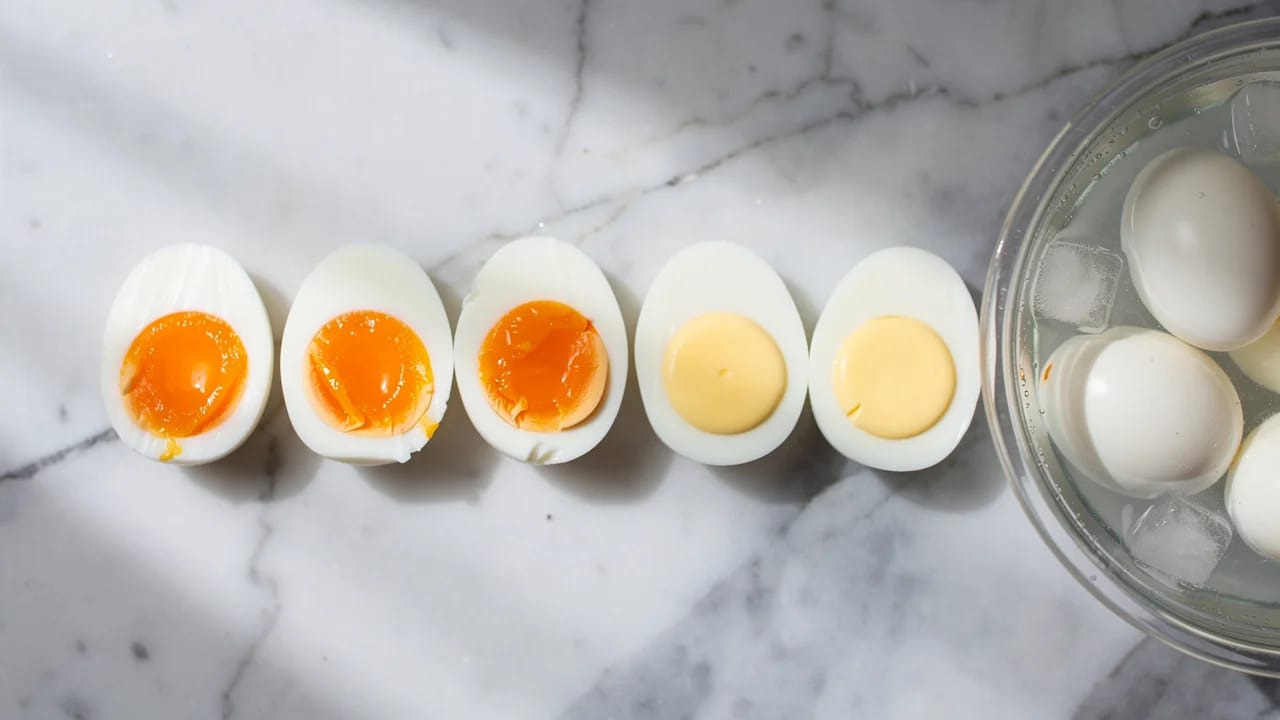
For large refrigerated eggs lowered into boiling water, start at 6 minutes for a runny yolk, 8 minutes for jammy, or 11-12 minutes for hard-cooked.
For large eggs taken from the refrigerator and lowered into boiling water, start with 6 minutes for a liquid yolk, 8 minutes for a jammy yolk, or 11-12 minutes for a hard-cooked yolk. Those times describe the method on this page. They are not interchangeable with recipes that start eggs in cold water.
Small changes matter. A larger egg, a crowded pot, a weak simmer, or a high-elevation kitchen can shift the result. Use the chart for your first batch, cut open one egg, and record the time that works in your kitchen.
Boiled egg timing chart
This chart assumes large refrigerated eggs, a small batch, and enough already-boiling water to cover the eggs by about 1 inch (2.5 cm). Start the timer as the eggs enter the water, then maintain a steady simmer.
| Time | White | Yolk | Useful for |
|---|---|---|---|
| 6 minutes | Set but delicate | Liquid | Toast, noodles, eating from the shell |
| 7 minutes | Set | Thick and flowing | Grain bowls, toast |
| 8 minutes | Firm | Jammy | Salads, noodles, snacks |
| 9 minutes | Firm | Mostly set, moist in the center | Sandwiches, make-ahead lunches |
| 11-12 minutes | Firm | Fully set | Egg salad, deviled eggs, chopping |
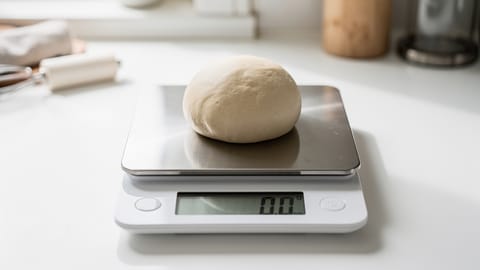
These are practical starting points, not a promise that every egg will look identical. If you buy eggs by weight, a kitchen scale can help you keep the size consistent between batches. Starting temperature matters too, so do not compare a refrigerator-cold egg with one that has sat on the counter.
At altitude, boiling water is cooler than it is at sea level. Skip universal formulas such as “one extra minute per 1,000 feet.” Test one egg at your usual time and add 30-60 seconds to the next one until the center matches what you want.
How to boil eggs with a repeatable hot start
Set up your mise en place before the eggs enter the water. Have a spoon, timer, and bowl of cold water ready. That keeps the cooking interval defined instead of leaving the eggs in the pot while you search for equipment.
Cooling limits carryover cooking, the continued cooking caused by heat already stored in the egg. It also prevents a hot hard-cooked egg from sitting at its highest temperature longer than necessary. An ice bath cools faster, but a bowl of very cold water works for a small batch if you refresh the water when it warms.
Soft, jammy, or hard: choosing a time
Soft-boiled: 6-7 minutes
At 6 minutes, expect a set but tender white and a liquid yolk. At 7 minutes, the yolk is thicker around the edge while the center still flows. These eggs are delicate, so serve them in the shell or peel carefully.
Runny eggs involve a food-safety tradeoff. Fresh, clean, uncracked eggs can still contain Salmonella. The FDA recommends cooking until the white and yolk are firm and using pasteurized eggs for food served raw or undercooked. Children, older adults, pregnant people, and people with weakened immune systems should choose fully cooked eggs unless their health authority advises otherwise.
Jammy: 8 minutes
An 8-minute egg has a firm white and a spreadable, jammy center under this method. It is easier to halve than a 6-minute egg and works well with a simple bowl of rice. If that is your plan, the same principle of controlling water, heat, and time appears in our guide to cooking rice.
A jammy yolk is still not the same as the FDA’s firm-yolk recommendation. Use pasteurized eggs when you want this texture and food-safety risk is a concern.
Mostly set: 9 minutes
At 9 minutes, the yolk should be set around most of its area with a darker, moist center. This is a useful compromise when you want a sliceable egg without a dry yolk. It also travels more neatly than a soft-boiled egg.
Hard-cooked: 11-12 minutes
At 11-12 minutes, the yolk should be set through. Serious Eats uses a boiling-water start followed by 30 seconds of boiling and 11 minutes at a bare simmer for large eggs. The exact result still depends on batch size and how quickly the water returns to temperature.
Hard-cooked eggs are useful for meal prep because the FDA permits a clear refrigerated storage window. Cool and refrigerate them promptly rather than leaving them on the counter.
How to peel a hard-cooked egg
No peeling method works for every egg. A boiling-water start improves the odds that the white will release from the shell, but Serious Eats explicitly notes that eggs offer no guarantee.
- Cool the egg until it is easy to handle.
- Tap it gently all over to create many small cracks.
- Begin at the wider end, where the air pocket often gives you room to get under the membrane.
- Peel slowly. If the membrane clings, work under a thin stream of cool water.
Very fresh eggs can be harder to peel, but there is no need to hold eggs for an exact number of days. Baking soda, vinegar, and salt are also optional rather than requirements. They do not replace a controlled time and temperature.
Why a hard-cooked yolk can turn green
A gray-green ring around the yolk is harmless. It forms when sulfur from the white reacts with iron in the yolk during prolonged heating. It is a quality issue, not a sign that the egg is unsafe.
To reduce the chance of a ring, avoid extending the hard-cooked time without reason and cool the eggs promptly. If the center is set at 11 minutes in your kitchen, a longer boil only pushes the white and yolk toward a firmer texture.
Storage and food safety
The FDA advises using hard-cooked eggs within one week, whether peeled or still in the shell. Refrigerate cooked eggs within two hours, or within one hour when the ambient temperature is above 90°F (32°C). Keep the refrigerator at 40°F (4°C) or below.
Store peeled eggs in a covered container so they do not dry out or absorb odors. The FDA’s one-week limit covers peeled eggs too, so the shell does not create a longer official window.
Serve soft or jammy eggs promptly. If you need eggs for several days of lunches, hard-cooked is the more defensible choice because it follows the firm-yolk guidance and has an established storage limit.
Troubleshooting
The egg may be larger, the batch may have cooled the water, or your simmer may be gentler. Keep the setup the same and add 30-60 seconds next time.
Lower eggs with a spoon and reduce the water to a steady simmer. A small crack is a handling problem, not proof that the timing chart failed.
Crack the shell all over, start at the wider end, and use cool running water to help lift the membrane. Some eggs still resist a clean peel.
The egg stayed hot longer than needed. Shorten the hard-cooked time or cool it sooner. The color is harmless.
A simple way to make the result repeatable
Write down the egg size, whether it came straight from the refrigerator, and the time that produced your preferred center. That record is more useful than a universal adjustment table. Once the timing is calibrated, the same eggs can anchor breakfast or a packed lunch alongside other dependable fundamentals such as choosing an oil by smoke point.
- For large refrigerated eggs in boiling water, start at 6 minutes for liquid, 8 for jammy, or 11-12 for hard-cooked.
- Maintain a steady simmer, cool promptly, and adjust the next batch by 30-60 seconds if needed.
- Runny and jammy eggs carry more food-safety risk. Use pasteurized eggs, and choose firm yolks for people at higher risk.
- Refrigerate hard-cooked eggs within two hours and use them, peeled or unpeeled, within one week.