 Bastien
Sour cream substitutes: what to use and how much
Full-fat plain Greek yogurt is the easiest sour cream substitute: use the same amount in dips and most baking. For sauces and soups that simmer, crème fraîche is the safer swap, because its higher fat keeps it from curdling.
Out of sour cream halfway through a recipe? Use full-fat plain Greek yogurt, cup for cup. It's thick and already sour, so it works as well in a dip as in a cake batter. It only lets you down in a hot sauce: when America's Test Kitchen stirred Greek yogurt into beef stroganoff, it broke. For anything that simmers, crème fraîche is the safer swap.
The right choice depends on what the sour cream is doing. In a cake it supplies acid and fat. In a dip or on a baked potato it's mostly there for body and tang. Treat every ratio below as a starting point for that kind of recipe.
Sour cream substitutes at a glance
| Substitute | For 1 cup sour cream | Best for | Watch out for |
|---|---|---|---|
| Full-fat plain Greek yogurt | 1 cup | Cold dishes and most baking | Breaks in hot sauces; slightly leaner bakes |
| Plain whole-milk yogurt | 1 cup, strained for dips | Batters and dressings | Thin until strained |
| Crème fraîche | 1 cup | Hot sauces and soups | Milder tang; add lemon juice if you miss it |
| Buttermilk plus butter | 3/4 cup buttermilk + 1/3 cup butter | Cake and muffin batters | Too thin for dips or cheesecake |
| Blended cottage cheese | 1 cup cottage cheese + 1/3 cup buttermilk + 1 tbsp lemon juice | Dips and dressings | Leaner; blend until no curds remain |
| Thinned cream cheese | Softened cream cheese + milk to taste + lemon juice | Dips and spreads | Thick and mild until loosened and soured |
| Heavy cream plus acid | 1 cup heavy cream + 1 tbsp vinegar or lemon juice, shaken | Sauces and batters | Runnier; acid-soured, not cultured |
| Mayonnaise | Part mayo, part yogurt or buttermilk | Cold dips and dressings | No tang of its own |
| Dairy-free | Plant yogurt, cashew cream, coconut cream or blended silken tofu | Toppings and dips | Nut and soy allergens; flavor varies |
What sour cream is, and what a substitute has to match
In the US, sour cream has a legal definition. The federal standard says it results from the souring, by lactic acid producing bacteria, of pasteurized cream. It must contain at least 18% milkfat (14.4% is the floor once sweeteners or bulky flavorings are added) and have a titratable acidity of at least 0.5%, calculated as lactic acid. A separate standard covers acidified sour cream, which is soured with food-grade acids, with or without bacteria.
Commercial makers add a starter culture to cream and ferment it at about 20°C (68°F) for around 18 hours, until the pH falls from about 6.5 to 4.6, according to Wikipedia. That's the same lactic fermentation that makes yogurt sour, which is why other cultured dairy makes the best stand-in.
So a substitute needs acidity and a thick, spoonable body. Fat matters more than people expect. It keeps cakes tender, and it's what stops cultured cream from curdling in a hot pan.
Greek yogurt: the closest everyday swap
Full-fat plain Greek yogurt is the easiest substitute because it's already strained thick and already sour. Use the same amount. Taste of Home's dietitian contributor swaps it 1:1 and finds whole-milk or 2% Greek yogurt closest to sour cream in taste, while nonfat tastes tangier and less rich.
The catch is fat. America's Test Kitchen puts a cup of sour cream at about 40 grams of fat, against about 11 grams for the same amount of whole-fat Greek yogurt. In their tests the yogurt was acceptable in drop biscuits and a horseradish sauce, both a little leaner. Their verdict: fine in a pinch, risky with high heat.
The other swaps, one by one
Plain yogurt
Regular plain yogurt works 1:1 too. New Mexico State University's substitution chart lists 1 cup of plain yogurt per cup of sour cream, and America's Test Kitchen swaps whole-milk yogurt in equal amounts in most baking, with slightly drier cakes and muffins.
It's thinner than sour cream, which shows in a dip. Nigella Lawson's team strains whole-milk yogurt through a muslin-lined sieve set over a bowl in the fridge for 1 to 2 days, until most of the whey has drained. Skip nonfat yogurt for cooking; America's Test Kitchen advises against it.
Crème fraîche
Crème fraîche is cultured cream too, but it starts from heavy cream. America's Test Kitchen gives it 30 to 40% butterfat against 18 to 20% for sour cream, and it's less sour. Healthline uses it one to one. If you miss the tang, Taste of Home suggests a squeeze of lemon or lime. Its real advantage is heat, covered further down.
Buttermilk, for batters only
Buttermilk has the acid but not the body or the fat. NMSU's chart replaces 1 cup of sour cream with 3/4 cup of buttermilk plus 1/3 cup of butter, which puts some of the fat back. Keep it to cake and muffin batters. Nigella's team rules it out for cheesecake, because buttermilk usually has under 1% fat and is far more liquid than sour cream.
Blended cottage cheese
For dips, NMSU blends 1 cup of cottage cheese with 1/3 cup of buttermilk and 1 tablespoon of lemon juice until smooth. Healthline notes that cottage cheese is lower in fat and higher in protein than sour cream. Keep blending until no curds are left, or they'll show in the dip.
Thinned cream cheese
Cream cheese is too thick and too mild on its own. The Kitchn softens it, thins it with milk or cream to the consistency you want, and adds lemon juice or vinegar for acidity.
Heavy cream with vinegar or lemon juice
This is the fastest homemade version. It's soured with acid rather than cultured, which puts it closer to what US rules call acidified sour cream. The method is in the 10-minute section below.
Mayonnaise
Mayo isn't cultured dairy. It's an emulsion of oil and egg, so it brings richness without tang. The Kitchn calls it acceptable in dips and dressings, and best mixed with yogurt or buttermilk. Treat it as a cold-dish fix.
Which substitute for which recipe
Baking
In baking, sour cream does two jobs. Its acid gives baking soda something to react with: King Arthur Baking lists sour cream, buttermilk and yogurt among the wet acidic ingredients that activate soda. Its fat keeps cakes moist and tender.
If your recipe uses baking soda, swap in something cultured and sour, such as yogurt or buttermilk with butter, and leave the leavener alone. A substitute with no acid would leave the soda without a partner, and the guide to baking soda vs baking powder explains what unreacted soda does to flavor.
Then make up for the fat. America's Test Kitchen's equal swap gives slightly drier cakes and muffins. Ricardo finds that low-fat Greek yogurt makes cakes that are fine but a bit dense, and loosens it with 2 tablespoons of milk for each 1/2 cup of yogurt. If a cake still comes out dry, Nigella's team suggests replacing a quarter of the yogurt with melted butter: 3/4 cup of yogurt plus 1/4 cup of melted butter for each cup of sour cream.
Dips and dressings
Cold dishes are the easy case, because nothing has to survive heat. Greek yogurt is Taste of Home's go-to base for dips such as French onion and ranch. Blended cottage cheese and thinned cream cheese both work, and so does mayonnaise cut with yogurt.
Warning: A dip made with any of these is perishable. NC State Extension says food should not sit out of refrigeration for more than two hours, or one hour above 90°F (32°C). Set out a small bowl and refill it from the fridge. The food danger zone explains why the clock matters.
Tacos and other cold toppings
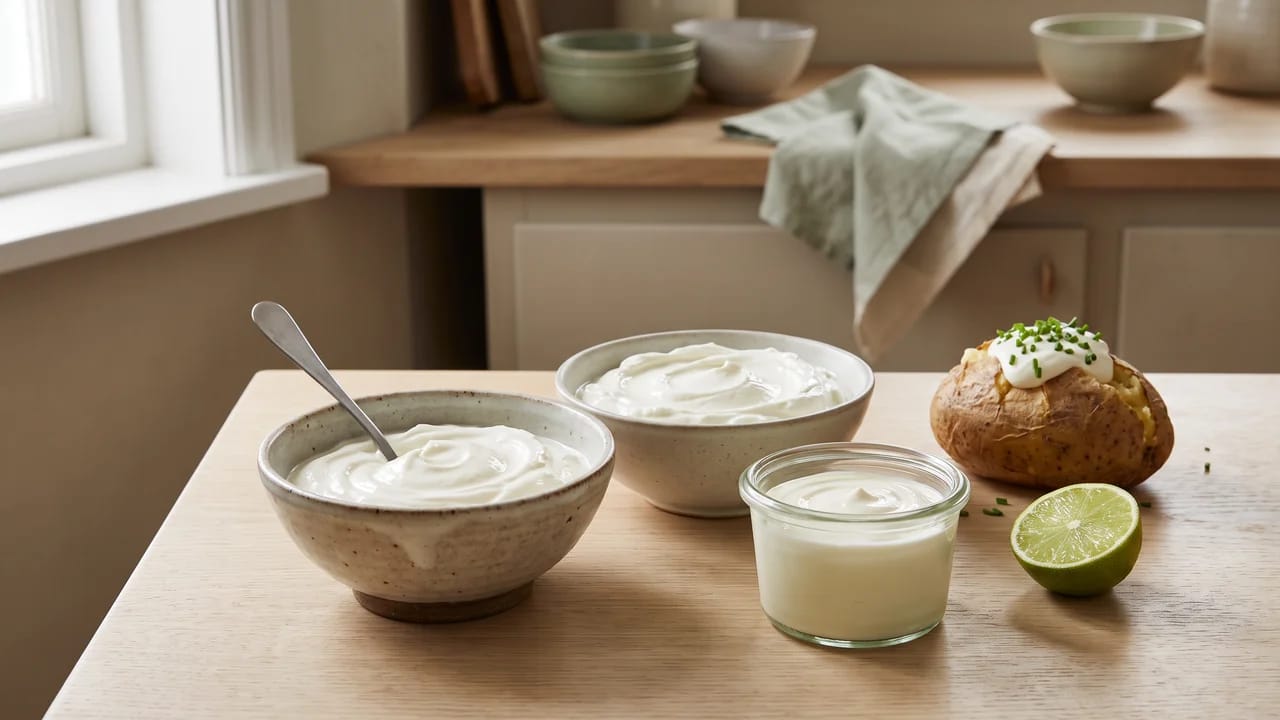
A cold dollop on top never cooks, so Greek yogurt is fine here. Taste of Home suggests it for nachos and baked potatoes, and crème fraîche for soups and enchiladas, sharpened with lemon or lime. For tacos, Mexican crema is another option: The Kitchn describes it as a lightly soured cream, slightly thinner than sour cream, so it drizzles rather than sits.
Hot sauces and soups
Stroganoff and creamy pan sauces are where substitutes fail. In a Cook's Illustrated test, yogurt, sour cream and crème fraîche were each stirred into water at a bare simmer, 185°F (85°C). Within 10 seconds the yogurt and the sour cream had curdled, while the crème fraîche stayed smooth. Heat makes the whey proteins bind with casein into clumps. Butterfat coats the proteins and keeps them apart, and crème fraîche has fewer proteins to begin with. Yogurt, at roughly 4% fat, has the least protection.
Tip: For anything that simmers, use crème fraîche. Even with real sour cream, America's Test Kitchen stirs it into stews and sauces off the heat.
If yogurt is all you have, give it a fighting chance:
The warming step comes from Ricardo's food chemistry column, and it's the same tempering cooks use to keep eggs from scrambling in hot liquid. Taste of Home also says not to boil Greek yogurt. For more insurance, Ricardo stabilizes the yogurt with starch. Dissolve 2 teaspoons of cornstarch in 1/3 cup of water, bring it to a boil until it thickens into a paste, and mix that hot paste into 3/4 to 1 cup of yogurt before it goes into the sauce.
Cheesecake
In a cheesecake the swap has to be thick and rich. Nigella Lawson's team calls thick whole-milk Greek yogurt the best alternative, though the cake may be slightly less rich, depending on how much sour cream the recipe uses relative to cream cheese. They also warn that in some cheesecakes and frostings, strained yogurt's low fat changes the texture and taste. Crème fraîche is their better substitute if you can find it, and Greek yogurt is safest when the batter calls for only a small amount of sour cream.
How to make a sour cream substitute in 10 minutes
Real sour cream can't be made in 10 minutes, because the culture needs hours to sour and thicken the cream. What you can make quickly is an acid-soured stand-in:
This is the Budget Bytes method. The result is runnier than store-bought sour cream, which often contains thickeners. For a thicker dip, the blended cottage cheese mix above is ready as soon as it's smooth.
Note: Some homemade recipes culture cream on the counter for a day or more. This guide sticks to mixes that go straight into the fridge; keep whatever you make cold and use it soon.
Dairy-free sour cream substitutes
Unsweetened plant yogurt is the simplest swap. FARE lists yogurts made from almond, cashew, coconut, oat, pea or soy milk as alternatives to dairy yogurt, and notes that soy yogurt is most like milk-based yogurt because it's a good source of protein.
Healthline notes that store-bought soy sour creams swap one to one, and describes a few homemade bases. Soaked cashews blended with vinegar, lemon juice and salt make a tangy cream for soups and side dishes, though it may not suit baking. The thick cream skimmed from full-fat coconut milk can be soured with lemon juice, about 1 tablespoon per cup for baking. Silken tofu blended with apple cider vinegar, lemon juice and salt gives a soy-based version.
Warning: Cashews are tree nuts and tofu is soy. FARE warns that some allergen substitutes are allergens themselves, so check every label against the allergy you're cooking around.
Pick by heat first
Start with the heat. If the dish is cold or baked, full-fat Greek yogurt covers most recipes cup for cup, and the blended cottage cheese mix gives a dip more body. If it simmers, reach for crème fraîche, or add whole-milk yogurt off the heat after warming it with a little of the sauce.
Sources
- 21 CFR 131.160 Sour cream - eCFR (US Code of Federal Regulations)
- 21 CFR 131.162 Acidified sour cream - eCFR (US Code of Federal Regulations)
- Substituting Greek Yogurt for Sour Cream in Recipes - America's Test Kitchen
- How to Substitute Cultured Dairy Products - America's Test Kitchen
- Cutting Out Curdling in Cultured Dairy - America's Test Kitchen (Cook's Illustrated)
- All About Cultured Dairy - America's Test Kitchen
- In a Pinch Ingredient Substitution (Guide E-131) - New Mexico State University Extension
- What's the difference between baking soda and baking powder? - King Arthur Baking
- Cooking with yogurt - Ricardo (Christina Blais)
- How to substitute sour cream in a recipe - Ricardo
- Sour cream for cheesecake - Nigella Lawson (Ask Nigella)
- No sour cream for cheesecake - Nigella Lawson (Ask Nigella)
- Greek yogurt instead of sour cream - Taste of Home
- 5 No-Fail Sour Cream Substitutes - Taste of Home
- How to Make Sour Cream With 2 Ingredients - The Kitchn
- How to Make Sour Cream - Budget Bytes
- The 7 Best Substitutes for Sour Cream - Healthline
- How to Use Substitutes for Common Food Allergens - FARE
- Food Safety Tips for Large Gatherings - NC State Extension
- Sour cream - Wikipedia
- Crème fraîche - Wikipedia