 Bastien
Tempering
Tempering is the technique of changing an ingredient's temperature gradually to prevent an unwanted reaction: eggs are tempered so they don't curdle in hot liquid, and chocolate is tempered so its cocoa butter sets in the stable Form V crystals that give gloss and snap.
Tempering is the technique of changing an ingredient's temperature gradually to prevent an unwanted reaction. The word covers two unrelated kitchen processes: tempering eggs (warming them slowly so they don't curdle when added to hot liquid) and tempering chocolate (melting and cooling it so the cocoa butter sets in stable crystals that give gloss and snap).
Both share one idea: slow, controlled temperature change prevents the damage a sudden change would cause. Tempering is what separates a silky crème anglaise from sweet scrambled eggs, and a glossy, snapping bonbon from a dull, streaky one.
How do you temper eggs?
When raw eggs meet hot liquid too quickly, the proteins coagulate on contact and you get cooked flecks floating in your sauce. Tempering raises the eggs' temperature in stages so the proteins set smoothly and evenly once everything is combined.
Egg custards begin to set at about 70 °C (158 °F), and a rise of only a few degrees past the target is enough to overcook and curdle them, which is why a plain custard is usually kept below about 80 °C (Wikipedia). Stirred custards like crème anglaise are classically taken a little higher, to the point where they coat the back of a spoon, and stopped there.
Step-by-step egg tempering
Egg tempering applications
Common mistakes when tempering eggs
Carryover cooking applies here too. Once you pull a custard off the heat, the pan keeps cooking it for another degree or two, so pull slightly early and keep stirring, or pour it into a cold bowl.
How do you temper chocolate?
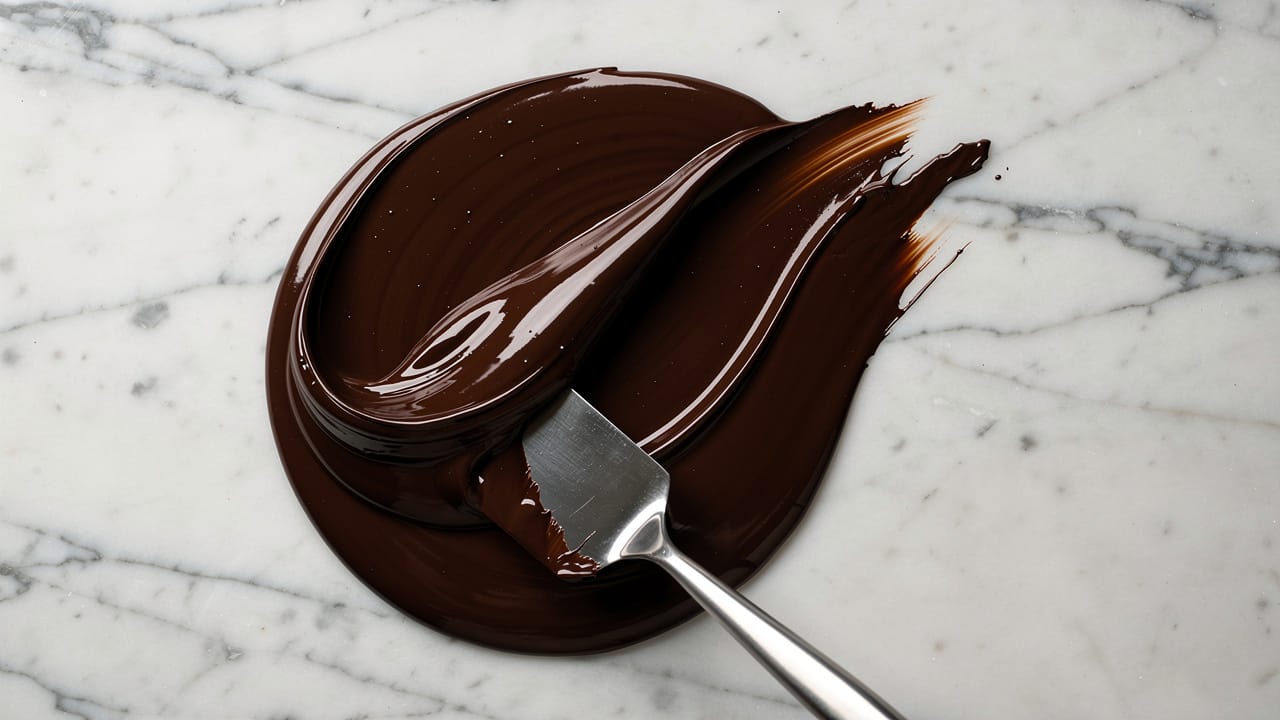
Chocolate tempering is a different process that happens to share the name. Here you're controlling which type of cocoa butter crystal forms as the chocolate sets. Cocoa butter is a polymorphic fat with six crystal forms, and only one of them, Form V, gives chocolate its characteristic snap, gloss, and stable texture (Wikipedia). Tempering melts away the other forms and encourages Form V to grow.
Why temper chocolate?
The white streaks on old or badly stored chocolate are fat bloom: cocoa butter that has migrated to the surface and recrystallized in an unstable form. Proper tempering, and storage away from heat, keeps it off.
Chocolate tempering temperatures
Use an instant-read thermometer. The numbers below follow Callebaut's tutorials: melt between 40 and 45 °C to erase the existing crystals, then bring the chocolate down to its working temperature.
If the working chocolate climbs more than a couple of degrees past its target, the Form V crystals start to melt and you lose temper. Reheat above 40 °C and start again; chocolate can be re-tempered repeatedly.
Tempering methods
The seeding method is the most practical approach at home. It uses already-tempered chocolate (a bar or Callebaut's callets) to seed the melted chocolate with stable Form V crystals. Callebaut's version: melt to 45 °C, let it fall to about 40 °C, then stir in about 5% unmelted callets at room temperature and keep stirring until the chocolate reaches working temperature (Callebaut).
Tabling is the classic professional technique. It's fast for large batches and gives experienced hands the most control, but it needs a marble or granite slab and some practice (Callebaut).
The microwave method is the quickest for small batches. It works because you never melt all of the chocolate, so some existing Form V crystals survive to seed the rest.
This works best with couverture or a good eating bar. Compound chocolate, made with vegetable fats instead of cocoa butter, doesn't need tempering at all.
Tempering chocolate without a thermometer
No thermometer? The seeding method limits the temperature on its own, and two checks tell you whether it worked. Dab a little chocolate on your lower lip: at working temperature it feels barely cool, neither warm nor cold. Then run the knife test, which is the real confirmation. Dip a clean blade and leave it at room temperature. Properly tempered chocolate will:
- Set within about 3-5 minutes rather than staying wet or tacky
- Have a uniform glossy surface
- Release cleanly from the metal
- Snap rather than bend when broken
If the test fails, reheat above 40 °C and start over. Nothing is lost except time.
Tempering in Fond
Fond hasn't launched yet. This is how it will work at launch. Join the waitlist for early access.
Both kinds of tempering are step-and-timer work. In Fond, a custard or bonbon recipe carries its temperatures in the step text, and Cook Mode runs a timer from any step that has one (the 3-minute knife test, the ice-bath chill) while keeping the screen awake. When you find the exact working temperature your kitchen and your chocolate like, add it to the recipe's notes so it's there next time.